


Looking for the real thing? Browse our Greek ring collection, each piece one of one, individually authenticated, with documented provenance. For the background, see the guide to ancient jewelry.
Overview: What we mean by ancient greek wedding bands
Definitions: ring types and terms used in scholarship
The phrase ancient greek wedding bands is useful for a focused search, but in scholarship it usually functions as a shorthand for the broader set of finger-rings and finger-worn tokens found across Greek-speaking regions. Collections and catalogues record plain hoops, signet or intaglio rings, and amuletic pieces, and specialists caution that many of these objects served multiple social roles rather than a single ritual purpose British Museum collection.
Scope: periods, regions and sources included
For clarity this article treats material from roughly the Archaic through the Hellenistic periods, drawing on museum records, conservation briefs and classical texts to frame interpretation; typical materials recorded in catalogues include bronze, silver and occasional gold, and many objects bear intaglios or mythological imagery that may be amuletic or identificatory rather than explicitly matrimonial Oxford Research Encyclopedias entry on marriage and family.
Archaeological evidence: rings in Greek material culture
Common ring types recorded in museum catalogues
Museum catalogues and excavation records document many finger-rings from Greek contexts, including plain hoops, hollow-boss rings and intaglio signet rings, and these entries typically record material, approximate period and condition notes that help researchers place an object in time and use British Museum collection. For example, see the British Museum object H_AF-480.
Collections show that bronze rings are common, silver rings appear less frequently and gold examples are comparatively rare, which affects how we judge likely social use and accessibility across different communities British Museum collection.
Materials, manufacturing and wear indicators
Condition reports and conservation briefs are central to dating and functional interpretation, because patina, manufacturing marks and long-term wear patterns are evidence that can indicate frequent personal use rather than recent fabrication Getty conservation brief on identifying rings. See also the Getty Museum study Ancient gems and finger rings - Getty Museum.
Where provenance or secure excavation context is available, catalogues often record associated finds and stratigraphy, and these contextual details are what make it more reasonable to consider a ring as a social token rather than a purely decorative object Getty conservation brief on identifying rings.
Check museum catalogue records and conservation briefs for provenance and condition
Use primary catalogue entries where possible
Literary and legal sources: texts on betrothal and token exchange
Which classical texts mention token exchange
Classical literary and legal sources include passages on betrothal, dowry and the exchange of tokens, and some scholars read specific lines as indicating that finger-worn objects could accompany betrothal in certain places and periods, though these readings vary with translation and context Perseus Digital Library.
How translations and context affect interpretation
Interpretive caution is necessary because the words used in primary texts do not always map cleanly onto material categories; a term in a legal text might mean a token, a pledge, or a symbolic gift depending on the manuscript and how editors translate the passage Oxford Research Encyclopedias discussion.
Readers who want to assess claims about rings and betrothal should consult primary translations alongside scholarly commentary rather than relying on short secondary summaries, because close readings often determine whether a passage is treated as evidence for a wearable token or as a more general legal formality Perseus Digital Library.
How scholars identify possible betrothal or marriage rings
Physical criteria collectors can check
Scholars and conservators tend to flag simple thin hoops or plain bands in bronze or iron as the most plausible candidates for rings worn continuously and possibly serving as tokens in social exchange; these are distinct from elaborate signet rings that often serve sealing or identity functions British Museum collection.

Wear consistent with age, documented conservation or restoration notes that describe only stabilization, and clear provenance or catalogue references strengthen a claim that a hoop was used as a personal token rather than a modern copy, but such evidence is not decisive on its own Getty conservation brief on identifying rings.
Documentation and provenance that matter
Independent catalogue or museum references and excavation records are the strongest forms of documentation for researchers and collectors, because they show the object's find context or a formal entry in a public collection, which helps avoid misattribution or circular claims based on seller descriptions alone British Museum collection.
A brief provenance statement can be helpful but must be read alongside conservation and condition notes; restoration that replaces original metal or resets an intaglio can complicate interpretation, so clear restoration notes are essential for reliable assessment Getty conservation brief on identifying rings.
Comparing Greek and Roman ring practices
Why Romans are better documented for ring-exchange customs
Comparative scholarship shows that Roman legal and social practice includes more consistent, formal ring-exchange customs that become widely attested across the literature and material record, making Roman examples a clearer analogue for modern ring-exchange rituals Oxford Research Encyclopedias entry.
What differences tell us about interpreting Greek evidence
Because Greek evidence is regionally and chronologically diverse, it is safer to treat rings from Greek contexts as multifunctional objects whose social meaning depends on place, date and accompanying evidence rather than assuming a single pan-Hellenic wedding band tradition Athenian Agora catalogue essay.
This comparative perspective helps prevent overgeneralization and shows why researchers look for corroborating archaeological contexts before interpreting a ring as part of a formal betrothal practice Oxford Research Encyclopedias entry.
Common misreadings and pitfalls when studying rings
Attribution errors and modern assumptions
A common mistake is to assume that any old ring with wear is a marriage band; decorative motifs can be amuletic or personal and only context justifies a marital reading Getty conservation brief on identifying rings.
Rings were used widely in ancient Greek contexts, but evidence shows they were multifunctional and direct equivalence with modern wedding bands is limited; careful contextual evidence is needed to support a marital interpretation.
Another pitfall is reading signet or intaglio rings as matrimonial without considering their sealing and identity functions; these rings often carry personal names or images intended to identify documents or ownership rather than to signal marital status Athenian Agora catalogue essay.
Why provenance and context are often missing
Many market listings lack secure excavation context or independent catalogue cross-reference, which increases the risk of misattribution; ambiguous provenance statements and missing conservation notes are red flags for researchers and collectors Getty conservation brief on identifying rings.
When context is missing, scholars prefer cautious phrasing and avoid strong claims about an object's social role until more evidence is published or the item is linked to a controlled archaeological record Athenian Agora catalogue essay.
Museum and catalogue examples: reading real objects
How museums describe rings and what to look for in entries
Museum collection entries typically list material, period estimate, condition notes, and any available provenance, and these fields are the primary ones collectors should consult when judging whether a ring might plausibly be a betrothal token British Museum collection. See, for instance, the Met Museum entry Finger Ring with Intaglio Depicting Eros.
Condition notes that describe original patina, stable corrosion and absence of invasive modern repair increase confidence in the object's antiquity and continuous use history, whereas vague restoration statements that lack detail should prompt further questions Getty conservation brief on identifying rings.
Sample reading: plain band versus intaglio ring
Consider a hypothetical plain bronze hoop with even wear, original green-brown patina and a catalogue entry citing a secure excavation context; such an entry is consistent with an object that was worn for long periods and can reasonably be discussed as a candidate for social exchange, with the caveat that direct links to marriage require more context British Museum collection.
By contrast, an intaglio ring described with a named motif or inscription and an explicit note about use for sealing should be read primarily as an identity or administrative tool unless other evidence ties it to a marital assemblage Athenian Agora catalogue essay.
Practical buying and evaluation checklist for collectors
What documentation to request and how to read it
Request clear catalogue references or published collection entries published collection entries, high-resolution photographs that show patina and wear, and detailed restoration notes that explain what was stabilized or repaired; independent museum entries or excavation records increase interpretive confidence Getty conservation brief on identifying rings.
Ask for any prior ownership records and comparison to similar published examples; a short provenance note without independent verification is less persuasive than an entry in a recognised collection or a published catalogue entry British Museum collection.
Preservation, restoration and display considerations
Some restoration is acceptable when it is documented as stabilizing corrosion or reattaching a fragment, but heavy reconstruction alters the original and should be clearly described in restoration notes to avoid misleading buyers about condition Getty conservation brief on identifying rings.
For display, prefer mounts that do not stress thin hoops and avoid cleaning methods that remove original surface evidence; conservation briefs explain why preserving patina and surface wear supports future scholarship on an object Getty conservation brief on identifying rings.
Conclusions, open questions and where to find more
Summing up, rings are well-attested in Greek material culture but should generally be treated as multifunctional objects, so direct parallels to modern wedding bands are limited and often regionally variable British Museum collection. See our highlights collection highlights.
See behind the cataloguing desk at @auroraantiqua
If you want to learn how catalogue references and restoration notes inform interpretation, review museum entries and conservation briefs before forming a conclusion.
Open questions include the need for more published in situ contexts that tie rings explicitly to marriage assemblages and additional systematic typology work that helps distinguish betrothal candidates from other personal rings Athenian Agora catalogue essay.
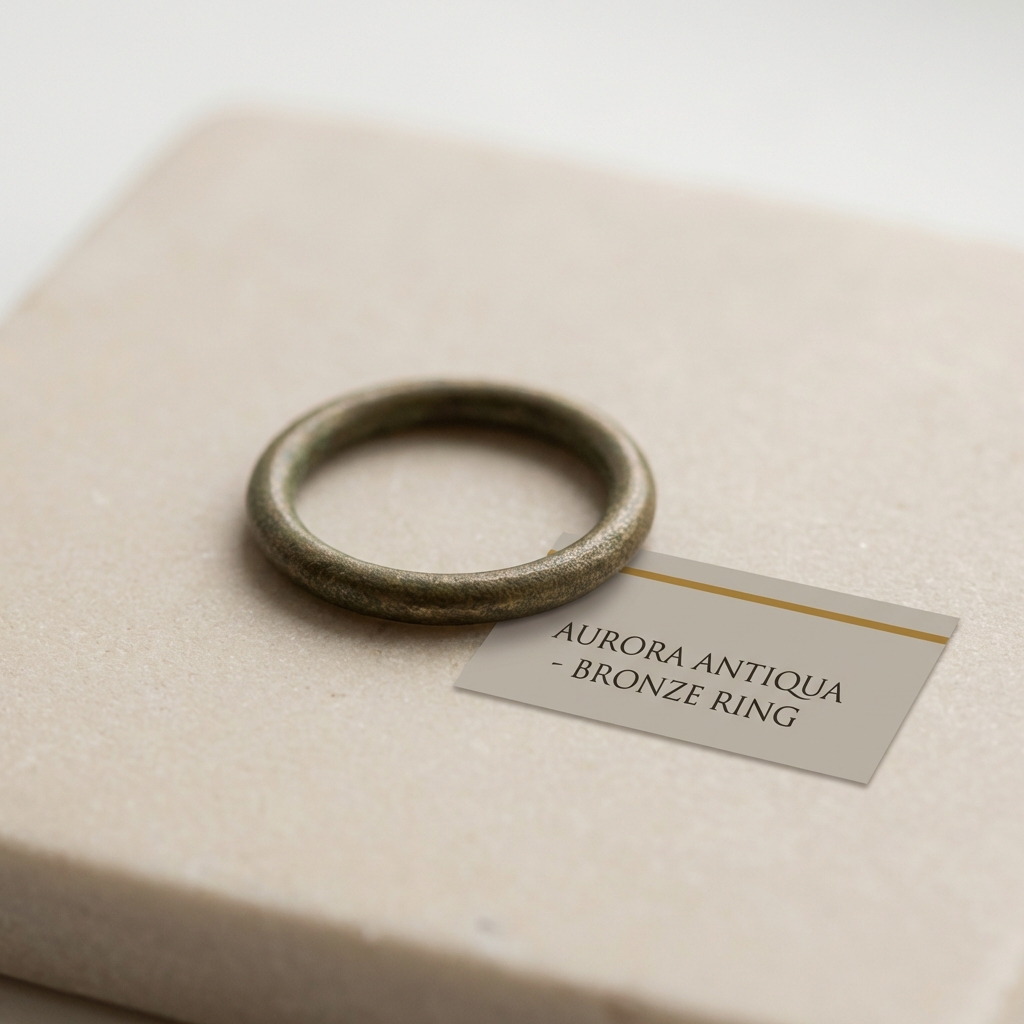
Collections show that bronze rings are common, silver rings appear less frequently and gold examples are comparatively rare, which affects how we judge likely social use and accessibility across different communities British Museum collection.

By contrast, an intaglio ring described with a named motif or inscription and an explicit note about use for sealing should be read primarily as an identity or administrative tool unless other evidence ties it to a marital assemblage Athenian Agora catalogue essay.
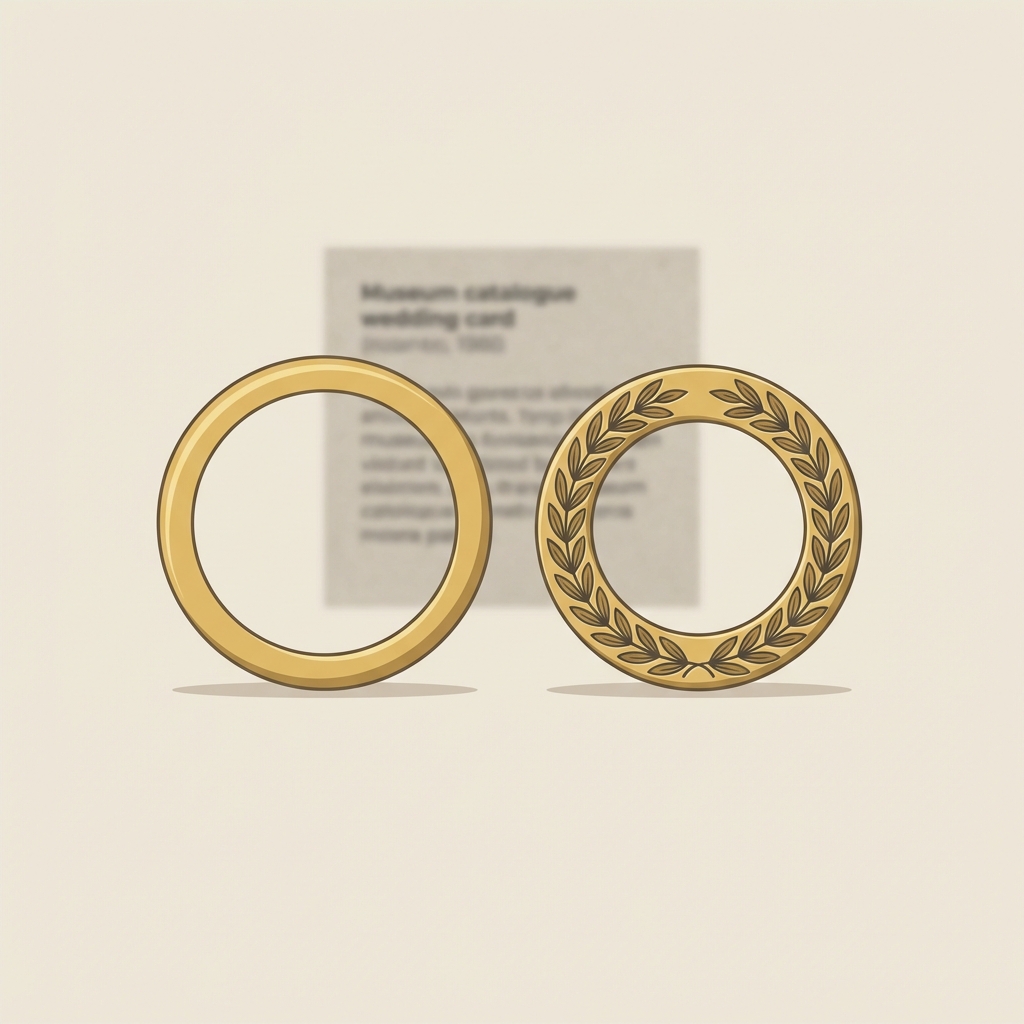
Yes, finger-rings in bronze, silver and occasional gold are well documented in museum catalogues from the Archaic through Hellenistic periods, but their uses were diverse and not limited to marriage.
Intaglio or signet rings often served sealing and identity functions; while they might be part of personal exchange, they are not automatically marriage tokens without corroborating context.
Request museum or excavation catalogue references, high-resolution photos showing patina and wear, detailed restoration notes and any provenance or prior ownership records.
More from Aurora Antiqua
References
- Aulus Gellius, Attic Nights, Book X, LacusCurtius, Bill Thayer, University of Chicago (Loeb Classical Library edition)
- Pliny the Elder, The Natural History, BOOK XXXIII, Perseus Digital Library, Tufts University (edition Bostock)
- Pliny the Elder, The Natural History, BOOK XXXIII, Perseus Digital Library, Tufts University (edition Bostock)
- Internet History Sourcebooks: Medieval Sourcebook, Internet Medieval Sourcebook, Fordham University, New York
- Gimmel Ring, Victoria and Albert Museum, London
- Ring, Victoria and Albert Museum, London
- Aegean and Cypro-Aegean Non-Sphragistic Decorated Gold Finger Rings, American Journal of Archaeology