


Looking for the real thing? Browse authenticated Ancient Roman coins, each piece one of one, individually authenticated, with documented provenance. For the background, see the guide to buying ancient artifacts.
What a real roman coin necklace is and why its value differs from a collector coin
A real roman coin necklace is a genuine ancient coin that has been altered or adapted to be worn, typically by drilling, solder mounting, bezel setting or trimming, and often attached to a hoop or chain. In many listings the seller will note the coin is drilled or mounted and include condition notes and visible patina. When a coin is converted to wearable form it usually moves from the numismatic market toward the wearable artifact market, and that shift affects which buyers are interested and how value is determined.
Modifications such as a drilled suspension hole or a fitted bezel change both the physical structure and the way specialists grade the piece. Drilling removes original metal from the edge, soldering or bezels can obscure peripheral legends or mintmarks, and trimming alters diameter and weight. These changes typically reduce a coin's numismatic grade and therefore its comparative price versus an unmodified example, a pattern noted in recent market analyses of modified coins and wearable pieces Heritage Auctions ancients review.
A real Roman coin made into a necklace usually commands a lower numismatic price than an equivalent unmodified coin because drilling and mounting reduce diagnostic features; to estimate value, cross check metal and weight, visible die features, recent auction comparables for modified examples, and available provenance before seeking professional appraisal.
Buyers should understand the difference between acquiring a wearable heritage object and acquiring a collector coin intended for a cabinet. A wearable piece often prioritises symmetry, stability and comfort, while a collector coin prioritises completeness, original surfaces and legible features. That difference explains why an identical issue in collector grade normally commands a different price than the same coin once converted to a necklace.
How experts assess Roman coins: core criteria you can understand for a real roman coin necklace
Professional grading guides emphasise measurable criteria you can learn to read in condition notes, including weight, diameter, metal composition, die-matching and patina. These features help attribute the coin to a mint and time period and are central to authentication workflows used by grading services and knowledgeable dealers Online Coins of the Roman Empire, American Numismatic Society and Institute for the Study of the Ancient World. For wearable coins these data still matter, even when parts of the edge are removed or when a bezel hides peripheral marks.
a short request checklist for portable XRF or lab results
Request lab headers and instrument model
Die study and portrait identification remain useful even when a coin has been modified, because facial types, clothing folds and reverse motifs often survive drilling and bezel work. Specialists compare visible die features to published corpora to find comparables and to detect mismatches. When noninvasive instrument tests such as portable XRF are available they are widely used by museums and advanced dealers to confirm metal content, but results require numismatic context for interpretation and cannot alone prove die matches or the absence of later surface treatments Combining synchrotron radiation techniques for the analysis of gold coins from, Scientific Reports (see manufacturer guidance and accuracy discussions, and see portable XRF studies on OpenEdition).
Surface appearance can be misleading. Patina, encrustation and tool marks from modern drilling or cleaning can alter visual character, so condition notes should describe where the surface has been stabilised, left untouched, or repaired. A measured weight and diameter, compared with published standards for an issue, provide immediate checks that can reveal trimming or heavy repairs even before specialist input.
Market evidence: what recent auction and dealer results say about a real roman coin necklace
Auction reports from 2024 and 2025 show large dispersion in realised prices across issues and conditions. Common Roman bronzes often sell in the tens to low hundreds of dollars, while well-preserved high-fineness silver or gold pieces can reach thousands to tens of thousands depending on rarity and provenance, a broad pattern illustrated by recent market reports Classical Numismatic Group market report 2024.

These reports also show that coins presented as wearable items typically realise lower prices than comparable unmodified examples when sold to numismatic audiences. Provenance and clear documentation consistently improve marketability and may raise realised prices, whereas undocumented finds often face both legal and buyer confidence questions that can depress value American Numismatic Society guidance on Roman coinage.
For buyers this means recent auction archives are useful to set expectations, but wearable variants of the same issue should generally be compared to other modified or mounted examples rather than to pristine auction lots. Where auction archives list drilled or mounted coins, those lots are the closest comparables for estimating a wearable price.
How converting a coin into a necklace typically affects its price
Conversion almost always reduces numismatic value because it removes or obscures diagnostic features and alters weight. Common modifications include drilling a suspension hole, trimming edges to fit bezels, soldering a jump ring, or setting in a custom metal frame. Each modification changes how a specialist would grade the piece and tends to move buyers toward those who value wearability over collecting completeness. Studies and auction sales note substantial discounts on converted coins versus the same issue in collector grade Heritage Auctions ancients review.
Buyers trade off numismatic completeness for a wearable artifact. That trade off can be desirable when the goal is a conversation piece or wearable history, but it does mean expectations about resale and comparative market value should be conservative. The most important drivers of the discount are how much visible detail was lost, whether the coin was trimmed, and whether original surfaces were damaged by drilling or cleaning.
Step-by-step method to estimate how much a real roman coin necklace might be worth
Start with metal type and weight to set a conservative intrinsic floor. For silver and gold issues market practice treats spot metal prices as a minimum base for high-fineness coins, but the numismatic premium drives most of the final value, so avoid valuing solely by metal content British Museum guidance on coins and metal content.
Next use a quick visual checklist: confirm whether the coin is drilled, note any trimming, check that the portrait and main reverse motif are visible, and record weight and diameter. Then search auction archives for comparables, prioritising lots marked as drilled or mounted when possible. Compare condition notes and provenance to refine your range.
Follow curator updates and find documentation context on @auroraantiqua
Download a simple printable checklist or contact a curator for a documentation review if you need help comparing auction archives and condition notes.
Factor in provenance and documentation as a multiplier on marketability rather than a fixed premium. If a coin has clear auction records, collection history or a verification letter that can be presented, it will generally sell more readily and may attract higher bids than a similar undocumented wearable coin. When in doubt, estimate a conservative range rather than a single price, and document the sources used to reach that range.
When to seek professional authentication or grading for a real roman coin necklace
Third-party services provide structured reporting on attribution, condition descriptions, and often an image-backed certificate. Professional guides stress weight, diameter, metal composition, die-matching and patina as core criteria that grading services assess, and these checks are the reason third-party results increase buyer confidence International Association of Professional Numismatists (IAPN), IBSCC.

Typical tests include measured weight and diameter checks, visual die-study, and instrumental analysis when relevant. Portable XRF can confirm broad metal content and detect modern plating or alloys, but results must be interpreted with numismatic knowledge to avoid false positives. Certification improves marketability but is not infallible, and grading approaches can vary between services.
Costs and turnaround times vary with service and scope. For a wearable coin, evaluate whether the seller will provide existing reports or whether you need a targeted check, for example XRF verification, a specialist attribution, or a full grading submission. Balance the cost against the likely price range of the piece and the value added by clearer documentation.
Red flags and common mistakes buyers make with wearable Roman coins
One common error is over-reliance on spot metal value while ignoring numismatic premiums and the effect of conversion. Metal content sets a minimum intrinsic value for high-fineness pieces but often understates or misrepresents market worth when scarcity, portrait type or historical significance are the main drivers British Museum guidance on coins and metal content.
Accepting provenance claims without paperwork is another frequent mistake. Vague statements about ‘‘old collection’’ or ‘‘found in estate sale’’ provide limited support; buyers should request specific auction records, collection history notes or verification letters. Undocumented finds can raise legal and ethical concerns that depress value and complicate resale Research report: export licensing and provenance, GOV.UK, Department for Culture, Media and Sport (DCMS).
Also watch for aggressive cleaning or polishing that alters patina. Restoration notes should state what was stabilised, repaired or left untouched. If sellers do not provide clear restoration notes and photos, that absence is a practical red flag and should factor into any offer.
How to read documentation and provenance when evaluating a real roman coin necklace
Provenance comes in different forms: prior auction records, collection history notes, or third-party verification letters. The most useful documentation traces a clear chain of custody or an identifiable auction lot number, because these references allow buyers to cross-check realised prices and condition descriptions against archival records CNG market report 2024.
When reviewing documentation ask for specifics: the exact auction house, lot number and date, or a scanned verification letter with contact details. Generic statements without dates or references provide little added marketability. Clear documentation generally improves the speed and level of sale, and it is commonly reflected in realised prices for comparable items.
Practical example scenarios: three buyer profiles and estimated approaches to valuation
Scenario A, the casual buyer, wants a wearable heritage piece. They prioritise clear photos, measurements and readable condition notes, and accept a conservative price range because the piece is for personal wear rather than investment. For this buyer, focus is on comfort, aesthetic, and a simple record of provenance and restoration notes.
Scenario B, the collector, compares auction comparables and prioritises attribution and die matches. This buyer will search archives for similar issues, check realised prices, and may pay more for a documented provenance or a well recorded die link. They will also be sensitive to trimming or drilling that obscures key attributes CNG market report 2024.
Scenario C, the provenance first buyer, seeks documented ownership history. This buyer values collection history and verification letters and will generally pay premiums when those records exist. They will expect clear restoration notes and may request instrumental checks like XRF prior to purchase.
Practical checklist for buying a real roman coin necklace online
Immediate vetting steps: confirm metal and weight, request clear photos showing obverse and reverse in high resolution, ask for diameter and weight, and request restoration and condition notes. If the coin is drilled or trimmed ask for close images of the alteration and for any statements on when and how the modification occurred.
Questions to ask the seller: Has this coin been submitted to a grading service or examined by a specialist? Can you provide prior auction records or collection history? Were any stabilisation or repairs performed and if so what exactly was done? Cross-check recent auction results for comparable drilled or mounted coins before making an offer Heritage Auctions ancients review. Please use our contact page for assistance.
How restoration and preservation notes change value and care for a real roman coin necklace
Restoration terminology matters. ‘‘Stabilised’’ usually implies corrosion removal and consolidation to prevent further loss, while ‘‘repaired’’ or ‘‘reconstructed’’ suggests more invasive work. Exact language in restoration notes helps buyers understand whether a repair altered original surfaces or primarily ensured wearable stability Heritage Auctions ancients review.
Restoration can reduce numismatic value by altering original surfaces, but it can make a piece more suitable as wearable jewelry by improving structural integrity. Buyers should ask for photographic documentation of major repairs and, when possible, a short statement on the materials and methods used during restoration.
Legal and ethical considerations when buying wearable Roman coins
Undocumented finds raise ethical and legal questions that can affect both ownership and value. Laws vary by country and provenance that cannot be traced to a lawful export or recorded collection history can create barriers to sale and future export. Asking for clear collection history or export documentation is a practical step to reduce legal risk Council Regulation (EC) No 116/2009 on the export of cultural goods, EUR-Lex, Publications Office of the European Union.
Prefer sellers who provide transparent documentation and who describe restoration and preservation in detail. Ethical collecting practices include asking for find context, export paperwork when relevant, and avoiding items described only with vague provenance claims. That approach protects both buyer and seller and supports responsible stewardship of antiquities.
How a curated seller like Aurora Antiqua frames wearable ancient coins for buyers
Curated listings typically include condition notes, restoration and preservation details, and editorial context that explains iconography and likely dating. A curator frames a wearable coin as a piece of wearable history, emphasising what is documented and what remains an estimate, for example likely period or workshop attribution described as an estimate rather than a fact.
Aurora Antiqua presents curated ancient rings, select small artifacts and restoration notes alongside provenance references when available, to help buyers understand what they are buying without promising absolute authentication or market performance. This framing is a trust layer and should be read as contextual information rather than a guarantee.
Summary: practical next steps to get a realistic estimate for a real roman coin necklace
Recap the core checks: measure weight and diameter, note metal type, inspect for drilling or trimming, compare visible die portraits with auction archives, and request provenance documents. Use auction comparables that match modified or mounted examples rather than pristine lots when estimating a wearable price CNG market report 2024.
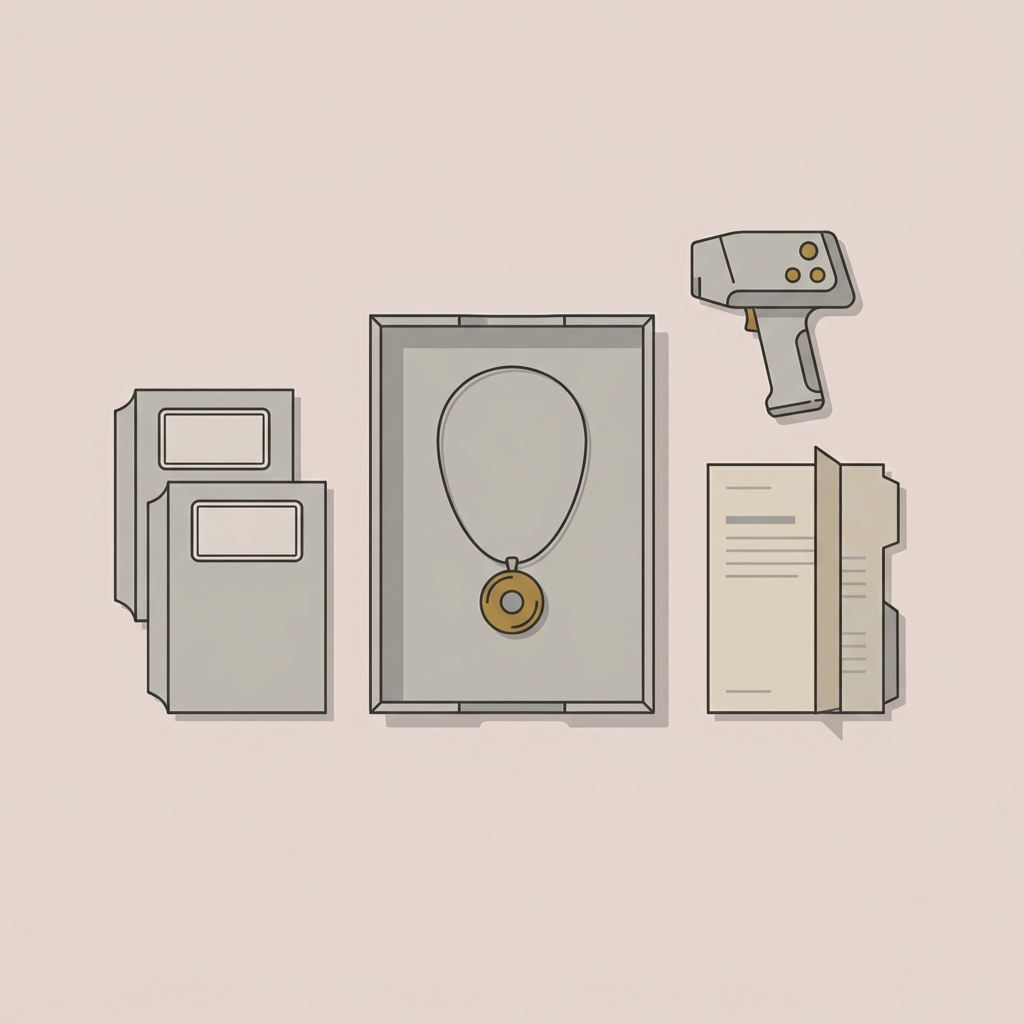
Next steps: request any existing third-party reports, consider targeted instrumental checks like XRF if metal content is material to your estimate, and keep a clear purchase record that includes seller condition and restoration notes. When provenance is weak, take a conservative price view and document your reasoning.
Appendix: resources and how to keep researching prices and comparables
Key reference sites to consult include professional grading guides for ancients, museum collection guidance on coin metal and conservation, and market reports or auction archives for realised prices. These resources help you map an issue type to recent sale results and to spot pricing outliers RPC, Home, Ashmolean Museum, University of Oxford; British Museum Press; Bibliotheque nationale de France.
To track comparables use auction archives and market reports, note lot numbers and realised prices, and set alerts for specific portrait types or issues. Track spot metal prices only as a floor for high-fineness coins, not as the primary determinant of market value British Museum guidance on coins and metal content. Also see our featured collection for curated examples.
Final notes: balancing desire for wearable history with realistic valuation
Before you buy, insist on clear photos, weights and diameters, and readable restoration notes. Keep purchase documentation and provenance information in your records so future buyers or appraisers can see the chain of information. When provenance is weak, be conservative with price expectations and weigh enjoyment of wearable history against resale uncertainty Heritage Auctions ancients review.
For care, avoid harsh cleaners, store the piece with soft padding to avoid abrasion of the coin surface, and consider a short conservator note on stabilisation if the coin shows active corrosion. Insure a valuable wearable under contents or specialized jewelry coverage and retain all seller documentation to support any future claim.
There is no fixed percentage. Converted coins commonly sell for a substantial discount versus the same issue in collector grade because drilling, trimming or mounting alters diagnostic features and reduces numismatic interest.
Portable XRF can confirm metal composition and detect suspicious modern alloys or plating, but it cannot by itself prove die attribution or rule out later surface treatments. Its results must be interpreted with numismatic expertise.
Request clear photos, weight and diameter, detailed restoration and condition notes, and any provenance such as prior auction records, collection history or verification letters.
More from Aurora Antiqua
References
- Online Coins of the Roman Empire, American Numismatic Society and Institute for the Study of the Ancient World
- RPC, Home, Ashmolean Museum, University of Oxford; British Museum Press; Bibliotheque nationale de France
- American Numismatic Society: Silver Quinarius of Augustus, Emerita, 25 BCE
- Combining synchrotron radiation techniques for the analysis of gold coins from, Scientific Reports
- International Association of Professional Numismatists (IAPN), IBSCC
- Research report: export licensing and provenance, GOV.UK, Department for Culture, Media and Sport (DCMS)
- Council Regulation (EC) No 116/2009 on the export of cultural goods, EUR-Lex, Publications Office of the European Union
- Regulation (EU) 2019/880 on the introduction and the import of cultural goods, EUR-Lex (Official Journal L 151/1)
- Gold necklace with coin pendants, Inv. 17.190.1655, The Metropolitan Museum of Art
- journals.openedition.org