


Looking for the real thing? Browse our Medieval ring collection, each piece one of one, individually authenticated, with documented provenance. For the background, see the guide to medieval jewelry.
What is ancient Celtic ring money? Definition and historical context
Term and time range
The phrase ancient celtic ring money refers to a family of metal rings and open hoops that archaeologists and collectors use to describe certain exchange and ornament forms found across Iron Age and later contexts in northwestern Europe, and the term appears in find catalogues and museum records as a typological label rather than a single fixed object type. The Portable Antiquities Scheme and major museum catalogues record ring forms and contextual data that help frame what this label covers, and those records are the starting point for typology-based identification Portable Antiquities Scheme finds database (see PAS report Journal article)
Typologically, ring-money covers a range of shapes, sizes and probable uses, from small closed signet rings to larger open hoops that may have functioned as bullion or currency depending on region and period, and dating is often an estimate tied to form and recorded context. The British Museum's catalogue entries group ring examples by sectional profile, closure type and manufacturing marks, which are the criteria researchers commonly use when assigning a date range to an unprovenanced object British Museum collection (see related discussion JSTOR article)
How archaeologists and collectors use the term
Archaeologists typically use the term to index finds in databases and to link comparable objects from secure contexts, while collectors and dealers use the label more loosely in marketplace descriptions; that difference in precision matters because a match to a typology in a catalogue raises confidence only when supported by secure find information Portable Antiquities Scheme finds database
Limitations of market labels
Market listings often compress typology, date range and provenance into short descriptions that can understate uncertainty, so buyers should treat marketplace labels as starting points for verification rather than conclusive identifications The Past Polluted: A Pigovian Approach to the Black Market in Antiquities, International Journal of Cultural
Unprovenanced market items can also obscure legal and ethical issues around collecting and ownership, so careful vetting of documentation is part of responsible acquisition and stewardship Code of Ethics, International Council of Museums (ICOM), Paris
Why careful identification matters for buyers and collectors
Risks of unprovenanced purchases
Purchasing an unprovenanced ring described as ring-money can carry higher risk because objects without secure excavation or a recorded detector find lack contextual evidence that supports dating and function, and that absence reduces confidence in any typological assignment Portable Antiquities Scheme finds database
Unprovenanced market items can also obscure legal and ethical issues around collecting and ownership, so careful vetting of documentation is part of responsible acquisition and stewardship Code of Ethics, International Council of Museums (ICOM), Paris
Value of documentation and find context
A ring that comes with a find record or clear collection history materially increases the probability that typological dating is accurate because that context ties the object to a stratigraphic or documented find event, which is why national finds schemes and museum catalogue references are high-value evidence when present Portable Antiquities Scheme finds database
Ethical and legal considerations
Collectors should be aware that many national and international guidelines advise caution with undocumented antiquities and encourage reporting suspicious items or unclear provenance to relevant authorities, which both protects cultural heritage and reduces the risk of acquiring illegally excavated material Code of Ethics, International Council of Museums (ICOM), Paris
Visible features to inspect on an ancient Celtic ring money
Hoop cross section and overall profile
One of the first visual checks is the hoop cross section, because sectional shape and overall profile are often diagnostic in typologies; examples catalogued by museums show consistent links between cross section, region and approximate date, so noting whether the hoop is circular, D-shaped, flat or oval is an important comparator for identification British Museum collection
Measure and record the ring's width and thickness across several points to capture the sectional profile rather than relying on a single photo; these simple measurements make it feasible to compare a market listing to catalogue entries and recorded finds and to compare with items in our rings collection Portable Antiquities Scheme finds database
Join type, closure details and manufacturing traces
Examine how the ring closes or joins: ancient joins may show casting seams, hammered or filed joins, and tool marks consistent with period techniques, whereas modern repairs or modern solder at a join can indicate recent intervention; museum typologies describe these manufacturing traces and they are central to matching an object to a recorded type British Museum collection
Look for signs of deliberate filing, hammering or cold folding as opposed to modern machining marks; capturing high-resolution images of the join under raking light helps reveal these traits for later comparison Microscopic and imaging approaches report
Patina, wear patterns and surface stratigraphy
Patina and coherent corrosion layers that match long-term burial environments often appear stratified and variable in colour and texture, and such stratigraphy can be a useful indicator of age when compared to museum examples; homogeneous or artificially induced surface layers are a common forgery signal to watch for Forensic indicators of modern fabrication
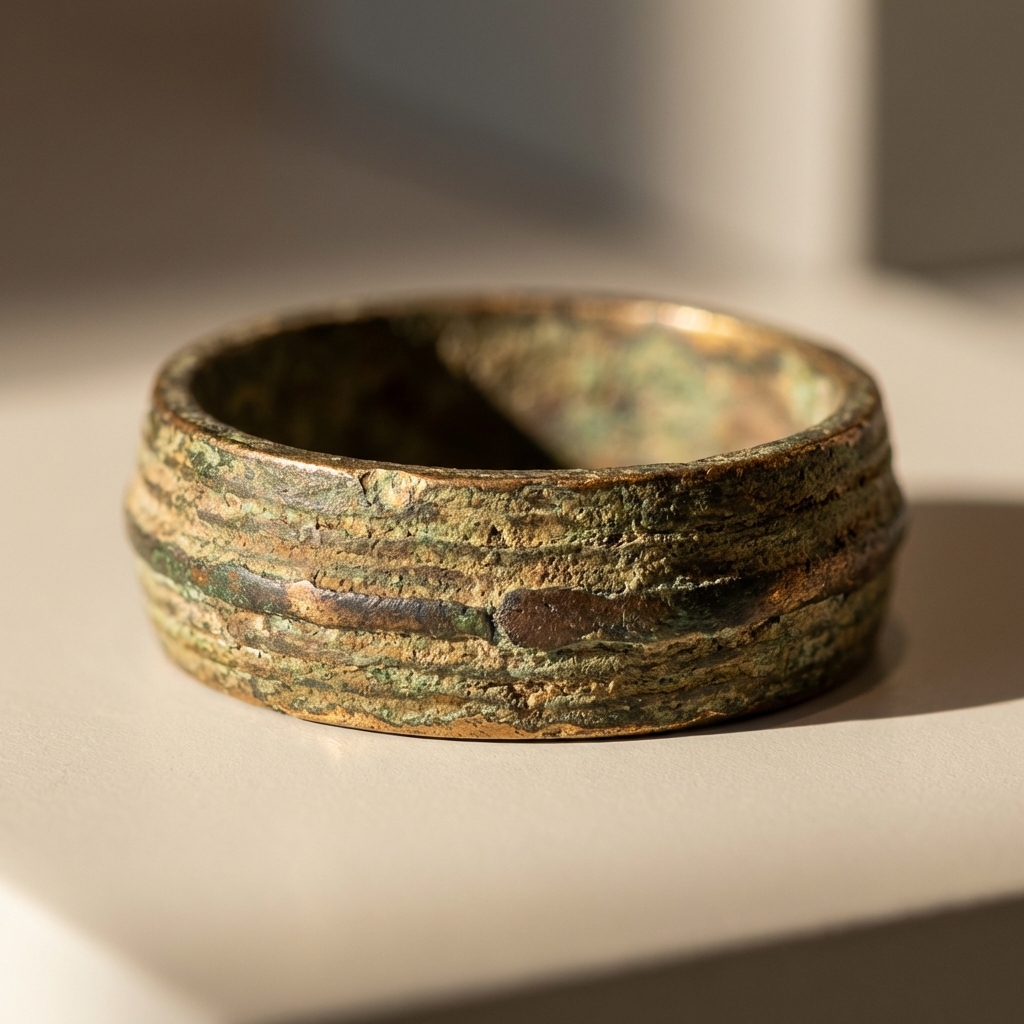
When assessing photos, note micro-wear at edges, interior band surfaces and inside the hoop where handling would typically produce discreet polish and abrasion over long use; these localized wear patterns are often recorded in catalogue condition notes and provide useful comparison points Portable Antiquities Scheme finds database
Using reference databases and typologies: how to match a ring to recorded examples
Searching the Portable Antiquities Scheme and museum catalogues
Start searches in authorative sources such as the Portable Antiquities Scheme and large museum catalogues to find recorded ring examples with images and typological notes, because these databases provide structured entries you can compare against measurements and photos from a listing Portable Antiquities Scheme finds database (see review Cambridge article)
Use sectional profile, join type, diameter and decorative motifs as filters when you search, and save catalog references for any close matches so you can cite them in follow-up enquiries with a seller British Museum collection

Interpreting typological matches and limits
A typological match can raise confidence but does not by itself prove antiquity or provenance, especially for unprovenanced market items; typology must be combined with context, condition notes and, where possible, non-destructive testing to form a reliable assessment Portable Antiquities Scheme finds database
Record both similarities and differences when you compare an item to a catalogue entry, because small deviations in sectional profile, join construction or patina pattern often determine whether a match is close enough to be persuasive British Museum collection
Documenting your comparison
Document the comparison with clear notes: list catalogue record IDs, photo filenames, measurements, and observations about joins and wear so you can present a concise dossier when asking a seller for more information or when consulting a specialist Portable Antiquities Scheme finds database
Saving the catalogue citations and annotated photos is useful both for your own records and for ethical reporting if provenance questions arise later; treat those records as part of responsible collecting practice Object ID, International Council of Museums
Non-destructive testing options: pXRF, microscopy and photogrammetry
What pXRF tells you and its limitations
Portable X-ray fluorescence, or pXRF, is a widely used first-line non-destructive test to determine alloy composition and to flag anachronistic element signatures, but results must be interpreted against calibrated reference datasets and with expert oversight to avoid false conclusions Hallmarking Process, The Company of Goldsmiths of Dublin, The Assay Office (Dublin Castle)
A pXRF report that shows an alloy consistent with regional and period expectations can increase confidence, while an unexpected modern alloy signal typically prompts further laboratory tests or specialist review The Celtic brooch from Westness, Orkney, and hinged-pins, Proceedings of the Society of Antiquaries
Microscopic surface analysis to find tool marks
Microscopy at 50 to 200 times magnification helps detect modern tool marks, retooling, or added surface layers that may not be visible to the naked eye, and microscopic imaging combined with expert interpretation is a recommended step when doubts remain about an object's manufacture or repair history Microscopic and imaging approaches report
Microscopic evidence of consistent historical working techniques supports typological attribution, while cut marks, modern machining traces or inconsistent surface stratigraphy suggest recent intervention and usually require conservation or forensic follow-up Forensic indicators of modern fabrication
Photogrammetry for documentation and measurement
Photogrammetry provides reproducible 3D documentation that captures exact shape, sectional profiles and small surface topography useful for later comparison with catalogue exemplars without physical handling, and it is an increasingly standard approach for recording candidate ring-money objects Microscopic and imaging approaches report
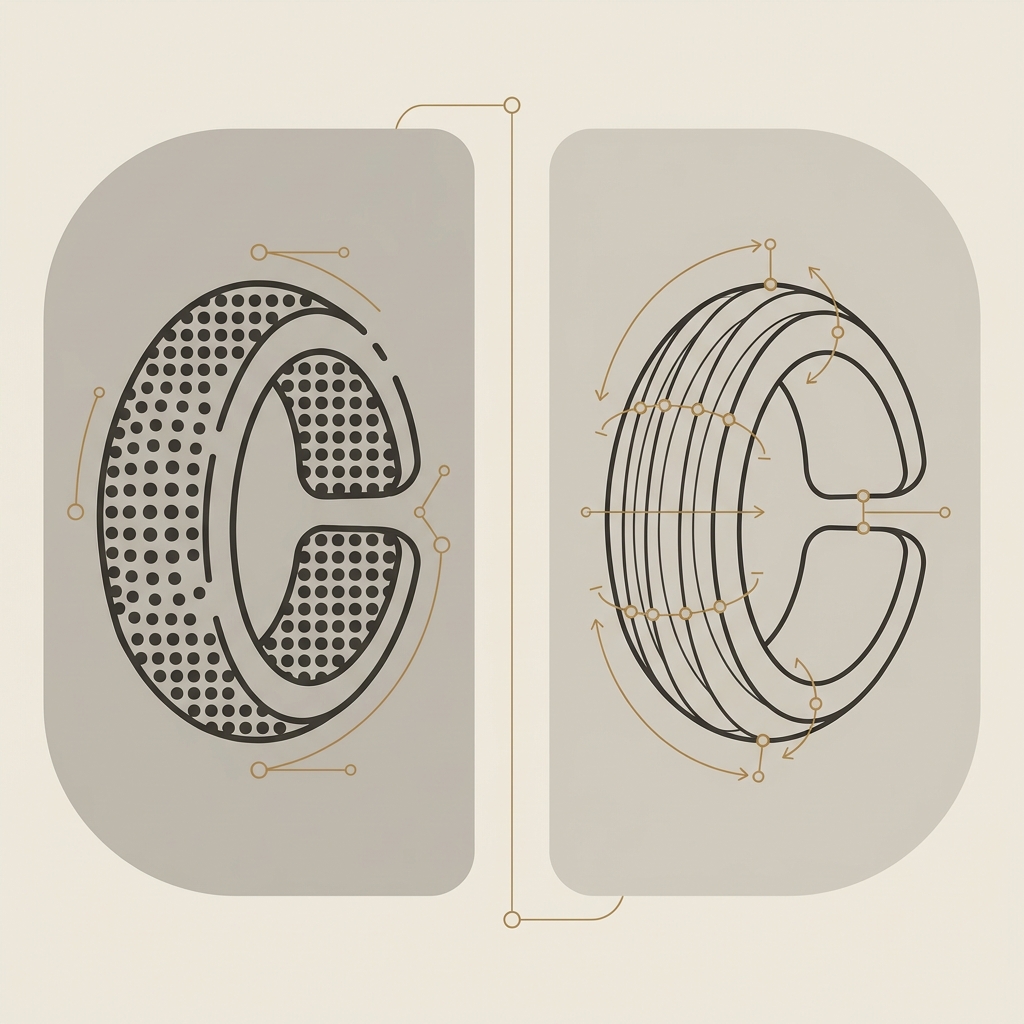
Generate a photogrammetric model when possible and attach it to your dossier so specialists can re-examine proportions and tool-mark topography remotely, which reduces uncertainty when in-person inspection is not feasible Portable Antiquities Scheme finds database
Assessing provenance and find context: what raises or lowers confidence
Excavation records and recorded detector finds
Secure excavation records or finds properly recorded to national schemes materially increase confidence because they provide independent context linking the object to a dateable deposit or findspot, a point emphasized in national find-recording guidance Portable Antiquities Scheme finds database
Recorded detector finds submitted to official schemes carry a different evidentiary weight than anonymous market listings, and entries that include photos, coordinates and finder notes are particularly useful for cross-checking typology and context Portable Antiquities Scheme finds database
request pXRF or microscopy reports when available
ask for operator and calibration details
Documentation to request from a seller
Ask sellers for detailed provenance notes, prior ownership history, any available lab reports, and clear condition and restoration notes, because these documents change the balance of evidence and help specialists assess claims; national guidance recommends this line of enquiry for buyers and institutions Research report: export licensing and provenance, GOV.UK, Department for Culture, Media and Sport (DCMS)
If a seller can supply a pXRF report or high-magnification images, those materials are often decisive in advancing an assessment before considering laboratory sampling or conservation intervention Best practices for non-destructive alloy analysis
How to read provenance statements
Interrogate provenance statements for dates, prior collection references, and any documentation that links the item to a recorded find; vague phrases that lack verifiable citations lower confidence, while named collections and catalogued entries raise it Research report: export licensing and provenance, GOV.UK, Department for Culture, Media and Sport (DCMS)
Aurora Antiqua typically provides condition notes, measurements and any provenance references available with a listing to help buyers understand what is documented and what remains uncertain (Aurora Antiqua)
Common forgery indicators and typical marketplace red flags
Artificial patina and surface homogeny
Artificially induced patina often appears overly even, lacking the micro-stratigraphy and textural variation of long-term burial, and homogeneous corrosion products are a frequent signal that an object has received surface treatment to simulate age Forensic indicators of modern fabrication
When images show uniform colour and texture across areas that would normally weather differently, treat the listing as suspicious and seek microscopic images or a specialist opinion before proceeding Microscopic and imaging approaches report
Modern solder alloys and anachronistic metals
Modern solder at joins and alloy signatures that do not fit the expected regional metallurgy are detectable by pXRF and should prompt further testing, because they often indicate recent repair or fabrication using modern materials Hallmarking Process, The Company of Goldsmiths of Dublin, The Assay Office (Dublin Castle)
Ask for a pXRF reading or a statement about the alloy rather than relying on a seller's general claim about metal type, since instrumental data is more informative than visual judgement alone Hallmarking Process, The Company of Goldsmiths of Dublin, The Assay Office (Dublin Castle)
Tool marks and inconsistent corrosion products
Modern tool marks, machining traces or corrosion products inconsistent with burial conditions are common forgery indicators and are most reliably identified with microscopic imaging and expert interpretation Microscopic and imaging approaches report
If microscopic images reveal clean, parallel machining lines or recent reworking at joins, consider that a strong signal to pause and seek further analysis Forensic indicators of modern fabrication
A step-by-step checklist to assess an ancient Celtic ring money online
Initial visual triage
Step 1: Request several high-resolution photographs showing the hoop profile, the join from multiple angles, close-ups of any decorative detail, and a scale for measurement; include an interior band shot to show wear consistent with use. Record these images and file names for comparison with catalogue entries Portable Antiquities Scheme finds database
Follow @auroraantiqua for behind-the-scenes finds and restoration clips
Download a printable checklist to keep with your research notes and seller communications.
Step 2: Check the Portable Antiquities Scheme and museum catalogues for typological matches using sectional profile and join type; save candidate records and note where the listing differs from each catalogue example British Museum collection or browse our Celtic Rings collection
Documented comparison and simple tests
Step 3: Ask the seller for provenance documentation, condition and restoration notes, and any non-destructive test reports such as pXRF summaries or microscopy images; if those are unavailable, consider the listing high risk and escalate accordingly Research report: export licensing and provenance, GOV.UK, Department for Culture, Media and Sport (DCMS)
Step 4: If a pXRF report is offered, request details about the operator and calibration; a first-line pXRF can flag anachronistic elements and guide whether lab testing is warranted Best practices for non-destructive alloy analysis
When to seek specialist lab follow-up
Step 5: Escalate to specialist lab testing or conservation assessment when typology and provenance are ambiguous, when pXRF returns unexpected alloys, or when microscopic images suggest modern intervention; those follow-up steps are the most reliable path to clarity in difficult cases Forensic indicators of modern fabrication
Step 6: Keep all communications and saved catalogue references, and if provenance remains unclear consider pausing a purchase until an expert opinion or lab report is obtained Portable Antiquities Scheme finds database
Practical examples and short case scenarios
Example A: a well-documented find recorded in PAS
Scenario A: A ring listed with a PAS entry that includes photos, finder notes and a recorded context typically raises confidence because the findspot and cataloguing link the object to a datable context and to typological parallels in museum collections Portable Antiquities Scheme finds database
In such a case, typological match plus recorded context together provide a stronger attribution than typology alone and reduce the need for immediate invasive testing British Museum collection
Example B: a market listing with partial documentation
Scenario B: A market listing that supplies good photos and a partial provenance note but lacks pXRF or microscopy often remains ambiguous; a pXRF that shows an expected copper-alloy composition will increase confidence, while an unexpected alloy signature or microscopic evidence of modern work will lower it The Celtic brooch from Westness, Orkney, and hinged-pins, Proceedings of the Society of Antiquaries
When documentation is partial, saving the seller correspondence and catalogue comparisons helps specialists re-evaluate the record if further testing is performed Object ID, International Council of Museums
How tests shifted the assessment in documented cases
There are documented instances where pXRF or microscopy altered an initial assessment, with pXRF revealing modern alloy elements or microscopy revealing machining marks that were invisible at normal resolution, and those outcomes typically necessitate further forensic work to resolve Forensic indicators of modern fabrication
These examples show that the totality of typology, context and testing determines confidence, and that some market cases remain unresolved without specialist lab follow-up Iron Age, National Museum of Ireland, Dublin
Conclusion: sensible next steps for buying and documenting ring-money
Summary of best practices
Combine typological comparison with provenance evidence and first-line non-destructive testing where possible, and consult specialists when typology and tests give conflicting signals; national finds databases and major museum catalogues are the primary reference points for typology and recorded contexts Portable Antiquities Scheme finds database
When to pause a purchase
Pause a purchase if the listing lacks clear provenance, if microscopic images or pXRF are absent when requested, or if the seller's provenance statements are vague and unverifiable, because those conditions elevate risk and merit further inquiry 1995 Convention, UNIDROIT, International Institute for the Unification of Private Law, Rome
Resources and reporting
Keep detailed comparison notes, save catalogue references and consider reporting any suspected undocumented or illicit material to the appropriate national body; ethical collecting practices protect both buyers and heritage resources Stolen Works of Art Database, INTERPOL
Typology raises confidence but is not definitive by itself; a match to recorded examples is stronger when combined with secure find context and non-destructive testing.
Request a pXRF summary and high-magnification images or photogrammetry; these first-line tools flag anachronistic alloys and surface interventions and guide whether lab follow-up is needed.
Pause the purchase, save all seller communications, compare the item with museum records and consider consulting a specialist or reporting the case to a national finds scheme.
More from Aurora Antiqua
References
- Code of Ethics, International Council of Museums (ICOM), Paris
- Object ID, International Council of Museums
- 1995 Convention, UNIDROIT, International Institute for the Unification of Private Law, Rome
- Stolen Works of Art Database, INTERPOL
- The Past Polluted: A Pigovian Approach to the Black Market in Antiquities, International Journal of Cultural
- Research report: export licensing and provenance, GOV.UK, Department for Culture, Media and Sport (DCMS)
- Hallmarking Process, The Company of Goldsmiths of Dublin, The Assay Office (Dublin Castle)
- The Celtic brooch from Westness, Orkney, and hinged-pins, Proceedings of the Society of Antiquaries
- Iron Age, National Museum of Ireland, Dublin
- Client Challenge, JSTOR