


Looking for the real thing? Browse authenticated ancient rings, each piece one of one, individually authenticated, with documented provenance. For the background, see the guide to buying ancient artifacts.
What is an ancient jade ring? Definition and context
An ancient jade ring is an antiquity in which the primary ornament is carved from a material described as jade and set or worn in a ring form, typically with archaeological or historical context that connects the object to a past period or collection history. An ancient jade ring can be described in catalogues as an artifact when provenance, condition notes and collection history are provided to help place it in time and culture.
The two minerals most commonly called jade are jadeite and nephrite, and distinguishing between them matters because each has different visual traits and material properties that labs and specialists use when identifying pieces, especially in cases where treatment or restoration is suspected, according to recognised gemological guidance GIA jade education.
For collectors, the ring setting, mounts and any conservation work carried out after discovery can change surface appearance and obscure original tool marks or weathering. Clear restoration notes and dates of conservation work help interpret what part of the visible surface is ancient and what was altered or stabilised, which in turn affects confidence in visual identification.
Provenance and documentation materially increase confidence in a piece but do not replace laboratory testing when material identification is important for purchase or display; independent laboratory statements remain the standard for definitive distinction between jadeite and nephrite and for detection of treatments and dyes.
Quick at-home screening checks you can try first
Start with low-risk screening that flags obvious imitations and avoids damaging the ring. A careful first step is a measured heft check: compare the weight of the suspect ring to a known metal or stone ring of similar size. Genuine jade typically feels denser and heavier than plastic or many glass simulants, but this is only a screening cue and can mislead when materials are assembled or coated, so treat the result as provisional Gem-A identification guide.
Follow @auroraantiqua for inspection tips and provenance insights
Download a printable quick check list to take photos and notes during your inspection.
A second simple test is thermal feel: jade tends to feel cool to the touch longer than plastic, and it usually takes more time to warm in the hand. This is a useful quick observation but it is not decisive because glass and some treated stones can behave similarly under casual handling.
The tap or sound test can be informative for whole carved pieces: a clean jade object often produces a clear, bell like tone when struck gently with a non metal tool, but sound varies with size, setting and repairs, so use it only as a preliminary indicator and not as proof of authenticity IGS guide to identifying jade.
Use a 10x loupe or a low power microscope to examine surface grain. Natural jade typically shows interlocking fibrous or granular structure under magnification, and dye concentration often appears as localised colour pools in treated stones. Photograph any grain, dye lines or areas around joins and mounts to share with a specialist if you consult one.
When sharing observations with a seller or specialist, describe what you saw, include scale and lighting notes, and avoid claiming conclusive identification from these at home checks; many treatments and assembled simulants defeat casual inspections.

Reading color, translucency and texture: visual cues explained
Colour patterns, translucency and surface texture are the primary visual screening criteria that major gemological authorities use to separate jade from imitations and to differentiate jadeite from nephrite, but none of these alone is definitive GIA jade education.
Colour in natural jade can range from pale green to deep apple green, and may include zones, mottling or cloudy areas; jadeite often shows brighter, more vivid greens while nephrite tends to present with creamier, more muted tones, yet overlaps are common and lighting can change apparent hue.
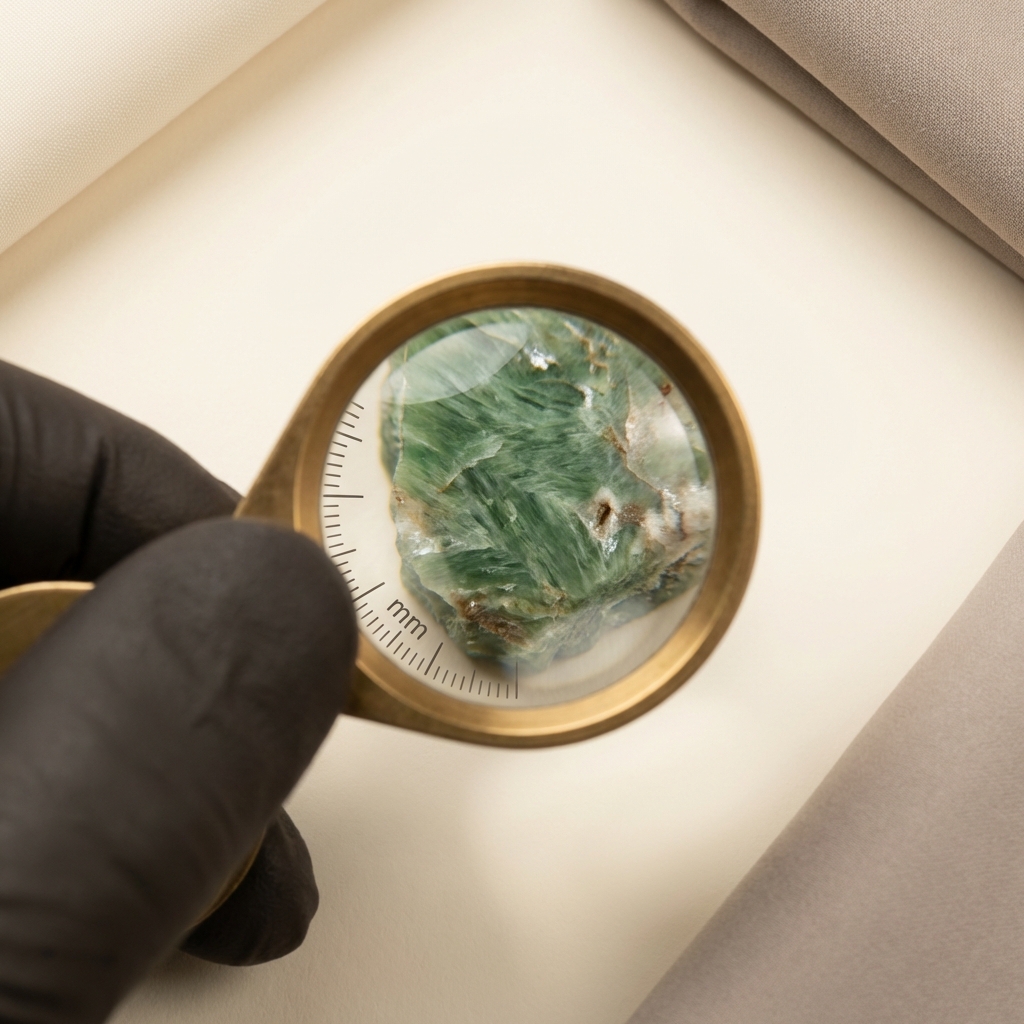
Translucency and light transmission are practical screening features: hold the piece in diffuse light and note whether light penetrates the body or is stopped at the surface. Higher translucency can suggest a fine quality jade item, while very opaque, flat colour can indicate other stones or treated materials when taken together with other cues Gem-A identification guide.
Under magnification natural jade often reveals a fibrous or granular interlocking texture that is hard to reproduce in glass and many plastics. For ancient rings, patina, surface weathering and tool marks associated with age may alter that texture; these age related surface signs can help when combined with provenance and condition notes from the seller.
When to seek laboratory testing and what to ask for
If you need a definitive material identification, when the asking price or historical claim justifies further expense, or when you suspect dyeing or polymer treatment, obtain a report from a recognised gemological laboratory rather than relying on at home tests.
Use careful at home screening and documented condition notes to identify obvious issues and build a case for or against a lab report; when doubts remain about dyeing or polymer treatment, obtain a laboratory report that states mineral type, tests used and treatment status.
Widely recognised authorities in gem testing commonly cited by collectors include established laboratories that publish methodology and credentials; ask the seller which laboratory they recommend and whether any earlier reports exist, then verify the lab credentials independently.
When preparing to send a piece for testing, request explicit report statements that name the material as jadeite or nephrite, state the presence or absence of dye or polymer impregnation, list the tests used, and give the report date and laboratory credentials. If the language is ambiguous about treatment status, arrange further testing or a second opinion, because wording can materially change what the report means for the buyer LMHC Information Sheet 11: Jade and related Materials, Definitions, Laboratory Manual Harmonisation Committee.
Common laboratory techniques useful for jade testing include FTIR and Raman spectroscopy for treatment and material signatures, microscopy for structural detail and inclusions, and other spectroscopic methods that specialists use to confirm mineralogy and detect impregnation or dyeing. Thermo Fisher FT-IR overview.
Provenance, condition and restoration notes: what matters for ancient rings
Provenance and clear condition notes increase confidence in an ancient object by documenting collection history, prior ownership and known interventions, but they do not replace scientific testing for material identification, particularly when treatment is suspected British Museum collection care guides.
Read condition and restoration notes closely. Useful entries specify exactly what was stabilised or repaired, whether consolidants were applied, and who performed any conservation work. Those details help you judge whether surface features are original or the result of later treatment and can indicate whether microscopy or chemical testing is likely to be necessary.
Ask sellers for dated photographs from different angles, any conservator receipts or reports, and the dates of any laboratory tests that accompanied the piece. If a listed object lacks clear documentation or uses vague phrases about treatment, treat that absence as a reason to request further evidence or to seek testing before completing a purchase. Identification of gemstone treatments with Raman
Mounts, backings or added metalwork applied after discovery can mask, press, or abrade the stone surface and sometimes introduce adhesives or consolidants; this is why photos of joins and the stone-metal interface are important when assessing an ancient jade ring.
Common deceptive treatments and how laboratories detect them
Dyeing and polymer impregnation are two of the most frequent treatments used to improve colour and stability in jade and are often invisible to casual inspection; laboratory methods are typically required for reliable detection Identification of Bleached and Polymer-Impregnated Jadeite, Gemological Institute of America (GIA), USA. The Journal of Gemmology, 2009, vol. 31, nos. 5 to 8, Gemmological Association of Great Britain (Gem-A), London
Polymer impregnation can make a porous or weathered stone appear fuller and more translucent, and dyes can concentrate in surface fractures or pores. Both treatments can significantly change how a piece looks while leaving few visible traces without instrument analysis.

Glass, plastic and assembled simulants remain common sources of confusion because they can be coloured, coated or combined with other materials to mimic jade’s appearance under casual lighting; these simulants often fail spectral or microscopic tests that labs perform IGS article on jade identification.
Laboratory techniques map to treatments as follows: FTIR and Raman can reveal organic polymers and dyes, microscopy can show unnatural coatings or assembly lines at joins, and spectroscopic signatures can separate the mineral composition of jadeite and nephrite from glass or plastic fillers Gems & Gemology article on detecting treated jade, see also GIA DiamondView application note.
A step-by-step buying checklist and decision framework
Pre purchase checklist: request high resolution photos and lighting notes, ask for condition and restoration notes, perform the at home screening checks described earlier, and ask whether an independent lab report exists or can be arranged before purchase. Use clear questions and insist on dated documentation when it is available GIA jade education.
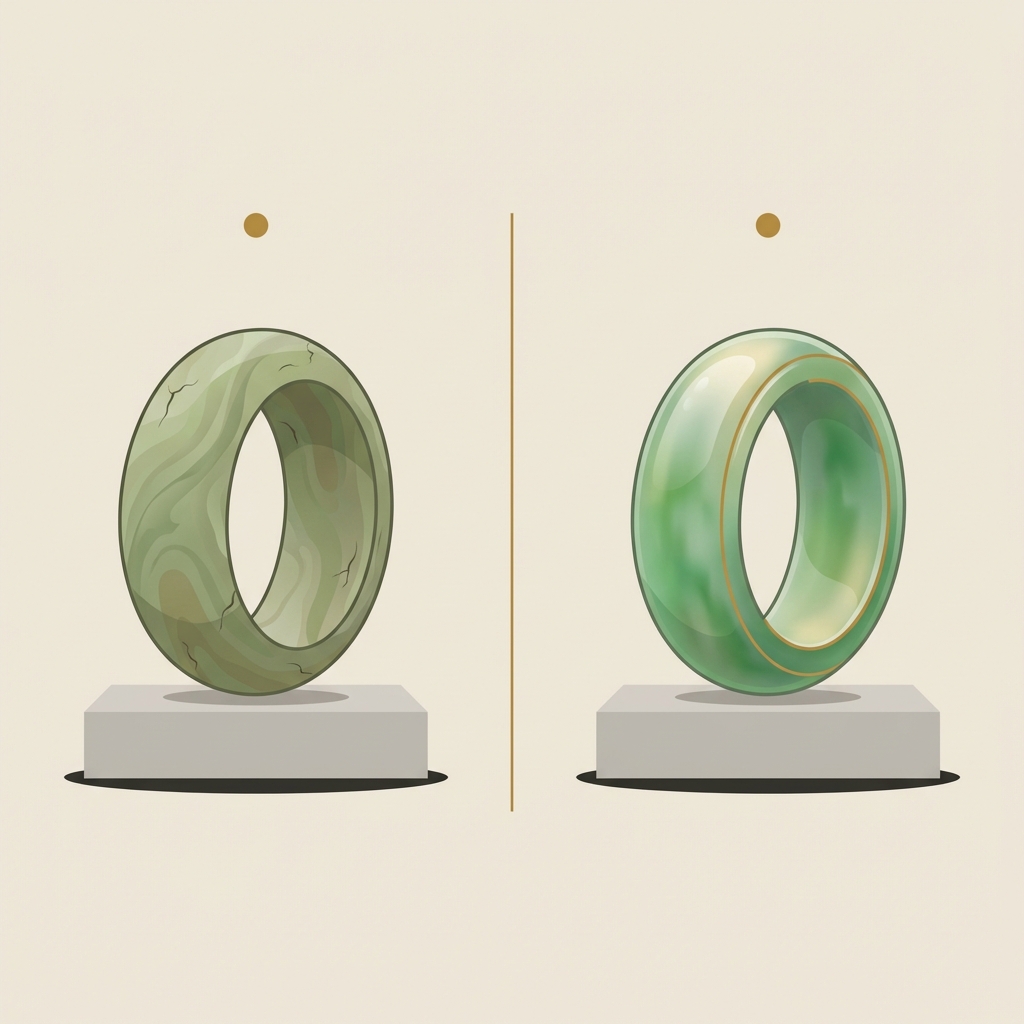
Decision flow: accept purchase as is when documentation is complete, treatments are disclosed, and the price reflects condition; negotiate a conditional price if provenance is good but testing is absent; require a laboratory report before purchase when the price or historical claim makes verification necessary or when tests might reveal concealed treatments.
Red flags to pause a purchase include vague or missing provenance, ambiguous language about treatments, sudden large price differences compared with similar documented items, or reluctance to provide close photographs and conservation receipts. These signs justify asking for more documentation or independent testing.
After purchase: keep all documentation and lab reports with the object, consider a conservator review if restoration work is undocumented, and store the ring with stable humidity and temperature to preserve any patina and prevent later degradation.
Conclusion and next steps: resources, labs and care
At home checks are useful screening tools but laboratory testing is the route to definitive identification of material and to detection of treatments; when in doubt, request a report that names the mineral, states treatment status and lists the methods used GIA jade education.
Aurora Antiqua supports collectors by providing condition notes, restoration summaries and documentation references where available, and encourages buyers to request lab reports when material identification matters for purchase decisions. Use authoritative lab reports together with provenance to form a balanced view of the object.
Compact pre purchase lab request template
Use as a starting template for email requests
Care basics: avoid harsh chemicals, store wrapped in acid free tissue, and keep reports and photographs with the object. Proper documentation and conservative care preserve both the material and the provenance that give an ancient ring its meaning.
At home tests can flag obvious fakes and provide useful photos and observations, but they cannot reliably detect dyeing or polymer treatments; laboratory testing is needed for definitive identification.
Ask the lab to state the material (jadeite or nephrite), presence or absence of dye or polymer impregnation, the tests used, and the report date and laboratory credentials.
Clear provenance increases confidence by documenting ownership and history but it does not replace scientific testing for material and treatment confirmation.
More from Aurora Antiqua
References
- LMHC Information Sheet 11: Jade and related Materials, Definitions, Laboratory Manual Harmonisation Committee
- Identification of Bleached and Polymer-Impregnated Jadeite, Gemological Institute of America (GIA), USA
- The Journal of Gemmology, 2009, vol. 31, nos. 5 to 8, Gemmological Association of Great Britain (Gem-A), London
- The Jade Enigma (Gems & Gemology, Spring 1982), Gemological Institute of America (GIA), USA
- The Gemstone Book, CIBJO Blue Book, Coloured Stone Commission, CIBJO, The World Jewellery Confederation
- 16 CFR Part 23, Guides for the Jewelry, Precious Metals, and Pewter Industries, Federal Trade Commission, eCFR
- Kunststoffe als Imitationen für Edelsteine und organische Substanzen (plastic imitations of gems), Deutsche Gemmologische Gesellschaft
- What Is Jade Gemstone, Gemological Institute of America
- Understanding Jade And Its Importance In China, Gem-A, The Gemmological Association of Great Britain
- International Gem Society, gemsociety.org