


Looking for the real thing? Browse our full ring collection, each piece one of one, individually authenticated, with documented provenance. For the background, see the guide to buying ancient artifacts.
How experts treat claims about the oldest gold ring and why accurate dating matters
When someone asks about the oldest gold ring, it helps to be precise about what is meant by age. Experts distinguish between the date a ring was manufactured, later alterations such as repaired settings or re-mounted gemstones, and reuse of older components in newer work. Understanding those differences matters because a single object can contain elements from several periods, and a manufacturer's date does not always equal the date of last alteration.
No single test gives an absolute age for a gold ring; the best practice is a combined approach that includes hallmark inspection, stylistic assessment, non-destructive alloy analysis, and provenance checks to build confidence in an estimate. Hallmarks and assay marks remain a primary route to date modern and post-medieval gold where statutory systems apply, and they are often the first place experts look for a high-confidence starting point The Goldsmiths' Company hallmark guide.
Collectors and buyers typically worry about three practical things: authenticity, condition, and documentation. Condition notes and restoration records help separate original features from later repairs, and provenance or prior lab reports substantially raise confidence when they exist. When paperwork is thin or a ring shows ambiguous features, professional assessment by a conservator or accredited laboratory is the prudent next step.

Core framework for dating a gold ring: hallmarks, testing, style and provenance
A simple framework helps make a reasoned assessment: first, look for hallmarks and maker marks; second, use non-destructive alloy analysis where available; third, compare stylistic and manufacturing features to known typologies; and fourth, review provenance and prior reports. Combining these pillars typically raises overall confidence beyond any single cue, because each method addresses different questions about an object.
Each pillar has a typical confidence level and role. Hallmarks can provide precise dates in jurisdictions with statutory systems. Portable XRF and spectrometric techniques give compositional data that support or challenge stylistic hypotheses. Visual and manufacturing evidence places a ring within broad periods. Provenance and lab reports bring independent documentary support and due-diligence context. Where doubt remains, targeted sampling by an accredited lab can be considered as a last resort.
A short checklist to guide initial visual and documentary assessment of a ring
Use as a first-pass resource before sending images to a specialist
Use this framework as a stepwise decision aid: a marketplace-level question can often be resolved by careful photographs and hallmark reading, while high-value or ambiguous pieces benefit from portable XRF and documented provenance before any sampling is considered.
Hallmarks and maker marks: the primary route to dating modern and post-medieval rings
Where statutory hallmarking exists, the typical hallmark cluster includes an assay office mark, a fineness or purity mark, a maker's mark, and sometimes a date letter. Each element contributes a different piece of information: fineness indicates metal standard, the assay office anchors the legal jurisdiction, maker's marks point to a workshop, and date letters can give a specific year when the system supports that feature https://www.assayofficelondon.co.uk/hallmarking/what-is-a-hallmark#convention, Goldsmiths' Company Assay Office.
Not all countries or periods used systematic hallmarking, and some older or foreign rings will lack marks entirely. Missing marks do not automatically indicate forgery, but they do remove one high-confidence dating tool and increase the importance of stylistic, compositional and documentary evidence. Where marks are present but faint or altered, a magnified inspection under controlled light can reveal punched letters or traces of original punches that help attribute date ranges.

If you find marks, begin a hallmark lookup with reputable references or an assay office inquiry. For modern British pieces the assay offices maintain searchable resources, and many dealers and conservators will refer a hallmark image to an office or a specialist reference to confirm a reading. When hallmarks point to a specific workshop or date letter, that information is usually among the most direct evidence for a manufacturing timeframe.
Non-destructive alloy testing: portable XRF, what it can show and its limits
Portable X-ray fluorescence, or portable XRF, is widely used by museums and conservation labs as a first-line, non-destructive method to determine near-surface alloy composition and to support dating hypotheses. The technique reports elemental abundances on or near the surface, which can indicate alloy recipes associated with certain periods or manufacturing practices Smithsonian conservation XRF guide and the Getty handheld XRF guide.
Portable XRF is useful because it is non-invasive, fast, and can be taken to the object. However, it measures near-surface composition and can be affected by surface enrichment, plating, or corrosion layers; interpretation requires calibration and an experienced operator. A single XRF read that shows a particular gold-silver-copper mix helps form a hypothesis but should not be the sole basis for a definitive age statement. See also a review of non-destructive elemental analysis for further context.
Use this framework as a stepwise decision aid: a marketplace-level question can often be resolved by careful photographs and hallmark reading, while high-value or ambiguous pieces benefit from portable XRF and documented provenance before any sampling is considered.
Portable XRF is useful because it is non-invasive, fast, and can be taken to the object. However, it measures near-surface composition and can be affected by surface enrichment, plating, or corrosion layers; interpretation requires calibration and an experienced operator. A single XRF read that shows a particular gold-silver-copper mix helps form a hypothesis but should not be the sole basis for a definitive age statement.
See condition notes and testing details at @auroraantiqua
When you examine online listings, review condition notes and documentation before drawing conclusions; clear photos plus reported testing or prior reports help decide whether to request a specialist opinion.
Compared with acid or touchstone testing, portable XRF is non-destructive and provides a wider elemental profile. Acid tests can indicate karat roughly but are partly destructive and less precise, so for valuable or historic pieces most authorities recommend instrumented spectrometry as the preferred route if testing is needed GIA guidance on gold testing.
Interpretive challenges include distinguishing a bulk alloy from a surface-enriched layer or a later plating, and recognizing that different workshops or regions used different alloy recipes. For these reasons, XRF results gain meaning when combined with hallmark data, stylistic assessment, and any available provenance documentation. If conflicting signals remain, an accredited laboratory report can provide more precise, documented analysis. A further discussion of field practice is available in a technical review on portable XRF use.
Stylistic and manufacturing clues: reading band shape, bezel, soldering and setting techniques
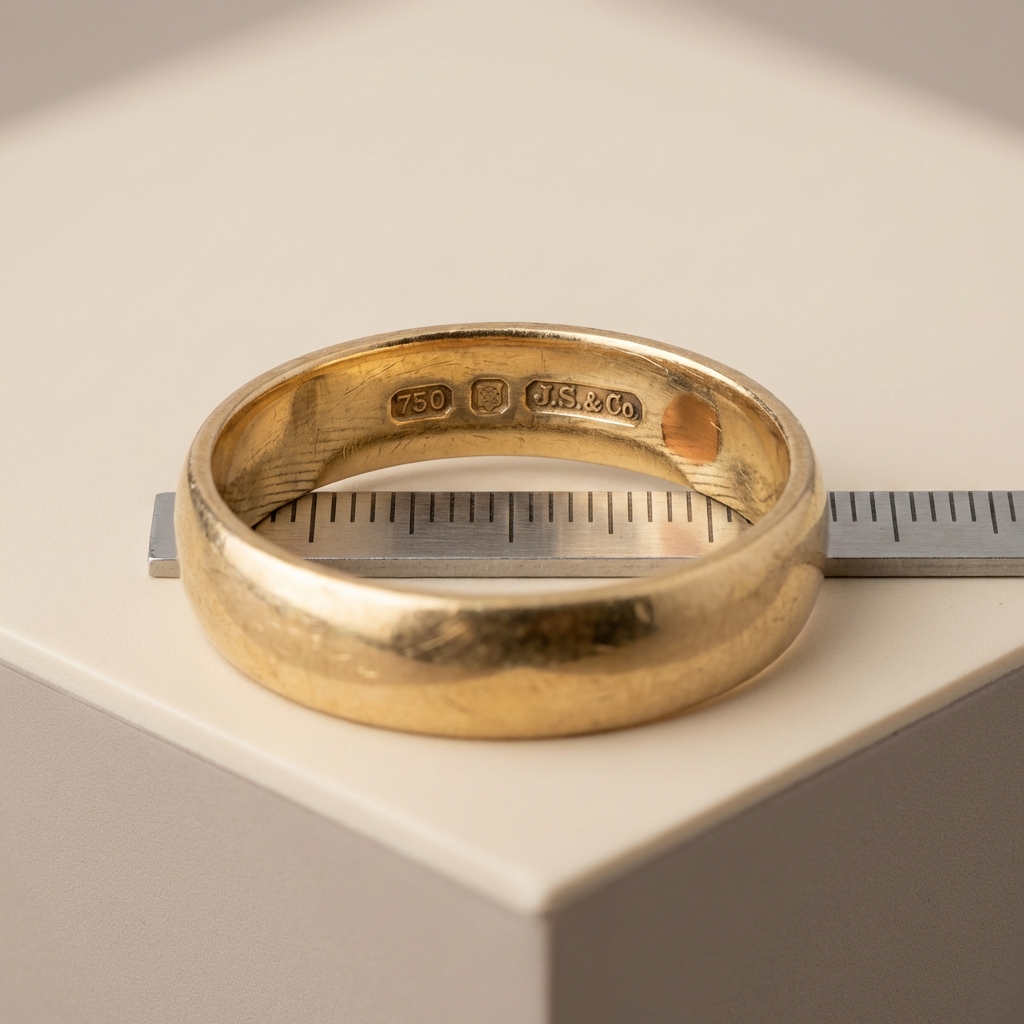
Stylistic and manufacturing features remain a practical way to estimate broad periods for a ring. Inspect hoop cross-section, bezel form, bezel-edge finishing, solder joints, and whether features suggest hand-forged work or later machine production. These clues do not give exact years but often place a ring within an archaeological or historical category such as ancient, medieval, Victorian or modern.
Specific features to inspect include the hoop cross-section, which can indicate structural approaches used by particular workshops; bezel profiles, which differ between intaglio mounts and cabochon settings; solder type and location, which reveal repair practices; and tool marks that indicate hand versus machine finishing. When a ring includes an intaglio or carved gemstone, the carving style and iconography help narrow cultural and chronological windows. For more on the oldest rings see our Q&A on the oldest rings.
Stylistic dating is medium confidence unless it is supported by documented typologies or confirmed parallels from well-dated collections. To make a useful comparison, photograph the ring from multiple angles with a scale, note measurements, and record any visible tool marks so a specialist can compare the object to published typologies or museum examples Smithsonian conservation XRF guide.
Provenance, documentation and prior lab reports: how paperwork raises confidence
Provenance and documentation are central to increasing confidence in an age estimate. Useful provenance elements include a clear collection history, prior ownership notes with dates, invoices or acquisition receipts, and independent laboratory reports that describe testing methods and results. Museums and reputable dealers follow due-diligence practices that weigh these documents heavily when forming a dating opinion Research report: export licensing and provenance, GOV.UK, Department for Culture, Media and Sport (DCMS).
When available, prior lab reports can be read for methods, instrument types, and sampling notes so that a buyer understands what was tested and how definitive the conclusions were. Independent reports that describe non-destructive alloy analysis, microscopy of joins and surfaces, and condition or restoration notes add layers of evidence that can corroborate hallmarks and stylistic assessments.

In many curated listings, condition notes explain whether repairs were stabilised or left as found, and restoration notes clarify what was done. When purchasing from a specialist curator, expect clear documentation about condition and any conservation work, plus provenance descriptions that contextualise how a piece entered the market. See our ancient Roman rings collection for representative listings.
Where documentation is partial or absent, the absence itself is information: it reduces overall confidence and increases the value of independent testing and specialist examination. Buyers should ask sellers for copies of prior reports and for any collection history that can be traced and, where appropriate, request that the item be inspected by a conservator or sent to an accredited lab for formal analysis.
Start with thorough documentation. Photograph the ring from multiple angles with a scale, note measurements, and compile condition and restoration notes. Next, inspect and record any hallmarks; if marks are present, run a hallmark lookup or consult an assay office reference to translate fineness, office marks and date letters. If marks are absent, move to compositional and stylistic checks to form a working hypothesis.
If the ring is not of high monetary or historical value, a marketplace-level assessment using photos, hallmark references and stylistic comparison may be sufficient. For items of significant value or ambiguous features, seek non-destructive alloy testing such as portable XRF and request prior lab reports if they exist. An accredited laboratory report should be considered when results will materially affect provenance claims or legal transfer. For general shopping guidance see our rings collection.
Decision points in this workflow are straightforward: if hallmark and documentation point consistently to a period, you have a likely window; if signals conflict or the ring is high value, escalate to accredited testing. Sampling should be a last resort, conducted only by a qualified laboratory with clear justification and full documentation of methods.
Common pitfalls, limits of current methods and next steps for collectors
Common mistakes include relying on a single cue such as a surface XRF read or a visual likeness to a well-known type, misreading plated surfaces as bulk alloy, or accepting provenance claims without supporting documentation. These errors can lead to mistaken age assignments and misplaced confidence.
Form a reasoned estimate by documenting the piece, inspecting hallmarks, using non-destructive alloy testing when available, comparing stylistic features to known typologies, and reviewing provenance and prior lab reports; escalate to accredited analysis only when uncertainty remains or the item is high value.
Other limits remain in 2026: separating bulk alloy from surface enrichment without sampling can be difficult, and distinguishing early modern high-quality reproductions from authentic older work often requires complementary lab reports or clear provenance. Practically, buyers should prioritise clear photos, condition and restoration notes, and independent analysis when available, and be cautious when documentation is sparse Smithsonian conservation XRF guide.
As next steps, document every purchase, request condition and restoration notes, and keep copies of any prior lab reports. If you plan to buy wearable history, favour sellers who provide detailed provenance and transparent conservation information. When in doubt, seek a conservator or accredited lab to avoid irreversible sampling or conservation choices that could reduce future analytical options.
Hallmarks in jurisdictions with statutory systems are a high-confidence starting point, but not all rings have readable marks; missing or altered marks increase reliance on other methods.
Portable XRF indicates near-surface alloy composition and supports dating hypotheses, but it cannot by itself provide an absolute manufacturing date and requires expert interpretation.
Sampling should be a last resort, done by an accredited laboratory when non-destructive tests and documentation leave important questions unresolved.
More from Aurora Antiqua
References
- https://www.assayofficelondon.co.uk/hallmarking/what-is-a-hallmark#convention, Goldsmiths' Company Assay Office
- Hallmarking, The Goldsmiths' Company, London
- Hallmarking Guidance Notes: practical guidance in relation to the Hallmarking Act 1973, the UK Assay Offices
- Hallmarking Act 1973, The National Archives / legislation.gov.uk, UK
- Gesetz über den Feingehalt der Gold- und Silberwaren (FeinGehG, German law on gold and silver fineness), Bundesministerium der Justiz
- Convention on the Control and Marking of Articles of Precious Metals (Hallmarking Convention), Geneva
- Research report: export licensing and provenance, GOV.UK, Department for Culture, Media and Sport (DCMS)
- About us, International Association of Dealers in Ancient Art
- Handheld XRF In Cultural Heritage: A Practical Workbook for Conservators, The Getty
- shell.cas.usf.edu