


Looking for the real thing? Browse genuine ancient rings for sale, each piece one of one, individually authenticated, with documented provenance. For the background, see the guide to ancient jewelry.
What the phrase oldest gold ring means for value: melt value versus collectible value
When someone asks about an oldest gold ring, it helps to separate two very different value channels. Melt value is an objectively measurable baseline calculated from a ring's weight and the current spot gold price; this is the number you can compute reliably from weight and market data such as the World Gold Council gold prices, and it often serves as a floor for most transactions. World Gold Council gold prices
Collectible value is conditional and can be many times the melt baseline depending on age, rarity, identifiable workshop features, iconography, condition and, crucially, provenance. Specialists and buyers pay premiums when an item can be dated, attributed, and documented, and those premiums come from market demand rather than the metal alone. Auction Terminology, Christie's
See ring investigations and provenance notes on @auroraantiqua
If you have the ring to hand, gather its weight and clear photos before running tests; having those basic records makes later steps faster and gentler for the object.
For legal or insurance certainty a formal, credentialed appraisal is the accepted standard for assigning market value to antique jewellery; an appraisal report typically reconciles both melt and collectible factors to produce a market value opinion. The Appraisal Foundation guidance
It is also possible for an object to have low melt value but meaningful collectible worth, or the reverse. A thin, heavily worn ancient hoop with a secure provenance and a distinctive motif may sell for a premium, while a modern high karat ring with little provenance may only fetch its melt value. Condition and missing documentation can make even a clearly old ring hard to trade, so treat both channels as part of the same decision.
How credentialed appraisers value an oldest gold ring: standards and steps
When you need a reliable market value, seek a credentialed appraiser who follows USPAP for personal property and jewellery. USPAP compliant reports provide a documented opinion of market value and are widely accepted for insurance, legal, and sale purposes. The Appraisal Foundation guidance
Appraisers will ask you to provide basic measurable data such as weight, internal diameter or ring size, measurements of any bezel or gem, and clear photographs from multiple angles. They will also want condition notes that describe structure, wear, patina, and any visible repairs or restorations. Prepare these items in writing to speed the process.
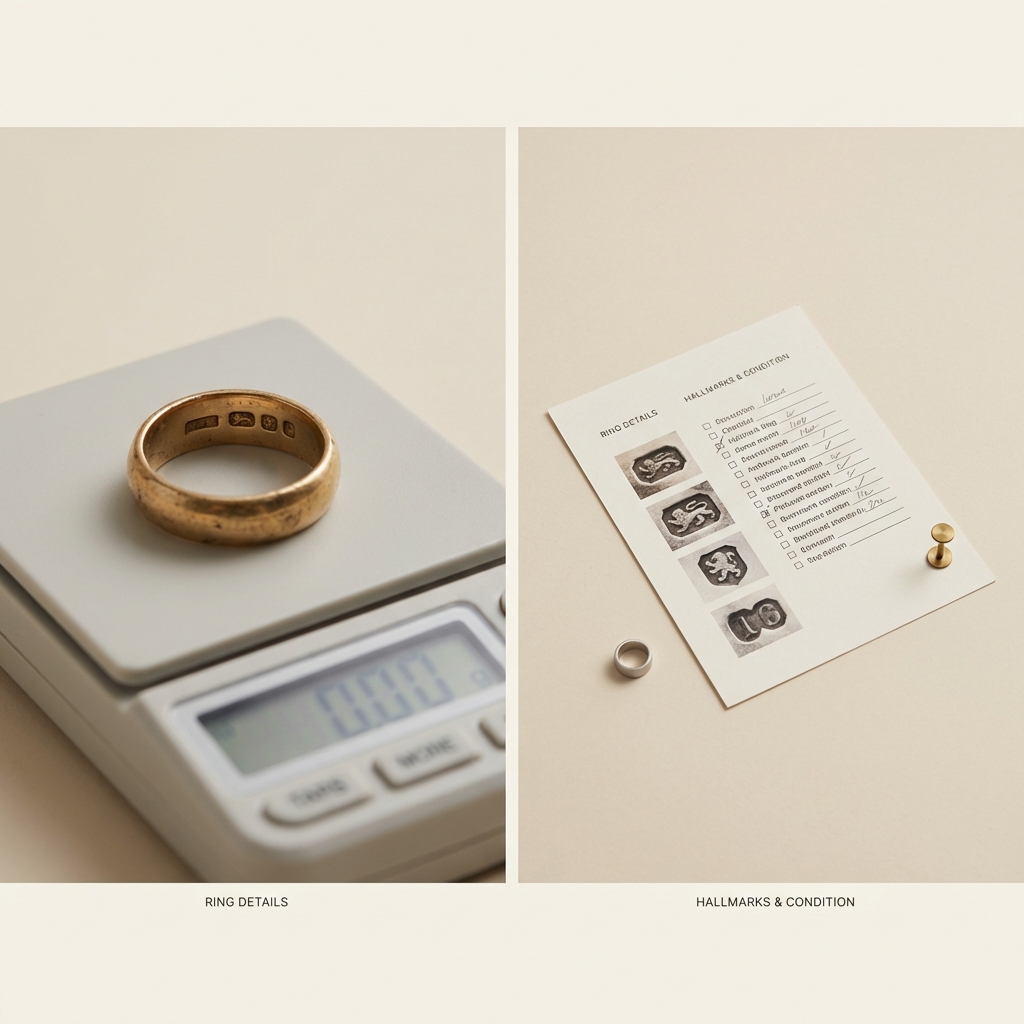
Good documentation makes an appraisal stronger. Relevant documents include any collection history, prior sale receipts, laboratory tests for metal purity, and written restoration or conservation notes. Appraisers use this material to place the piece in market context and to cite comparables, rather than relying only on home tests.
An appraisal differs from a melt calculation. The latter is a mathematical baseline tied to karat and weight, while the former is an evidence based market opinion that may include premiums or discounts for condition, rarity and provenance.
Quick at-home checks for an oldest gold ring and their limits
Start with a careful visual inspection before touching or cleaning the surface. Look for hallmarks, maker's marks, engraved numbers, or stylistic features that may suggest a period or workshop. Record these markings with date stamped photos and notes; documenting these features first preserves evidence for later study. American Society of Appraisers
They can be; melt value is a measurable baseline, and collectible value depends on age, condition, provenance and market demand, so documentation and a credentialed appraisal are the accepted ways to determine market worth.
Basic home screening tests can flag obvious issues but cannot substitute for professional analysis. The magnet test can reveal ferrous solder or base metal cores, and a ceramic scratch can show hardness differences, while acid test kits give a rough karat indication. These methods can help you decide whether to pursue further testing, but they are screening tools rather than definitive answers. GIA testing guide
Do not clean or polish an ancient surface to make marks easier to read. Aggressive cleaning can remove patina, obscure tool marks, or erase maker's punches that are essential to dating and attribution. If you must remove dirt to photograph a mark, use the mildest method and document the pre and post condition carefully. British Museum conservation
Laboratory testing for the oldest gold ring: XRF, fire assay and what results mean
XRF and fire assay are the two standard laboratory approaches for measuring gold purity. XRF is non descriptive and non destructive in the sense that it reads the surface composition and gives a reliable estimate of karat and elemental mix, while fire assay, a more invasive chemical process, remains the benchmark for exact purity measurements when a small sample can be taken. GIA testing guide Additional technical comparisons are available from Thermo Fisher's analysis of portable XRF versus fire assay: Thermo Fisher comparison of XRF and fire assay and from United PMR's discussion: United PMR analysis. See also a practical XRF methods overview: Bowman XRF performance.
Choose XRF when you need a quick, non invasive report that can be included with condition notes; choose fire assay when absolute accuracy of fineness is required and sampling is acceptable. Labs will provide a written report you can attach to an appraisal or a sales listing, and those results are commonly used to calculate the melt value baseline. World Gold Council gold prices
Document any testing clearly. A lab certificate should state who performed the test, the method, date, and the precise results expressed in karat or fineness. Keep that certificate with your photographs, provenance notes and any conservation records to build a full dossier for sale or insurance.
How age, condition, restoration and provenance affect an oldest gold ring's market value
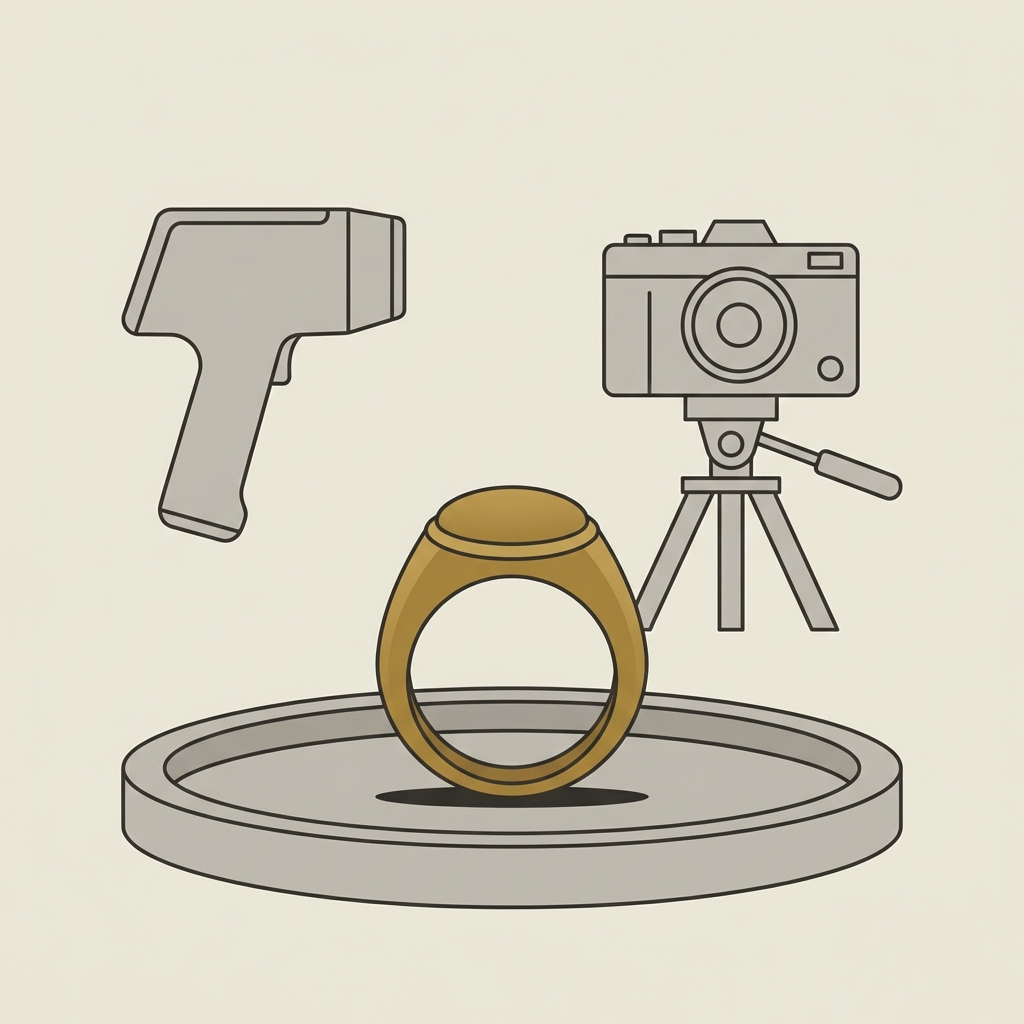
Specialist buyers and auction assessors look for a combination of secure dating, readable iconography, intact structure and a traceable collection history when pricing ancient rings. Clear provenance, such as prior ownership records or sale receipts, can materially increase market confidence and create premiums over melt value. Auction Terminology, Christie's
Restoration and conservation history must be disclosed. Conserved stabilizing interventions can preserve an object for display and wear, but undocumented or aggressive repairs and polishing that remove patina can reduce collector interest and therefore market value. Follow museum conservation best practices when stabilizing an item and record what was done. British Museum conservation
Provenance documentation can take many forms, including written collection history, prior sale records, or letters that support attribution. When those documents exist they help an appraiser or specialist place the ring in a comparative market context and can turn an age statement into a credible selling point. The Appraisal Foundation guidance

Motifs and periods commonly attracting attention include engraved intaglios, clear iconography, and rings linked to identifiable workshops; such attributes may make a piece more desirable to collectors, but desirability remains subject to market demand and documentation. See the ancient Roman rings collection. Sotheby's how auctioneers assess antique jewellery
Common mistakes sellers and buyers make with an oldest gold ring
A frequent error is attempting to clean or polish an ancient surface to make it look newer. Removing patina or surface accretions can destroy evidence used for dating and may lower collectible value. If you want marks to be legible for study, photograph first and then use non invasive gentle cleaning only. British Museum conservation
Relying solely on home tests for valuation is another common mistake. Screening tests have value for triage but should not be presented as conclusive proof of purity, period or market value. For sale or insurance, a credentialed appraisal and, when necessary, lab testing are the accepted next steps. The Appraisal Foundation guidance
Failing to record provenance or restoration history also reduces buyer trust. Keep receipts, prior auction or sale notes, photographs over time, and any correspondence that documents the object’s history; this material can shift buyer perception and support an asking price.
Quick corrective steps include stopping further cleaning, photographing the ring from all angles, noting any marks or damages, and contacting a specialist appraiser to discuss next steps. Early restraint preserves options.
Practical checklist: selling, insuring or keeping an oldest gold ring
Prepare a dossier before you seek a sale or insurance value. Include high resolution photographs, weight and measurements, clear images of hallmarks or maker's marks, written condition notes, any lab test reports, and any provenance documents you have. These items form the core packet an appraiser or buyer will request. American Society of Appraisers
Record weight accurately using a digital scale that measures to at least 0.01 gram and note the measurement units used-grams or troy ounces. Accurate weight is necessary to compute a gold melt baseline and to compare with any karat test results. World Gold Council gold prices
Record key physical and documentary data for appraisal
Use a measured digital scale for accuracy
When selling, disclose restoration and conservation history in writing and include any lab certificates. For insurance, obtain a USPAP style written appraisal and keep copies of both appraisal and the lab reports. If you plan to keep the ring for personal reasons, store it in stable humidity and avoid household cleaning agents that can leave residues.
Consider your sale channel carefully. Specialist dealers and auction specialists can place historical pieces with appropriate buyers, but whatever channel you choose, provide the dossier and expect buyers to request independent verification before completing a purchase. Start at our rings collection. Aurora Antiqua rings collection
Conclusion: realistic expectations for whether an oldest gold ring is worth anything
Use melt value as a transparent baseline and treat collectible premiums as conditional on evidence: provenance, condition and market demand determine whether a ring surpasses metal value. Basic lab tests and careful documentation help bridge the two value channels and make appraisals more reliable. World Gold Council gold prices
For money, legal or insurance certainty obtain a USPAP compliant appraisal from a credentialed appraiser; for a sale, gather weight, photos, hallmarks, conservation notes and any provenance documents first. These steps protect both seller and buyer and clarify expectations. The Appraisal Foundation guidance
Stop cleaning, document everything, consider lab testing if karat is unclear, and then commission a formal appraisal. Those steps provide a defensible route to answer whether a particular oldest gold ring is worth anything in the market.
Melt value is the metal worth based on weight and spot price, while collectible value reflects age, rarity, condition and provenance and may exceed melt value.
Use lab testing when home screening is inconclusive or when you need a documented purity report for appraisal, sale or insurance.
Avoid aggressive cleaning; removing patina or maker's marks can harm attribution and reduce collectible value.
More from Aurora Antiqua
References
- Auction Terminology, Christie's
- Publication 561 (12/2025), Determining the Value of Donated Property, Internal Revenue Service (IRS), USA
- Treasure Act 1996, The National Archives, legislation.gov.uk
- Treasure Valuation Committee, GOV.UK, Department for Culture, Media and Sport (GOV.UK)
- Getty Provenance Index, J. Paul Getty Trust, Getty Research Institute, Los Angeles
- Hallmarking Guidance Notes: practical guidance in relation to the Hallmarking Act 1973, the UK Assay Offices
- 16 CFR 23.3, Misrepresentation as to gold content, Federal Trade Commission, eCFR
- Pliny the Elder, The Natural History, BOOK XXXIII, Perseus Digital Library, Tufts University (edition Bostock)