


Looking for the real thing? Browse our full ring collection, each piece one of one, individually authenticated, with documented provenance. For the background, see the guide to ancient jewelry.
What "roman ring 916" means: hallmark, purity and dating
The phrase roman ring 916 is often used by sellers and collectors to describe a ring that carries a 916 numeric mark, and that mark primarily speaks to metal purity rather than age or origin.
In modern hallmarking a 916 stamp indicates 22 carat gold, or about 91.6 percent pure gold, and serves as a millesimal fineness mark rather than a dating label, so the number alone does not prove antiquity Gemological Institute of America guidance on gold purity.
Collectors should note that hallmarking systems use numeric or millesimal fineness to show composition, which helps buyers and assay offices compare alloys across markets, but these systems do not encode when an item was made or by whom BIS hallmarking and standards overview.
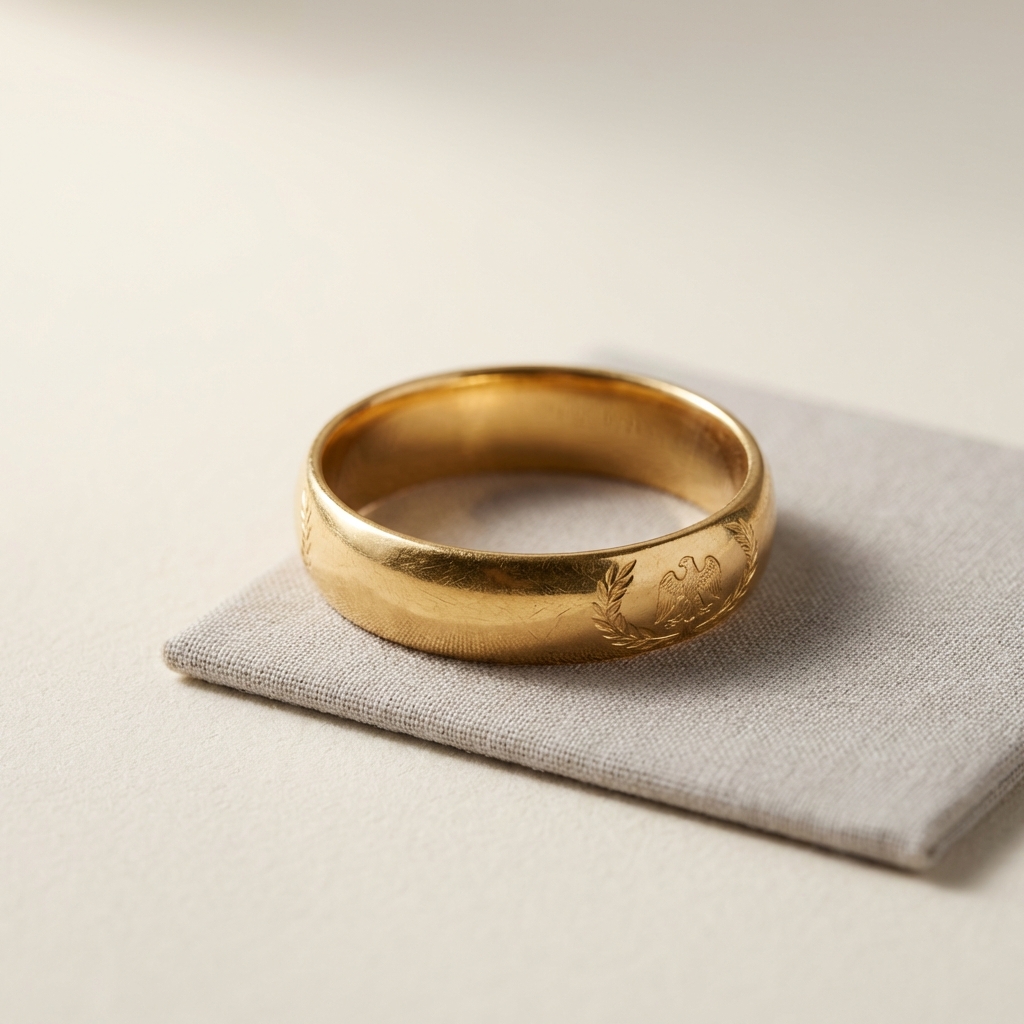
A 916 stamp found on a ring described as Roman can mean various things: the ring may be genuinely ancient and later restamped, it may have had modern repairs, or the marking may have been added in a later period to meet local trade rules; the presence of a modern-looking 916 hallmark should not be taken as definitive proof of a Roman origin without supporting provenance and specialist verification How auction houses assess antique jewellery.
How experts test a roman ring 916 without damaging it
When preservation matters, non-destructive methods should be the first step for a roman ring 916; XRF analysis provides a reliable alloy readout without sampling, making it the recommended approach for collectors who want accurate composition while keeping the object intact XRF for jewellery analysis. For local XRF testing options see FastXRF.
@auroraantiqua insights and assay tips
For pieces you value as artifacts, consider a photo documented condition review and an XRF check by a trusted lab to balance preservation with accuracy.
Simple field checks can help triage whether to pursue professional testing: visual hallmark inspection, magnet tests for ferrous inclusions, and handheld electronic testers or acid spot tests can offer preliminary information, but each has limitations in accuracy and interpretation Practical guidance on testing and valuation steps. For high-performance XRF assays and assay descriptions see Bowman XRF.
If a ring shows signs of significant restoration, reworking, or an unexpected alloy, escalate to a professional assay or a conservation consultation before agreeing to any sale or invasive testing; specialists can also advise whether small surface samples are necessary for definitive laboratory assays XRF technical application note.
Calculating the melt value of a 916 gold ring
You can calculate a theoretical melt or scrap value for a 22 carat stamped ring using a simple formula: melt value equals the item weight in grams times the spot gold price per gram times 0.916 to adjust for 91.6 percent purity, with the result representing a gross metal floor rather than a likely payout.
When preparing that calculation, use a reputable spot price source and convert troy ounce quotations to a gram basis if needed; market services that publish live spot rates are standard inputs for these computations LBMA price and market data.
Real world payouts are usually lower than theoretical melt because buyers deduct seller margins, refining fees, assay costs and regional taxes, so the cash offer from a local buyer or refinery will commonly be a fraction of the computed melt figure Guide to melt and dealer deductions.
Follow stepwise practice when you compute melt value: weigh the ring accurately on a jewellery scale, find the current spot price on a market reference, apply the 0.916 purity factor and then estimate common deductions so you understand the likely net rather than the gross number Valuation workflow.
Why a roman ring 916 can be worth more than its gold content
For collectors, the value of an antiquity often depends far more on provenance, condition notes and craftsmanship than on metal content, because historical context and documented collection history can create substantial premiums above melt value How provenance and condition affect pricing. For related reading see our Roman Empire blog.
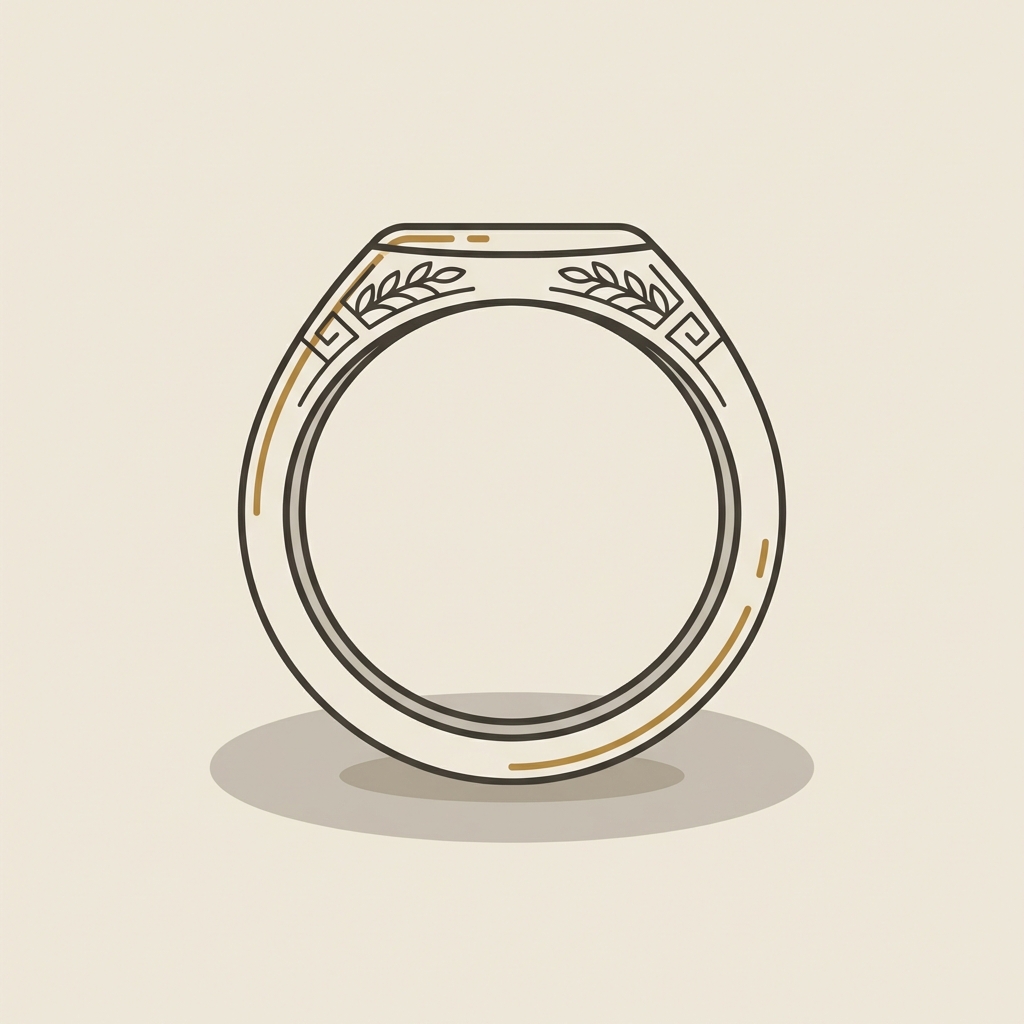
Condition notes and visible patina frequently inform buyer perception and market positioning; documented restoration history that explains what was stabilized or repaired will also shape how specialist buyers and conservators assess desirability Auction house guidance on condition and restoration.
what an XRF report typically contains and how to read it
Ask for a photo referenced report
When cataloguing or preparing a sale, specialists use comparables, catalogue entries and prior auction results to estimate the premium that provenance and rarity may add, meaning that two visually similar rings with different documented histories can sell for very different sums Using comparables in valuation.
Red flags: common mistakes when valuing or buying a roman ring 916
A frequent error is to assume a 916 stamp proves Roman origin; millesimal marks indicate purity and can be modern additions or evidence of later metalwork, so treat hallmark readings as one data point to be tested against provenance and physical examination GIA on karat and fineness marks.
Another common mistake is overlooking restoration and modern soldering, which can change both the intrinsic alloy proportions and the collectible appeal; undocumented repairs can reduce marketability and should be recorded in condition notes before any sale Condition and restoration considerations.
To limit risk, photograph hallmarks and the interior hoop, note any solder lines and replaceable elements, and seek a specialist opinion if the ring has unusual iconography or an intaglio that could warrant further provenance inquiry Practical seller precautions.
Practical steps to sell or keep a roman ring 916
Start with a short seller checklist: weigh the ring precisely, create photo documented provenance notes, list visible condition and any restoration notes, and decide whether the piece is primarily a metal sale or a collector object before seeking offers Checklist for calculating melt and preparing documentation.
Obtain an XRF or lab assay when alloy composition is uncertain or when you expect collector interest, because a readout showing 91.6 percent gold supports a 22 carat purity claim while leaving open questions about later reworking that only a provenance review can resolve XRF analysis reference.

Compare the theoretical melt floor with recent auction or dealer comparables to decide whether to pursue a specialist sale channel; if documentation and condition point to collectible value, auction or curated dealer sale may reach premiums that a plain metal sale will not Why comparables and provenance matter. See comparable listings in our ancient Roman rings collection.
When choosing a sales route, consider costs and audience: local buyers or refiners prioritize melt and convenience, private sales may favor confidentiality but require buyer diligence, and specialist auctions or curated dealers typically serve collectors willing to pay for provenance and condition notes Market channel tradeoffs. Browse related items in our rings collection.
Case scenarios: valuation paths for different roman ring 916 examples
Scenario 1, low documentation: a worn ring with a 916 stamp, visible repairs and no collection history will often follow a melt dominated path where local offers reflect metal content less common auction premiums, so the immediate action is to weigh, document and consider local appraisal options Melt first approach.
Recommended short actions for a low documentation case include stabilizing fragile elements, photographing hallmark regions and the intaglio if present, and obtaining at least a preliminary electronic or acid test before committing to an irreversible decision Testing escalation guidance. For field and lab options see Xcalibur XRF services.
Scenario 2, well documented: a ring with collection history, photographic provenance and an XRF report confirming alloy composition is more likely to be treated as a collector piece, and the seller should gather comparables and consider specialist sale channels that reach historically minded buyers How documented pieces are marketed.
For a well documented piece, immediate actions include securing a condition statement, requesting targeted photographs for catalogue use, and asking a conservator or an independent expert to confirm any restoration notes before listing with a specialist dealer or auction outlet Preparing documented pieces.
Summary and next steps: is a roman ring 916 worth anything? a concise checklist
Short answer in practical terms: a 916 mark denotes 22 carat purity and provides a calculable melt floor, but whether a roman ring 916 is worth more depends on provenance, condition notes and specialist valuation, which often determine collector premiums.
Immediate checklist: weigh the ring, photograph hallmarks and intaglio, gather any provenance or collection history, consider an XRF or lab assay for alloy confirmation, and compare melt calculations with recent comparables before choosing a sales channel Practical next steps for sellers. See an example listing of a museum-grade Roman ring in our store when preparing documentation.
The 916 mark indicates 22 carat purity and gives a calculable melt floor, but whether a Roman ring is worth more depends on provenance, condition, and specialist valuation.
When in doubt about age or unusual features, consult a conservator or an experienced specialist who can provide a documented condition statement and advise whether further laboratory testing is warranted Conservation and testing advice.
A 916 stamp indicates 22 carat gold or approximately 91.6 percent purity; it is a purity mark and does not by itself prove the age or origin of the ring.
You can run preliminary checks at home such as visual hallmark inspection, magnet tests and electronic testers, but these are not definitive; XRF or professional assays are recommended for accurate results and preservation.
Decide after weighing the piece, documenting provenance and condition, and obtaining an alloy report if needed; if provenance and condition suggest collector interest, seek specialist channels, otherwise a metal sale may be appropriate.
More from Aurora Antiqua
References
- 16 CFR 23.3, Misrepresentation as to gold content, Federal Trade Commission, eCFR
- https://www.assayofficelondon.co.uk/hallmarking/what-is-a-hallmark#convention, Goldsmiths' Company Assay Office
- Hallmarking Guidance Notes: practical guidance in relation to the Hallmarking Act 1973, the UK Assay Offices
- Hallmarking Act 1973, The National Archives / legislation.gov.uk, UK
- Hallmarking, The Assay Office Birmingham
- Hallmarking in the UK: consumer protection, GOV.UK, British Hallmarking Council / GOV.UK
- Auction Terminology, Christie's
- Publication 561 (12/2025), Determining the Value of Donated Property, Internal Revenue Service (IRS), USA
- HALLMARKING, Bureau of Indian Standards, bis.gov.in