


Looking for the real thing? Browse authenticated ancient rings, each piece one of one, individually authenticated, with documented provenance. For the background, see the guide to ancient jewelry.
What a faun motif communicates and why it suits a ring
Brief definition of a faun/satyr motif
A faun motif usually depicts a half-human, half-goat figure associated with rustic nature, revelry and mythic stories from Greek and Roman tradition; as a compact symbol it can convey playfulness, wildness or pastoral association depending on style and posture, and it often appears in classical visual vocabularies that collectors recognise.
Using a faun on a small wearable surface such as a ring can work well because its distinctive outline and key attributes, like the horns, pointed ears or a fluting staff, read clearly at reduced scale when simplified, making it suitable for bezels, shoulders or small intaglio scenes.
A short decision checklist to pick bezel or shoulder engraving
Use finger distance to test readability
Why small-scale wearable surfaces suit mythological imagery
Mythological figures translate effectively to rings because they offer a compact set of recognisable features that can be stylised without losing meaning, which helps a motif like a faun remain legible on curved metal or a carved stone bezel.
For readers aiming for a historically grounded design, consult documented collection images rather than relying on vague memory, since museum catalogues preserve variations that influence whether a faun looks youthful and playful or more naturalistic, and that distinction matters for how the motif will be perceived on a ring Metropolitan Museum of Art collection entries (see our Ancient Greek Rings collection).
Fauns and satyrs appear across media in the classical world, from painted pottery to small bronzes and carved gems; these contexts show a range of poses and iconographic detail that are useful when choosing a reference for a ring design. You can also view a comparable example in our catalog Sylvanus Roman bronze ring.
Museum catalogues and collection overviews document both humorous, dancing representations and more relaxed, naturalistic portrayals, and those differences will affect whether you choose a lively, dynamic composition or a single-profile head for an engraved bezel Metropolitan Museum of Art collection entries
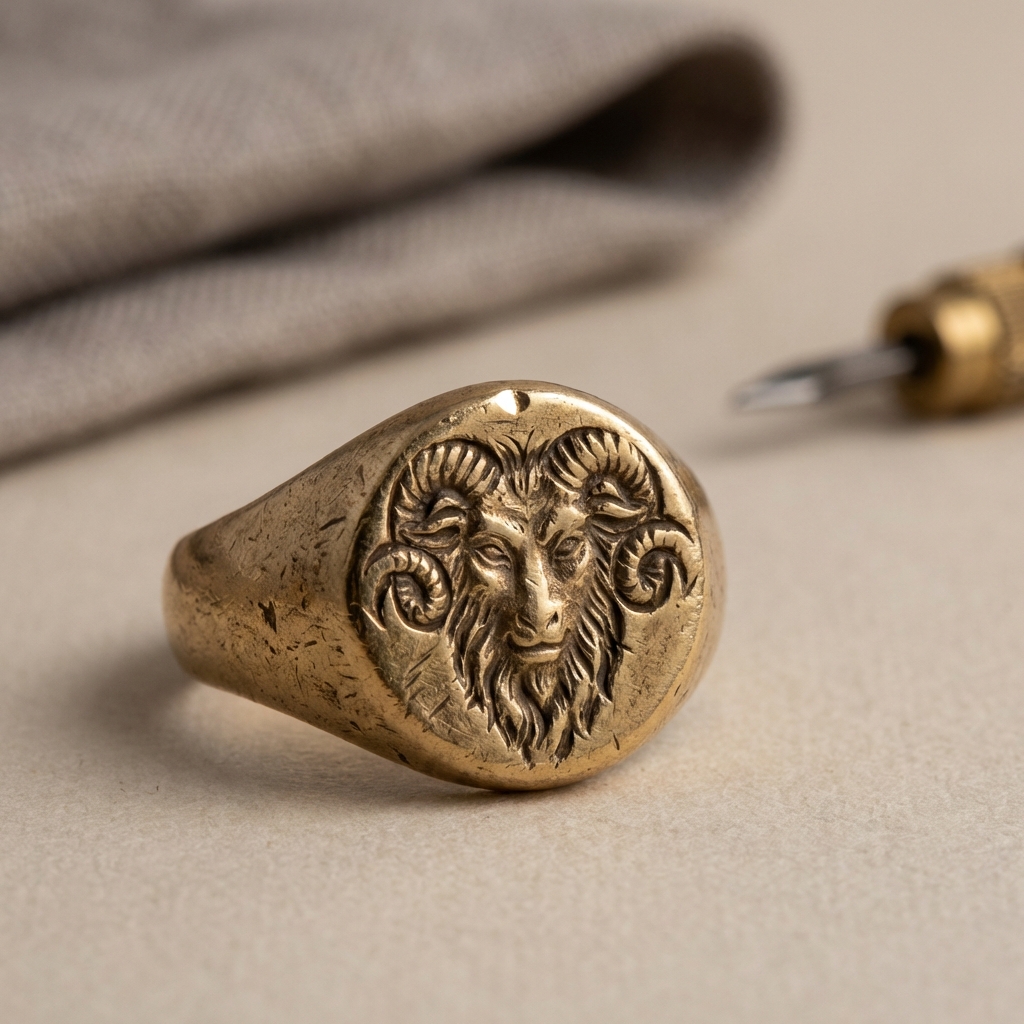
Pottery silhouettes tend to simplify detail, which can be a helpful template for high-contrast engraving, while small bronzes and engraved gems may preserve subtler modelling and posture that suit intaglio work for a bezel.
When using a historical image for inspiration, treat any suggested dating or attribution as provisional and compare the chosen model to authoritative entries rather than asserting a specific workshop or date without documentation Metropolitan Museum of Art collection entries
Translating a faun motif to ring geometry: placement, scale and composition
Choosing bezel versus shoulders versus intaglio for a faun engraved ring
Bezel engraving concentrates the scene where it is most visible, shoulders wrap a motif into the hoop and intaglio requires carving into a gem surface; each option changes how much detail can be shown and how the motif reads at arm's length.
For bezels, prioritize a clear silhouette and strong negative space so the faun reads against the background; shoulders allow narrative extension but reduce the central image size; intaglio supports depth but requires a different set of skills and viewing habits.
Match the desired finish to the material and the motif: choose hand engraving for textured, historically sympathetic results, laser engraving for precision and repeatability on hard alloys, and gemstone intaglio when a carved stone focal point is preferred, and always request proofs and confirm metal or stone suitability.
When reviewing proofs, check simplified composites of the motif at actual bezel dimensions and on a mock-up photo of the ring to confirm that horns, face and other identifiers remain legible after reduction.
Scale, negative space and readability on finger
Small-scale engraving benefits from decisive choices about which details to keep and which to omit; a reduced scene with a clear contour often reads better than an unresolved miniature packed with ornament.
Remember that finger curvature and ring size affect perceived proportions, so request mock-ups or magnified proofs and test them against the actual hoop width and bezel height before approving deep or highly detailed work.
The choice of metal or gemstone significantly influences technique and finish because different materials respond to engraving and to subsequent conservation in different ways; for example, bronze, silver and gold each show cuts and patina differently and that will alter contrast and legibility Applied Surface Science review on metal marking

If you are considering an antique metal ring, consult the listing's restoration notes and condition remarks before commissioning any alteration, and confirm metal thickness so that an engraver can set appropriate depth limits without compromising structural integrity.
Gold generally accepts very fine detail when tool or laser settings are correct, silver can react with some laser parameters and show darkening, and bronze may patinate in ways that make shallow cuts appear higher contrast; selecting technique should follow a discussion of how the chosen metal will finish.
When a gemstone bezel is on the table, consider traditional intaglio stones such as carnelian, agate and jasper, which have longstanding use in carved scenes and offer different surface qualities that affect how a faun design will appear once carved GIA overview of intaglio and cameo techniques
Hand engraving with a graver produces depth, visible tool marks and a textured finish that often reads as historically sympathetic on an ancient or period-inspired ring, and the tactile quality is difficult to reproduce exactly with a machine Ganoksin guide to hand engraving
Commissioning a hand engraved faun motif should start with a clear request for sketches or a hand-drawn proof, a statement of intended depth and surface finish, and confirmation of metal thickness so the engraver can set safe cutting limits; these steps help avoid surprises after work begins Trotec commissioning guidance
See behind-the-scenes at @auroraantiqua
Download a short commissioning checklist or contact a vetted engraver if you want a one-page brief to adapt for your maker
Hand engraving is often preferable when a project seeks period-appropriate texture or visible tool character, for example when matching a historic patina or when an uneven, lively line gives the motif a sense of age and presence.
What hand engraving produces: depth, tool marks and texture
Traditional graver work produces varied line width and surface relief, which adds shadow and tactile interest to a faun motif and supports a more authentic looking finish than uniform machine lines.
Commissioning a hand engraver: proofs, depth, and finish
Ask a hand engraver for a close-up photo of a proof and a depth spec in tenths of a millimetre or a practical description of cut depth, and agree on how the final surface will be finished so contrast and patina remain consistent with the intended look Ganoksin guide to hand engraving
Laser engraving is a reliable way to produce microtext, precise line work and repeatable motifs across multiple items, which is useful for symmetrical shoulder scenes or repeated signet runs, but it requires specific parameter checks to avoid heat-related discoloration and to control contrast Epilog Laser technical guide and an overview of different engraving methods is available Hand Engraving & Laser Engraving 101.
Before commissioning laser work, request the machine parameters or a test mark, confirm acceptable file formats and discuss post-engraving finishing so that any heat patina is managed and the final look meets expectations.
What lasers do well: microtext, repeatability and hard alloys
Lasers excel on hard alloys and for micro-engraving where uniformity is essential, and they can render very fine decorative lines that would be time consuming to cut by hand.
Tradeoffs: heat effects, contrast control and file preparation
A key tradeoff is that laser energy can change surface colour or bring up oxides on softer metals, so confirm whether a sample or test strip is possible and discuss how a conservatively chosen finish will help preserve the intended contrast Applied Surface Science review on laser marking
Gemstone intaglio and inlay for faun designs
Intaglio carving on a gem is a different craft from metal engraving: it demands lapidary skills, different tools and an understanding of how light passes through or reflects from the chosen stone, so commissioning intaglio should start by checking examples of previous carved work GIA overview of intaglio and cameo techniques and a practical discussion of carving approaches is offered in industry writing The Art of Intaglio Carving.

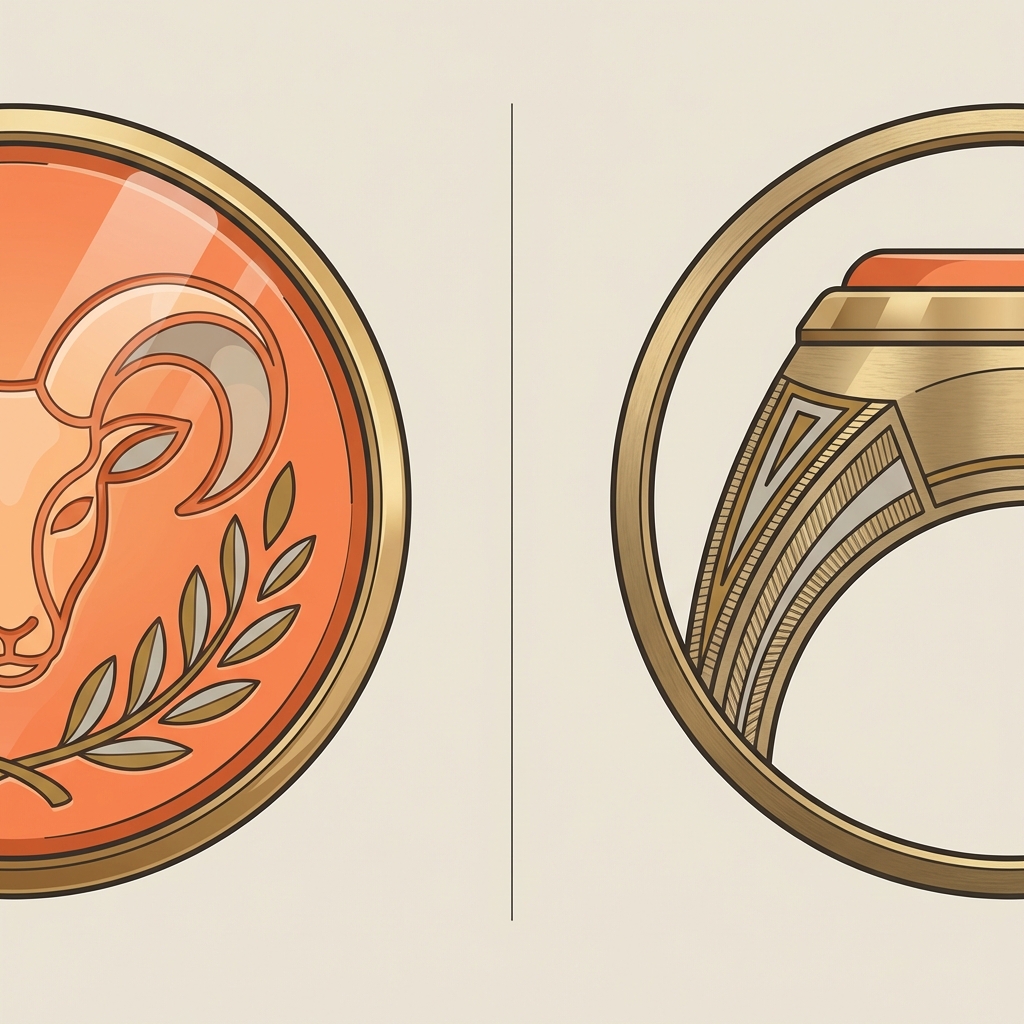
Include a brief template in your message to the maker specifying scale, preferred aesthetic and a request for magnified mock-ups; this saves revision rounds and helps align expectations on period-authentic texture versus contemporary crispness.
What to ask your maker before work begins
Ask for a timeline of work, photos of previous similar projects, a written confirmation of safe depth limits and a short note on how the piece will be finished and conserved after engraving.
What to ask your maker before work begins
Copy-ready items to send: desired motif reference image, bezel size in millimetres, ring size, preferred look (period-authentic or modern), and request for a proof photograph under magnification.
Legal, ethical and attribution considerations when using classical motifs
When adapting classical imagery, avoid definitive dating or provenance claims without documentary support and use museum catalogue comparisons for serious attribution because visual similarity alone is not sufficient to date or attribute a motif reliably Metropolitan Museum of Art collection entries
Be mindful that some motifs may have cultural sensitivities or restrictions and that altering an authentic antiquity raises separate ethical and conservation questions best handled with professional advice and clear restoration notes.
When a motif needs careful attribution or cultural sensitivity
If you plan to present a piece with historical claims, document the chain of ownership and any third party reports rather than relying on visual resemblance, and state dating as an estimate when formal documentation is absent.
Typical mistakes and how to avoid them
Common mistakes include over-detailing scenes that lose clarity at ring scale, neglecting metal thickness checks, not requesting proofs and mismatching technique to material; these issues often create costly revisions or disappointing legibility after work is done Ganoksin guide to hand engraving
Finishing errors, such as aggressive polishing that removes shadow in fine cuts or inappropriate laser energy that alters a silver surface, can reduce contrast; agree on conservative finishing steps and request magnified images of the final mark where possible.
Design and technical pitfalls
Do not assume that a detailed museum image will reproduce cleanly at bezel scale; simplify before approving and favour strong contours and negative space for clarity.
Post-engraving finishing and care missteps
Avoid cleaning routines that strip patina or abrasive polishes that blur engraved edges; when in doubt, consult a conservator or the maker about safe maintenance.
Design scenarios: three practical faun ring concepts
Scenario 1, minimalist bezel intaglio for everyday wear: a small carnelian intaglio roughly 8 by 6 millimetres carved with a single-profile faun head, set in a low bezel on a medium-width hoop; intaglio carving and low-set mount make it suitable for daily wear and offer a warm, restrained aesthetic GIA intaglio guidance (see also Berganza on intaglio history).
Scenario 2, textured hand-engraved signet inspired by a museum example: a flat signet surface with a hand-cut faun profile, shallow relief lines, visible tool texture and a lightly oxidised finish to enhance shadow; request a hand engraving proof and a conservative finish to preserve tool marks Ganoksin guide to hand engraving
Scenario 3, laser-engraved shoulder scene paired with smooth bezel: use laser micro-engraving to create a repeating shepherding scene on the shoulders and a plain polished bezel with a single small faun motif, ensuring test marks confirm no unwanted discoloration on the chosen alloy Epilog Laser technical guide
Minimalist bezel intaglio for everyday wear
This option favours a compact portrait and low profile for practical wear; prefer traditional stones and an experienced lapidary for the carving.
Textured hand-engraved signet inspired by a museum example
Choose hand engraving when you want visible tool character and a period sympathetic surface; ask for comparative photos with scale bars.
Laser-engraved detailed shoulder scene paired with a smooth bezel
Laser work is appropriate for tight, repeatable shoulder patterns but verify parameters and request post-process cleaning that preserves metal colour.
Caring for an engraved faun ring: preservation and simple maintenance
Routine care should prioritize gentle cleaning and patina preservation: use mild soap and water, soft brushes and avoid aggressive polishes that can flatten fine cuts and reduce contrast in engraved areas Silver and plate, Icon, The Institute of Conservation (UK)
For antique or conserved pieces, consult restoration notes before any intervention, and seek a professional conservator if there is structural concern or loose mounts rather than attempting household repairs.
Routine care to preserve patina and engraved detail
Store rings separately, avoid ultrasonic cleaners for fragile intaglio settings and keep a dated set of condition photos to document any change after cleaning or repair.
When to seek professional conservation or polishing
If corrosion, active degradation or previous repairs are present, ask for a conservator's opinion and record any treatment as an update to the condition and restoration notes.
Conclusion: choosing the right approach for your faun-themed ring
Map the desired aesthetic to material and technique: pick hand engraving for textured, period sympathetic work, laser engraving for precision and repeatability, and intaglio for a carved, gem-based focal point; confirm proofs and metal or stone suitability before work begins Trotec commissioning guidance (see our rings collection).
When sourcing or adapting historical motifs, use museum catalogues or documented comparanda and keep any mention of dating or provenance clearly qualified; for buyers of curated antiquities, expert curation and clear documentation help set expectations about condition and any prior restoration.
Hand engraving produces visible tool marks, varied line depth and a textured finish, while laser engraving offers precise, repeatable fine lines and microtext; choice depends on desired texture, material and the need for repeatability.
Yes. A faun can be carved as an intaglio on stones like carnelian, agate or jasper, but intaglio requires a trained lapidary and different commissioning steps than metal engraving.
Altering an antiquity raises ethical and conservation issues; consult condition and restoration notes, and seek professional conservation advice rather than making changes without documentation.
More from Aurora Antiqua
References
- Art & Architecture Thesaurus Full Record Display (Getty Research)
- Amnon Rosenfeld, Michael Dvorachek, Shua Amorai-Stark, Elsevier, Journal of Archaeological Science
- Getty Museum Acquires Collection of Ancient Engraved Gems, J. Paul Getty Museum, Los Angeles
- Catalogue of the Engraved Gems and Finger-Rings in the Ashmolean Museum, II: Roman, BAR Publishing, via Fulcrum
- Gemstones from Roman Britain: Recorded in the Portable Antiquities Scheme, University Debrecen, Hungary
- Silver and plate, Icon, The Institute of Conservation (UK)
- How to Care For Your Jewellery: The Ultimate Guide by the National Association