


Looking for the real thing? Browse genuine ancient rings for sale, each piece one of one, individually authenticated, with documented provenance. For the background, see the guide to ancient jewelry.
What a faun engraved ring is and why engraving matters
Defining the motif and typical periods
A faun engraved ring is an ancient or historic ring that bears a faun motif, usually rendered as a low-relief intaglio or carved bezel depicting a mythical half-human, half-goat figure typical of certain Roman, Hellenistic and later revival workshops. Dating such a ring is often an estimate and should be tied to any available provenance or documentation rather than assumed from motif alone, and if you own or consider buying one it helps to read condition notes carefully for clues about age and interventions. See a related example in our catalog: Sylvanus Roman bronze ring.
Collectors pay attention to engraving on these rings because the mark can serve three separate roles: evidence that supports attribution, an element of surface integrity such as patina that contributes to condition notes, and a signal that changes buyer perception of originality. Auction house guidance emphasizes that inscriptions and marks are treated differently depending on their origin and placement, which in turn affects market interest and attribution; see Christie's research on inscriptions for context Christie’s research on inscriptions.
It depends: original maker marks or period inscriptions can aid attribution and sometimes add value if well documented, while modern personalization and deep mechanical engraving that disturbs patina typically reduce buyer interest; always document and seek conservator and appraiser advice before altering a historically significant piece.
Why any engraving changes collecting considerations
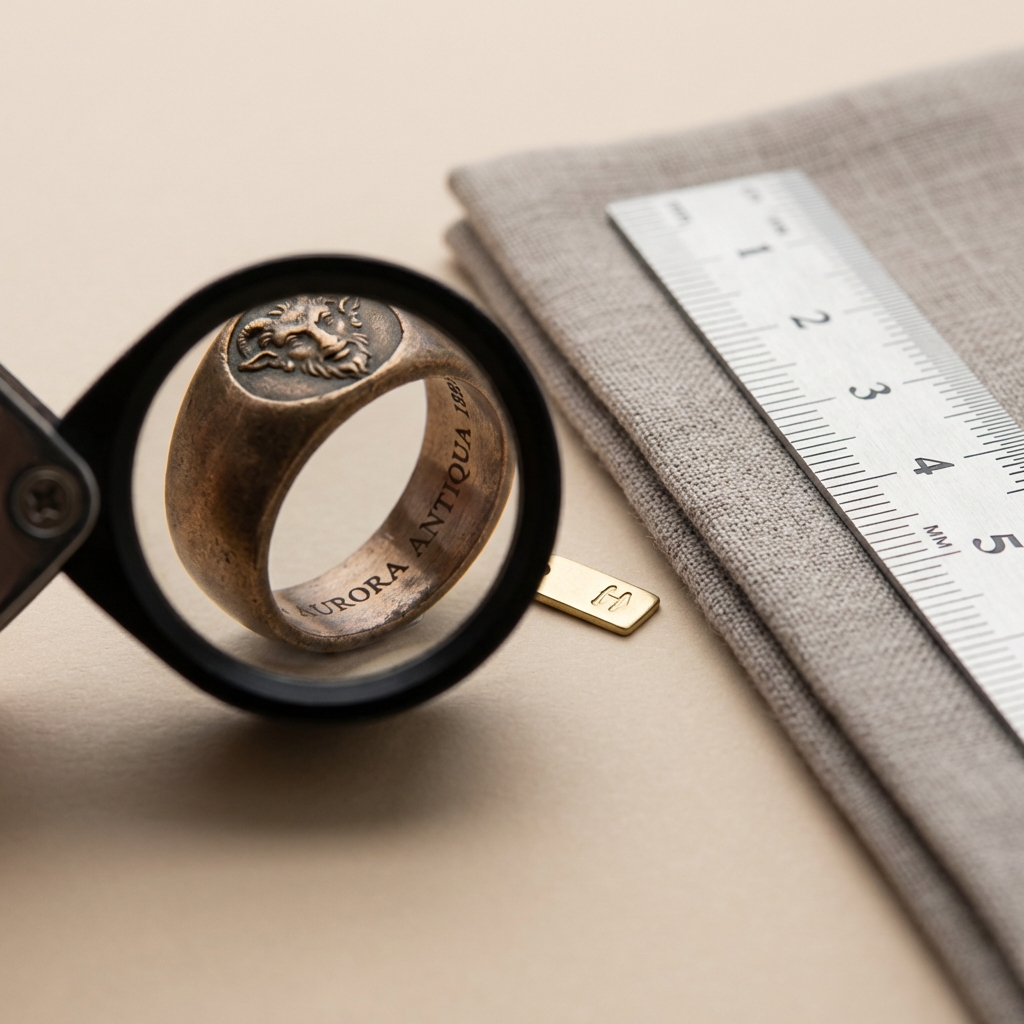
Even small additions can change how a collector reads a ring. An original maker's stamp or period-appropriate inscription can support a dating or workshop attribution, while a modern personalization can narrow the pool of potential buyers and complicate resale expectations. This distinction is central to understanding how engraving can affect engraved jewelry value in practice.
A simple classification: three engraving categories that shape value
Maker's marks and period inscriptions
One helpful first step is to classify any engraving into one of three broad categories. The first includes original maker's marks, hallmarks or inscriptions that appear period-appropriate and that may corroborate attribution or workshop origin. Auction houses and specialist sellers report that such marks can support attribution and sometimes add value when supported by documentation, so treat these differently from later additions; see Christie's research on inscriptions for guidance Christie’s research on inscriptions.
Modern personalization and decorative engraving
The second category is modern personalization, such as names, dates or decorative initials engraved for sentimental use. Appraisers and sellers commonly note that modern personalization often narrows the buyer pool and can reduce resale price because it alters original surfaces and may conflict with iconography or patina.
Restorative or conservation markings
The third category covers restorative or conservation markings made by professionals for cataloging or treatment records. When these are reversible, well documented and applied with conservation ethics in mind, they are usually treated differently from decorative personalization, and may not reduce provenance value if the intervention is clearly recorded; see IIC guidance on ethics and best practice IIC and ICON guidance on conservation ethics.
Technical factors that determine how damaging an engraving can be
Depth and tool marks
Assess the depth of the cut and whether tool marks interrupt the original surface. Deep mechanical engraving can remove patina and original tooling traces that are part of the artifact's condition notes, and conservation guidance warns that intrusive cutting often causes irreversible change; for the conservator perspective see the British Museum's conservation guidance British Museum conservation guidance.
quick inspection checklist to assess engraving depth and placement
Use good light and a loupe for inspection
Placement, hidden shank versus visible bezel
Placement matters: an inscription on a hidden shank is usually less likely to harm market interest than a visible engraving on the bezel or over a motif that changes iconography. Appraisers emphasize that shank inscriptions can satisfy identification needs without disturbing the ring's visual narrative, while visible motif alterations tend to raise red flags for collectors.
Effect on patina, gemstones and settings
Check whether an engraving disrupts patina or approaches stone settings, because disturbance to a bezel or gem mounting increases conservation concern and can affect condition notes used by sellers and buyers when assessing value; for technical background see the GIA discussion of engraving and the resale market GIA guidance on engraving and resale.
What auction houses and appraisers report about engraved pieces
How inscriptions affect attribution and sale results
Auction houses and specialist sellers commonly report that original maker's marks and period inscriptions can aid attribution and in some cases improve a lot's market visibility when corroborated by provenance or specialist reports, but those benefits depend on documentation and context; consult auction house research to understand how inscriptions have been handled in recent sales Christie’s research on inscriptions.
Case-based market evidence and its limits
Most market guidance through 2026 is case-based rather than statistical. There are few large-sample studies quantifying average resale penalties for personalization, so appraisers and houses rely on case studies and expert judgement when estimating how an engraving will influence a sale; see the Sotheby’s Institute market analysis for discussion of this evidence limit Sotheby’s Institute market analysis.
Conservation and museum guidance: why minimal, reversible intervention matters
Conservation ethics and reversibility
Museum and conservation guidance emphasizes minimal intervention and reversibility, arguing that deep or intrusive engraving can irreversibly alter surface patina and condition notes and so typically reduces cultural and market value; for the conservation position see the British Museum guidance on caring for jewellery British Museum conservation guidance.
How interventions can alter condition notes and display value
Even subtle mechanical marks can change how a curatorial or collecting community reads a piece in condition notes, and conservators recommend documented, reversible approaches where possible to preserve display and research value; for professional best practice see IIC and ICON guidance IIC and ICON guidance on conservation ethics.
A decision checklist for buyers and owners of a faun engraved ring
Before you alter: documentation and appraisal
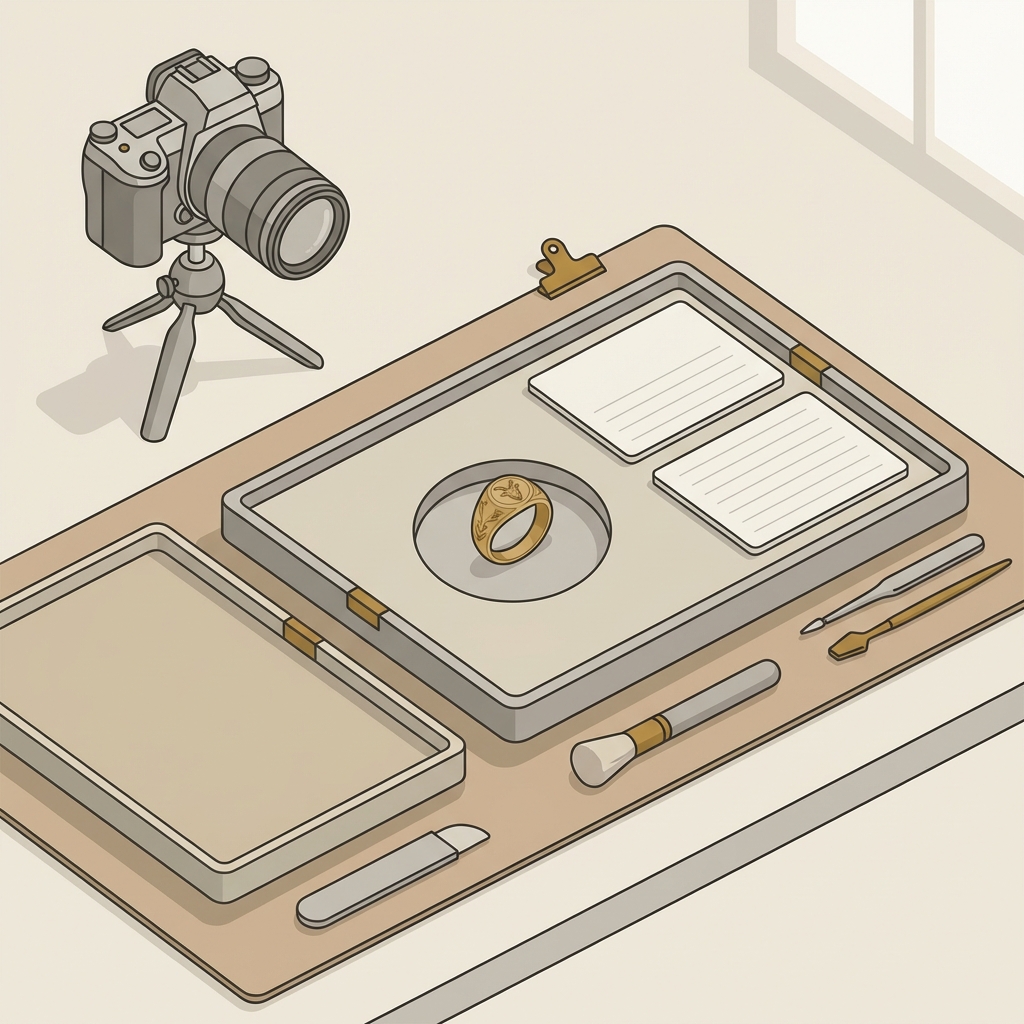
Before approving any engraving or alteration, obtain a photographic and written appraisal and record the ring's current condition, including a macro of the motif, images of the full profile and clear interior shank photographs; Smithsonian guidance recommends thorough marking and documentation practices before intervention Smithsonian guidance on marking and documentation. Also consult our Ancient Roman rings collection for related examples.
When a ring is historically significant or has unclear provenance, consult both a conservator and an appraiser to evaluate options and to get written estimates and condition reports; this dual input helps balance market impact and preservation priorities.

Questions to ask sellers, conservators and appraisers
Useful questions include whether an inscription is period or modern, whether any past markings were documented, and whether proposed interventions are reversible. Request written answers and photographs so that provenance and condition notes travel with the piece for future buyers.
Reversible alternatives to permanent engraving
Removable inscribed plates and slip bands
If personalization or identification is needed, consider removable engraved plates or slip bands that do not alter the ring itself. These options satisfy many practical needs while keeping the original surface intact and preserving condition notes for collectors. For context on sustainable vintage jewellery see JCK's discussion of vintage and sustainable jewellery JCK.
Follow behind-the-scenes with @auroraantiqua on Instagram
If you are weighing personalization against preservation, consider removable plates or keeping detailed documentation as a first step before any permanent action.
Accompanying documentation and digital records
Keeping high-resolution photographs and a written provenance file is often the most effective noninvasive alternative to engraving. Digital records can travel with the object and be shared with buyers without risking irreversible change, and conservators can advise on micro-marking only in exceptional, well-documented circumstances; see Smithsonian best practices for marking and documentation Smithsonian guidance on marking and documentation.
Practical scenarios: three short case studies
A Roman intaglio with apparent later initials
Scenario: a Roman intaglio bezel shows faint later initials on the interior shank. If the initials are later but shallow and limited to the interior, they may be a recognizable history note for provenance without seriously compromising the motif, though documentation of the initials and their probable date will help buyers interpret their effect; auction house guidance on inscriptions is a useful comparator Christie’s research on inscriptions.
A medieval ring with modern interior engraving
Scenario: a medieval ring bears a clearly modern name inside the shank. While an interior inscription is less visually disruptive than a bezel engraving, modern personalization can still narrow buyer interest. Sellers often note personalization in condition notes and provide clear photos so buyers can factor it into their decisions.
A conservator-applied catalog number
Scenario: a conservator has applied a reversible catalog mark during treatment and recorded it in restoration notes. When these markings are reversible and well documented, they are treated differently from decorative personalization and usually do not reduce provenance value if the records accompany the object; see IIC guidance on conservation practice IIC and ICON guidance on conservation ethics.
Common mistakes and pitfalls owners make when considering engraving
Underestimating the damage to patina and iconography
Owners sometimes underestimate how even apparently small cuts can remove patina or alter iconographic details, and conservation bodies warn that irreversible changes are a common cause of lost cultural information and diminished collecting interest; for the conservation position consult the British Museum guidance British Museum conservation guidance.
Relying on anecdotal resale stories
Another common pitfall is trusting anecdotes about resale outcomes. Because large-scale empirical studies are limited, anecdotal reports should be weighed against professional appraisals and documented case studies rather than taken as definitive proof of how engraving devalue ring outcomes will play out.
Skipping professional advice
Skipping both conservator and appraiser input before irreversible work is a frequent error. A short consultation can clarify whether a proposed engraving is reversible, how it will affect condition notes, and whether a noninvasive alternative can meet the same need.
How to document a ring before and after any marking
Photographic checklist
Take a set of essential images: macro of the motif, full ring profile, interior shank, any inscriptions and mounting details. Good photographs and clear captions form the backbone of provenance and condition notes that travel with the ring and protect marketability; Smithsonian best practices provide a helpful framework for this documentation approach Smithsonian guidance on marking and documentation.
Written condition and provenance notes
Record materials as described, measurements, any observed repairs, and the state of patina and bezel. Include dates of prior restorations and any conservator reports, and store copies with the object and with any sales listing to make future attribution and appraisal more reliable.
When an engraving can be an asset: maker marks and period inscriptions
What strengthens an inscription's positive effect
An inscription is more likely to help attribution when it is consistent with the object's period, when it aligns with other workshop traits, and when independent documentation such as collection history or a specialist report corroborates the reading; auction house research notes these conditions for positive impact Christie’s research on inscriptions.
How to present inscriptions to buyers
When an inscription appears to be period, present it with clear photos, a transcription, and any supporting provenance or specialist commentary. Avoid asserting period status without expert input; written appraisals and condition notes allow buyers to weigh inscription evidence for themselves.
Who to consult and what to ask: appraisers, conservators and sellers
Key questions for an appraiser
Ask an appraiser whether the engraving is likely to affect market interest and how similar inscriptions have performed at auction, and request a written statement you can share with potential buyers or conservators. Appraisers can place an engraving within market context but rely on conservators for reversibility assessments. For an ethics perspective from a dealer's view see Antique Jewellery Company's ethics page.
What a conservator should confirm
A conservator should confirm whether an alteration is reversible, whether the engraving will disturb patina or structural stability, and what noninvasive alternatives exist. Request a short written condition report and treatment plan before approving any work.
Conclusion: balanced, document-first approach for faun engraved rings
Summarize recommended steps
Document first: take high-resolution photographs, obtain a written appraisal, and consult a conservator before any permanent marking. Prefer reversible alternatives where possible to preserve condition notes and collector interest. See our rings collection for examples.
Final cautions and resources
Remember that maker marks and period inscriptions can sometimes add attribution value, while modern personalization often reduces buyer interest. Because large-scale statistical studies are limited, rely on documented case studies, professional appraisal and conservation guidance when deciding how to proceed; see Sotheby’s Institute for market context Publication 561 (12/2025), Determining the Value of Donated Property, Internal Revenue Service (IRS), USA. Additional context on sustainable antique jewellery is available from Gatsby Jewellery.
A shallow interior engraving is usually less damaging than visible motif work, but its effect depends on depth, placement and documentation; consult a conservator and obtain a written appraisal before altering the piece.
Yes, original maker marks or period inscriptions can support attribution and sometimes improve market interest if corroborated by provenance or specialist reports.
Removable inscribed plates or slip bands and detailed photographic documentation are common reversible alternatives that preserve the original surface.
More from Aurora Antiqua
References
- Auction Terminology, Christie's
- Publication 561 (12/2025), Determining the Value of Donated Property, Internal Revenue Service (IRS), USA
- Bague : satyre jouant de la double flûte devant une statue, Musee du Louvre, Paris, Departement des Objets d'art
- Ring, Victoria and Albert Museum, London
- Posy ring, London Museum (formerly Museum of London)
- Hallmarking Act 1973, UK Government, legislation.gov.uk (The National Archives)
- E.C.C.O. Professional Guidelines (II): Code of Ethics, European Confederation of Conservator-Restorers'
- Archaeological materials, Icon, The Institute of Conservation (UK)