


Looking for the real thing? Browse authenticated ancient rings, each piece one of one, individually authenticated, with documented provenance. For the background, see the guide to ancient jewelry.
Why engraving choices matter: definition and context
What we mean by engraving on a ring (faun engraved ring considerations)
When people say engraving on a ring they can mean several things: an interior shank inscription, surface lettering on the exterior shank, a carved intaglio or bas-relief inside a signet recess, or even micro-engraving on a gemstone. If you are considering a faun engraved ring as a wearable antiquity example, think in those terms from the start so that placement, technique and future care match the object and its history.
Engraving methods vary by scale and intent. Small hand-engraved letterforms inside a shank are a different technical decision from a deep signet recess with bold letterforms or a figural motif carved into a bezel. Jeweller guidance explains how technique and placement affect legibility and long-term wear, which is why a clear condition note matters before any work is done Gemological Institute of America guidance. See technical discussions on Ganoksin.
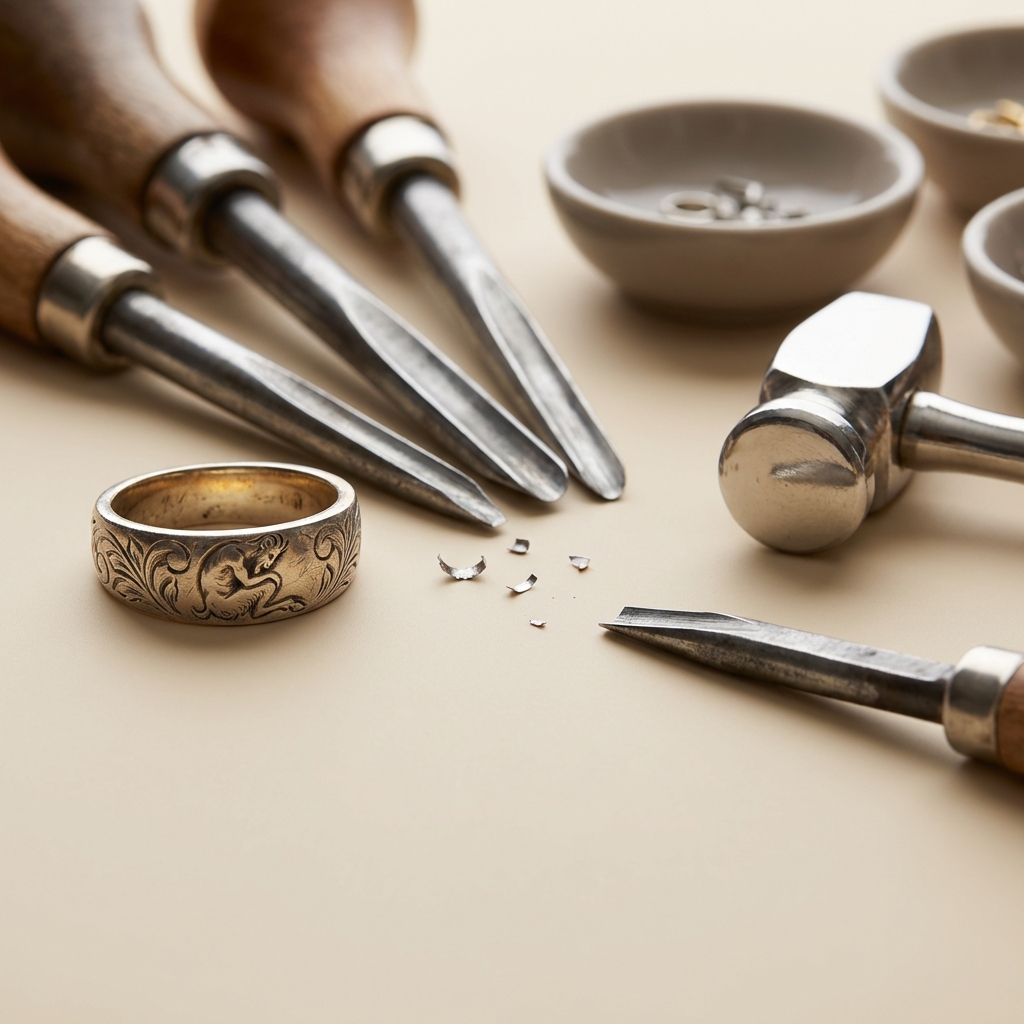
For ancient or curated rings the decision is further conditioned by provenance, restoration notes and the ring’s documented history. Altering a one of a kind antiquity can change its condition report and the way collectors, auction houses or curators assess it. Consult listing documentation and any available restoration notes before assuming an inscription is appropriate. See the Ancient Roman Rings collection for examples.

In this article we frame three overlapping concerns that should guide what you do not engrave: legal exposure (for example registered marks and copyrighted images), reputational and ethical risks (such as hate symbols), and technical longevity (material compatibility and resizing effects). Each concern points to different practical choices about what to avoid and how to document any change.
As a practical note, when a piece is presented with condition notes and provenance, use those details to decide whether a shallow surface inscription is reversible or likely to be lost during repair. This conditional approach helps keep decisions aligned with the ring’s historical value and the collector’s expectations.
Legal risks: trademarks, copyrighted images and defamatory text
When a logo or image can trigger IP enforcement
Reproducing a registered trademark or a protected artwork as an engraving can create legal exposure, and official IP offices and guidance documents explain that reproducing protected marks may lead to enforcement or marketplace removal; before adding third-party logos consider permission or an alternative that evokes the idea rather than copying the mark USPTO trademark basics. For further legal context see an art-law overview.
Copyright issues are similar: a copyrighted image or protected illustration reproduced without permission can raise removal demands on marketplaces and civil platforms. If you are inspired by a modern artist’s image, avoid direct reproduction and consider a small, original interpretation instead, or secure permission first (see U.S. Copyright Office guidance).
Avoiding inscriptions that could be illegal or defamatory
Engraving text that targets or makes false statements about an identifiable person, or that could be read as a threat or harassment, may expose the owner to legal claims and platform removal. Consumer-facing guidance about personalization notes the emotional and legal risks of inflammatory or identifying language, and it is sensible to avoid inscriptions that name or accuse living individuals Consumer Reports guidance.
Because platform policies vary, pause before engraving third-party logos, copyrighted images or potentially defamatory text; when in doubt, seek permission or legal advice and record any decision in the piece’s documentation.
Symbols and imagery to avoid: hate symbols, extremist content and reputational harm
Why certain symbols cause harm beyond legality
Certain symbols carry meanings that harm communities or convey support for extremist views; those symbols are often flagged by civil society databases and many marketplaces for both legal and reputational reasons. Engraving such imagery can create lasting harm for the wearer and complicate sales or display of the piece Anti-Defamation League hate-symbols database.
Even when a motif has historical uses, present-day associations can dominate how others read an inscription. If a symbol has contested meaning, provide contextual documentation rather than presenting the symbol alone on the exterior; a short condition report or a separate provenance note can help explain why a historical motif appears on a piece.
Avoid reproducing protected trademarks or copyrighted images, hate symbols, defamatory or threatening text, and overly fine shallow engraving on soft or plated metals; for ancient rings, prioritise reversible options and consult provenance and restoration notes.
When a community standard or marketplace policy flags imagery, sellers and collectors often choose alternatives that convey personal meaning without reproducing controversial motifs. Consider symbolic language, floral or abstract motifs, or historically informed iconography with clear explanatory notes rather than an uncontextualised emblem.
Emotional and resale considerations: names, dates and sensitive personal references
Why ex-partner names and charged messages cause regret
Consumer guidance commonly advises against permanently inscribing an ex-partner’s name or emotionally charged messages because such inscriptions often cause buyer remorse, complicate future relationships to the object, and can create resale friction later on Consumer Reports guidance.
For collectors of curated or ancient rings, the stakes can be different: adding a modern personal inscription to a historic ring can alter its appeal to other collectors and may change how the piece is documented in a condition report. If you want a personal touch without permanence, explore removable tags, discreet interior initials, or reversible mounts that can be taken off without altering the original metal or patina.
How personal inscriptions affect future resale and display
A deeply personal inscription can limit the pool of future buyers or complicate museum or exhibition loans if curators prefer unaltered items. When resale or future display matters, consider interior inscriptions done in a conservative, deep letterform on a structurally sound shank, rather than shallow surface text on a thin or plated band.
Always photograph and document the ring before any inscription. A current condition record helps potential buyers understand what was original, what was restored and what was added later; keep restoration notes precise and attach them to provenance documentation where possible.
Technical pitfalls: material, scale, and longevity of engravings
How metal hardness and technique affect legibility
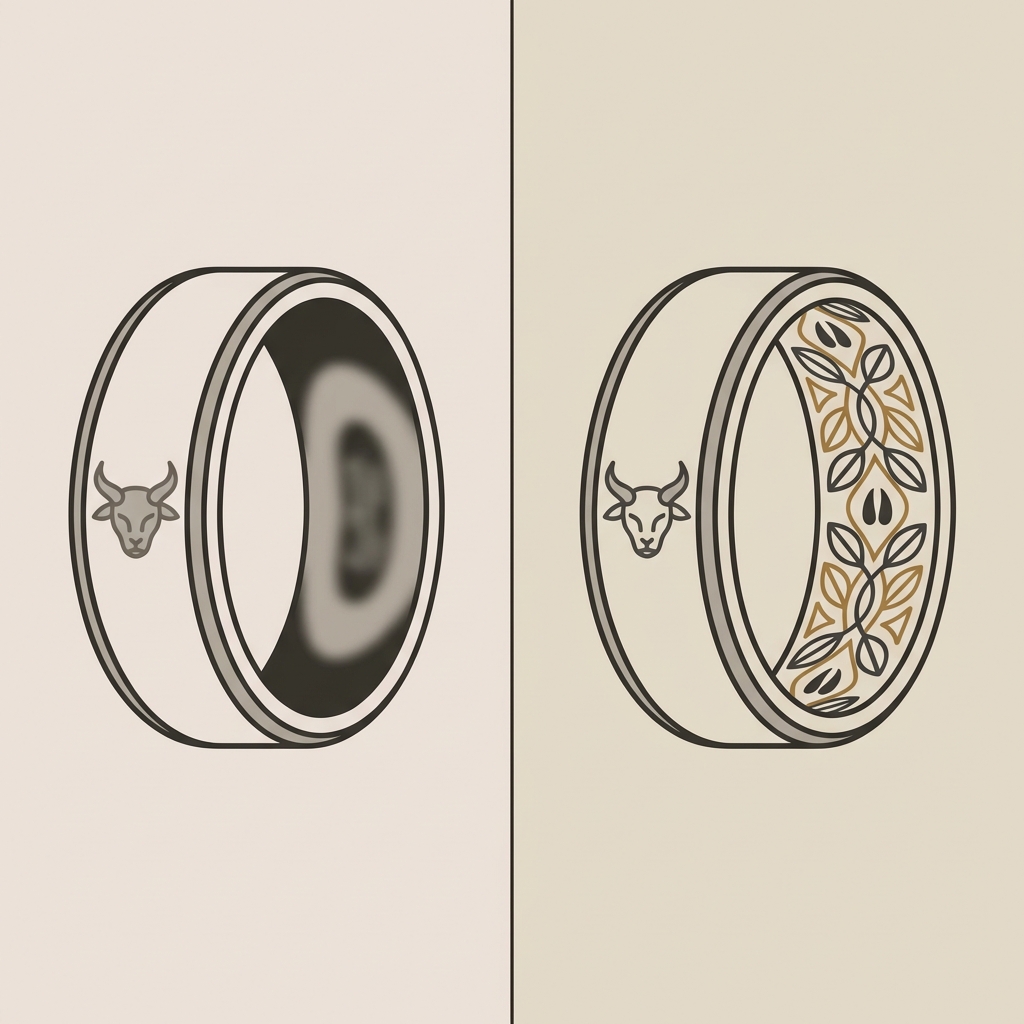
Metal choice and technique determine how long an inscription will remain legible. Soft gold alloys and plated surfaces tend to hold shallow engraving poorly, while harder alloys and signet recesses preserve deeper letterforms for longer periods. For inscriptions meant to endure, a bold, deep letterform in a signet recess or on a hard alloy typically outlasts surface micro-engraving Gemological Institute of America guidance.
Fine detail and micro-engraving on shanks are especially vulnerable: normal wear, contact with rings, and routine resizing can blur or remove micro-details. If your plan depends on fine figural elements or very small lettering, reconsider the location or opt for a different personalization method that tolerates abrasion and repair.
Resizing and repair work are common causes of lost shallow inscriptions. Hallmarking and resizing guidance explains that thin shanks and plated layers may be altered during routine size changes, so factor likely future alterations into the initial decision Hallmarking Act 1973, UK Government, legislation.gov.uk (The National Archives).
See condition and provenance details on @auroraantiqua
Before you engrave, review the ring’s condition notes or consult a conservator about material compatibility.
When working with ancient rings, always ask a conservator or a qualified jeweller about reversible options. For example, mounting a historic bezel in a modern reversible housing preserves the original surface while allowing contemporary personalization on the removable mount. See our professional restoration service for conservator-led options.
A simple decision checklist for what not to engrave
Use the short tool below as a reminder before you commit to an inscription.
Quick decision aid to use before engraving
Carry this with the ring to consult before any work
Checklist: Ask the following in order and pause at any negative answer.
1. Is the imagery or text free of trademarks and copyrighted works, or have you obtained permission?
2. Could the symbol be read as hateful, extremist, or otherwise harmful to communities?
3. Will the inscription create lasting emotional difficulty for you or future owners?
4. Is the chosen location and depth compatible with the metal and likely resizing needs?
5. For curated or ancient rings, has the seller documented provenance and restoration notes and advised on reversibility?
If you answer no to any of the checklist items, pause and seek permission, expert advice, or an alternative personalization method.
Common mistakes and how collectors correct them
Examples of frequent engraving errors and fixes
Typical mistakes include choosing overly fine detail that fades quickly, reproducing logos or copyrighted imagery without permission, engraving emotionally charged names that cause regret, and applying engraving to plated or thin shanks that cannot endure resizing. These errors often come from underestimating wear and the permanence of inscriptions.
Collectors can sometimes correct mistakes with conservation measures, but the options have tradeoffs. Professional conservation can stabilise a surface, but re-engraving or aggressive cleaning can remove patina and alter documented condition; reversible concealment mounts or reversible inserts are often preferable to destructive fixes.
When conservation, re-engraving or concealment is appropriate
Re-engraving to restore legibility can work if it is performed by a conservator who documents the change, but it may not be appropriate for rings whose provenance relies on original surface features. Concealment-such as setting the ring into a reversible bezel or using a removable modern shank-can preserve original surfaces while giving the wearer a personalized visible option.
Whatever corrective path you choose, document the intervention carefully. Update the condition report and restoration notes, and keep photographs that show the ring before and after work; transparent documentation helps future collectors and curators understand the piece’s history.
Practical scenarios and closing guidance for buyers of ancient rings
Short scenario walkthroughs: gift, resale, wearable history
Scenario 1, a gift: If you plan to engrave a ring as a gift, avoid highly specific, emotionally charged text such as an ex-partner’s name or a contentious slogan. Choose neutral, private inscriptions like discreet initials in a deep signet recess, and confirm the ring’s metal and thickness first.
Scenario 2, resale of a curated ring: A collector selling a curated antiquity should recognise that adding modern inscriptions may narrow the market. If personalization is essential for the current owner, use reversible mounts or interior shank inscriptions that are documented and photographed; note any change in the provenance documentation.
Scenario 3, wearable history: If you want to wear history, prioritise conservation-minded choices. Preserve patina, avoid shallow surface work on soft alloys, and when in doubt consult a conservator who can recommend reversible solutions that maintain the ring’s condition report and documented restoration notes.
Final checklist and next steps
Before you commit, photograph the ring thoroughly, read listing provenance and restoration notes, and consult a qualified jeweller or conservator for ancient pieces. When third-party imagery or text is involved, seek permission or choose original alternatives that convey meaning without copying protected marks.
As a curation reference, Aurora Antiqua presents curated ancient rings with condition notes and provenance context to help buyers make informed personalization choices, but any alteration should be documented and, where possible, reversible. See our ring collections for curated examples.
Not without permission; reproducing registered trademarks can trigger enforcement or marketplace removal and is best avoided unless you secure rights or use an original design.
Consider the emotional and resale implications; choose a reversible or interior inscription and document the ring’s condition before any change.
Shallow surface inscriptions are vulnerable to resizing and repair; deeper letterforms or signet recesses on harder alloys tend to hold up better.
More from Aurora Antiqua
References
- Hallmarking Act 1973, UK Government, legislation.gov.uk (The National Archives)
- Hallmarking Guidance Notes: practical guidance in relation to the Hallmarking Act 1973, the UK Assay Offices
- How to Care For Your Jewellery: The Ultimate Guide by the National Association
- Archaeological materials, Icon, The Institute of Conservation (UK)
- E.C.C.O. Professional Guidelines (II): Code of Ethics, European Confederation of Conservator-Restorers'
- Leitfaden Standards Bewahren, Deutscher Museumsbund e.V
- Ring, Victoria and Albert Museum, London
- Devotional finger ring, London Museum (formerly Museum of London)
- Trademark basics, uspto.gov
- copyright.gov