


Looking for the real thing? Browse genuine ancient rings for sale, each piece one of one, individually authenticated, with documented provenance. For the background, see the guide to ancient jewelry.
What is a Claddagh ring? Definition and historical context
An ancient claddagh ring is a type of finger ring that combines three clear motifs, the hands, the heart and the crown, traditionally read as friendship, love and loyalty; these symbols are widely described in standard references and museum entries on the form, and the ring is commonly associated with Galway as its region of origin Encyclopaedia Britannica entry on the Claddagh ring.
Get the one page care checklist from @auroraantiqua
A one page care checklist can help you keep patina and structure safe; download or print a short checklist before trying to clean or resize a historic ring.
The Galway origin should be presented as part of the ring’s cultural provenance rather than as an exact workshop attribution, because authoritative sources recommend framing dates and attributions as estimates tied to collection records and documentation Claddagh Rings, National Museum of Ireland, Dublin. For a readable origin overview see Claddagh Design's account of the Claddagh origin.
Use of the phrase ancient claddagh ring in descriptions is appropriate when an item shows age and clear documentation, but writers and sellers should avoid absolute dating statements unless supported by proven provenance or technical analysis Irish Times feature on Claddagh traditions.
How the traditional wearing conventions work
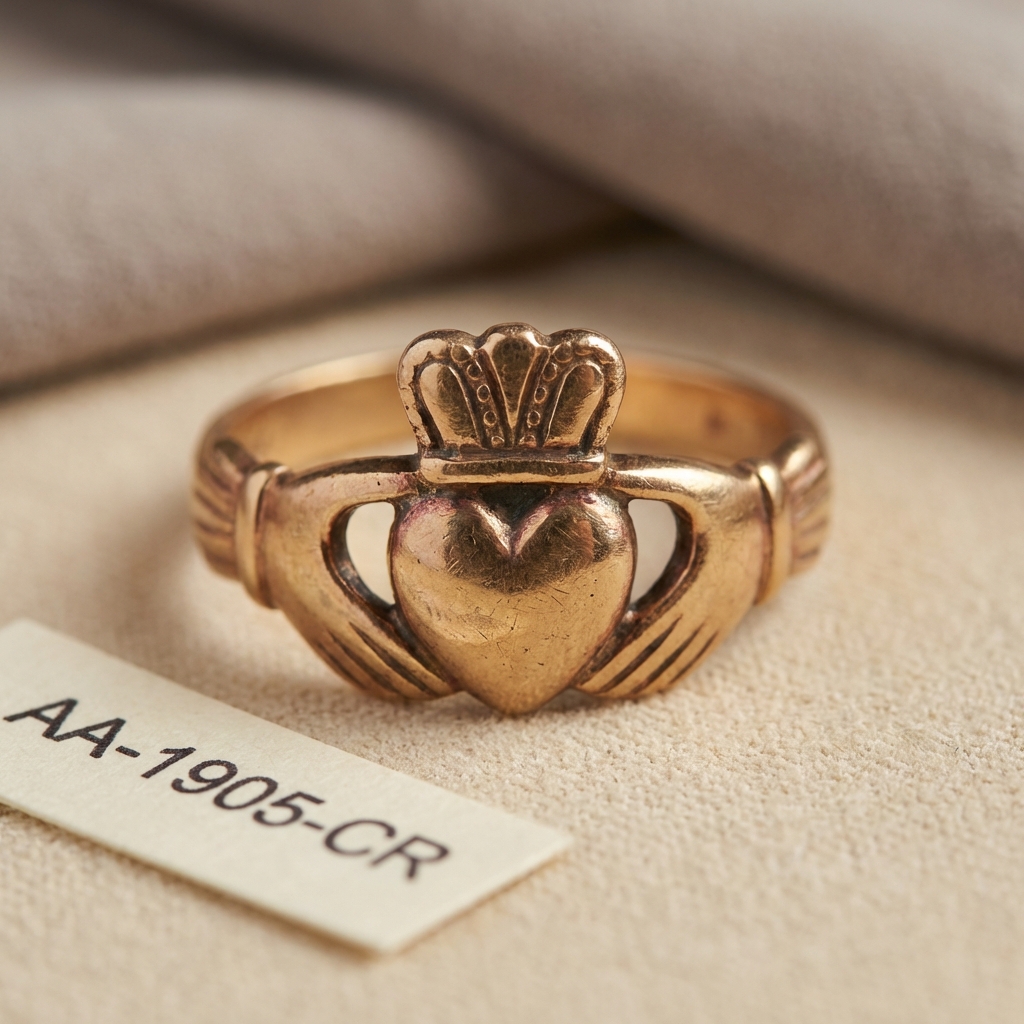
People often express relationship status through hand choice and the orientation of the heart; a common modern convention records that the ring on the right hand with the heart pointing outward signals that the wearer is single, while turning the heart inward indicates engagement or being taken V&A article on Claddagh rings. Another practical guide to wearing conventions is available here.
Wearing the ring on the left hand with the heart turned inward is often read as partnered or married in many modern summaries, though this is a cultural convention rather than a universal mandate Encyclopaedia Britannica entry on the Claddagh ring.
Finger choice is traditionally the ring finger, and many museum descriptions note this as the customary placement, but regional and personal variations mean people sometimes choose other fingers for comfort or style V&A article on Claddagh rings.
Common signals and a quick etiquette checklist
Here is a short, usable checklist you can follow to signal status with a Claddagh ring: right hand heart outward equals single; right hand heart inward often indicates engaged; left hand heart inward commonly signals partnered or married; choose the ring finger when you want to follow tradition and choose a different finger when comfort or style matters BBC Culture piece on how to wear a Claddagh ring. A photo and video guide is also useful photo and video guide.
Use hand and heart orientation intentionally as cultural signals, ask for condition and restoration documentation before wearing or buying, preserve patina with gentle care, and consult a conservator for resizing or major repairs.
If someone misreads your signal, a brief explanation like I wear this for style or This was a family piece usually resolves confusion; contemporary users frequently adapt placement and many reports recommend being ready to explain the choice when needed BBC Culture piece on modern uses.
Museum perspective: dating, provenance and documentation to trust
Museums advise presenting dating and origins as estimates, and they attribute confidence to pieces when supported by collection history or documentary records; curators typically link attributions to collection entries and provenance notes rather than absolute dates Claddagh Rings, National Museum of Ireland, Dublin.
Useful documentation includes written collection history, prior ownership notes, inventory or accession numbers, and any third party verification letters or reports that accompany the piece; these help institutions and buyers assess claims about dating and origin Irish Times feature on Claddagh traditions.
When documentation is incomplete, use cautious phrasing for listings and descriptions, and point readers to the available records rather than making absolute statements about authenticity Claddagh Rings, National Museum of Ireland, Dublin.
How to evaluate an ancient Claddagh ring before you wear or buy it
Start by asking for condition notes that describe the patina, structural integrity, and any visible repairs; museum and conservation guidance emphasise preserving original surfaces and noting where restoration work has been stabilised or left untouched Archaeological materials, Icon, The Institute of Conservation (UK).
Check fit carefully, test for internal comfort and sizing, and be aware that some historical repairs may change how a ring wears or how it can safely be resized; consult a conservator before attempting structural alterations V&A article on Claddagh rings.

Ask sellers for high resolution photos that show the interior band, the setting or bezel, and any areas of solder or repair; these images combined with condition and restoration notes form the practical evidence you need to decide whether to wear, conserve, or purchase a piece Archaeological materials, Icon, The Institute of Conservation (UK). See examples in the rings collection.
Care and conservation: preserving patina and fragile features
Preserve patina by avoiding harsh chemicals and abrasive polishing, and prefer gentle cleaning methods such as soft brushes, distilled water, and minimal mechanical intervention; conservators warn that aggressive cleaning can remove historic surface evidence and damage restorations Archaeological materials, Icon, The Institute of Conservation (UK).
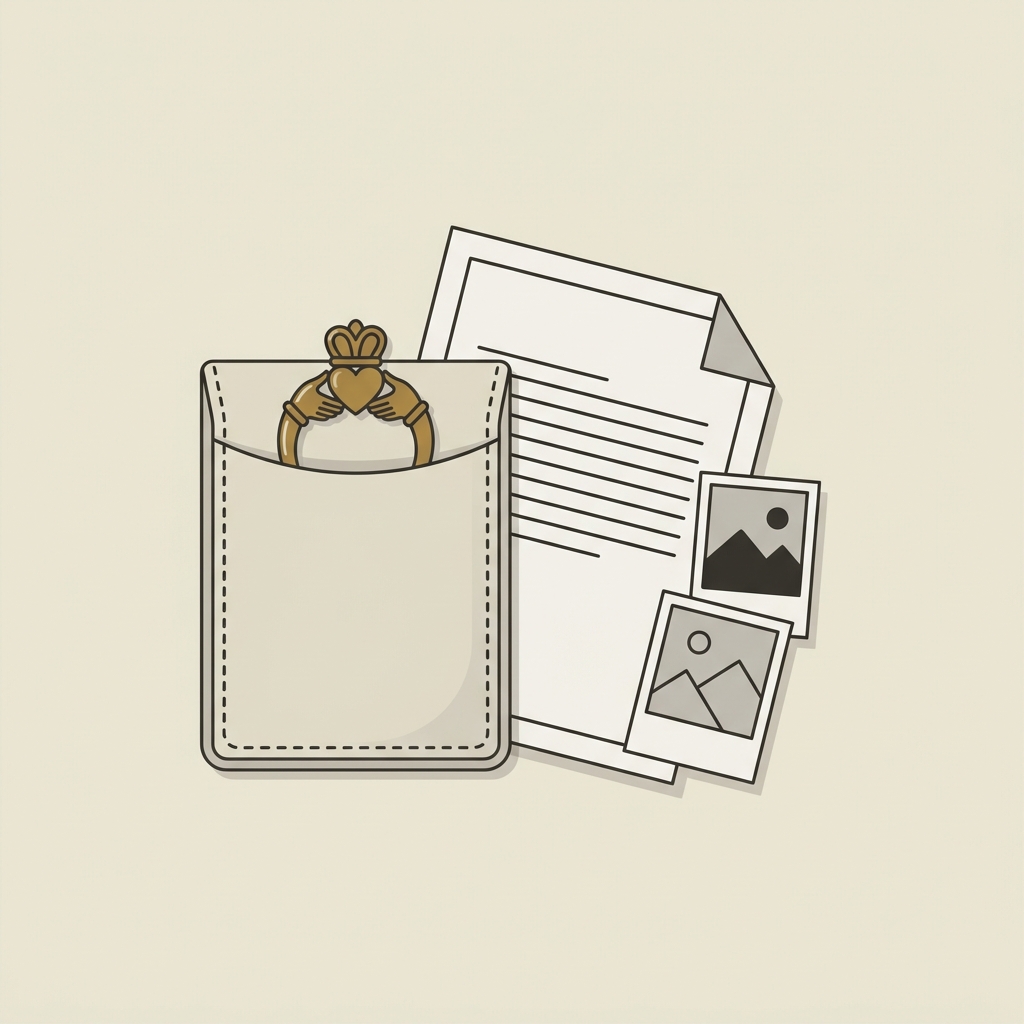
Store rings in soft, separate pouches or boxes to avoid metal contact and abrasion; remove historic rings during heavy manual work, exposure to moisture, or when handling cleaners and cosmetics to reduce wear and protect any set stones Claddagh Rings, National Museum of Ireland, Dublin.
Retain all restoration and condition notes, and consult a qualified conservator before attempting any major cleaning or repair so that the piece’s history remains legible and its structural integrity is not compromised Archaeological materials, Icon, The Institute of Conservation (UK).
Common mistakes and etiquette pitfalls when wearing a Claddagh ring
A frequent social misstep is assuming everyone reads the same signal from hand choice and heart orientation; misreading can cause confusion so it is sensible to clarify intent in conversation when the ring’s meaning matters Irish Times feature on Claddagh traditions.
Simple decision flow to choose placement and signal intent
Follow steps to decide hand and orientation
Another common error is overstating provenance or condition in listings; avoid absolute claims without paperwork and be explicit when restoration has been done, including what was stabilised or left untouched Claddagh Rings, National Museum of Ireland, Dublin.
When selling or gifting a Claddagh ring, describe clearly whether the piece is an ancient ring or a modern adaptation and include condition and restoration notes so recipients understand the piece’s history and care needs Irish Times feature on Claddagh traditions. Consider also linking to related items in the Celtic rings collection when relevant to a listing.
Modern variations: fashion, personal meaning and cultural shifts
Contemporary wearers commonly adapt Claddagh placement for fashion or comfort, wearing the motif on different fingers, as a pendant, or stacked with modern rings; cultural reporting notes these variations alongside the traditional conventions BBC Culture piece on modern uses.
Examples of alternative placements include wearing the ring on the index or middle finger as a style choice, using the motif on a necklace for safety and visibility, or mixing an older Claddagh with modern bands to create a layered look V&A article on Claddagh rings.
These adaptations are socially valid, and when in doubt a short explanation about why you wear the ring helps avoid mistaken assumptions about relationship status BBC Culture piece on modern uses.
Fit, sizing and what historical repairs mean for comfort
Measure ring size using standard sizing methods and ask sellers for internal band photos; historical repairs such as added solder or reshaped shoulders can change fit and may require specialist resizing by a conservator rather than a standard jeweller Archaeological materials, Icon, The Institute of Conservation (UK).
Signs that a repair may make a ring unsafe for regular wear include unstable bezels, loose stones or thin shoulders that could fracture under stress; if you spot these, seek conservation advice before wearing the piece daily V&A article on Claddagh rings.
When resizing is needed, prioritise a conservator who documents the work and uses reversible or minimal intervention techniques so the ring retains its character and so future owners can understand its restoration history Archaeological materials, Icon, The Institute of Conservation (UK).
Styling tips: wearing a Claddagh with modern jewellery
Consider scale when pairing a slim historical Claddagh with wide contemporary bands, because difference in scale affects balance and may increase wear on thin shoulders; place heavier rings on the opposite hand to reduce abrasion V&A article on Claddagh rings.
Avoid stacking directly against abrasive metals and alternate which hand you wear the historic ring on during heavy activity; this simple rotation reduces continuous friction and helps protect patina and any delicate settings Archaeological materials, Icon, The Institute of Conservation (UK).
Buying from curators: what to ask and what paperwork to keep
Request a complete set of paperwork before buying: clear condition notes, detailed restoration notes, collection history, prior ownership records, and any third party verification letters or reports; these are the elements museums find most useful when assessing objects Claddagh Rings, National Museum of Ireland, Dublin. You can also contact the shop directly via the Aurora Antiqua homepage for queries.
Red flags include vague provenance language, missing condition details, inconsistent photos, or pressure to decide quickly; reputable curators will provide transparent documentation and time to examine records Irish Times feature on Claddagh traditions.
Keep all paperwork and high resolution images as part of the piece’s collection history; these form the basis for future conservation, insurance and responsible resale or inheritance planning Claddagh Rings, National Museum of Ireland, Dublin.
Practical scenarios: engagement, fashion wear, heirloom handling
Scenario A: proposing with a heritage ring. If you propose with a family Claddagh, use orientation deliberately and explain the ring’s provenance to the recipient, including any documentation or restoration notes so the recipient understands care needs V&A article on Claddagh rings.
Scenario B: everyday fashion use. Rotate the historic ring out for heavy work, keep a soft pouch for storage, and use gentle cleaning routines so you can enjoy the piece while minimising wear; conservators recommend consulting before any polishing Archaeological materials, Icon, The Institute of Conservation (UK).
Heirloom handling. Pass on documented condition and restoration notes with any heirloom, and include clear photographs of both exterior and interior band as part of the piece’s collection history for the next owner Claddagh Rings, National Museum of Ireland, Dublin.
Conclusion: quick checklist and next steps
Quick takeaway. Use hand and heart orientation intentionally to signal status, preserve original surfaces with gentle care, and retain documentation as part of the ring’s collection history Encyclopaedia Britannica entry on the Claddagh ring.
Action checklist. Choose placement intentionally, ask sellers for condition and restoration notes, consult a conservator before resizing, and store rings separately to protect patina Archaeological materials, Icon, The Institute of Conservation (UK).
Common modern signals use hand and heart orientation: right hand heart outward for single, right hand heart inward for engaged, and left hand heart inward often for partnered or married, though personal and regional variations exist.
You can wear a historic ring daily if it is structurally sound, but remove it for heavy manual tasks, avoid moisture and chemicals, rotate wear to reduce continuous abrasion, and consult a conservator if repairs or resizing are needed.
Request condition notes, restoration notes, collection history or prior ownership details, high resolution photos of the interior band, and any third party verification letters or reports.
More from Aurora Antiqua
References
- Claddagh Rings, National Museum of Ireland, Dublin
- Richard Joyce and the oldest known Claddagh ring, Galway City Museum
- Archaeological materials, Icon, The Institute of Conservation (UK)
- Silver and plate, Icon, The Institute of Conservation (UK)
- How to Care For Your Jewellery: The Ultimate Guide by the National Association
- E.C.C.O. Professional Guidelines (II): Code of Ethics, European Confederation of Conservator-Restorers'
- Leitfaden Standards Bewahren, Deutscher Museumsbund e.V
- Object ID, International Council of Museums