


Looking for the real thing? Browse genuine crusader rings for sale, each piece one of one, individually authenticated, with documented provenance. For the background, see the guide to Roman jewelry.
What a roman glass cross necklace is and why context matters
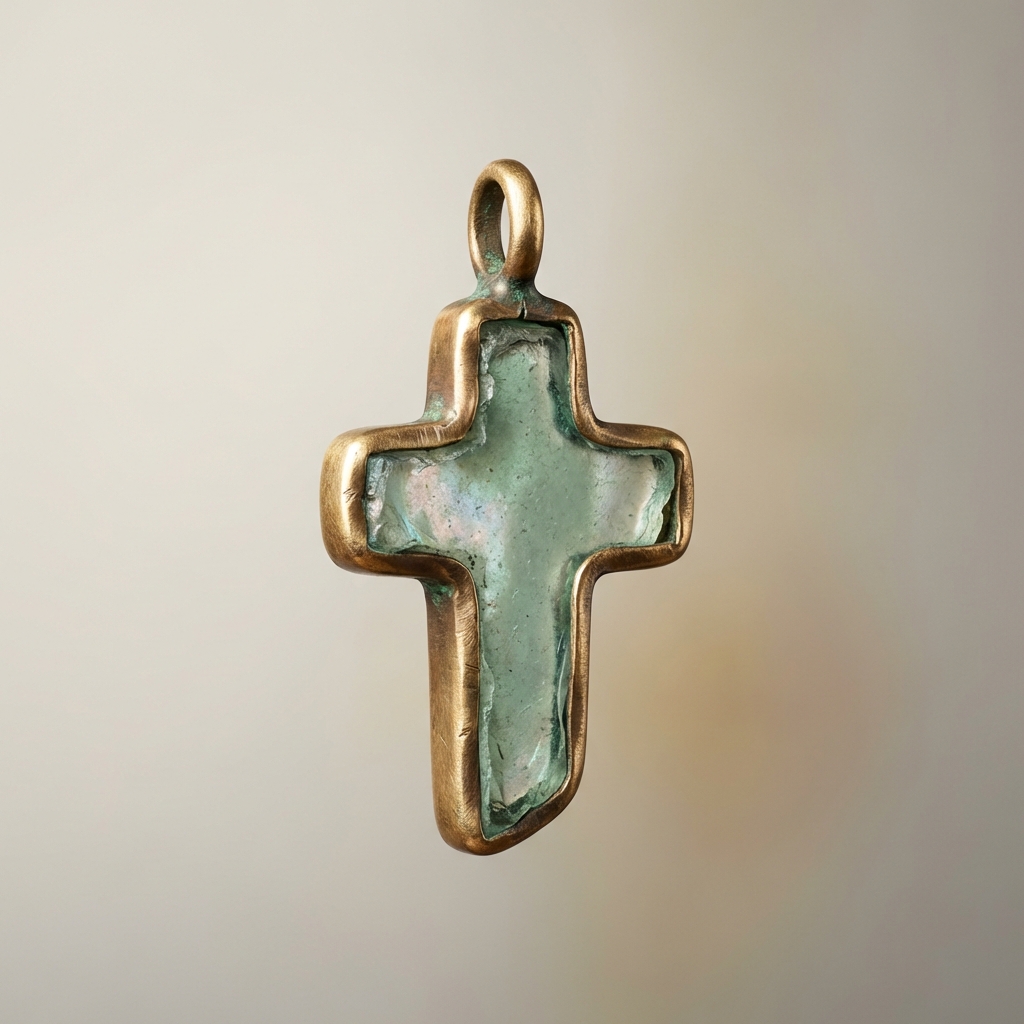
A roman glass cross necklace is typically an antiquity described by its material, a small glass pendant often set or mounted for wear, and by its patina and provenance where available. Collectors should read the object as both a physical artifact and a cultural sign, noting that glass composition, manufacturing marks, and any attached mount all contribute to how the piece will age and be handled.
Material description and handling matter because glass behaves differently from metal or stone, and conservators recommend particular precautions for historic glass. For guidance on conservation practices for glass, the Smithsonian Institution's conservation overview is a useful reference for basic care and handling Smithsonian conservation guidance.
Visual identification checklist for basic motif and material traits
Use with photos
When considering images such as a crucifix versus a plain cross, the theological and visual distinction is relevant to interpretation and display. The Encyclopaedia Britannica provides an overview of how different forms are read within Christian traditions, which helps collectors differentiate motif intent from later additions Encyclopaedia Britannica on the cross.
How different cross designs carry distinct meanings
Design details matter: a crucifix showing a corpus usually signals a specific theological emphasis, while an empty cross often represents a broader Christian symbol. These distinctions are read differently between denominations and by nonreligious observers, so collectors of antiquities should describe the object accurately rather than assume a single meaning.
For identification, note the silhouette, any ringed arms, extra bars, or decorative terminals. Features such as a ringed cross or a Latin cross form can help attribute an example, but dating and workshop attribution remain estimates absent firm documentation.
Different Christian traditions emphasize form and imagery in ways that affect appropriateness in religious settings; a crucifix may be expected in some liturgical contexts while an empty cross is more common in others. When explaining a historic pendant, refer to these differences rather than asserting a single interpretation, since visual language can carry specific devotional meanings.
Visual features collectors should note
Collectors should check for hallmarks of workmanship such as molded versus blown glass, evidence of a fitted bezel, and any surviving pigment or gilding. These visual cues, combined with condition and restoration notes, can clarify whether a pendant is an original wearable mount or a later adaptation.
When a design can be seen as offensive today: appropriation and extremist use
Some historic motifs have been appropriated by extremist groups, which changes how they are read in public. The Celtic cross in particular is documented in hate-symbol resources as being used by white supremacist groups in modern contexts, and that association can make similar-looking objects sensitive to wear in political or public spaces ADL hate symbol entry. For broader background on the historic form see the Celtic cross article and a discussion of visual differences in academic commentary Celtic Crosses and White Supremacism.
Importantly, it is visual similarity and modern usage that most often causes offence, not an object’s antiquity. Public reaction depends on context, and international guidance stresses that restrictions on expression to prevent offence must be narrowly defined and respectful of legitimate expression, so etiquette and local norms are often the practical guide UN Human Rights guidance on freedom of expression.
See provenance and restoration details on @auroraantiqua
When in doubt, consult any available listing documentation or provenance notes to explain the piece's history rather than relying on appearance alone.
For collectors, provenance and clear documentation can make the modern associations of a symbol easier to explain; when such records are missing or vague, the risk of misinterpretation increases and discretion is warranted.
Legal limits and protected emblems to watch for
Certain emblems are legally protected and their unauthorized use can be unlawful or offensive. The red cross and red crescent are internationally protected emblems and their decorative or commercial use is strictly regulated in many jurisdictions, so avoid repurposing or displaying these signs as ornament ICRC guidance on emblems.
At the same time, human rights bodies advise that restrictions intended to prevent offence should not be so broad that they suppress legitimate expression. Where law and etiquette intersect, check local regulations and consider the setting before wearing a symbol that resembles a protected emblem UN Human Rights guidance on freedom of expression.
A practical decision framework: should you wear a roman glass cross necklace today?
Step 1, identify the motif: look closely at the pendant and compare visible traits to documented symbol lists and museum descriptions. If the object is described in a listing or has a provenance note, use that language when explaining the piece to others.
Step 2, check modern associations: consult hate-symbol databases and current guidance to see whether the motif has recent extremist appropriation. If a modern problematic association appears in those resources, consider reserving the item for private display rather than public wear SPLC hate symbol database.

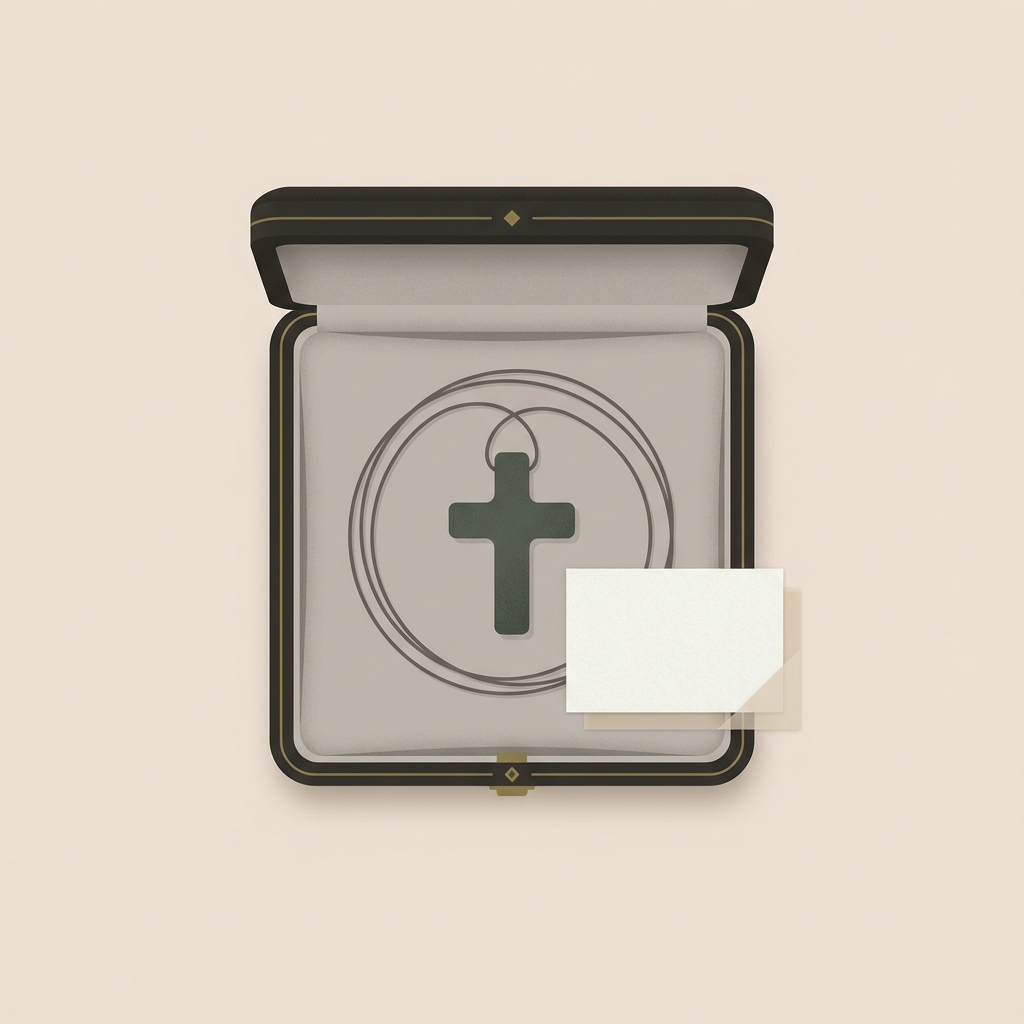
Step 3, assess the setting and presentational choices: in religious services, a piece with clear devotional intent is often acceptable; in political events or protests, any symbol that could be read as partisan or appropriated is best avoided. Use subdued presentation or an explanatory provenance card where context helps clarify intent (see our medieval pendants collection).
Caring for a roman glass cross necklace: conservation basics
Preserving fragile glass pendants follows standard museum guidance: avoid rapid temperature and humidity changes, limit exposure to direct sunlight, and do not use household chemicals for cleaning. For basic conservation advice, consult institutional guidance on caring for glass artifacts Smithsonian conservation guidance.
When a glass pendant is mounted, pay attention to stress points at pins, hoops, and bezels; choose a short chain and avoid heavy pendants that put torque on old mounts. Restoration notes in a listing should state what was stabilized or repaired and inform safe wearing practices.
If you suspect structural weakness, wrap the piece for safe transport and consult a professional conservator before attempting any cleaning or rehanging. Conservators can advise on reversible treatments and appropriate storage materials.
Common mistakes and how to avoid them
A frequent error is assuming that historical origin removes modern associations. Even an authentic ancient motif can be seen differently today because of recent appropriation, so research the modern visual language before public wear and do not rely solely on listing age to shield interpretation ADL hate symbol entry.
Other common mistakes include using household cleaners on glass, which risks etching or damage, and displaying protected emblem imagery as decoration. Simple fixes are to keep condition notes visible, avoid emblematic decorations, and present provenance when the piece is discussed Smithsonian conservation guidance.
Practical scenarios: workplace, travel and public events
At work or in formal professional settings, a subtle approach is often safest. A small pendant worn beneath clothing or presented with a provenance card can reduce misunderstandings and allow the piece to be read as a collectible rather than a political statement.
When traveling, be mindful that some regions have strict emblem laws or heightened sensitivities where symbols that are benign at home may be restricted or cause offense. Check local guidance and consider leaving a potentially sensitive piece in secure storage or carried as documentation rather than worn.
Designs that have been appropriated by extremist groups or mimic legally protected emblems are most likely to cause offence; contextual information and provenance help clarify intent.
At public events such as protests, rallies, or political gatherings, avoid wearing items that could be interpreted as endorsing a cause you do not intend to support; context and crowd perceptions can change a neutral object into a charged sign.
Documenting and explaining your piece: provenance, condition and messaging
Prepare a concise provenance note that includes collection history, prior ownership notes if available, measurements, and clear condition and restoration notes. Aurora Antiqua provides condition notes and provenance-style references where available to help buyers explain a piece responsibly.
When asked about a pendant in public, a short neutral phrase such as "This is an antiquity described as a glass cross pendant, shown here with its documented mount and condition notes" can help steer the conversation to history and stewardship rather than politics.
Conclusion: a respectful-wearing checklist for collectors
Checklist: 1) Identify the motif and compare with symbol resources. 2) Check modern associations and local laws. 3) Consider setting and audience. 4) Use provenance and condition notes to explain the object. 5) Follow conservation basics for fragile glass and consult a conservator when in doubt SPLC hate symbol database. For examples, see the Orbis pendant.
Next steps: maintain documentation, avoid protected emblems, and prioritize conservation. When uncertainty remains, err on the side of contextualizing the piece or reserving wear for private or appropriate religious settings ICRC guidance on emblems.
No. Whether a cross is seen as disrespectful depends on context, modern associations, provenance, and local norms rather than shape alone.
No. Avoid household chemicals and rapid temperature changes; consult a conservator for cleaning fragile glass.
Consider not wearing it publicly, document provenance, and use explanatory notes if you choose to display it privately or in appropriate settings.
More from Aurora Antiqua
References
- Archaeological materials, Icon, The Institute of Conservation (UK)
- E.C.C.O. Professional Guidelines (II): Code of Ethics, European Confederation of Conservator-Restorers'
- ICOM-CC, International Council of Museums, Committee for Conservation
- Conserve O Gram 4/16: Creating A Microclimate Box for Metal Storage, National Park Service, US Department
- Object ID, International Council of Museums
- Research report: export licensing and provenance, GOV.UK, Department for Culture, Media and Sport (DCMS)
- Celtic cross, Wikipedia