


Looking for the real thing? Browse our Ancient Roman ring collection, each piece one of one, individually authenticated, with documented provenance. For rings with an intaglio, see our intaglio rings. For the background, see the guide to Roman jewelry.
What is a roman carnelian intaglio?
A roman carnelian intaglio is a gemstone, typically a red to orange chalcedony carved so the design sits below the surface rather than raised, producing a recessed image that can serve as a signet seal or as a decorative gemstone in a ring.
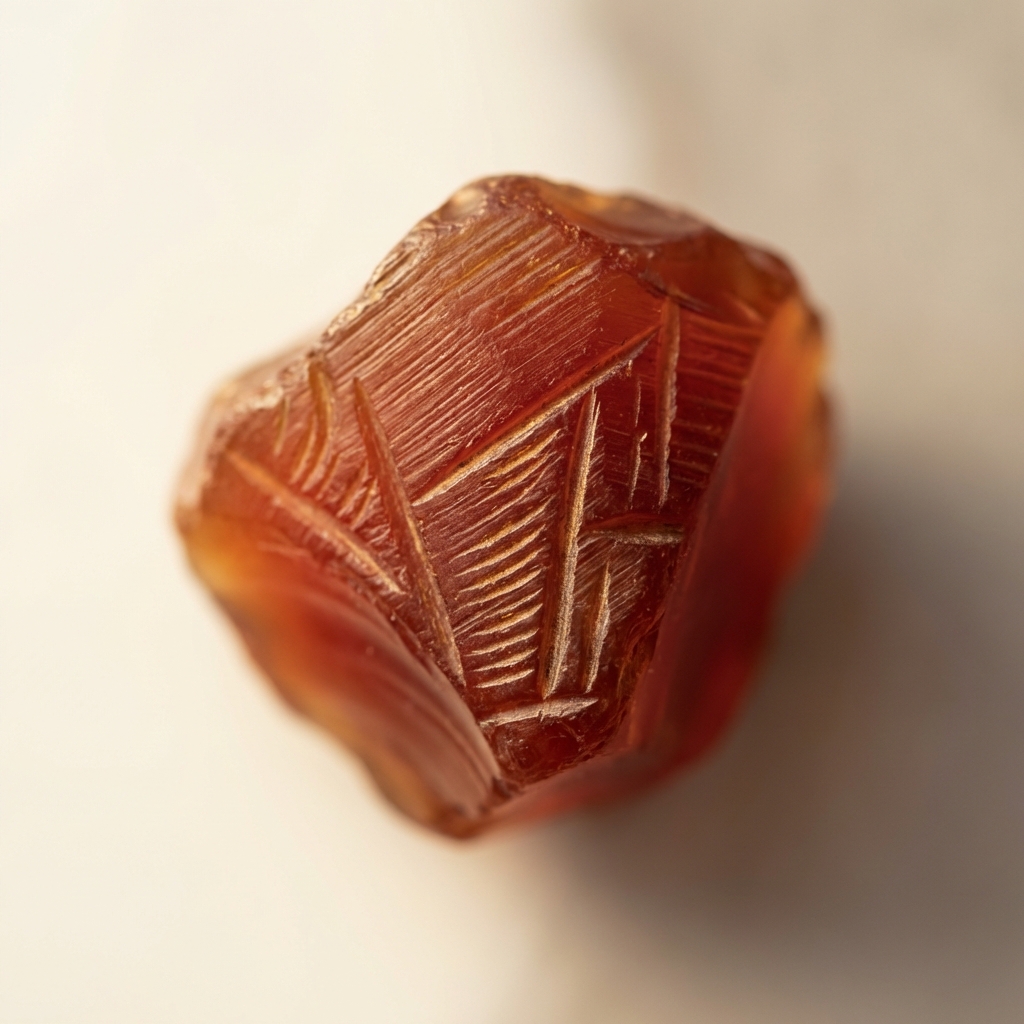
The term intaglio describes that recessed cutting, which allows the carved design to make a mirror image impression into soft materials such as wax or clay; this functional definition and the historical use of intaglios as personal seals and ornaments are documented by major museum publications Metropolitan Museum of Art, engraved gems overview.
Carnelian itself is a variety of chalcedony that ranges from red to orange, prized in antiquity because it polishes to a high luster and accepts very fine engraving, a property emphasized by gemological authorities GIA carnelian overview. The combination of a hard, polished stone and the intaglio technique made these objects effective both as practical seals and as wearable jewelry.
In Roman practice the intaglio was often set into a signet ring or mounted in other small objects where the carved surface could be shown or used when needed; museum collections and catalogues repeatedly illustrate this dual role of personal identification and display British Museum collection notes on engraved gems.

When you read descriptions in catalogues and listings, pay attention to language that distinguishes intaglio from cameo, and to any condition notes that describe surface wear or mounting details; those elements often clarify how the object functioned historically and how it survives today.
Why carnelian was a preferred stone for Roman intaglios
Carnelian was commonly used by Roman glyptics because its physical properties suited fine cutting and high polish, which together make carved detail readable at small scale; this quality is noted by gemological sources GIA carnelian overview.
Compared with softer or more brittle stones, carnelian offered a balance of durability and workability: the stone could be cut with fine tools and then polished to reveal crisp lines without easily chipping in normal wear, which helped it serve as a working seal as well as jewelry.
Because carnelian accepts a high polish, engraved lines and minute details show cleanly under light, which is why many museum and auction catalogues record large numbers of carnelian intaglios in Roman collections Christie’s guide to ancient engraved gems.
Collectors should evaluate the material and polish, inspect for toolmarks and matching wear, review setting and restoration notes, and seek provenance or catalogue references; when necessary, obtain non destructive tests or specialist opinions.
Those qualities also affect preservation: a well polished carnelian surface can retain a readable image for centuries, but condition depends heavily on how the piece was worn and how it was mounted.
For collectors this means the material itself is often a strong initial indicator of a likely Roman intaglio, but material must be combined with technical, stylistic and documentation evidence to build a reliable attribution. (See our Ancient Roman Rings collection)
How Roman intaglios were made: tools, methods and diagnostic marks
Roman gem cutters used a range of small drills and abrasive materials to shape and incise gemstones, techniques described in technical and museum literature; common tools included bow or hollow drills and fine rotary implements used with abrasive powders to cut silica stones Journal of Archaeological Science study on glyptic techniques.
The traditional workflow combined rough shaping, finer cutting with abrasives, and final polishing; each stage leaves characteristic marks. Under magnification, ancient cutting often shows microscopic striations and toolmarks that reflect the drill action and the abrasives used, and specialists use these features as part of technical assessment.
See curated Roman intaglio listings with documentation
See curated listings that include clear condition notes, close up images, and documented provenance to compare technical features across examples.
Microscopic toolmarks and wear patterns are informative but not conclusive on their own: they are most reliable when they match expected techniques for the proposed period and are consistent with other evidence such as mounting style, motif, and provenance Metropolitan Museum of Art, engraved gems overview.
Because toolmarks require magnification and sometimes specialist microscopy, many collectors rely on high resolution photography and independent condition reports when deciding whether to pursue further testing or third party opinion.
Common motifs and iconography on roman carnelian intaglios
Roman intaglios display a set of motifs repeated across public and private collections, including gods and goddesses such as Athena or Minerva, portrait busts, animal figures, and mythological scenes; the frequency and variety of these motifs are well documented in museum and auction catalogues Metropolitan Museum of Art, engraved gems overview (see the study Keeping the faith: early Christian intaglios as indexes of ...).
Mythological scenes and emblematic symbols often functioned as personal identifiers or expressions of allegiance, and sometimes the chosen motif can suggest a cultural or familial association that helps narrow dating when paired with technical evidence.
Portrait busts and named deities appear regularly in published collections, and studies of engraved gem motifs point out that repeated formulae and stylistic conventions can assist attribution when compared with securely dated examples in museum records Christie’s guide to ancient engraved gems.
Motif alone rarely proves a piece is Roman, but when motif, cutting style and setting align with established examples, the combined picture strengthens confidence in attribution.
How to identify a roman carnelian intaglio: a collector's checklist
Start with a visual inspection that records obvious features: the stone material and color, whether the design is recessed rather than raised, surface condition, and how the gem is mounted. If the design is intaglio in form and the stone resembles carnelian, that is an initial match to the category but not proof of age.
Next look for technical signs: visible toolmarks, the nature of edge wear, and any microscopic striations in high resolution images; such technical markers are part of an overall assessment and are used by specialists when combined with stylistic and contextual clues Journal of Archaeological Science study on glyptic techniques.
quick inspection checklist for collectors
Use with magnified images
Examine the mounting and setting style and compare condition notes across the object: a later remount may show modern solder or a bezel profile inconsistent with Roman practice, and mismatched wear between the stone and metal can indicate later alteration.
Provenance and documentation are essential parts of the checklist: auction catalogue references, museum collection entries, and any prior sale documentation add weight to attribution; where documentation is limited, non destructive scientific tests can provide material confirmation without harming the object British Museum notes on engraved gems.
When reviewing a marketplace listing, request close up images of the carving under raking light and any available condition or conservation notes. If a seller provides third party reports or references to a sale catalogue, follow those citations to see the original context and any specialist commentary that accompanied the earlier handling of the piece. (See related rings.)
Finally, remember that reliable identification is cumulative: material, cutting technique, motif, setting, and documentation together form the case for a piece, and no single indicator should be treated as definitive.
Condition, conservation and care for carnelian intaglios
Daily handling and simple care make a large difference to long term preservation: avoid harsh chemicals, abrasive polishes and ultrasonic cleaners, which can damage settings and alter patina; conservation bodies recommend gentle surface cleaning and careful storage for gem set objects Getty Conservation Institute care guidance.
Store intaglio rings in cushioned compartments away from humidity and extremes of temperature, and handle them with clean hands to reduce oils and residues on the stone and metal.
When restoration is indicated, ask for clear restoration notes that describe what was done, for example any stabilization of a broken hoop or repaired bezel; disclosed restoration helps future owners understand alterations and sets expectations about condition and conservation history.
For significant cleaning or repair, consult a conservation professional experienced with historic jewelry rather than using home remedies; a specialist can advise on reversible, documented interventions that preserve original material and surface condition.
Common mistakes and pitfalls when buying roman carnelian intaglios
A frequent error is over reliance on a single sign such as patina or apparent toolmarks. Patina can be replicated or may result from later exposure, and toolmarks must be interpreted by specialists within a wider body of evidence rather than taken alone as proof.
Another common pitfall is failing to notice later remounts or recutting: a historic gem can be set into a modern bezel, or a stone face may have been flattened and reengraved in ways that obscure original features. Be alert to mismatched wear between stone and metal.
Sellers and listings sometimes omit condition or restoration notes; when notes are missing, ask specific questions about stabilization, past cleaning, and any documentation. If a catalogue reference is given, follow it to verify the context and any specialist attributions recorded at the time of sale Christie’s guide to ancient engraved gems.
When in doubt, seek a specialist opinion or a condition report that includes magnified images and technical commentary rather than relying solely on general descriptions or appealing photographs.
Practical examples and short case studies
Case study A: A museum catalogued intaglio shows a goddess head, a well polished carnelian surface, microscope documented toolmarks consistent with rotary drilling, and a clear accession history recorded in the collection entry; combined, these elements create a robust attribution supported by comparative examples in published museum material Metropolitan Museum of Art, engraved gems overview and essays such as Jewels with Cameos and Intaglios.
Case study B: A marketplace listing shows a carnelian with a mythological scene but provides only a few photos and no provenance. The image suggests good detail but the setting appears modern and the sale description lacks restoration notes. Practical next steps for a buyer would include requesting high resolution raking light photos, asking for any prior sale catalogue citations, and considering a conditional purchase that allows time for third party review. (See related reporting such as Medieval Seal Incorporated Roman Intaglio.)
If collectors want additional certainty, non destructive tests such as surface spectrometry or microscopy can confirm material and reveal manufacturing traces without harming the object; these techniques are most useful when combined with stylistic and documentary evidence rather than used in isolation British Museum notes on engraved gems.
Where a piece is offered with clear documentation and condition notes, the buyer can compare the listing to known museum examples and quoted catalogue descriptions to assess alignment and gaps in the record before making a decision.

Collecting roman carnelian intaglio responsibly means using combined evidence: material and its properties, cutting technique and diagnostic marks, motif comparison, careful reading of provenance and condition notes, and conservative conservation practice all contribute to a reasoned attribution British Museum notes on engraved gems.
Preserve pieces with gentle care, insist on disclosed restoration and clear condition notes, and seek specialist input when significant questions remain. Aurora Antiqua acts as a curator reference for context and documentation and presents pieces with condition notes and restoration information when available to help collectors make informed choices.
An intaglio is carved with the design recessed into the surface so it can produce a mirror-image seal impression; a cameo has the design in relief above the surface.
Only gentle surface cleaning with a soft brush and mild soap is recommended; avoid acids, abrasives and ultrasonic cleaners and consult a conservator for significant work.
No, carnelian was used across many periods and cultures; material alone does not prove Roman origin and must be combined with technical, stylistic and documentary evidence.
More from Aurora Antiqua
References
- Art & Architecture Thesaurus Full Record Display (Getty Research)
- Amnon Rosenfeld, Michael Dvorachek, Shua Amorai-Stark, Elsevier, Journal of Archaeological Science
- Quartz, Handbook of Mineralogy, Mineral Data Publishing / Mineralogical Society of America, USA
- Carnelian ring stone with Asclepius, the god of medicine, Acc. 81.6.94, The Metropolitan Museum of Art
- intaglio (gemma incisa) Mercurio stante, 100 dC, 299 dC, Istituto Centrale per il Catalogo e la Documentazione
- A. M. Caggiani u. a., Corroborating the autoptic identification, Wiley, Journal of Raman Spectroscopy
- An Introduction to Gem Treatments, Gemological Institute of America (GIA)
- Uncovering Roman Carlisle 2024 autumn excavation announced, Cumberland Council
- Intaglio: Imperial Eagle, The Cleveland Museum of Art
From Aurora Antiqua
We sell authenticated ancient & medieval pieces, each individually examined before listing and backed by a Lifetime Authenticity Guarantee. One of a kind, sold once, never reproduced.
Browse Ancient Roman Rings →