


Looking for the real thing? Browse genuine crusader rings for sale, each piece one of one, individually authenticated, with documented provenance. For the background, see the guide to medieval jewelry.
What is a medieval crusader ring? A clear definition and scope
In collecting and listing practice, the term medieval crusader ring is often used to describe rings that are either from medieval periods associated with crusading contexts or pieces later attributed to that theme. This phrase can refer to a range of objects, from signet-style rings bearing Christian imagery to bands and mounts whose form or decoration has been linked to crusading iconography. Such labels are shorthand rather than definitive proof, and careful reading of documentation and condition notes is essential when a listing uses the term.
Photo and listing checklist to assess whether a ring could merit a crusader-related attribution
Use as a starting checklist when requesting more images
Because the phrase is used differently by sellers, scholars and collectors, it helps to keep the scope narrow. A medieval crusader ring can indicate an object that was made during medieval centuries and that shows iconography or form associated with crusading culture, or it can be a later object given that label because of appearance or presumed symbolism. Not every medieval ring with a cross or Christian motif should be presumed to be linked to crusading activity; such motifs circulated widely and were reused across periods and regions.
For collectors, the practical implication is simple: treat the label as an initial cue to investigate further, not as a standalone authentication. Look for supporting condition notes, provenance, or documented collection history when a seller suggests a crusader association.

Descriptions that suggest a crusader association typically point to certain visual cues rather than a single diagnostic trait. Commonly cited features include crosses or other Christian symbols, heraldic devices, abbreviated inscriptions, or figural scenes that reference pilgrimage or martial devotion. These features can indicate a devotional or identity-related purpose, but they do not, on their own, confirm a direct link to crusading activity.
In form, many rings described in this way have signet-style faces or small bezels with intaglio or low-relief decoration. A signet face can be plain, incised, or carved in low relief, and in collecting descriptions such faces are sometimes called a crusader signet when Christian iconography is present. Metal types named in listings often include silver and base alloys described as typical for wearable medieval jewellery, though precise identification usually depends on testing or clear documentation.
Patina, surface wear and the way a bezel is worn or rounded are often mentioned in listings because they speak to long use and handling. While such wear can suggest age, similar surface effects can also be produced by later handling or deliberate ageing, so visible features should be treated as suggestive rather than conclusive without further context.
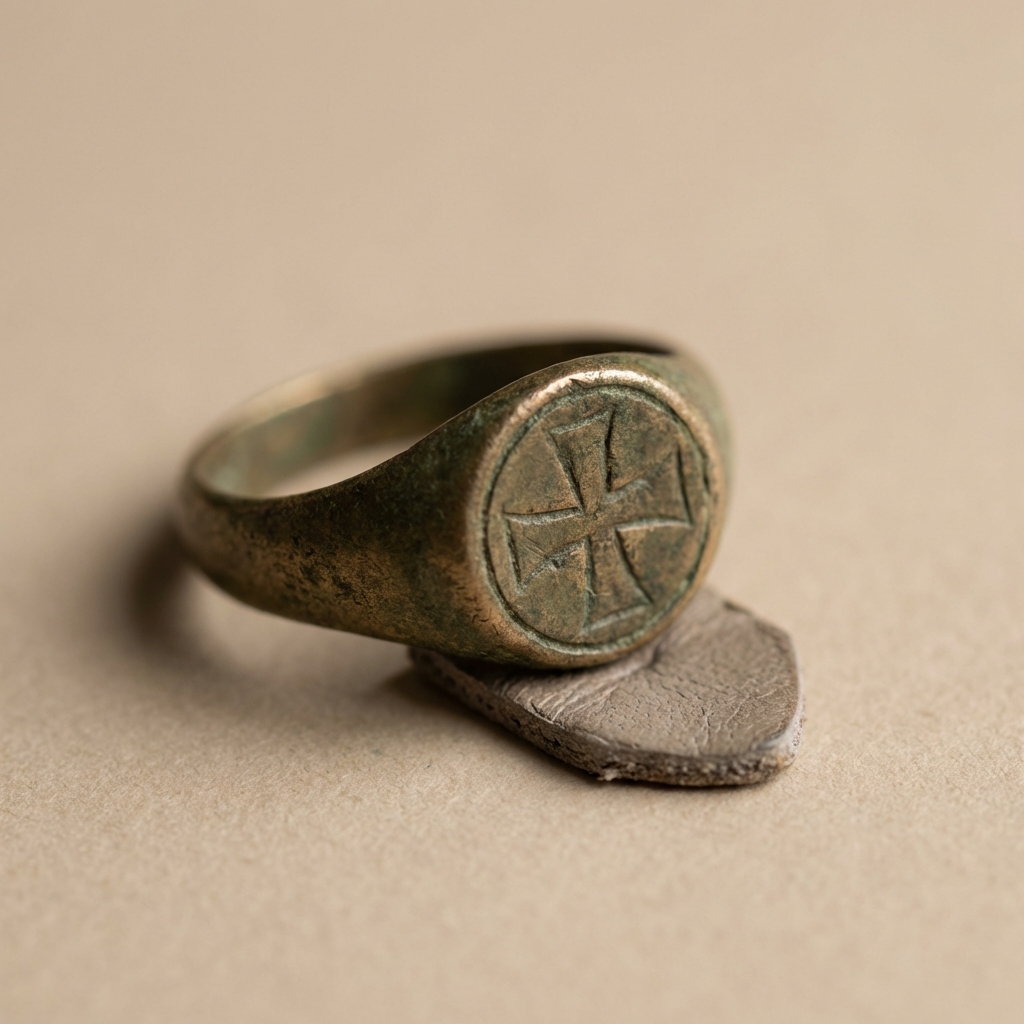
Patina, surface wear and the way a bezel is worn or rounded are often mentioned in listings because they speak to long use and handling. While such wear can suggest age, similar surface effects can also be produced by later handling or deliberate ageing, so visible features should be treated as suggestive rather than conclusive without further context.
For collectors, the practical implication is simple: treat the label as an initial cue to investigate further, not as a standalone authentication. Look for supporting condition notes, provenance, or documented collection history when a seller suggests a crusader association.
Typical features of a medieval crusader ring
Descriptions that suggest a crusader association typically point to certain visual cues rather than a single diagnostic trait. Commonly cited features include crosses or other Christian symbols, heraldic devices, abbreviated inscriptions, or figural scenes that reference pilgrimage or martial devotion. These features can indicate a devotional or identity-related purpose, but they do not, on their own, confirm a direct link to crusading activity.
In form, many rings described in this way have signet-style faces or small bezels with intaglio or low-relief decoration. A signet face can be plain, incised, or carved in low relief, and in collecting descriptions such faces are sometimes called a crusader signet when Christian iconography is present. Metal types named in listings often include silver and base alloys described as typical for wearable medieval jewellery, though precise identification usually depends on testing or clear documentation.
Patina, surface wear and the way a bezel is worn or rounded are often mentioned in listings because they speak to long use and handling. While such wear can suggest age, similar surface effects can also be produced by later handling or deliberate ageing, so visible features should be treated as suggestive rather than conclusive without further context.
How experts and sellers describe and date a medieval crusader ring
Specialists and careful sellers generally rely on a combination of stylistic comparison, observed manufacturing traits and any available provenance when suggesting dates or workshop attributions. In buyer-facing listings you will commonly see phrasing that reflects uncertainty: estimated dates, ranges, or terms like attributed to a workshop or region.
Follow @auroraantiqua for behind-the-scenes context
If you follow Aurora Antiqua's editorial listings or sign up for contextual updates, you can see how condition notes, measurements and provenance references are presented alongside images to aid your assessment.
Sellers may also include restoration notes and condition statements that explain what was stabilised, repaired or left untouched. Clear condition notes and a transparent description of any restoration work help readers understand why an attribution is proposed and what remains uncertain.
When in doubt, ask for more information: specific close-up photos, measurements, and a written explanation of the basis for the suggested date or attribution are reasonable requests that many reputable sellers will answer.
Common condition and restoration signs to check
Wear consistent with age is often described in terms such as rounded edges on the hoop, softened relief on the bezel, small surface scratches and a natural patina in recesses. These features can indicate long use, though the patterns and distribution of wear are what matter: wear concentrated only on a decorative face while the hoop looks new may point to later repair or alteration.
Restoration and preservation notes typically report actions like stabilised settings, re-polished surfaces, re-mounted stones or left original joins. Each of these phrases has a practical meaning for a buyer: stabilised suggests minimal intervention to make a piece structurally sound, while re-polished or re-mounted indicates more active conservation or repair.
When evaluating a listing, ask the seller to be specific. Useful questions include which parts were stabilised, whether any solder joins are modern, and if any stones were replaced or re-cut. Clear replies in writing help you assess condition against your collecting goals.
How provenance and documentation inform a medieval crusader ring attribution
Provenance statements in listings can range from a brief note of prior ownership to detailed collection history and accompanying verification letters. Sellers may provide a timeline of ownership, references to archived sale catalogues, or copies of lab or expert reports when available. Each element adds weight to an attribution, but gaps are common for objects with long histories.
Treat the label as a starting point, request detailed photos, measurements, condition and restoration notes, and any provenance documentation; align the level of evidence to your collecting goals and consider a specialist opinion if needed.
A provenance chain that includes documented collection history and verifiable ownership notes increases confidence, but does not by itself settle questions about manufacture or original use. Likewise, verification letters or third-party reports can be very helpful when they explain the basis for their opinion and the methods used.
If provenance is partial, practical steps include requesting any available paperwork, high-resolution photographs of marks or inscriptions, and explicit statements about which elements of the attribution are certain and which remain conjectural.
Decision framework: Should you buy a medieval crusader ring?
Deciding whether to buy depends on your collecting goals. If you seek wearable history and aesthetic resonance, a well-described piece with clear condition notes may suffice. If you collect for strictly academic or provenance-led reasons, you will likely require stronger documentation and possibly third-party reports.
Use a simple checklist when evaluating a listing: clear photos and measurements, transparent condition and restoration notes, a provenance statement or collection history, and a reasonable return policy. If a listing lacks these basics, factor that uncertainty into your decision.
Risk considerations differ by buyer type. A collector buying a wearable antiquity accepts more condition-related uncertainty, while someone aiming for a scholarly collection should expect deeper documentation and be prepared to commission independent assessment when needed.
Typical mistakes and pitfalls when assessing a medieval crusader ring
One common error is relying on a single visual cue. A cross or simple Christian symbol in a photograph can be persuasive, but the same motif occurs across time and regions and does not by itself prove a crusader association. Similarly, a single, small photograph rarely shows joins, repairs or modern interventions that can alter interpretation.
Another frequent pitfall is confusion with modern reproductions and revivals. Many later pieces were made in historical styles or deliberately aged; ambiguous patina or inconsistent wear patterns are clues that warrant further questioning. Heavy wear that obscures joins or surface detail can also mask modern repairs that change the original form.
To reduce risk, request multiple high-resolution images taken at oblique angles, ask for specific shots of joins and the inside of the hoop, and review any restoration notes carefully. When descriptions are vague, ask direct, written questions and treat evasive replies as a red flag.
Practical examples and photo-reading: three illustrative scenarios
Example A describes a signet-style ring that arrives with a written collection history, multiple detailed photographs, and a clear restoration note stating only minor stabilisation of the hoop. In that scenario, the combination of documentation and transparent condition notes can make a medieval attribution plausible for a collector whose interest is wearable heritage.
Example B is a patinated band offered with a short, undated provenance note and two small images. The patina looks convincing at first glance, but the listing lacks photos of the interior and of join lines. This ambiguity suggests the need for more images and a written explanation of the basis for the dating before a confident decision can be made.
Example C is a piece openly described as a revival or reproduction, or one where the seller notes a modern solder join and inconsistent wear. Visual clues such as uniformly shallow tooling, bright metal at obvious stress points, or a style that matches documented revival trends are strong indicators that the piece is not a medieval original.
How Aurora Antiqua approaches medieval crusader rings
Aurora Antiqua serves as a curator and reference layer for collectors seeking context and clear presentation. Listings aim to combine curated ancient rings spanning Roman, Greek, Byzantine, Islamic, Celtic, medieval, and post medieval periods with condition notes and provenance where available, so buyers see both images and the supporting information together.
Aurora Antiqua product listingsWhere documentation exists, the listing will describe it and include collection history or verification letters in summary form. Restoration and preservation notes are provided to explain what was stabilised or repaired and what was left untouched, helping readers form a measured view of attribution and condition.
The role of a curator in this context is to present information clearly and to help collectors ask the right questions, not to issue absolute declarations about origin. Transparent presentation allows buyers to match a ring to their collecting priorities and comfort with uncertainty.
Practical buying checklist and questions to ask the seller
Essential questions to ask any seller include: What is the full provenance or collection history for this piece? Are there documented verification letters or third-party reports? What specific condition work, if any, was performed and is that described in restoration notes? Can I receive measurements and additional high-resolution photographs, including interior shots and detail of joins?
Acceptable replies provide clear, written answers and, where relevant, images or copies of documentation. Red flags include vague statements about provenance, reluctance to show joins or interiors, or promises of authenticity without supporting documentation.
Before purchase, confirm the return policy and request a written condition statement that you can retain. These steps make post-purchase conversations and any necessary conservation work easier to manage.
Caring for and wearing a medieval crusader ring safely
Low-impact care preserves fragile features. Avoid exposure to harsh chemicals, frequent immersion in water, and abrasive cleaning. Store an ancient ring separately to prevent contact damage to fragile bezel work or intaglio surfaces, and use soft protective pouches for transport.
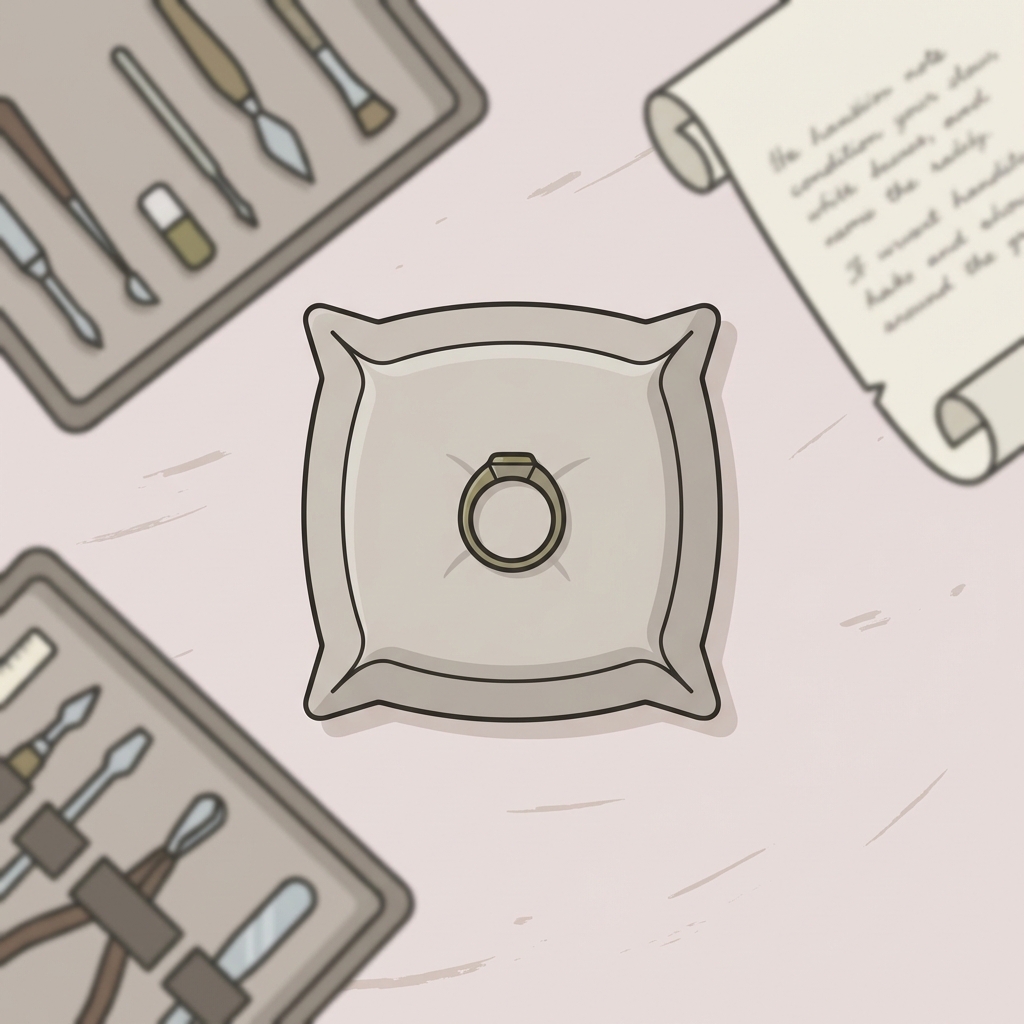
Limit direct wear if a ring has loose settings or visibly fragile joins, and consider professional conservation before regular use. A conservator can advise on whether stabilisation is sufficient for occasional wear or if further work is needed.
Keep measurements, photographs and provenance notes together and consider insuring pieces that have high value to you. Clear documentation makes conservator consultations and insurance claims more straightforward if needed.
Legal and ethical considerations when buying and owning medieval material
Legal and ethical rules about ownership and export vary by jurisdiction, and provenance gaps can raise legitimate concerns. Requesting clear documentation about export history and prior ownership is good practice, especially for high-value pieces or those claimed to have long collection histories.
Ethical collecting means preferring transparent listings, asking direct questions about origin, and being cautious when a seller cannot provide information about export or ownership history. For legal questions use an independent specialist or legal advisor in the relevant jurisdiction.
When documentation is incomplete, weigh the ethical and legal uncertainties against your collecting goals and consider seeking independent advice before completing a purchase.
Summary: how to think about a medieval crusader ring as a buyer or collector
Key takeaways: treat the phrase medieval crusader ring as a descriptive cue rather than proof; look for clear photos, provenance and condition notes; ask specific questions about restoration; and align your purchase with your collecting goals and risk tolerance.
If you want to proceed, request additional images, a written condition and restoration statement, and any available documentation. For more demanding scholarly collecting, consider commissioning a third-party opinion or condition report before purchase.
Aurora Antiqua aims to present curated listings with contextual information to help buyers make informed decisions, while acknowledging that some questions require specialist examination beyond a single listing.
Further reading and resources for learning more
Reliable next steps include consulting academic publications and museum catalogues for comparable illustrated examples, and speaking with conservators or independent specialists when attribution or condition affects your decision. These sources help you build a comparative understanding without relying on single photos or shorthand labels.
When requesting a specialist opinion, ask for a clear, written condition report that explains the basis for any dating or attribution, and keep all correspondence and documentation for future reference. This practice supports both due diligence and long-term stewardship of a piece.
Maintain a cautious, evidence-first approach: use the checklist tool and the buyer questions in this guide to structure enquiries and to document answers for your records.
The label typically points to a ring with Christian iconography or a form historically associated with crusading contexts, but it is a descriptive cue rather than proof of origin and should be checked against documentation and condition notes.
Look for inconsistent wear, uniformly shallow tooling, obvious modern solder joins, and vague provenance; request additional interior and join photographs and a written history before assuming an early date.
Request clear collection history, any verification letters or reports, detailed condition and restoration notes, and high-resolution images of marks, interiors and joins to support the attribution.
More from Aurora Antiqua
References
- Finger ring, London Museum (vormals Museum of London)
- Ring, Victoria and Albert Museum, London
- Devotional finger ring, London Museum (vormals Museum of London)
- Signet Ring, Victoria and Albert Museum, London
- Ashmolean Museum: British Archaeology Collections, Gold, University of Oxford
- Archaeological materials, Icon, The Institute of Conservation (UK)
- Bronze disease, Conservation Wiki, AIC Wiki, American Institute for Conservation
- Standards: Konservatorische Behandlung von archaeologischen Funden, Version, Bundesdenkmalamt Oesterreich, Wien
- Internet Archaeol. 33. Bland. Response: the Treasure Act and Portable, Internet Archaeology, University
Going deeper? See the complete guide to crusader rings.