


Looking for the real thing? Browse authentic Medieval & Crusader rings, each piece one of one, individually authenticated, with documented provenance. For the background, see the guide to medieval jewelry.
What is a medieval crusader ring? Definition and quick context
The phrase medieval crusader ring is a descriptive label collectors and cataloguers use for rings made in or associated with the Crusader era that carry Christian devotional or knightly imagery. Scholars and museum records treat the term as broad rather than as a single formal type, because surviving rings worked as many things at once: wearable devotional objects, personal seals and identity markers for their owners The Metropolitan Museum of Art, Jewelry in the Middle Ages overview.
That multiplicity of function is why careful language matters. A ring with a cross or star motif can signal personal piety or a link to pilgrimage, but the presence of such a motif alone does not prove membership in any specific medieval institution.
Guide for comparing a ring to primary databases and museum records
Use as a first pass comparison
In practice, collectors and researchers use a set of observable clues together: iconography, bezel form, material and any documented provenance or comparable finds. This combined approach reduces misattribution risk, but when institutional affiliation matters, contemporary documentary linkage or seal-context is decisive.
Plain definition and scope
For clarity, use the term medieval crusader ring to describe an object that dates to the Crusader period or carries motifs associated with that era and region. The scope is intentionally broad; the category groups rings with similar iconography and manufacturing features rather than asserting a single workshop or order as origin Museum overview on medieval jewelry.

Why collectors use the term
Collectors find the label useful because it signals a set of stylistic expectations and comparative catalogs to consult. The term points readers to a likely timeframe and motif family, and suggests which primary resources are relevant for comparison.
What this article will and will not claim
This article explains identification clues and evidence sources and intentionally stops short of asserting institutional Templar ownership without direct documentary or seal evidence. Established histories caution against easy Templar claims and recommend contemporary provenance for firm institutional attribution Cambridge University Press, The New Knighthood.
Historical context: rings in the Crusader era and their functions
Rings in the Crusader era existed in varied social contexts: they could mark personal piety, identify pilgrims, serve as knighting or household symbols, or function as small seals used to impress wax or clay on documents and goods. Museum object records and typological studies use these functions to situate rings within social practice Portable Antiquities Scheme.
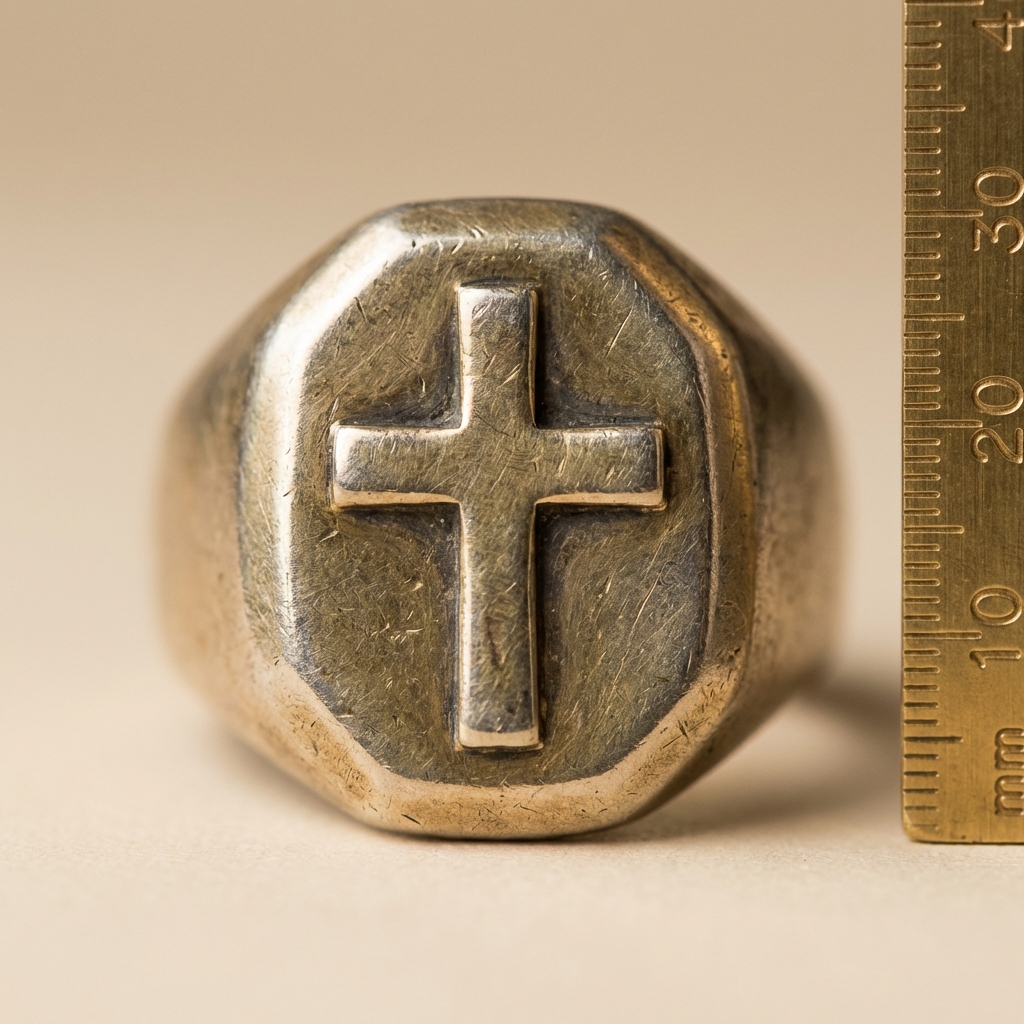
Knightly life and popular devotional practice produced overlapping forms. A cast bronze hoop with a raised cross might have been affordable devotional wear, while a neatly incised intaglio could double as a working signet for a literate household or officer. Because archaeological survival is uneven, surviving rings form a biased sample of what was once common.
Catalogs and national find-records provide the comparative backbone for dating and contextualization. When an example matches cataloged typology it gains interpretive weight; absent such parallels, attribution must remain cautious British Museum collection overview for rings.
Common symbols and iconography on medieval crusader rings
Common Christian motifs include simple crosses, star motifs and reduced saint figures. These images functioned as personal devotional markers and could reference pilgrimage shrines or general Christendom identity rather than a specific knightly order Metropolitan Museum of Art discussion of medieval jewelry.
Heraldic or seal-like designs also occur; some rings show geometric or emblematic fields that resemble small seals. Such motifs can indicate a personal or familial device but do not alone prove formal institutional membership.
Iconography is therefore an important clue but not a standalone proof. The most reliable readings combine motif with bezel form, material and documented comparanda before moving from plausible function to any stronger claim British Museum object typology.
Bezel types and seals: intaglio versus raised motifs
An engraved intaglio bezel is cut into the surface and can produce a reversed impression on wax or clay, which is a clear indicator of signet use; raised motifs sit above the surface and are primarily for display. Recognizing this difference helps separate likely seal rings from devotional display rings British Museum rings overview.
When inspecting images, note wear patterns and the crispness of engraving. A working intaglio often shows wear along the incised lines and residues in the cut that suggest repeated use as a seal. Raised motifs show wear at high points and on the bezel rim.
Motifs and bezel form are useful clues: motifs often signal devotional use while an engraved intaglio suggests signet function, but these features need to be combined with material evidence, provenance and cataloged comparanda before asserting any institutional connection.
Photographs that include bezel close ups, edge views and any reversed impressions can make a practical difference when assessing signet versus devotional function; buyers should request such views when a seal attribution is part of the claim.
Bezel type is diagnostic but not definitive. It is one piece of the evidence puzzle and best read alongside material, provenance and find comparanda to reach a robust interpretation Portable Antiquities Scheme guidance.
Materials and manufacture: what silver, bronze and gem intaglios suggest
Silver and bronze were common for many Crusader-era rings, reflecting widespread use and pragmatic metal choices, while gold rings and engraved gem intaglios such as carnelian often signal higher social status or continuity with older Mediterranean workshop traditions British Museum collection overview.
Visible manufacture clues include casting seams, simple hoop joins, soldered repairs and the manner in which a stone sits in a bezel. These features help with dating and with assessing whether an object has been altered or conserved Portable Antiquities Scheme.

Aurora Antiqua presents rings with condition notes and provenance-style documentation when available, to help buyers understand what the visible materials and repairs indicate about age and use. Photos that show the hoop, bezel and any repaired joins are especially helpful when silver and bronze condition influence interpretation.
Material identification from photos has limits; when an institutional attribution or precise dating matters, independent testing or a specialist report should be considered to complement visual assessment Helen J. Nicholson, The Knights Templar: A New History.
Provenance, find records, and where to compare rings
Primary comparative resources include national find databases and major museum catalogs; these repositories allow users to locate comparable typologies and published object records that can support or weaken attribution claims Portable Antiquities Scheme.
Meaningful provenance entries include contemporaneous ownership records, documented excavation contexts or entries in established collection catalogues. Loose or secondhand provenance descriptions that lack firm documentation are less helpful for institutional attribution.
Using comparable cataloged finds to check typology helps place a ring in a likely timeframe or workshop tradition. When a close match appears in a museum catalog or national database, the interpretive case for dating and function becomes stronger British Museum object records.
How museums and specialists approach attribution and labeling
Curators use specific qualifiers to signal uncertainty: phrasing such as probable, attributed to, and circa reflects different degrees of confidence based on typology, provenance and published scholarship anello sigillo (anello a castone con sigillo) età medievale, Istituto centrale per il catalogo e.
Institutions also rely on peer-reviewed scholarship and catalog entries to justify attributions. The absence of such published discussion does not disprove an attribution, but it reduces the evidentiary weight that a claim carries.
See provenance and restoration details on @auroraantiqua
Consult museum catalog entries and primary find databases before accepting an institutional Templar claim; use the checklist earlier in this article to map which pieces of evidence are present.
Readers should treat sweeping assertions of Templar ownership with caution. Specialist labels that link an object to an institution usually rest on documentary or seal-context evidence beyond motif alone Foundational Templar history.
Checklist for collectors: evaluating a medieval crusader ring before you buy
Quick visual checklist for images and descriptions: note material, bezel type, iconography, clear condition and restoration notes, and any documented provenance or comparable catalogued finds. These items should form the minimum set of details to request before purchase Portable Antiquities Scheme.
Questions to ask the seller include a full collection history or provenance, detailed restoration and condition statements, and any third party or specialist reports. Ask for high-resolution photos of the bezel, hoop and any maker marks or inscription areas.
When to pause: if a listing uses sweeping 'Templar' language without provenance or uses romanticized phrasing instead of catalog comparanda, seek more evidence or an independent opinion. The checklist reduces risk but cannot replace specialist testing when institutional attribution is claimed British Museum guidance.
Common misattributions and the later myth-making around Templar rings
Modern narratives often inflate connections to the Templars through imaginative storytelling, which is tempting for marketing but weak as evidence. Scholarship warns that many Templar attributions rely on later myth-making rather than contemporary linkage Cambridge history of the Order of the Temple.
Red flags include listings that offer no provenance, use romantic or anachronistic language, or fail to provide comparable catalog references. These patterns make institutional attribution unlikely without further proof.
Careful documentary linkage remains the strongest path to institutional attribution. Seal-context, contemporaneous records, or cataloged parallels in museum collections matter more than motif alone Portable Antiquities Scheme.
Practical examples and scenarios: reading three typical listings
Scenario A: a small silver cross ring with no provenance. The simple cross and silver metal suggest likely devotional wear; absent bezel evidence or comparanda, a claim of Templar ownership would be speculative and should prompt requests for better photos and provenance entries Museum overview.

Scenario B: a bronze ring with an intaglio matching a catalogued find. If the intaglio motif has a close parallel recorded in a national database and the find record links to a secure context, the working signet interpretation gains weight; request citation of the specific catalog entry.
Scenario C: a gold ring with carnelian intaglio and partial provenance. The material and gem type suggest higher status or continuity with older traditions, and partial provenance can help if it connects to a documented collection; independent testing and published comparanda will clarify the claim British Museum.
Care, restoration notes and how they affect interpretation
Common conservation interventions include stabilization, minor repairs and cautious cleaning. These treatments aim to preserve structure but can alter surface evidence such as tool marks and patina that inform attribution assessments Portable Antiquities Scheme.
Restoration can obscure original features; for example, aggressive polishing may remove tool marks or residues in an intaglio. Always request restoration notes and, when provided, before and after photographs to judge how interventions affect diagnostic features.
When to seek specialist testing or a second opinion
Non-destructive testing such as X-ray fluorescence or microscopic metallography can clarify metal composition and manufacturing techniques, which helps narrow likely date ranges and workshop practices Portable Antiquities Scheme.
However, institutional attribution rarely rests on laboratory tests alone. Documentary linkage, seal-context and published comparanda often remain essential. Seek a specialist report when a purchase depends on an institutional claim or when documentation is ambiguous.
Conclusion: reading meaning responsibly for a medieval crusader ring
Rings from the Crusader period commonly combined devotional imagery and practical function, so a cautious combined-evidence approach is best. Motifs such as crosses or stars are useful clues, but they should be read alongside bezel type, material, condition and provenance before making stronger claims Metropolitan Museum of Art.
Use national databases and museum catalogs as primary comparanda, review condition and restoration notes closely, and consult specialists when institutional attribution or high value depends on the claim. Responsible reading of meaning helps collectors make informed, evidence based choices.
Look for an engraved intaglio that produces a reversed impression, wear consistent with repeated use along incised lines, and request close photographs of the bezel and any impression evidence; combine these observations with catalog comparanda for stronger interpretation.
No; crosses and stars were common devotional motifs and can indicate piety or pilgrimage rather than formal Order membership; institutional attribution needs contemporary documentary linkage or seal-context.
Request specialist testing or a report when institutional attribution or high purchase value depends on the claim, or when materials and manufacturing features are ambiguous from photos alone.
More from Aurora Antiqua
References
- Ring, Victoria and Albert Museum, London
- Finger ring, London Museum (vormals Museum of London)
- Signet Ring, Victoria and Albert Museum, London
- Medieval gold signet ring, Collections Online, Amgueddfa Cymru, Museum Wales, Cardiff
- anello sigillo (anello a castone con sigillo) età medievale, Istituto centrale per il catalogo e
- Devotional finger ring, London Museum (vormals Museum of London)
- Lüneburger Stadtarchäologie e.V, Lueneburger Stadtarchaeologie e.V
- Ashmolean Museum: British Archaeology Collections, Gold, University of Oxford
- Research report: export licensing and provenance, GOV.UK, Department for Culture, Media and Sport (DCMS)