


Looking for the real thing? Browse genuine ancient rings for sale, each piece one of one, individually authenticated, with documented provenance. For the background, see the guide to ancient jewelry.
Quick answer and why this question matters
The short answer is that 'divorce ring' is mainly a modern interpretive label rather than a clearly defined archaeological category in current catalogues of ancient jewelry; sellers and catalogues typically describe rings by material, motif and condition rather than by a legal function.
This distinction matters for buyers because interpretive labels can influence how a ring is presented and valued, and because responsible buying relies on documentation like provenance and condition notes rather than on a single evocative phrase. Auriga - Roman Silver Intaglio Ring listing
Recommend a modest technical imaging and basic material check buyers can request
Ask for TIFF images and a signed provenance summary
For immediate decisions, prioritise clear photos, measurements and explicit provenance statements in a listing; these are the practical fields most catalogues use when describing ancient rings.
Definition and context: what Roman rings are and how they were used
Roman rings from the 1st century BCE through late antiquity appear in catalogue entries across a variety of materials, including gold, silver and bronze, and often with intaglio gemstones such as carnelian or red jasper; descriptions in commercial catalogues focus on material and motif more than a single social function. See the Ancient Roman Rings collection. Diana - Roman Silver Intaglio Ring listing
These objects can serve multiple roles in Roman life, typically recorded by catalogues as personal seals when intaglios are present, amulets when motifs suggest protection, status markers when metal or workmanship is fine, or simply as wearable jewelry; dating in listings is usually given as an estimated century range rather than a precise year. Minerva - Roman Gold Ring listing
How catalogues and Aurora Antiqua document Roman rings
Responsible catalogue entries typically include a clear set of data fields: material, estimated period, intaglio motif description, measurements, condition notes and any provenance statements or references; these fields help collectors compare items and ask targeted follow up questions. Celestia - Late Roman Bronze Ring listing
See behind the scenes at @auroraantiqua
Download or view a printable checklist of identification questions to use when inspecting a listing; it lists photos to request, condition details to confirm, and provenance items to ask for.
A good listing will also mention restoration notes and certificates when present, explaining what was stabilised or repaired, and will avoid speculative legal labels without citation, which helps buyers assess risk. Numerius - Roman Bronze Ring listing
Materials, manufacture and diagnostic features collectors should check
Start with the basics: material identification matters because gold, silver and bronze behave differently over centuries; a listing will often describe a ring as 'solid silver mount' or 'cast bronze' and these phrases are practical indicators of manufacturing tradition. Diana - Roman Silver Intaglio Ring listing
Look for manufacturing indicators in photos and descriptions: casting seams, pour marks, or evidence of hand-wrought finishing, plus bezel construction and how an intaglio is set or carved; these features help distinguish period originals from later remounts or modern copies.
Wear consistent with age also has typical signs: a stable surface patina, softened edges on raised details, slight smoothing of the intaglio face where repeated handling occurred, or shallow corrosion where bronze is involved; catalogue condition notes should call these out if present. Celestia - Late Roman Bronze Ring listing
Finally, stone identification in listings is often phrased as 'described as carnelian' or similar; that wording signals a seller identification rather than laboratory confirmation, and buyers who need certainty should request a material identification report. The Jewellery Editor provides a useful overview of intaglio gemstones and history that may help frame these requests: Ancient Intaglios: From Gemstones to Modern Jewelry
Common intaglio motifs and what they tell us about use and meaning
Catalogues frequently record intaglio imagery depicting deities, animals and mythological scenes; motifs such as Diana, Minerva and various animal scenes are common and are typically read as personal seals, amulets or conversation pieces rather than direct evidence of a legal act. For background on intaglios see the Corinium Museum article: Intaglios in the Roman World. Diana - Roman Silver Intaglio Ring listing

Reading iconography cautiously is important: a hunting goddess like Diana can imply a personal or devotional association, and a rooster or chariot scene can relate to civic or mythic symbolism, but such motifs do not by themselves identify a ring as used in a specific legal practice.
Aurora Antiqua listings illustrate this pattern by giving motif descriptions alongside condition and provenance notes, allowing readers to understand why a motif might suggest a particular use while making clear that motif alone is not definitive.
A practical identification framework buyers can use
Step 1: Check materials and manufacture. Confirm the seller's material description, examine photos for casting or finishing signs, and note bezel style and how the intaglio is mounted; this gives a basic sense of period consistency. Numerius - Roman Bronze Ring listing
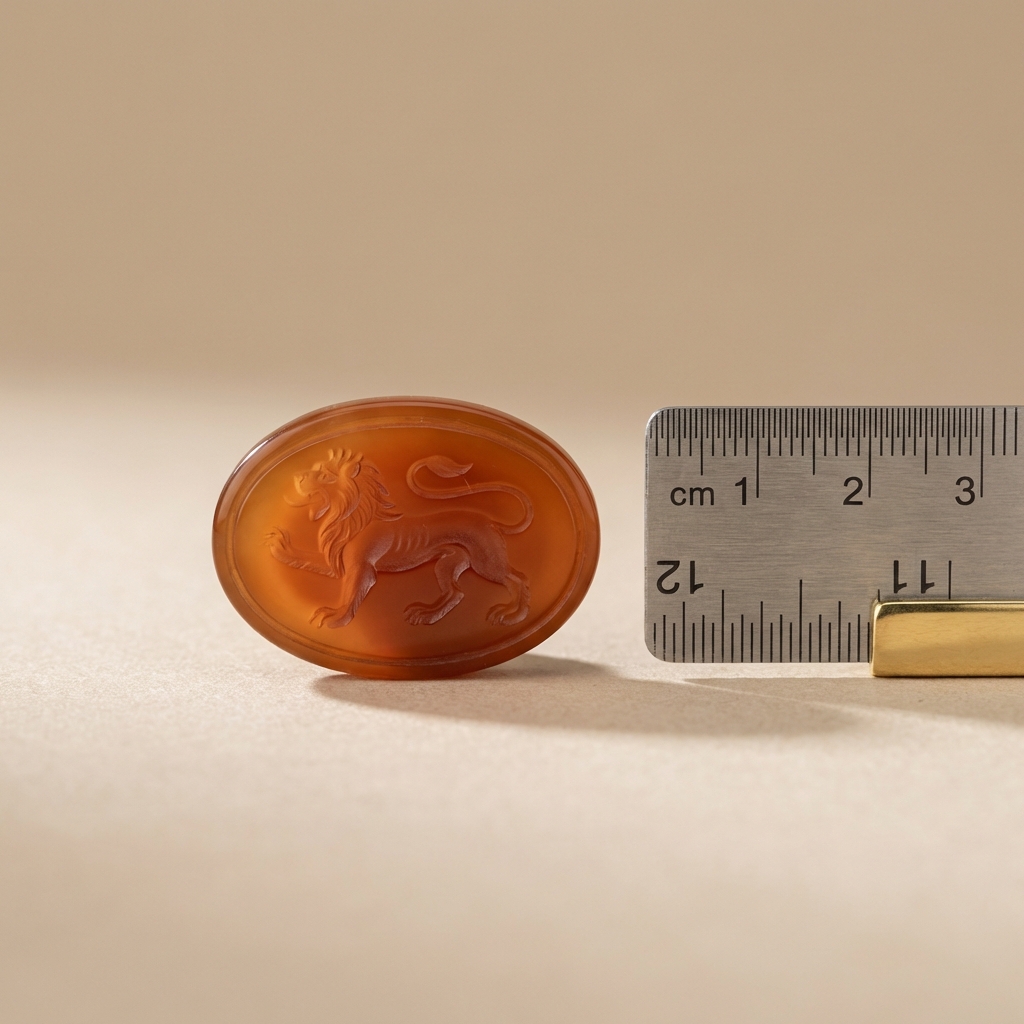
Step 3: Verify provenance and documentation. Prioritise documented provenance such as collection history, prior ownership notes or museum object numbers if applicable, and ask for any certificates or verification letters that accompany the piece; catalogue documentation is often the single most important factor in deciding whether to proceed. Minerva - Roman Gold Ring listing
When in doubt, request a modest independent check such as a high-resolution imaging set and a short material identification statement; these do not prove provenance but can help confirm whether the physical characteristics align with the seller's description.
How to assess provenance, condition and restoration claims
Reliable provenance statements in catalogue entries tend to include collection history, prior ownership notes, museum object numbers if applicable, or a verification letter from a known collection; this level of detail helps situate an object within an institutional or collector context and reduces uncertainty. Celestia - Late Roman Bronze Ring listing
Restoration notes should be specific: a good entry describes what was stabilised, what was repaired and what was left untouched, often with before and after photos or with a short technical note; vague phrases like 'conserved' without detail are a red flag.
Certificates and verification letters are useful, but assess their provenance too; a named collection history or museum number that can be independently checked carries more weight than a generic certificate, and sellers should be willing to provide additional documentation on request. Minerva - Roman Gold Ring listing
When provenance is incomplete, be conservative: ask for more images, measurements, and any prior sale records, and consider seeking an independent technical report if the object is a major purchase.
The 'divorce ring' label: what the evidence shows
Surveying recent commercial catalogues shows that the term 'divorce ring' is rarely used as a defined category and that explicit inscriptional or contextual evidence tying a ring to divorce is not reported in those catalogues, so the label should be treated as interpretive rather than evidential. Auriga - Roman Silver Intaglio Ring listing
Commercial catalogues from 2025 to 2026 do not present consistent inscriptional or contextual evidence that identifies a distinct class of rings explicitly used for divorce; the label remains an interpretive suggestion rather than a documented category.
Why this matters: assigning a legal function like divorce to a ring based solely on motif or wear is problematic because the available commercial evidence does not supply clear inscriptional or archaeological contexts that would support that specific use. Numerius - Roman Bronze Ring listing
Until independent literature or inscriptional finds make a direct connection, collectors and writers should avoid using 'divorce ring' as a firm provenance category and should instead describe the object by its documented attributes and any qualified interpretive suggestions.
Decision criteria: when to consider buying an ancient ring from a catalogue
Key decision factors include clarity of provenance, thorough condition and restoration notes, quality of photography and measurements, and the availability of third party testing or institutional references; weigh these against your buyer goal, whether wearable history or an academic collection. See the Rings collection for broader context. Celestia - Late Roman Bronze Ring listing
For a wearable-history purchase, you may accept a well-described piece with clear photos and reasonable condition notes; for serious academic collecting, prioritise items with verifiable collection history or independent technical reports and allow time to obtain those documents before purchase.
If provenance is unclear, consider asking for a period of due diligence or walking away; a conservative approach reduces the risk of acquiring an item with contested history or uncertain documentation.
Typical mistakes and red flags in listing descriptions
Common red flags are vague provenance phrasing such as 'old collection' without names or dates, absence of measurements, photos that obscure the bezel or intaglio, and claims of specific functions without citation; these shortcomings make it hard to assess authenticity or history. Minerva - Roman Gold Ring listing
Assigning a legal function like 'divorce ring' without direct evidence is unreliable because motif or wear alone cannot demonstrate legal use; ask the seller what evidence supports such a claim and request documentation if any is offered.
Sample follow up questions you can copy: 'Can you provide a documented collection history or prior sale record?', 'Are there high-resolution images of the intaglio and bezel from multiple angles?', and 'Has the piece been subject to any material identification or conservation reports?'.
Practical examples and short case scenarios from listings
Example 1, a silver intaglio listing with good documentation: an entry that names a prior collection, includes measurements, describes restoration work and supplies clear images of the intaglio and bezel gives a buyer the basis for reasonable confidence and follow up testing if desired. Diana - Roman Silver Intaglio Ring listing
Example 2, a weakly documented listing: a visually attractive piece with minimal provenance text, no measurements and only a single small photo is high risk; even if the motif invites an interesting story, the absence of documentation should prompt a request for more information or a decline to purchase.
Recording your findings is simple: make a short checklist that notes material description, measurements, provenance statements, restoration notes, and any independent tests; use that record to compare similar listings and to frame questions for the seller.
How to request documentation, images and technical checks from a seller
Checklist for questions to ask: request high-resolution images with scale, clear shots of bezel and hallmarks, a written collection history with dates and prior owners if known, any certificates or verification letters, and a short restoration summary detailing what was stabilised or repaired. Celestia - Late Roman Bronze Ring listing
What reasonable seller responses look like: named previous collectors, dated inventory numbers, or a short conservation note are all helpful; a willingness to provide additional images and to clarify condition language is a positive sign.
When to seek independent testing: for high-value purchases or when provenance is thin, ask for a material identification report or professional imaging and factor the time and cost of that check into your decision.
Conclusion: a cautious, evidence first path for buyers
In short, the label 'divorce ring' is best treated as an interpretive suggestion rather than a catalogue-defined category; current commercial listings do not provide consistent inscriptional or contextual evidence to support a distinct legal function for rings in most cases. Diana - Roman Silver Intaglio Ring listing
Recommended next steps are to apply the identification checklist in this article, ask sellers for clear provenance and restoration notes, and prefer items with third party documentation when accuracy of history matters; for complex cases consult a reputable curator or specialist. For more, see the Aurora Antiqua homepage.
Sellers use 'described as' to indicate identification made by visual inspection or seller knowledge rather than laboratory testing; request a material identification report if you need certainty.
No, motifs suggest possible uses such as seals, amulets or personal symbolism but do not by themselves prove a specific legal function without supporting inscriptional or contextual evidence.
A named collection history or prior ownership record that can be independently checked is usually the most useful single piece of provenance information.
More from Aurora Antiqua
References
- A Corpus of Roman Engraved Gemstones from British Sites, University of Michigan Press / BAR Publishing
- Internet Archaeol. 40. Atkinson and Preston. Objects of personal adornment, Internet Archaeology, Council
- Carnelian ring stone with Asclepius, the god of medicine, Acc. 81.6.94, The Metropolitan Museum of Art
- A. M. Caggiani u. a., Corroborating the autoptic identification, Wiley, Journal of Raman Spectroscopy
- Apport de l'analyse statistique des produits de corrosion à la compréhension, Revue d'Archeometrie
- Bague : satyre jouant de la double flûte devant une statue, Musee du Louvre, Paris, Departement des Objets d'art
- Object ID, International Council of Museums
- About us, International Association of Dealers in Ancient Art
- Research report: export licensing and provenance, GOV.UK, Department for Culture, Media and Sport (DCMS)