


Looking for the real thing? Browse our Ancient Roman ring collection, each piece one of one, individually authenticated, with documented provenance. For the background, see the guide to Roman jewelry.
What Romans called gold: aurum and related Latin terms
Etymology and the word aurum in classical sources
The everyday Latin word for gold was aurum, the term that gave modern chemistry the symbol Au and that appears in classical and modern reference works when authors discuss the metal and its uses; this etymological link is a useful starting point when reading catalogue entries or scientific reports about a gold ring roman or other artefacts Encyclopaedia Britannica overview of gold and SMIGRA Aurum.
In classical literature, authors describe gold not only as a material but also in terms of working and finishing methods that align with what archaeologists see in surviving jewellery, so the use of aurum in a listing or catalogue entry often signals that the writer is referring to the material rather than a particular coin type Pliny the Elder, Natural History.

Adjectival forms and literary usage
The adjectival forms aureus (masculine) and aurea (feminine) are common in Latin texts and later cataloguing language; they can describe colour, sheen, or an object made of gold and are the root for the coin-name aureus in numismatic literature Encyclopaedia Britannica entry on the aureus.
When you encounter catalogues or listing notes that use terms such as aureus or aurea, it helps to read them as historical or stylistic references rather than as definitive material assays unless the text also supplies scientific testing or clear provenance documentation Pliny the Elder, Natural History.
See behind the scenes at @auroraantiqua
Browse curated listings to see how material, condition and provenance notes are presented alongside clear images and measurements.
Aureus: the Republic and early Empire gold coin
When the aureus was used
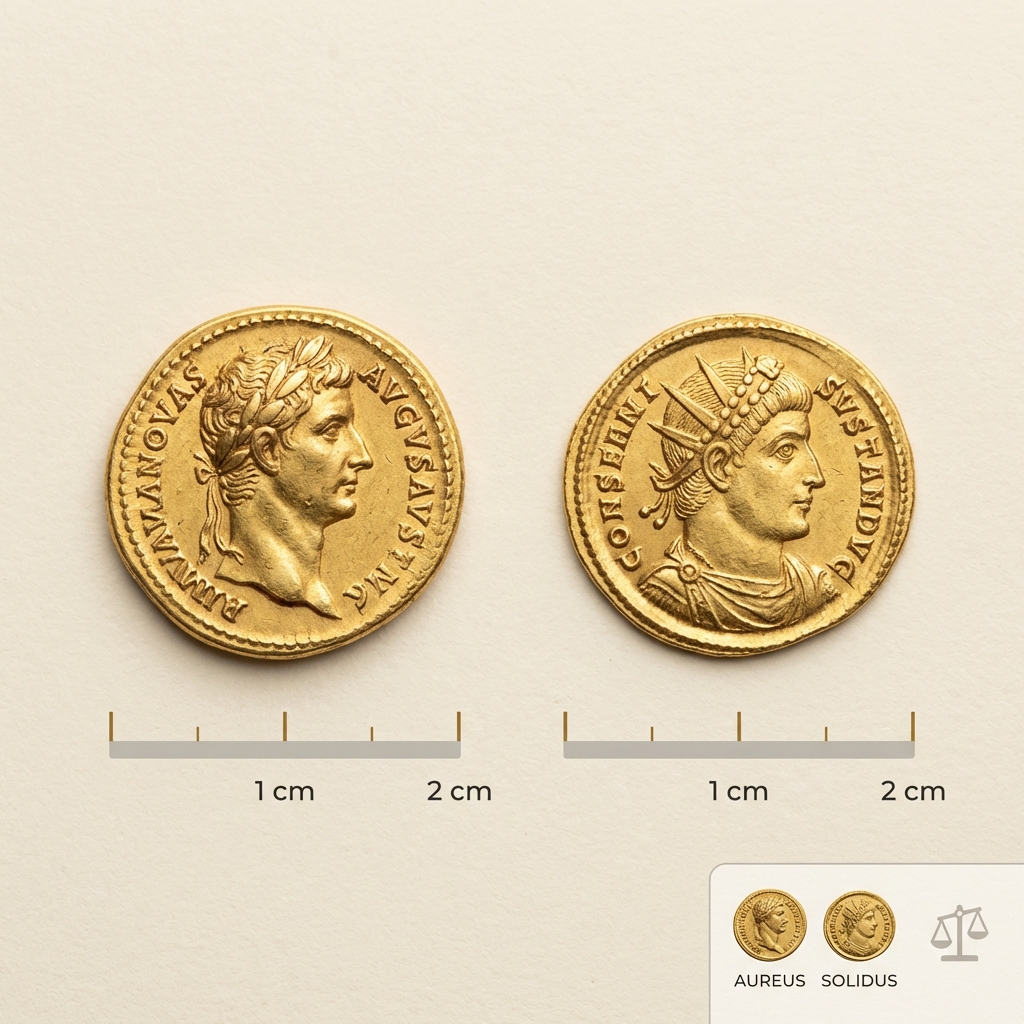
The aureus was the principal Roman gold coin from the late Republic through much of the early Empire, and it is the term most often encountered in catalogues and numismatic references when discussing Republican or early Imperial gold issues Encyclopaedia Britannica entry on the aureus; see the NumisWiki entry for further detail NumisWiki aureus.
Collectors should note that references to an aureus in a listing usually indicate a coin-type attribution tied to a historical period, but that the exact date, issuing authority and fineness of an individual piece often remain subject to specialist assessment and sometimes scientific assay Online Coins of the Roman Empire, American Numismatic Society and Institute for the Study of the Ancient World.
How numismatists identify an aureus
Practical identification of an aureus starts with weight and diameter measurements, combined with a clear reading of obverse and reverse legends and portraits to place the issue within a known emperor or magistrate series Aureus of Trajan, AD 103 to 111, Münzkabinett der Staatlichen Museen zu Berlin; see the ANS OCRE identify tools for assistance ANS Identify.
Because aurei experienced phases of high fineness and later debasement over time, it is sensible for buyers to compare measurements and legends against reputable references rather than relying solely on descriptive phrases in a listing Encyclopaedia Britannica entry on the aureus.
Solidus: Constantine's reform and the Late Antique standard
Origin under Constantine
Emperor Constantine introduced the solidus in the early fourth century, and the solidus quickly became a long-lived, high-fineness gold standard that persisted into Late Antiquity and the Byzantine period Encyclopaedia Britannica entry on the solidus.
The introduction of the solidus matters for collectors because it marks a change in weight and fineness expectations for gold coinage, and because Late Antique pieces and Byzantine derivatives follow different stylistic conventions than Republican and early Imperial aurei American Numismatic Society overview of Roman gold coinage.
The Latin term aurum names the metal, while aureus and solidus are coin terms that help date and contextualise objects; for rings combine stylistic inspection, condition and provenance notes with assays or specialist reports when precision is required.
When a listing attributes a small gold pendant or a coin-derived mount to the fourth century or later, asking whether the piece is an original solidus or a later imitation is an important step before accepting the date and description.
Why the solidus mattered for later coinage
The relative stability of the early solidus made it a common standard for international trade and later Byzantine issues, which is why a solidus attribution in a catalogue should trigger a comparison to known die-types and stable weight ranges in specialist references Encyclopaedia Britannica entry on the solidus.
For small artefacts such as pendants made from coins, the distinction between an aureus and a solidus is practical: it affects the likely date range and the expected physical characteristics that a conservator or numismatist would use when assessing the object American Numismatic Society overview of Roman gold coinage.
How these terms apply to Roman jewellery and rings
Auric terminology in jewellery descriptions
Catalogues and museum entries use aurum as a material term when describing gold jewellery, and adjectival forms such as aureus or aurea appear in older descriptions and in stylistic discussion; such language helps place a gold ring roman in a linguistic and historical context but should not replace scientific testing when precision is needed The Metropolitan Museum of Art, Roman Jewellery.
Writers commonly use phrases like appears to be or described as when the catalogue author has not arranged an assay, and responsible listings will pair those phrases with clear condition notes and images that show patina, joins and any visible repairs The Metropolitan Museum of Art, Roman Jewellery.
What to look for on an ancient ring
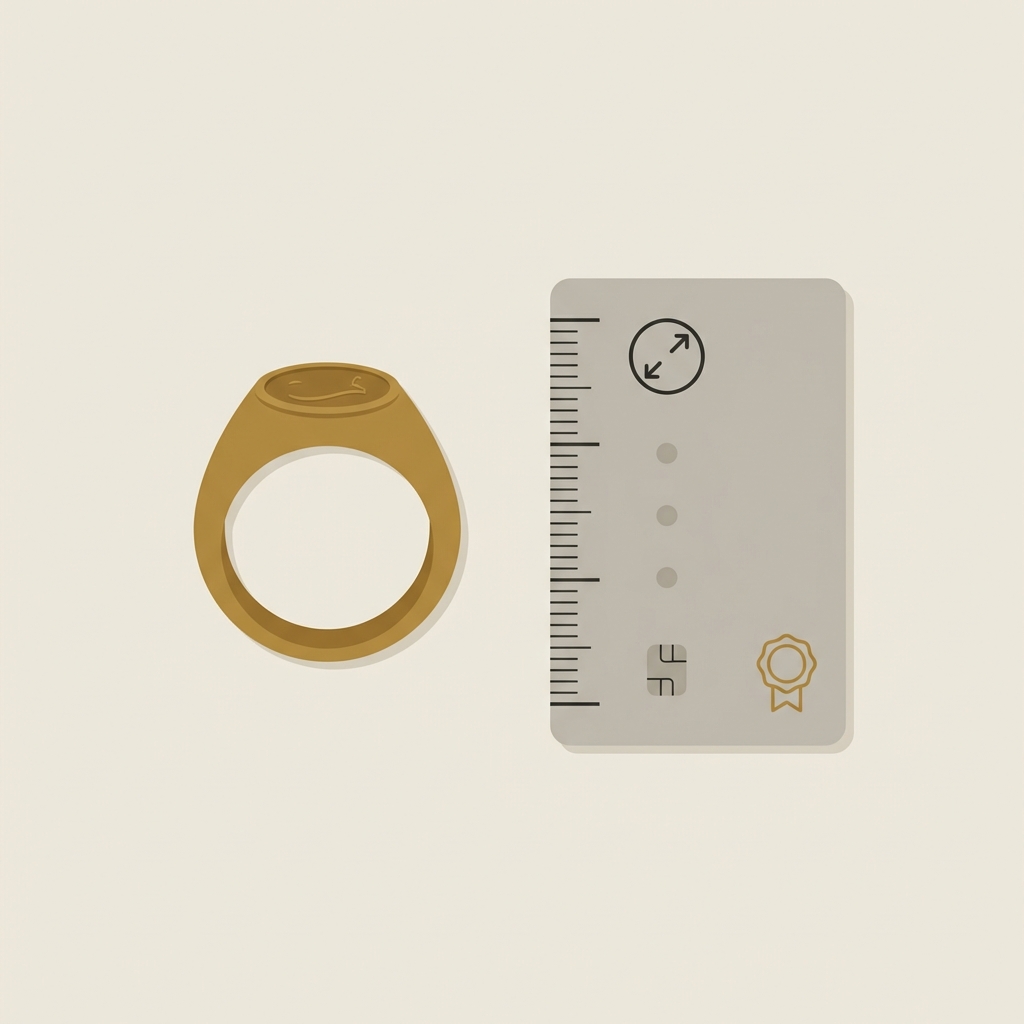
When inspecting a ring, check the bezel, the hoop where the finger sits, and the shoulders where the bezel joins the band; these construction points reveal a lot about technique, repair history and likely period attribution The Metropolitan Museum of Art, Roman Jewellery.
Look for signs of intaglio work or set gemstones such as carnelian and agate, and take note of patina and any restoration notes; when materials are described without assay, assume the description is stylistic and request tests for firm identification Pliny the Elder, Natural History.
Practical identification checklist for collectors
Coin checklist
For a coin listing, the basic checks are weight, diameter and a clear photograph of obverse and reverse legends and portraits to match against numismatic references; these steps are the first line of verification before requesting further documentation Online Coins of the Roman Empire: RIC II Trajan 109, American Numismatic Society.
When a seller attributes a coin as an aureus or solidus, compare the measurements and the legend to standard catalogues and, if the attribution matters to you, ask for an authoritative numismatic report or an assay to confirm fineness Encyclopaedia Britannica entry on the aureus.
Jewellery and ring checklist
For a gold ring roman, check construction details: bezel type, how the hoop is formed, evidence of intaglio or gemstone settings, and look for consistent patina and any visible repairs that are described in restoration notes The Metropolitan Museum of Art, Roman Jewellery.
Request provenance-style documentation where available, such as collection history or verification letters, and ask whether any material identifications were made by assay or are described as appears to be; these details materially affect how a piece should be catalogued and conserved American Numismatic Society: Silver Quinarius of Augustus, Emerita, 25 BCE.

Dating and attribution: what experts rely on
Stylistic dating and workshop attribution
Experts estimate dates and workshop attributions by comparing stylistic features, legends and manufacturing techniques to securely dated examples in museum collections and numismatic corpora, a method that provides useful but not absolute results American Numismatic Society overview of Roman gold coinage.
Because many attributions are comparative, listings that claim a precise year often rest on stylistic parallels rather than direct documentation, so buyers should prefer pieces with collection history or third-party verification when a narrow date range is important Encyclopaedia Britannica entry on the solidus.
Limitations of visual dating
Visual dating can be affected by regional workshop practices, modern repairs that mimic period techniques and the conservation history of a piece, which is why specialists typically label many attributions as likely or probably rather than certain The Metropolitan Museum of Art, Roman Jewellery.
Where dating is critical for research or purchase, ask for documentation such as collection history or verification letters, and consider independent reports or scientific testing to reduce uncertainty International Association of Professional Numismatists (IAPN), IBSCC.
Materials, fineness and when to seek scientific assay
Variability of fineness across periods
Gold fineness and weight varied across Roman history: aurei show phases of high fineness and later debasement, while the early solidus was struck to a relatively stable standard, so the historical context affects what fineness you might expect for a coin or a coin-derived pendant Encyclopaedia Britannica entry on the aureus.
Because individual pieces can deviate from general trends, the only way to confirm precise fineness is through scientific assay or an authoritative numismatic description that includes measured standards Encyclopaedia Britannica entry on the solidus.
Requestable specialist reports and assays to verify gold artefacts
Ask for both images and numeric reports
When assay matters
Assay matters when a precise fineness affects attribution, catalogue treatment or conservation choices, and when a buyer needs a firm material identification rather than a stylistic description Combining synchrotron radiation techniques for the analysis of gold coins from, Scientific Reports.
If you plan to alter or wear a fragile antique as wearable history, seek conservator advice and an assay report that documents alloying elements and potential treatments before any intervention The Metropolitan Museum of Art, Roman Jewellery.
Common misidentifications and red flags
Replica and reproduction markers
Common red flags include listings with low quality photos, vague provenance descriptions, inconsistent measurements, or missing legends on coins; any of these should prompt follow-up questions and, if unresolved, skepticism about the attribution The Metropolitan Museum of Art, Roman Jewellery.
Modern replicas and well-intentioned repairs can mimic period features, and it is often difficult for non-specialists to distinguish careful restoration from original joins without high resolution images and detailed restoration notes American Numismatic Society overview of Roman gold coinage.
Problematic listing practices
A listing that promises guaranteed authenticity without presenting paperwork, or that uses pressure language rather than documentation, is a practical red flag; prefer sellers who provide clear condition notes and provenance-style references and treat any absolute claims skeptically The Metropolitan Museum of Art, Roman Jewellery.
If measurements or photos are inconsistent, request additional images and independent verification before committing to purchase, and consider asking for an assay when fineness is consequential International Association of Professional Numismatists (IAPN), IBSCC.
Typical restoration and conservation notes explained
What restoration notes commonly report
Restoration notes often report whether a piece was stabilised, whether joins were re-soldered and whether missing elements were reconstructed; transparent notes will specify materials used and show images of treated areas The Metropolitan Museum of Art, Roman Jewellery.
Understand the difference between professional stabilisation, which aims to preserve and prevent further damage, and invasive repair, which reconstructs missing parts; ask for close-up photographs of any repaired areas before purchase The Metropolitan Museum of Art, Roman Jewellery.
How restoration affects appearance and resale considerations
Conservation treatments can alter the appearance of a ring by cleaning or consolidating areas, so transparent restoration notes help buyers judge how much of the current appearance is original and how much is the result of intervention.
Clear documentation of restoration is also important if you ever wish to resell or to show the piece to a specialist, because well-recorded treatment history preserves value in terms of information even if it does not guarantee market value.
Examples: reading three real-world listing scenarios
A coin listing described as an aureus
Imagine a listing that describes a gold coin as an aureus with a named emperor in the legend; your first step is to request weight and diameter, clear photos of both sides and a transcription of the legend so you can compare against standard catalogues Online Coins of the Roman Empire: RIC II Trajan 109, American Numismatic Society.
If the seller supplies matching measurements and a convincing legend, a numismatic comparison is the next step; if key details are missing, request an authoritative numismatic report or an assay before accepting the coin-type attribution.
A ring with an intaglio described as Roman
For a gold ring roman described as having a carnelian intaglio, examine bezel style, the setting method for the gemstone, patina and any restoration notes; ask whether the gemstone identification was visual or tested and whether provenance documentation exists The Metropolitan Museum of Art, Roman Jewellery.
Photographs that show the intaglio from multiple angles, as well as photos of the inner hoop and joins, can reveal if the setting is consistent with Roman workshop practice or if later modification has occurred.
A solidus converted to a pendant
When a solidus is converted to a pendant, the mount and suspension method are important clues: check how the coin was pierced or mounted, whether the attachment is ancient or modern, and whether the listing provides assay or numismatic references to confirm the coin type Encyclopaedia Britannica entry on the solidus.
Ask for documentation about the conversion process and for images showing the coin before and after mounting when available, because modern conversions can affect attribution and conservation decisions.
How Aurora Antiqua presents ancient gold rings and documentation
What to expect in a curated listing
Aurora Antiqua positions itself as a curator that presents pieces with historical context, condition notes and provenance-style documentation when available, and listings typically include clear images, measurements and restoration notes to help buyers assess a piece.
The brand emphasises restoration and preservation notes, provenance and documentation references when available, and uses conditional language to avoid overstating certainty about dating or materials.
How documentation and restoration notes are framed
Listings will often state whether material identifications are described as appears to be or whether an assay was arranged, and they will list any stabilisation or repair work performed so that collectors understand what was done and why.
Remember that responsible curatorship emphasises transparency over guarantees; Aurora Antiqua provides context and documentation where possible but does not offer absolute claims about future market outcomes.
Buying checklist: questions to ask before you commit
Essential documentation to request
Ask sellers for high-resolution photos from multiple angles, exact measurements, condition and restoration notes, and any provenance-style documentation such as prior collection history or verification letters.
Request assay results if a precise fineness matters and ask for a clear statement when material descriptions are visual or stylistic rather than tested The Metropolitan Museum of Art, Roman Jewellery.
Follow-up questions for condition and assay
Ask whether repairs were stabilising or reconstructive, which materials were used in any restoration, and whether images of repaired areas are available; also ask about any return policy and whether the seller will accept independent verification within a reasonable timeframe About us, International Association of Dealers in Ancient Art.
When a description uses appears to be, request tests or independent reports before accepting firm identifications.
Care and display for ancient gold jewellery
Basic handling and storage
Handle ancient gold jewellery with clean hands, avoid household cleaning agents and do not polish items aggressively, because surface cleaning can remove patina and obscure original finishes; store pieces in padded, low-humidity environments and use mounts that support fragile joins The Metropolitan Museum of Art, Roman Jewellery.
When displaying a ring, use padded supports and avoid exposing objects to direct sunlight or fluctuating temperature and humidity that can stress any attached gems or restorations.
When to seek professional conservation
Seek a professional conservator before attempting structural repairs or when corrosion or unstable joins are present; conservators can advise on reversible stabilisation and document any treatment in a way that preserves the item’s information value.
For wearable history, weigh the trade-offs between using a piece and preserving it: for many collectors, careful display rather than frequent wear is the conservative choice.
Summary: what 'Roman gold' usually means for collectors
Key takeaways
In short, aurum is the Latin word for gold and is often used in academic and catalogue descriptions, while aureus and solidus are coin terms that signify different historical roles and expectations for weight and fineness Encyclopaedia Britannica overview of gold.
For collectors evaluating a gold ring roman or a small gold artefact, combine visual inspection of construction, patina and intaglio or gemstone work with requests for provenance documentation and, where necessary, scientific assay or authoritative numismatic description American Numismatic Society overview of Roman gold coinage.
Aurum is the Latin term for gold; in listings it usually indicates the material is described as gold, but precise fineness should be confirmed by assay if needed.
An aureus is a Republican to early Imperial gold coin type, while the solidus was introduced under Constantine in the early fourth century and became a later high-fineness standard.
Request an assay when precise fineness affects dating, catalogue treatment or conservation choices, or when a seller describes materials without testing.
More from Aurora Antiqua
References
- Online Coins of the Roman Empire, American Numismatic Society and Institute for the Study of the Ancient World
- Online Coins of the Roman Empire: RIC II Trajan 109, American Numismatic Society
- Aureus of Trajan, AD 103 to 111, Münzkabinett der Staatlichen Museen zu Berlin
- American Numismatic Society: Silver Quinarius of Augustus, Emerita, 25 BCE
- Gold aureus of Julius Caesar, Inv. 99.35.113, The Metropolitan Museum of Art, New
- Gold necklace with coin pendants, Inv. 17.190.1655, The Metropolitan Museum of Art
- International Association of Professional Numismatists (IAPN), IBSCC
- Combining synchrotron radiation techniques for the analysis of gold coins from, Scientific Reports
- About us, International Association of Dealers in Ancient Art
- LacusCurtius, penelope.uchicago.edu
From Aurora Antiqua
We sell authenticated ancient & medieval pieces, each individually examined before listing and backed by a Lifetime Authenticity Guarantee. One of a kind, sold once, never reproduced.
Browse Ancient Roman Rings →