


Looking for the real thing? Browse our Ancient Roman ring collection, each piece one of one, individually authenticated, with documented provenance. For the background, see the guide to Roman jewelry.
What is a Roman gold coin? Definition and historical context
Short timeline: aureus to solidus/nomisma
The term used for a Roman gold coin depends on period and context. For much of the late Republic and the early Roman Empire the standard high purity gold coin usually referred to by numismatists is the aureus, a type that in early periods typically weighed roughly 7 to 8 grams and then changed with later monetary adjustments Encyclopaedia Britannica aureus entry.
By the early fourth century AD a new gold standard was introduced by Constantine and his administration, and the gold coin introduced at that reform is widely known as the solidus, which later in Greek and Byzantine literature is commonly called the nomisma; at introduction it tended to be lighter than the earlier aureus and averaged about 4.4 to 4.6 grams Encyclopaedia Britannica solidus entry (solidus example).
Printable quick reference for initial coin checks
Use a digital scale and clear macro photos
roman gold coin ring
These names matter because they give a first, practical anchor for dating and attribution: an aureus label will usually suggest a Republican or early Imperial context, while solidus or nomisma points toward late Roman and Byzantine systems. For collectors and buyers this chronological anchor helps set expectations about style, portrait types and likely inscriptions, but precise naming should always be confirmed by measured features and catalog comparison Oxford Research Encyclopaedia Roman coinage overview.

A practical identification framework: what to check first
Measure weight and diameter
Start by recording weight on a calibrated digital scale and diameter with a caliper; weight is among the most diagnostic features because the aureus and the later solidus were struck to different standards, though local and chronological variation means ranges can overlap. Record measurements precisely, noting units and the scale used, and keep the instrument images with the record.
Typical early aurei commonly fall near the higher gram weights noted earlier, while early solidi tend to be lighter; these typical ranges are a guide rather than a single diagnostic rule, so always combine weight with other observations such as portrait type and legend.
Read inscriptions and portrait types
Careful reading of the obverse legend and the ruler's titulature is a strong next step: inscriptions often carry the emperor name and titles that locate a coin in time, and portrait style can confirm whether the piece fits a Republican, early Imperial, late Roman or Byzantine profile. If the legend is obscured, note partial letters and photographic angles that reveal relief and die features.
Compare to trusted catalogues and museum examples
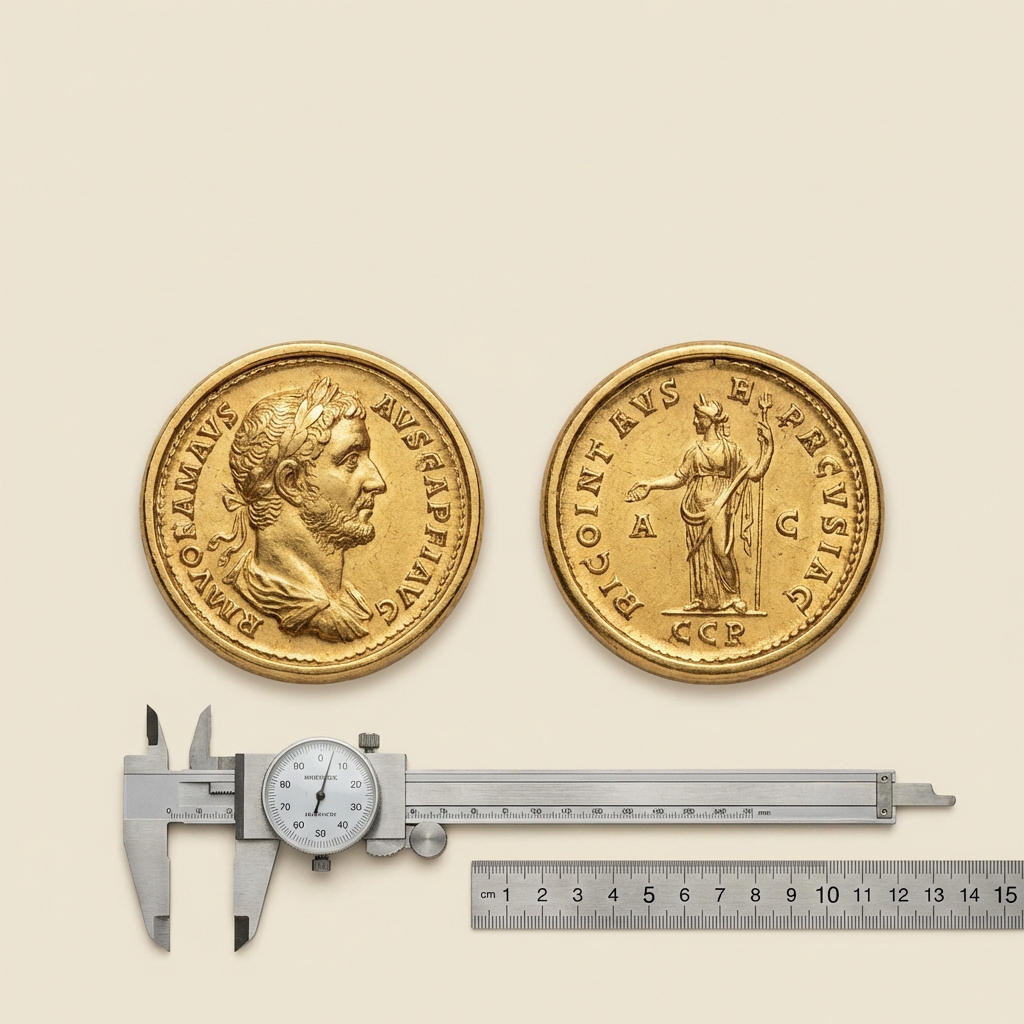
Once you have measurements and a reading of the legend and portrait, compare your data to established catalogues and museum holdings rather than relying on a single image. Standard reference catalogues and museum collections provide parallel examples and typical weight standards for particular issues, and they are the baseline for a defensible attribution Numismatic catalogue reference guide.
Checklist for a first pass: 1) Weight and diameter recorded, 2) High resolution images of both faces, 3) Transcription of any visible legend, 4) Note of any mint marks or control symbols, 5) Condition and any mounting or repair details. mint marks and mint practice.
See behind the desk at @auroraantiqua for identification tips
Save this checklist as a one page reference to use when photographing or listing a gold coin mounted in jewellery.
Step-by-step: identify a coin mounted in a ring or jewellery
Safe handling and photographing a mounted coin
When a coin is part of a wearable item, begin with safe handling: work over a soft surface, use gloves if appropriate for conservation concerns, and avoid exerting pressure that could shift a mounting or stress a repaired joint. Good handling preserves the original surfaces you need to read portraits and legends.
Photograph both faces with even light, using a neutral background and a scale marker in each frame; take oblique shots that reveal legend relief and die characteristics, and include a separate image that shows how the coin is set in the ring, so any obscured edge work is recorded for later study.
The principal names are aureus for much of the Republic and early Empire, and solidus, often called nomisma in Byzantine usage, from the early fourth century onward; precise attribution requires weight, legend and catalogue comparison.
Recording measurements and visible legends
If you can remove the coin safely and conservatively for measurement, use a digital scale and calipers to capture weight and diameter; if removal risks damage, record the visible diameter from calibrated photographs and include clear notes on how the coin is mounted. When the coin is mounted, the mounting can obscure edges and make exact diameter or weight measurement difficult, so be clear about measurement method in your notes.
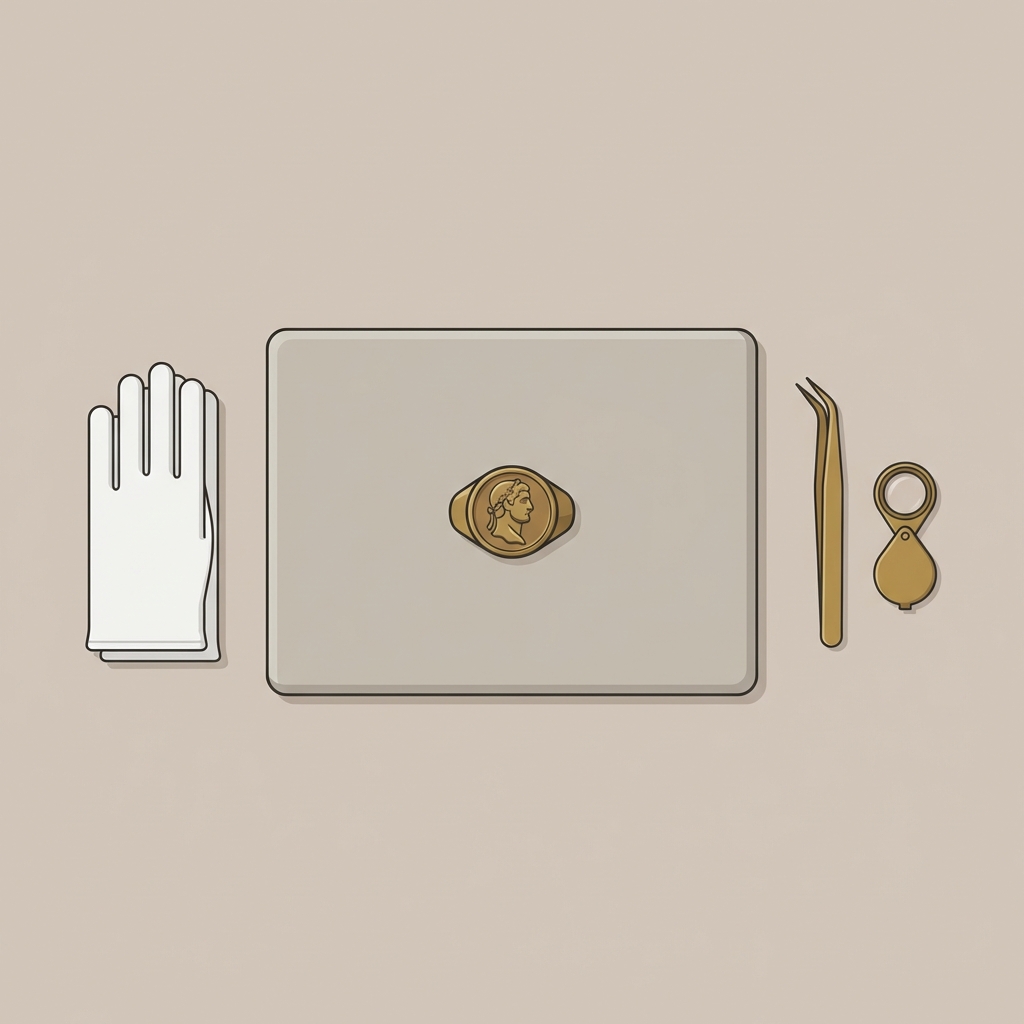
Make a concise transcription of any visible legend and describe portrait details in neutral terms such as 'laureate head', 'diademed bust' or 'helmeted figure', and note any signs of alteration or repair around the bezel that could alter the legends or portrait framing British Museum coins and currency guidance.
When to seek specialist photography or cataloguing
If inscriptions are partial, the portrait is unusually worn, or the mounting obscures diagnostic edge features, pause and seek specialist photography or a formal cataloguing opinion; a trained numismatist can use die details, letter forms and control symbols to separate closely related issues that a first pass might conflate.
Specialist input is particularly important when a mounted coin shows weights or stylistic features that sit between the typical ranges for aureus and solidus, because historical reforms mean late aurei and early solidi can be difficult to separate without catalogue comparison Encyclopaedia Britannica solidus entry.
Buying and collecting: documentation, condition and provenance to prioritise
What documentation matters and how to read it
Useful documentation includes collection history notes, prior ownership records, any third party reports or verification letters, and high quality dated photographs. These notes help place a coin in a collection history and make later comparison to museum examples more productive.
A clear provenance trail and comparison to museum parallels can materially increase confidence in an attribution, because they allow a buyer or researcher to see how the item aligns with known types and documented finds British Museum coins and currency guidance.
Aurora Antiqua presents pieces with condition notes, restoration notes and provenance-style documentation when available as part of the listing process.

Condition, restoration and how they affect attribution
Condition notes should state visible wear, corrosion, evidence of clipping or edge loss, and any stabilisation or repair work; restoration can obscure legends or portrait features that are key to dating and naming, so transparent restoration notes are essential for confident attribution.
Even minor edge repairs or re-cutting of a bezel that touches the coin can change measured diameter or hide mint marks, and a clearly documented treatment history helps separate effects of age from later interventions Numismatic catalogue reference guide.
Why provenance and museum comparisons increase confidence
Provenance that cites collection history, prior ownership, or a verification letter from a recognised specialist helps place a coin in context and gives a buyer evidence to match against published examples; this does not 'prove' an attribution, but it improves confidence in cataloguing.
When museum parallels exist for a given legend and portrait type, they provide a robust comparative foundation and can clarify whether a coin labeled in commerce as an aureus or a solidus is consistent with established typology American Numismatic Society nomisma and solidus overview.
Common misattributions and typical pitfalls
Confusing late aurei and early solidi
The period of monetary transition around the third and fourth centuries can create overlap in appearance between late aurei and early solidi, so a piece that sits between typical weight ranges or that bears mixed stylistic features should be treated as ambiguous until catalogued by a specialist, rather than given a firm name.
Historic reforms mean that the same descriptive term may not carry the same weight at every date, and careful citation of catalog numbers and museum parallels is the reliable way to reduce misnaming risks Oxford Research Encyclopaedia Roman coinage overview.
Errors caused by weight loss or clipping and by decorative mounts
Clipping, corrosion or wear can reduce a coin's weight and diameter, which if unrecorded can lead to misidentifying an originally heavier aureus as a lighter issue; mounting for jewellery can also obscure edges and hide essential control marks.
Always report whether weight or diameter was measured before or after any mounting or conservation intervention, and describe any visible signs of clipping or loss that could shift the measurement baseline.
Over-reliance on single visual matches
Relying on a single online image or a solitary unreferenced listing is a frequent cause of error; a single photograph rarely captures all diagnostic features, and visual matches without measurement and legend comparison are at best provisional. See how to tell if a Roman coin is real for a short guide on common pitfalls.
Cross-checking a candidate match against multiple catalogue examples and museum images is the safer approach when forming an attribution.
Practical examples and short case studies
Example 1: heavier portraited coin likely aureus - what to check next
Scenario: a mounted gold coin shows a heavy portrait style and an estimated weight near early aureus ranges. First check the recorded weight and diameter precisely, read any obverse legend for imperial name and titulature, and compare portrait type to early Imperial catalogues; a heavier weight and Republican or early Imperial titulature would tip the attribution toward aureus, but confirm with die and legend matches in reference catalogues before final labeling Encyclopaedia Britannica aureus entry. (NumisWiki aureus)
Next steps include seeking a museum parallel image for that portrait type and requesting a specialist cataloguing opinion if the legend is partial or the mounting obscures key marks.
Example 2: reduced-weight coin with Constantine-style titulature suggesting solidus/nomisma
Scenario: a coin with reduced weight near the lower solidus range but bearing Constantine-style titulature. Prioritize a close reading of the legend and compare measured weight to typological tables for Constantine issues; the association of Constantine-era titulature with a lighter issue commonly signals solidus or nomisma attribution, with the caveat that precise dating and mint attribution often require die and legend comparison with museum or catalogue plates Encyclopaedia Britannica solidus entry.
If the piece is mounted, document how the setting affects visible edge features, and consider professional photography to capture faint control marks or monograms that aid final attribution.
How a museum comparison clarified a disputed attribution
Scenario: a doubtful piece carried an ambiguous weight and a worn legend. A close photographic comparison with a museum example that shared an obverse portrait and a partial reverse legend allowed a specialist to attribute it to a known issue and to recommend a conservative naming in the sale record. This pathway shows how museum parallels and cataloguing materially improve confidence when measurements alone are inconclusive British Museum coins and currency guidance.
Summary and next steps for owners and buyers
Printable checklist to record and save: clear images of both faces with a scale, weight in grams, diameter in millimetres, transcription of any legend, note of mounting and restoration, and any provenance or verification letters. These core data points are the basis for a defensible initial attribution.
When to seek specialist cataloguing or conservation: consult a numismatic specialist when legend or weight sits between typical ranges, when conservation or mounting obscures diagnostic marks, or when a secure provenance is needed for sale or donation. Museum comparisons and clear documentation materially improve attribution confidence American Numismatic Society nomisma and solidus overview.
Use a calibrated scale: early aurei typically sit near higher gram weights while early solidi were lighter. Always combine weight with portrait and legend evidence, since standards varied over time.
You can make a preliminary record with careful photos, a scale if removal is safe, and clear notes on mounting, but seek specialist cataloguing if legends are partial or measurements fall between typical ranges.
Collection history notes, prior ownership records, third party reports or verification letters, and museum parallels improve confidence; transparent restoration notes are also important.
More from Aurora Antiqua
References
- Gold aureus of Julius Caesar, Inv. 99.35.113, The Metropolitan Museum of Art, New
- Aureus of Trajan, AD 103 to 111, Münzkabinett der Staatlichen Museen zu Berlin
- Online Coins of the Roman Empire: RIC II Trajan 109, American Numismatic Society
- Online Coins of the Roman Empire, American Numismatic Society and Institute for the Study of the Ancient World
- nomisma.org: denarius, Nomisma.org (numismatic linked open data project)
- Combining synchrotron radiation techniques for the analysis of gold coins from, Scientific Reports
- International Association of Professional Numismatists (IAPN), IBSCC
- Regulation (EU) 2019/880 on the introduction and the import of cultural goods, EUR-Lex (Official Journal L 151/1)
- Cat. 24 Solidus Portraying Emperor Constantine, publications.artic.edu