


Looking for the real thing? Browse our Greek ring collection, each piece one of one, individually authenticated, with documented provenance. For the background, see the guide to ancient jewelry.
Quick answer and why this matters
Short summary
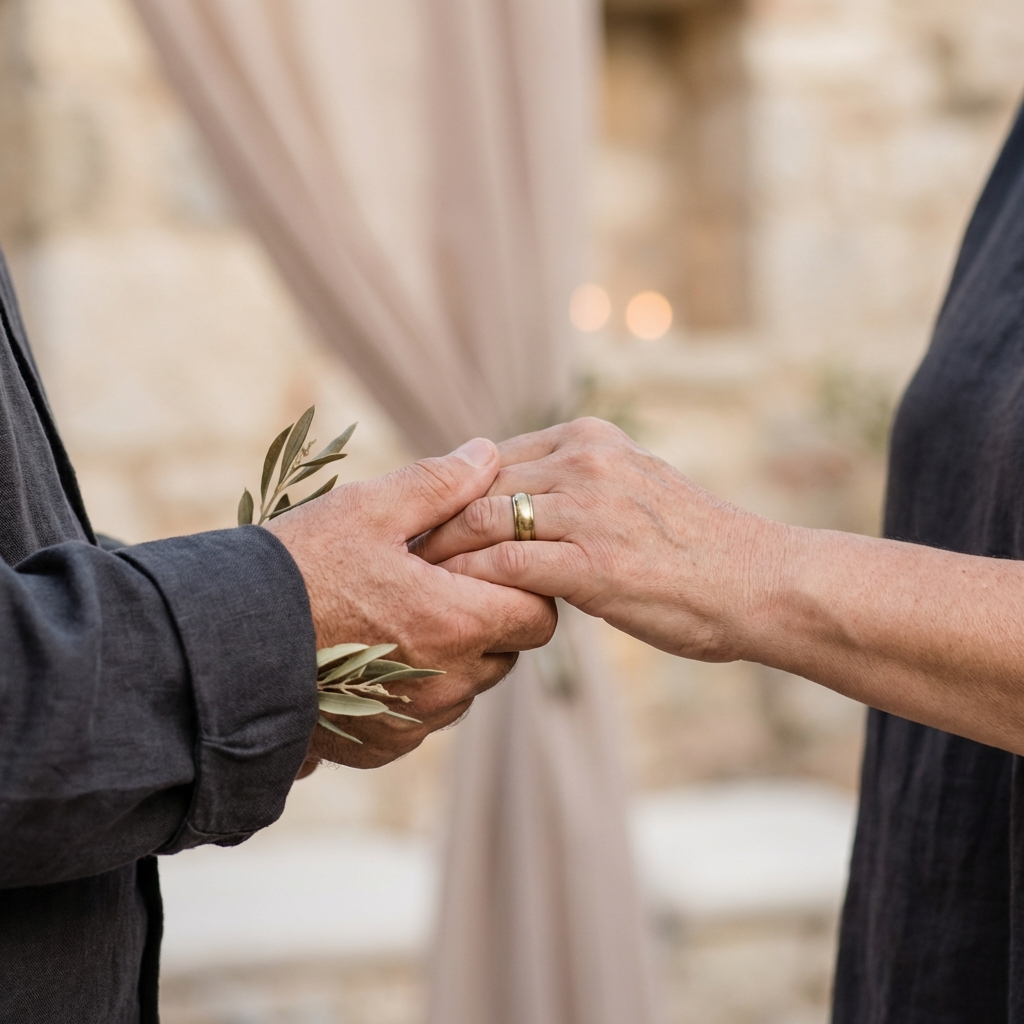
Short answer: practices vary, but within Orthodox liturgical practice the wedding ring is traditionally placed on the right hand during the marriage service, and contemporary Greeks may wear engagement rings on the left under Western influence or keep them on the right until marriage depending on family or regional custom Greek Orthodox Archdiocese guidance.
How this article helps collectors and visitors
Why this matters: for collectors, historians, and visitors, knowing these patterns helps interpret photographs, catalog notes, and worn surfaces on an ancient ring, and it guides how to ask sellers or parish officers about local habit without assuming a single rule British Museum collection highlights.
See provenance and restorations on @auroraantiqua
Explore curated ancient rings with clear condition notes and provenance details to understand how a piece may have been worn historically and recently.
How modern Greeks commonly wear engagement and wedding rings
Left-hand vs right-hand practices today
Across Greece today you will see both left- and right-hand placements: many people follow Western fashion and wear an engagement ring on the left hand, while others - often tied to Orthodox practice - either keep an engagement ring on the right or move a ring at the wedding service to the right hand Culture Trip on Greek wedding traditions. See a general guide to which finger a wedding ring goes on Clean Origin.
Urban and younger populations often adopt the left-hand engagement-ring habit seen in much of Western Europe and North America, while more traditional households and rural areas are likelier to retain right-hand placement in connection with local liturgical habits Greek City Times on right-hand wedding rings.
Patterns are not uniform; regional identities, family practice, and recent exposure to international fashions shape what you will see in contemporary photographs and listings, so treat any single image as suggestive rather than definitive Culture Trip on regional variation.
Quick photo and listing checks to read ring placement and likely context
Use this checklist when viewing images or short listings
Practical note for readers: when you see a ring on the right hand in a Greek context it may indicate a wedding ritual or a cultural preference rather than a rule about engagement rings, and left-hand placement often reflects Western influence or simply personal choice Greek City Times on contemporary practice.
Orthodox marriage rites and ring placement explained
What Orthodox parish guidance says
Within the Orthodox marriage ceremony the celebrant places the wedding rings on the right hand as part of the rite, a practice described in parish and archdiocese materials and reflected across Orthodox jurisdictions Greek Orthodox Archdiocese guidance Greek Orthodox Wedding Rings (Eragem).
There is no single rule: Orthodox wedding rites place the wedding ring on the right during the service, while contemporary fashion and regional differences mean engagement rings may be worn on the left or on the right until marriage, so interpret placement with context and ask if unsure.
Liturgical placement during the service does not always dictate daily wearing habits before or after the wedding; many couples choose a practical everyday wearing pattern that differs from the service itself, and people may move rings between hands for cultural, aesthetic, or pragmatic reasons Orthodox Church in America on marriage.
If you are unsure about local practice when attending a service or viewing family photographs, the courteous option is to follow the lead of the participants or to ask a parish representative for a brief explanation of their local custom before making assumptions.
Ancient Greek betrothal rings: legal, symbolic, and material context
What ancient rings were used for
In ancient Greece, rings could serve as tokens in betrothal and sealing practices, carrying both symbolic and legal weight in formal agreements; museum and scholarly work documents these functions for classical and Hellenistic periods British Museum collection highlights.
Materials, iconography, and dating basics
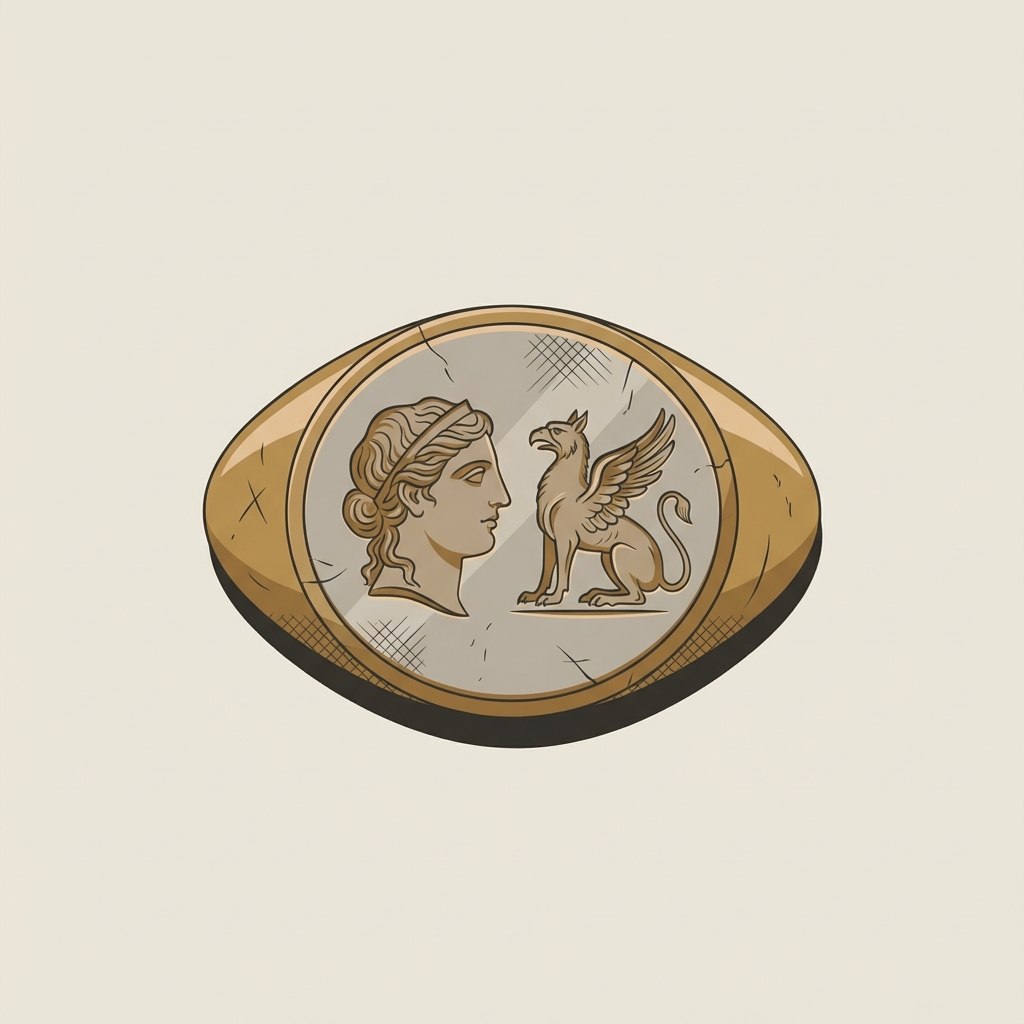
Typical materials include bronze and various gemstones set as intaglios; motifs and iconography - such as mythological creatures, geometric patterns, or personal seals - help specialists suggest possible dates, workshops, or uses, though attributions remain estimates without scientific testing Gemstones from Roman Britain: Recorded in the Portable Antiquities Scheme, University Debrecen, Hungary.
Collectors should read catalog descriptions for bezel form, hoop profile, signs of wear consistent with age, and any restoration notes, because those physical features give context to whether a ring was likely used in daily wear, reserved for ceremony, or repurposed over time.
Regional etiquette and what to do as a visitor or collector
Follow the wearer’s lead
When meeting people or viewing images in Greece, the simplest etiquette is to follow the wearer’s lead: do not assume a ring on the left or right hand means anything universal about relationship status; read context and defer to local explanation where available Culture Trip on visitor etiquette.
Asking politely and reading photos
If you need to clarify context - whether for a publication, a private purchase, or simple curiosity - ask briefly and respectfully, for example: "Is that the wedding ring or an engagement ring, and is it typically worn on that hand here?" This approach avoids presuming one correct practice Greek City Times on customs.

Reading photographs and listings for clues: note which hand is shown, whether the image is a posed studio shot or a candid family photo, and any accompanying caption that mentions ceremony, parish, or family practice; these notes help determine whether a ring was worn as part of a wedding ritual or simply as personal jewelry. See our rings collection rings collection for examples of listing formats.
How to buy and evaluate ancient Greek engagement rings
What documentation to request
Request provenance or collection history, any available verification letters, and clear restoration notes; trusted curators and specialized sellers typically provide condition notes and documentation that explain collection history and what conservation was done British Museum collection highlights. See our Ancient Greek Rings collection for curated examples Ancient Greek Rings collection.
Condition and restoration checks
Ask for multiple high-resolution images, measurements, and close-ups of the bezel, hoop, and any intaglio; look for consistent patina, tool marks, and explanation of repaired areas in restoration notes, because these factors matter as much for understanding use and wear as any stylistic attribution Archaeological materials, Icon, The Institute of Conservation (UK).
Interpret dating and material descriptions as professional estimates unless supported by scientific testing or independent documentation; where sellers provide clear provenance and restoration notes, use those records to place a ring within plausible historical and functional contexts rather than as definitive proof.
Common mistakes and how to avoid them
Misreading hand placement as a universal rule
One frequent error is treating a right-hand ring in Greece as an automatic sign of marriage; because practices vary by region and family, avoid universal claims and prefer conditional phrasing when describing an image or listing Culture Trip caution on assumptions.
Assuming provenance without documentation
A second common mistake is overstating dating or origin without clear documentation; always request provenance, ask for prior ownership notes, and look for third-party or curator statements rather than relying solely on a listing title or a short caption British Museum on cataloging.
Red flags in listings include vague provenance statements, missing measurements, blurred photos, or no restoration notes; when in doubt, ask the seller for more detail or consult a trusted curator or specialist before purchase.

Practical scenarios and concise closing checklist
If you are visiting Greece
If you see a ring on the right hand in a church photograph or in a family album, consider that this may reflect Orthodox liturgical placement during a wedding or longstanding household practice; when appropriate, ask politely for context rather than assuming the right hand always means married status GOARCH on marriage rites.
If you are buying an ancient ring online
When evaluating a candidate for purchase, use a checklist approach: request provenance and restoration notes, insist on clear images and measurements, and ask how the seller interprets wear patterns in relation to likely use as a betrothal or everyday ring British Museum collection guidance. For curated examples see highlights highlights.
Final quick checklist for action: follow the wearer’s lead when interpreting hand placement, ask sellers for documentation, read condition and restoration notes carefully, and use conditional language when describing origins or function.
There is no single rule: Orthodox wedding rites place rings on the right during the ceremony, but many contemporary Greeks wear engagement rings on the left or keep them on the right until marriage depending on family and region.
Not necessarily; right-hand placement can reflect liturgical practice, family custom, or personal choice, so ask for context or follow local cues rather than assuming marital status.
Ask for provenance or collection history, high-resolution images and measurements, and clear restoration and condition notes to understand likely use and authenticity indicators.
More from Aurora Antiqua
References
- Aulus Gellius, Attic Nights, Book X, LacusCurtius, Bill Thayer, University of Chicago (Loeb Classical Library edition)
- Pliny the Elder, The Natural History, BOOK XXXIII, Perseus Digital Library, Tufts University (edition Bostock)
- Gimmel Ring, Victoria and Albert Museum, London
- The Form of Solemnization of Matrimony, The Church of England
- Ring, The Cleveland Museum of Art
- Thumb Ring, The Cleveland Museum of Art
- Gemstones from Roman Britain: Recorded in the Portable Antiquities Scheme, University Debrecen, Hungary
- Archaeological materials, Icon, The Institute of Conservation (UK)