


Looking for the real thing? Browse genuine ancient artifacts for sale, each piece one of one, individually authenticated, with documented provenance. For the background, see the guide to ancient jewelry.
Quick answer and what this article covers: egyptian wedding ring finger in brief
Short summary: There is no single Islamic legal prescription that mandates a specific finger or hand for wedding rings; major fatwa bodies treat placement as cultural and local preference rather than a doctrinal requirement. For practical purposes in Egypt many people commonly place engagement or wedding rings on the right hand, often the right ring finger, while left hand use is also present and has grown with wider fashion influences and diaspora contacts. For readers who want sources and a short checklist, this article summarizes legal guidance, observed Egyptian practice, historical variation, and a step by step decision framework you can use when planning a ceremony.
Three yes no prompts to help decide which hand to use
Use answers to guide a conversation with family
How to use this guide: Read the quick practical answer if you need an immediate decision, then consult the sections on religious guidance and local practice for context. If you are planning a wedding or attending one, follow the decision framework later in the article to reduce last minute confusion and to respect family expectations.
This summary is framed to help readers understand that the egyptian wedding ring finger question is primarily about local custom and ceremony etiquette, while jurisprudential discussion typically focuses on materials and gender rules rather than prescribing a finger.
A short practical answer for Egyptians and visitors
If you need a one line answer: there is no single religious rule, and many Egyptians commonly wear rings on the right hand but left hand use is also frequent and increasingly common in urban and diaspora settings; check family expectation when in doubt. This practical statement reflects contemporary reporting on Egyptian wedding customs and the range of observed practice in households and ceremonies.
When to ask family or officiant: if you are a guest, a partner, or an officiant, a brief question the day before the ceremony can avoid awkward moments. Asking "Which hand should I use for the ring during the ceremony?" is typically enough and can be framed as a practical logistics question rather than a religious one.

Religious and legal guidance: what major Islamic authorities say about rings
Material and gender rules in fatwas, and why finger choice is not prescribed: Leading fatwa services emphasize what rings are made of and who may wear them, and they generally do not set a legal rule about which finger or which hand to use; the focus is on permissibility and decorum rather than finger placement. For statements of this kind see Dar Al-Ifta rulings and discussions on personal adornment and rings which explain those priorities Dar Al-Ifta and see Dar Al-Ifta's fatwa on gold wedding bands Gold wedding bands for men.
See behind the scenes at @auroraantiqua for contextual notes and real objects
If you want authoritative texts on material rulings, consult the cited fatwa services to see how they treat gold, silver, and general decorum for men and women without assuming a mandated finger.
Why fatwas concentrate on materials: classical and contemporary jurisprudence often discusses whether certain materials are permissible for men and the limits of adornment, so clerical guidance tends to give practical rules about gold and other metals rather than telling people which finger to use. For further fatwa-level discussion on materials and gendered guidance see the IslamWeb fatwa collection which covers rulings on rings and materials.
How Egyptians commonly wear wedding or engagement rings today
Observed patterns in urban and rural areas: Contemporary cultural reporting and accounts of Egyptian weddings show that many people commonly wear engagement or wedding rings on the right hand, often on the ring finger, but left hand placement is also observed and has risen in some urban and diaspora communities. This pattern appears in reporting on Egyptian wedding traditions and cultural coverage Ahram Online.
Influence of family, sectarian, and civil practices: Practice can differ by family background, religious community, and whether the ceremony is primarily civil or religious. For example, some Coptic households historically follow different patterns from many Muslim families, and urban settings often show greater variation than rural ones. Understanding these influences helps explain why a single custom is not universal across Egypt.
Historical and cross cultural variation in Muslim ring placement
Examples from historical and ethnographic literature: Historical surveys and ethnographic reviews document wide variation across communities and periods, with records of rings worn on the little finger, middle finger, or ring finger and on either hand depending on local custom. See our Aurora Antiqua Q&A on Roman ring fingers. This cross cultural perspective shows that finger choice has rotated across regions and eras rather than following a single doctrinal rule, as summarized in cross cultural overviews Encyclopaedia Britannica.
There is no single religious rule; finger choice is cultural and many Egyptians use the right hand while left hand use is also common, so ask family or the officiant and agree as a couple.
What this variation tells us about custom versus law: the diversity recorded by historians and ethnographers supports the view that placement is a cultural practice shaped by local norms, material availability, and fashion, rather than a uniform religious requirement. Ethnographic reviews of marriage customs across Muslim societies make this point about variation and custom.
Materials and gender rules that matter more than finger choice
Common rulings on gold and other materials: Across many fatwas and juristic discussions the main concern is whether a man may wear gold, while women are frequently permitted to wear gold jewelry; other materials such as silver are treated differently in jurisprudential discussion. For accessible fatwa-level discussion of materials and gender rules see IslamWeb which collects rulings on wearing rings and materials IslamWeb.
Practical implications for couples and visitors: Because material rules are a frequent focus for clerical guidance, couples often select metals and styles with those rules in mind while choosing which hand to use based on family custom or personal preference. See our rings collection for examples. Men who wish to follow conservative clerical advice typically choose non-gold metals or alternative forms of symbolic exchange.
A step by step decision framework for couples: choosing the finger and hand
Step 1: Ask family and officiant. Begin by asking key family members and the officiant about local expectation for the ceremony so everyone understands what will happen on the day. Family conversations are often the quickest way to learn whether the family expects a right hand, left hand, or flexible approach.
Step 2: Consider materials and local etiquette. Factor in any material guidance you wish to follow, for example whether a man prefers not to wear gold, and align the ring choice with those considerations. If the couple plans a civil registration or a mixed ceremony, decide in advance which hand will be used for photographs and for the moment of exchange.

Step 3: Agree as a couple and document choices for ceremonies. Once family expectations and material choices are clear, make a joint decision and tell whoever is officiating or coordinating the ceremony to avoid last minute friction. Simple recorded notes or a short text message to the ceremony coordinator can prevent confusion during the exchange.
Etiquette and ceremony notes: what to expect at Egyptian weddings
When ring placement matters in ceremony: The moment of ring exchange may follow local choreography; in some households the ring is presented and placed on a specific hand by the family, while in others the couple handles placement themselves. If a family expectation exists, it will often determine what happens on stage during the celebration.
How guests and family typically respond: Guests usually accept the couple's stated preference if it is communicated clearly; if unsure, a polite private question to a relative or to the organizer before the ceremony is appropriate. Civil registration and legal paperwork do not usually specify finger placement, so ceremony etiquette is what matters in practice.
Diaspora, modern trends, and fashion influences on ring placement
How global fashion affects young Egyptians: Younger Egyptians and diaspora communities often adapt left hand customs popular in Europe and North America, so left hand ring wearing can be more common among those exposed to global trends. Reporting on contemporary Egyptian wedding customs notes increased diversity of practice in urban and international contexts Ahram Online.
Mixed marriage and community blending: In mixed nationality marriages couples frequently negotiate which hand to use based on the partner's background and the community where the couple lives. When living abroad, many couples adopt the local convention for photographs and social expectations while maintaining personal choices in private.
Common mistakes and pitfalls to avoid when discussing ring customs
Overgeneralizing from a single community: A common error is to treat one family's practice as a universal rule; because customs vary, assume a local norm applies only unless multiple sources confirm it. Historical and ethnographic surveys remind us that practices differ widely across regions and periods.

Using religious language when only cultural practice applies: Another pitfall is to describe a local custom as a religious command. If the matter concerns finger placement rather than the permissibility of materials, it is typically cultural or customary rather than a binding religious ruling.
Practical examples and short scenarios: choosing a ring for an Egyptian wedding
Scenario A: Urban Egyptian couple with conservative families. Example action: ask both families privately, prefer a non-gold band for a man who wants to follow clerical guidance, and agree that the ring will be placed on the right hand during the ceremony to accommodate the families' expectations.
Scenario B: Mixed nationality couple living abroad. Example action: choose the local convention for public ceremony photos, communicate the choice to any present family members, and keep a private agreement about personal wear after the ceremony.
Scenario C: Guest attending a wedding. Example action: if you are unsure which hand to use when offering a congratulatory ring or gift, ask a close family member or the ceremony coordinator beforehand to avoid awkwardness.
How to ask family or an officiant the right way
Suggested polite questions to use: Short polite phrases work best, for example "Which hand should I use for the ring during the ceremony?" or "Do you prefer we place the rings on the right or left hand for the photo?" These questions frame the issue as a logistical preference rather than a doctrinal dispute.
What to do if opinions differ: If families disagree, mediate by proposing a compromise such as using one hand for the ceremony and allowing personal wear to follow individual preference. Recording the agreed plan in a message to the coordinator can help keep the ceremony running smoothly.
How brands and curators can responsibly frame cultural context: a note for collectors
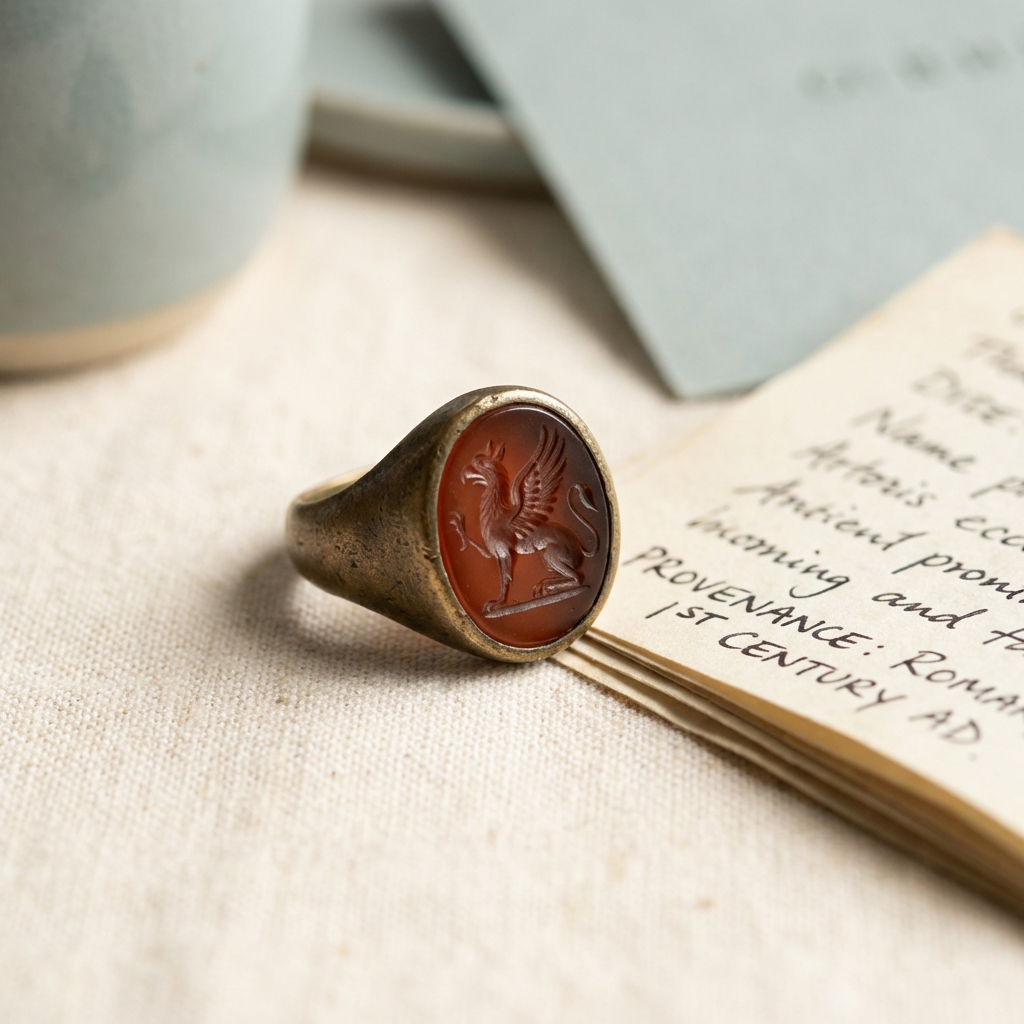
How historical objects inform modern customs: Sellers and curators can explain that ancient rings and motifs illuminate past practices without implying that those practices determine modern religious rules. Presenting an object's period, condition notes, and provenance helps buyers understand context without overclaiming continuity.
Responsible language and provenance: When describing ancient rings, use conditional phrasing and the brand's normal provenance and restoration notes to avoid asserting modern cultural norms as universal truths. Aurora Antiqua aims to provide contextual information, condition notes, and provenance references to help collectors make informed choices without promising doctrinal authority.
Conclusion: practical takeaways on the egyptian wedding ring finger question
Key points to remember: Finger placement is largely cultural, not a uniform religious prescription, and Egyptian practice often uses the right hand though left hand use is common and growing. Clerical guidance tends to focus on materials and gender rules rather than specifying a finger or hand.
Where to read more: For authoritative fatwa language consult the major fatwa services and for cultural reporting see contemporary coverage of Egyptian wedding traditions to understand how local practice is evolving. For fatwa collections see IslamWeb and for cross cultural overviews see Encyclopaedia Britannica. If you are planning a ceremony, ask family and the officiant in advance and agree as a couple to avoid last minute confusion.
No. Major fatwa bodies generally treat finger choice as a cultural matter and instead focus on materials and decorum when issuing guidance.
Many Egyptians commonly wear rings on the right hand, often the ring finger, but left hand use is also present and has increased in some communities.
Clerical guidance often advises that men avoid gold, so men who wish to follow those rulings frequently choose other metals; check local fatwas for specific guidance.
More from Aurora Antiqua
References
- Aulus Gellius, Attic Nights, Book X, LacusCurtius, Bill Thayer, University of Chicago (Loeb Classical Library edition)
- Pliny the Elder, The Natural History, BOOK XXXIII, Perseus Digital Library, Tufts University (edition Bostock)
- Pliny the Elder, The Natural History, BOOK XXXIII, Perseus Digital Library, Tufts University (edition Bostock)
- Gimmel Ring, Victoria and Albert Museum, London
- The Form of Solemnization of Matrimony, The Church of England
- Internet History Sourcebooks: Medieval Sourcebook, Internet Medieval Sourcebook, Fordham University, New York
From Aurora Antiqua
We sell authenticated ancient & medieval pieces, each individually examined before listing and backed by a Lifetime Authenticity Guarantee. One of a kind, sold once, never reproduced.
Browse Ancient Artifacts →