


Looking for the real thing? Browse our full ring collection — each piece one-of-one, individually authenticated, with provenance.
Short answer: will a magnet stick to 925 silver on an ancient chinese ring?
One-sentence quick conclusion
Pure silver does not stick to a magnet, and a correctly made sterling 925 alloy normally will not show magnetic attraction, so a magnet that clearly sticks to a ring is a strong signal that ferrous metal or magnetic contaminants are present.
That simple point is useful as a first screen, but for an ancient chinese ring the result needs careful interpretation because corrosion, historic repairs, or a non-silver core can produce misleading readings.
Follow @auroraantiqua for behind the scenes looks and condition discussions
Before you form a conclusion from a quick magnet check, consult condition and provenance notes, ask about any documented restoration, and consider non-destructive analysis if the result changes your buying decision.
Why a quick screen is useful but not definitive
A small strong magnet is a low-cost, non-invasive way to separate obviously ferrous objects from non-ferrous ones, and it helps prioritise which items need further testing when you are reviewing multiple listings or a collection.
However, a negative magnet test does not prove that a ring is genuine 925 sterling silver, and a positive result does not always mean the visible metal is not silver; context is essential.
Royal Society of Chemistry silver element information

Why sterling silver marked 925 is normally not magnetic
Composition of sterling silver
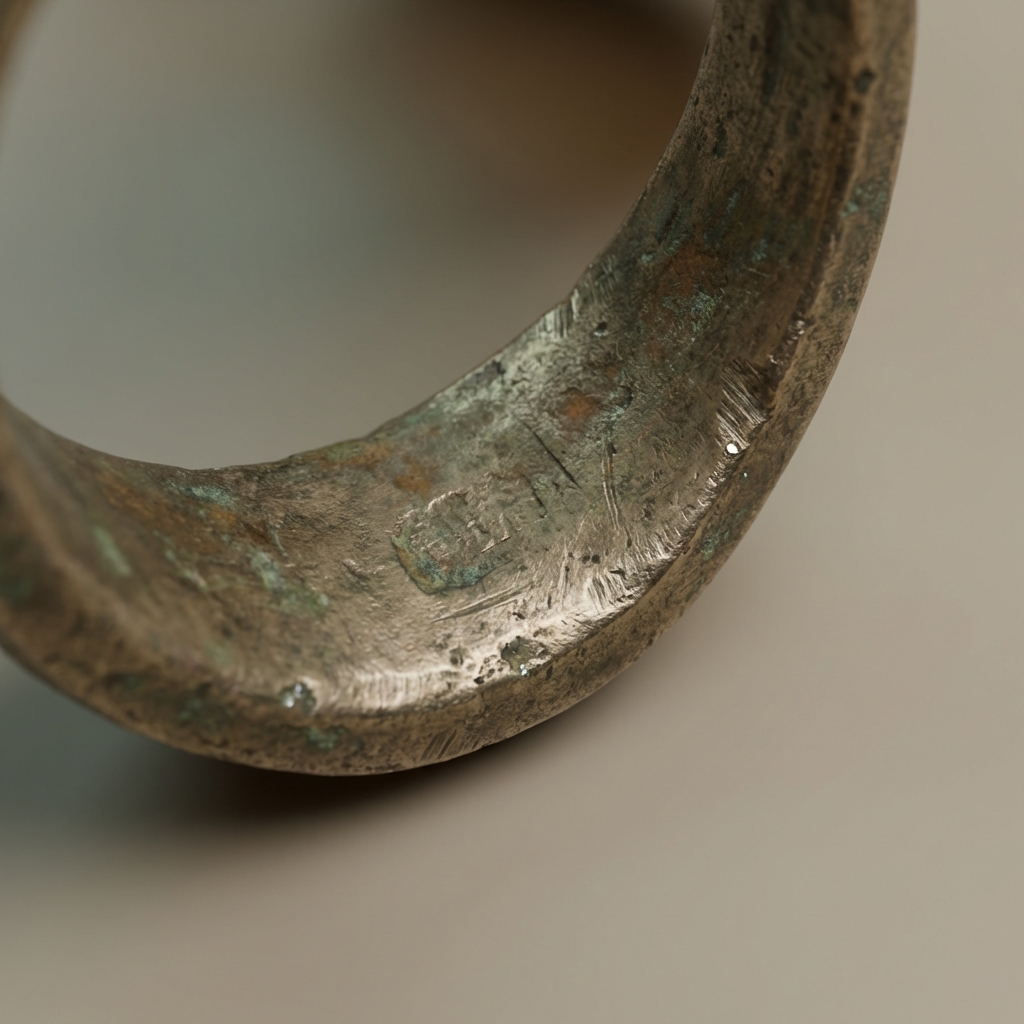
Sterling silver, commonly marked 925, is an alloy of about 92.5 percent silver and about 7.5 percent copper, and neither of those base elements is ferromagnetic, so a correctly made 925 alloy typically will not be attracted to a magnet.
Assay offices and hallmarking practice help identify modern sterling pieces, but many antiquities lack marks, so composition alone is only part of the identification story.
The Goldsmiths' Company Assay Office explanation of sterling silver
Magnetic properties of silver and copper
At the elemental level silver is diamagnetic and copper also lacks ferromagnetic behaviour, which explains why the metals themselves do not stick to magnets and why a magnet test is a reasonable first filter for modern items that are expected to be pure or near-pure silver.
That physics underpins why a straightforward magnet check is widely used, but it also highlights the test limits: it only detects the presence of magnetic materials, not the absence of forgery or later repair.
Royal Society of Chemistry silver element information
What a magnet test can and cannot show for silver jewelry
How to run a basic magnet screen safely
Use a small, strong neodymium magnet as a screening tool, hold it close to the ring without applying force, and observe whether there is clear attraction or none at all; move the magnet around the hoop, bezel and interior where repairs or pins might be present.
Do this gently to avoid stressing fragile areas or encrusted surfaces, and document your observation with photos and notes that you can compare to the seller's condition notes or future lab reports.
GIA guidance on metal testing and magnetic tests
No; elemental silver and correctly made sterling 925 are not magnetic, so a magnet that sticks indicates ferrous metal or magnetic contaminants, but interpretation for ancient pieces needs additional checks.
Common false positives and false negatives
A magnet that sticks can indicate a ferrous core, iron pins, steel fittings, magnetic solder or later magnetic plating beneath a silver surface, all of which are plausible on historic rings and repairs and can produce a false positive for non-silver metal.
Conversely, a lack of attraction does not prove a ring is sterling silver, because non-magnetic base alloys or plated items can mimic the look and feel of silver without being genuine 925 sterling.
GIA guidance on metal testing and magnetic tests
Special considerations for an ancient chinese ring: corrosion, repairs and cores
How burial corrosion alters magnetic behavior
Long-term burial can produce corrosion products and mineral encrustations that hide underlying materials or bond with them in ways that change surface magnetic response, so a ring that looks silver at a glance may behave unpredictably when exposed to a magnet. For examples of scientific analyses on buried silver, see a technical case study published in Nature.
Interpreting a magnet test for archaeological metal therefore requires combining the screening result with condition notes, photographs and any conservation history to avoid premature conclusions.
British Museum conservation perspectives on metallurgy and corrosion
Restoration and repair traces that affect tests
Historic or modern repairs may use iron pins, steel clamps, or magnetic solders in the joint, and those additions can make a ring attract a magnet while the original silver elements remain non-magnetic, so ask sellers for restoration notes or visible repair photos.
When restoration is documented, the presence of ferrous repairs does not necessarily negate authenticity, but it should be recorded and considered in condition notes and pricing.
British Museum conservation perspectives on metallurgy and conservation
Regional workshop practices that can change alloy mixes
Alloy recipes, workshop practices and repair traditions vary by time and place, so some historic workshops in China and surrounding regions used mixed alloys or composite constructions that differ from the modern 925 standard, which complicates direct comparison with contemporary sterling items.
Because of that variability, a magnet test is only one line of evidence among many when assessing an ancient chinese ring, and specialists often rely on lab techniques to read alloy signatures and repair histories.
British Museum conservation perspectives on metallurgy and conservation
Other practical at-home checks to pair with a magnet test
Visual inspection and condition notes
Look for hallmarks when present, consistent wear and surface patina, solder seams, pins or areas of different texture where repairs may have been made, and compare the item closely with reference images of well-documented pieces from the same period and region.
When sellers provide provenance, restoration notes or clear close-up photographs, use those documents to interpret any unexpected magnet behaviour rather than relying on the magnet alone.
The Goldsmiths' Company Assay Office explanation of sterling silver

Simple non-destructive at-home checks
As a cautious next step, compare the ring's measured mass and dimensions to reference examples to perform a basic density check when feasible, photograph the interior and bezel for tool marks or pin holes, and ask the seller to confirm any documented conservation or metallurgical testing.
Avoid destructive home tests such as applying acids to archaeological metal because they can damage patina and reduce the object's research and aesthetic value.
Consumer Reports guide to spotting fake silver and basic home tests
When to move from home checks to lab testing: pXRF and professional assay
What pXRF shows and its limits
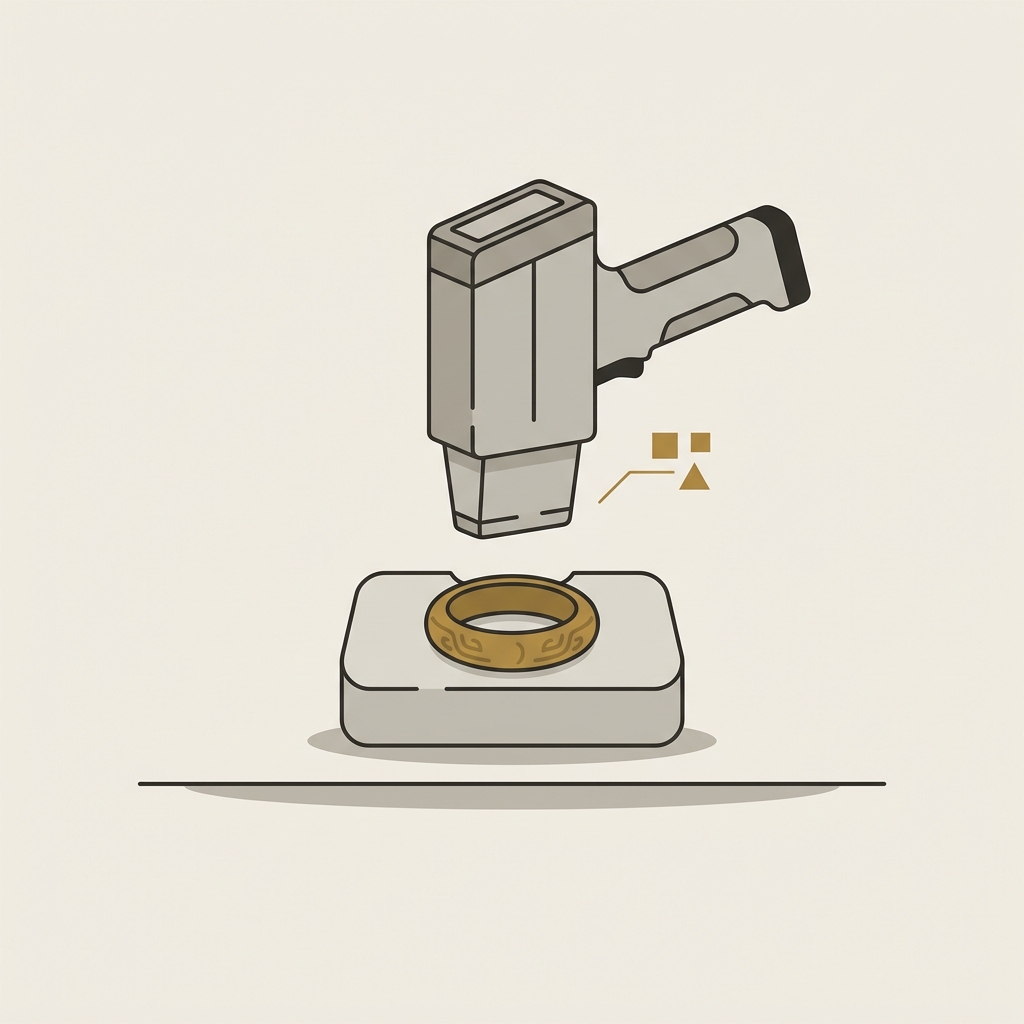
Portable X-ray fluorescence, or pXRF, is a commonly used, non-destructive method for elemental analysis that many museums and specialists use to screen metal objects and alloys in the field or in collections work. See manufacturer information on X-ray fluorescence and analyzers at Bruker.
pXRF is surface sensitive and benefits from calibration, experienced operation and careful interpretation, so collectors should view it as a powerful screening tool rather than a single definitive assay in every case.
Review of pXRF use in archaeometallurgy
When to request lab assay or conservation input
Consider professional pXRF or a full laboratory assay when the magnet test and visual checks disagree, when provenance is unclear, when a high value decision depends on precise composition, or when the object has visible repairs that could hide different metals.
Conservation-grade analysis also helps distinguish original alloy from later additions, and a conservator can advise on safe sampling if destructive testing is the only route to a conclusive result.
Review of pXRF use in archaeometallurgy
How to weigh evidence and decide when to buy or seek conservation
Decision criteria and red flags
Use a combination of magnet screening, clear photographs, condition and restoration notes, provenance statements, and lab output to build confidence (see our rings collection); missing documentation, a magnet that sticks without any record of repairs, or inconsistent patina are reasonable red flags that suggest further testing or decline.
Conversely, a clear negative magnet test coupled with consistent wear, well photographed condition, and a documented conservation history increases confidence but does not replace the value of targeted elemental analysis when the purchase is significant.
The Goldsmiths' Company Assay Office explanation of sterling silver
simple screening steps for early evaluation
Use as initial filter only
A simple decision flow collectors can use
Start with a cautious magnet screen and visual check, ask the seller for restoration notes and provenance, use at-home non-destructive checks where appropriate, and move to pXRF or laboratory assay when ambiguity remains or when the item's value justifies professional analysis.
Keep written notes and photographs at each step so you or a conservator can review the evidence later if needed.
Review of pXRF use in archaeometallurgy
Common mistakes, brief case examples, and a buyer checklist
Typical errors to avoid
Do not rely solely on a magnet test to establish silver authenticity, do not apply destructive home tests to archaeological material, and do not ignore restoration notes or ask for further documentation if the test results are unexpected.
These avoidable mistakes often cause collectors to misread the significance of a magnet result and to miss opportunities to obtain clarifying analysis.
Consumer Reports guide to spotting fake silver and basic home tests
Three short illustrative scenarios
Scenario one, a ring that strongly attracts a magnet was found to have an iron repair pin placed through the hoop in a modern restoration, which accounted for the magnetic response while the remaining metal was consistent with a non-magnetic silver alloy.
Scenario two, an apparently silver ring showed no magnet attraction but pXRF revealed a tin-rich base alloy beneath a thin silver plating, demonstrating how a negative magnet test alone can be misleading.
Scenario three, a heavily corroded ring resisted the magnet due to crust and encrustation masking a mixed-metal interior, and targeted cleaning and pXRF separated original alloy signals from later intrusive material.
GIA guidance on metal testing and magnetic tests
Final checklist for buying an ancient ring
Before purchase, ask for clear close-up photographs and measurements, condition and restoration notes, any available provenance or collection history, and whether pXRF or other analysis has been performed; compare with images on Aurora Antiqua.
If a magnet sticks and there is no documentation explaining ferrous repairs, request pXRF or a conservator opinion before completing the purchase; if tests remain ambiguous, consider declining or requesting a return option.
The Goldsmiths' Company Assay Office explanation of sterling silver
No. A negative magnet test only shows no ferromagnetic material is detectable, but it does not prove alloy composition or authenticity. Further checks like pXRF or professional assay are needed for confirmation.
Not always. A magnet that sticks can indicate ferrous repairs, iron pins or other magnetic additions. Ask for restoration notes and consider lab analysis to determine whether the magnetic element is original or a later repair.
Yes, pXRF is considered a non-destructive, widely used screening method that provides elemental information about surface composition, though it requires expert calibration and interpretation to be most useful.
References
- https://www.rsc.org/periodic-table/element/47/silver
- https://www.thegoldsmiths.co.uk/education/what-is-sterling-silver/
- https://www.gia.edu/gia-news-research-testing-metals
- https://auroraantiqua.com/products/authentic-roman-silver-ring-diana-intaglio-of-the-huntress-goddess-1st-century-bc-3rd-century-ad-eu-54-us-7
- https://www.britishmuseum.org/collection/term/Topic:Metallurgy_and_conservation
- https://www.consumerreports.org/cro/magazine/2015/01/checking-silver/index.htm
- https://www.sciencedirect.com/science/article/pii/S2352409X21004321
- https://auroraantiqua.com/collections/ancient-roman-rings
- https://www.nature.com/articles/s40494-021-00531-2
- https://www.bruker.com/en/applications/minerals-mining-and-petrochemical/precious-metals-gemology/gold-silver-and-platinum-analysis.html
- https://auroraantiqua.com/collections/rings
- https://auroraantiqua.com/