


Looking for the real thing? Browse authenticated Ancient Roman coins, each piece one of one, individually authenticated, with documented provenance. For the background, see the guide to Roman jewelry.
What hammered coins and Celtic ring-money are
ancient celtic ring money
Many modern numismatic authorities continue to use the term hammered coin to mean any piece produced by hand with dies rather than by mechanised milling, a classification that helps separate pre-milled issues from later machine-made examples; this distinction remains standard in museum and collector cataloguing NGC Ancients overview.
Hammered production covers a long span of human history and describes the technique rather than a single style or region. When you read a catalogue that calls an object hammered, it signals the piece was struck between dies with human force, and that typological comparison will typically use die features and strike characteristics for identification and dating AN UNKNOWN COIN DIE OF AUGUSTUS (27 BC, 14 AD), Journal of Ancient History and Archaeology, DOI.
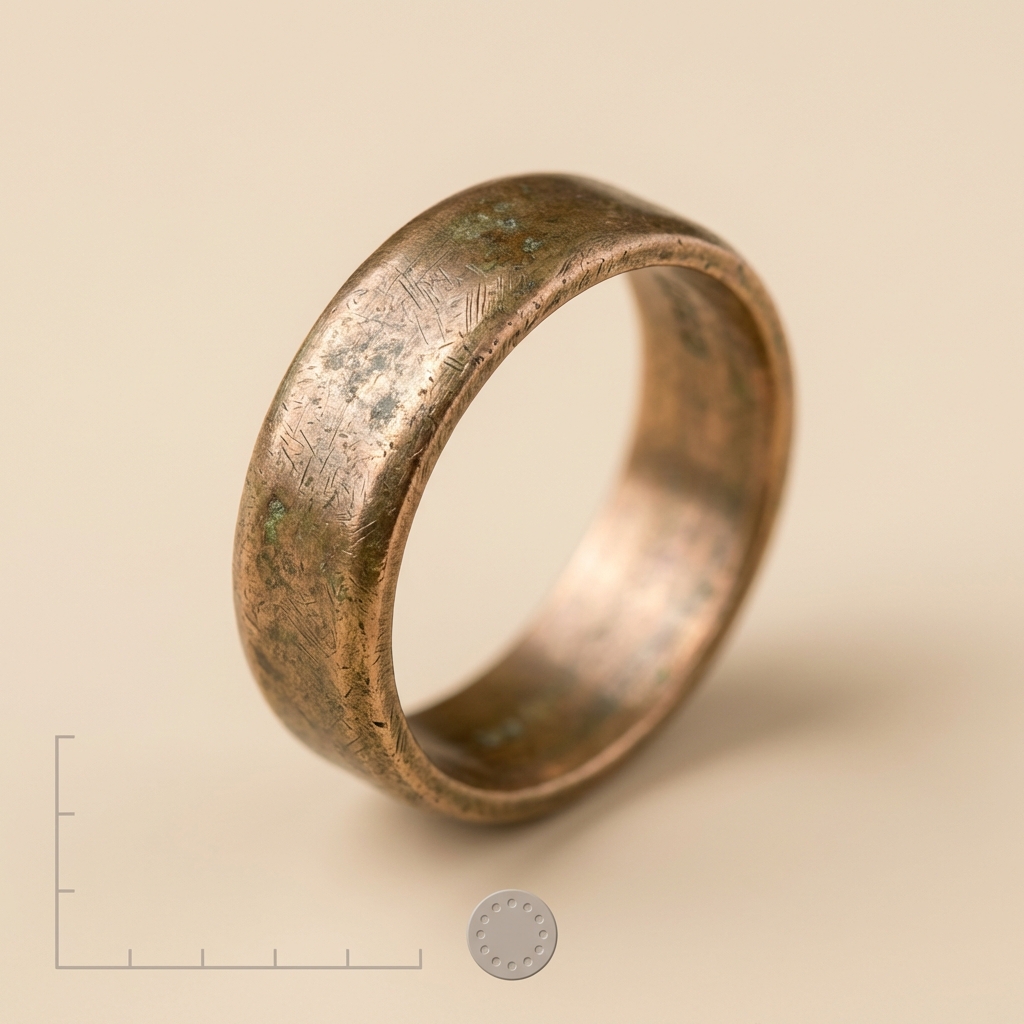
Celtic ring-money is a term that covers two distinct but related artefact groups. In one sense it names large metal rings that functioned as bullion or proto-currency in Iron Age Europe, often valued for weight and metal content. In another sense it is applied to smaller ring forms that may have been wearable and stylistic, sometimes blurring the line between jewellery and monetary object Portable Antiquities Scheme records. Celtic rings collection.
Archaeological and numismatic catalogues commonly treat these categories separately: large heavy rings and ring-shaped ingots are recorded under bullion or proto-monetary forms, while smaller inscribed or decorated rings are recorded as jewellery or ornamented rings; find-record databases reflect that distinction when they catalogue and publish entries ANS research overview. BNJ paper.

For a collector this classification matters because it affects how an object is compared within typologies, what measurements are relevant, and how market comparables are selected. The production technique, whether hammered or otherwise, and the ring form are therefore foundational descriptors in any listing or record Aureus of Trajan, AD 103 to 111, Münzkabinett der Staatlichen Museen zu Berlin.
Why collectors care: the main value drivers
Collectors evaluate hammered coins and ancient celtic ring money by a small number of consistent attributes that shape market interest: metal content, precise weight and measurable purity, visible condition including patina, typological rarity, and provenance or legal recording. These drivers are repeatedly cited in numismatic guidance and market reports ANS research overview.
Metal matters. A simple way collectors separate lots is by metal: bronze examples of ring forms and common hammered coins generally sit at the lower end of price ranges, while securely attributed silver or gold pieces are assessed and priced differently because of intrinsic material value and collector demand Heritage Auctions market summaries.
They can be worthwhile for collectors who prioritise clear documentation, condition notes and measured attributes; verify provenance and consider targeted testing for high-value pieces.
Condition and patina are both aesthetic and diagnostic. Wear consistent with age, stable corrosion, and a natural patina can confirm expected use and burial histories, whereas heavy surface loss or aggressive cleaning can damage diagnostic features and reduce desirability; condition notes in listings should therefore be read carefully and compared to clear photographs ANS research overview.
Typological rarity influences collector interest beyond metal and condition. Certain die types, regional variants, or unusual ring forms attract attention because they fill gaps in collections or academic catalogues, and auction catalogues and find databases are the standard places to verify how unusual a form is for a given region and period Heritage Auctions market summaries.
Finally, provenance and legal recording are practical value multipliers. When a piece has documented prior ownership, a published find-record, or an export licence where required, it becomes easier to move through institutional sales channels and private transactions; lacking such documentation often constrains marketability Research report: export licensing and provenance, GOV.UK, Department for Culture, Media and Sport (DCMS).
How experts authenticate and grade these pieces
Authentication typically starts with a visual, typological comparison. Experts examine die characteristics, strike quality, tool marks and dimensions against published typologies and verified reference collections to assess plausibility before any laboratory testing is considered ANS research overview.
Non-destructive testing is common when an object’s value justifies the cost. X-ray fluorescence, or XRF, is frequently used to check alloy composition and to confirm whether measured ratios of copper, silver, gold or other elements match expected ranges for a given typology; such testing informs, but does not by itself prove, authenticity because surface corrosion and burial processes can affect readings Application of multi-modal 2D and 3D imaging and analytical techniques, npj Heritage Science (Springer Nature). See related studies.
Metallography and more involved laboratory work can be recommended for high-value silver or gold pieces, but these methods are more invasive or costly and are therefore used selectively. A stepwise approach is typical: start with visual checks and XRF, then escalate to deeper testing if discrepancies appear or if auction or institutional sale requires formal reporting Application of multi-modal 2D and 3D imaging and analytical techniques, npj Heritage Science (Springer Nature). scientific analyses
Third-party certification from recognised numismatic bodies is often advised for items that will be offered at higher values. Certificates that describe measurements, observed typology, test methods, and any conservation treatments help a buyer understand what has been examined and the limits of that examination International Association of Professional Numismatists (IAPN), IBSCC.
Even formal reports are contextual. Authentication is a combination of laboratory data, measurable attributes and expert contextualisation, so buyers should treat certificates as part of the evidence rather than as absolute proof on their own ANA guidance on authentication.
Provenance, finds records and legal considerations
Provenance can take many forms: prior ownership notes, collection histories, published references, or verification letters. Clear documentation helps establish an item’s recent chain of custody and can materially affect whether a piece is saleable or needs additional legal steps before transfer Research report: export licensing and provenance, GOV.UK, Department for Culture, Media and Sport (DCMS).
Public finds-record systems and portable antiquities databases play a central role in responsible collecting. When items are recorded in national or regional databases, they provide an evidentiary trail that buyers, sellers and institutions use to confirm legal status and to reduce the risk of acquiring contested material Portable Antiquities Scheme. See also this article on Celtic ring money.
Follow @auroraantiqua for behind-the-scenes provenance and condition checks
If you need examples of provenance documentation or want to request condition and find-record images, contact the seller for copies of any records or verification letters before bidding or buying.
Export licences and treasure laws vary by jurisdiction, but where national legislation applies a documented find-record or permit will usually be required for lawful export and resale; buyers should ask sellers to confirm whether any national reporting was completed and to provide supporting documents when available Report treasure, GOV.UK, UK Government.
For material from regions with strict cultural property regulation, sellers who provide clear provenance and recorded finds reduce buyer risk and simplify transaction pathways. Conversely, the absence of recorded provenance often means a buyer must accept additional due diligence steps or decline the purchase Portable Antiquities Scheme. For questions, consult our contact page.
Condition, conservation and restoration notes to check
Read condition notes closely. Wear consistent with age often appears as softened details and edge rounding rather than language like pristine or perfect; good listings describe stabilisation, removed concretion, or areas left untouched so buyers understand what was done and why ANS research overview.
Patina and corrosion can communicate burial environment and age, but aggressive cleaning or chemical treatments can remove surface evidence that is important for typological study and laboratory testing; transparent restoration notes should state the methods used and whether interventions are reversible Archaeological materials, Icon, The Institute of Conservation (UK).
Common conservation actions include mechanical stabilisation of fragile joins, consolidation of loose surfaces, and simple desalination treatments for finds recovered from marine contexts. Reputable sellers and curators will include restoration notes that explain what was stabilised or repaired and what was deliberately left alone to preserve integrity ANS research overview.
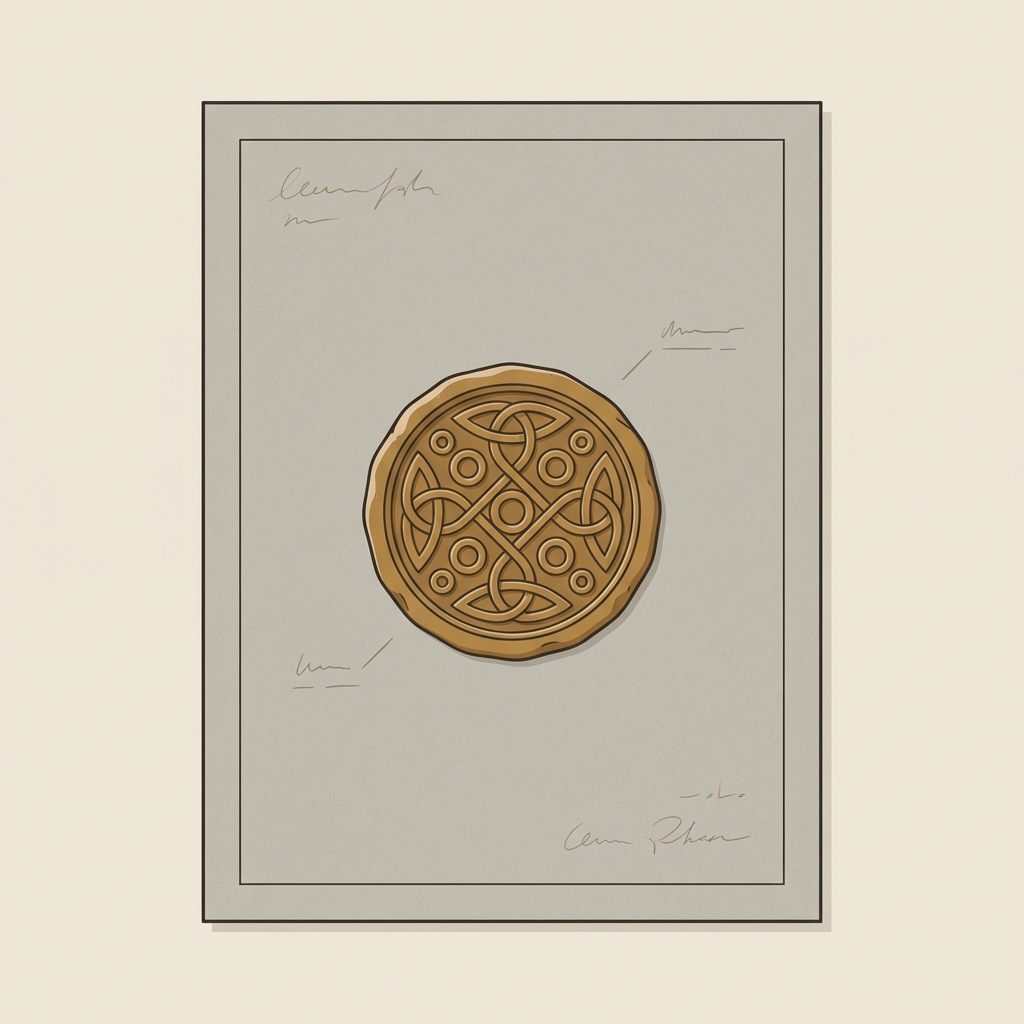
Ask specific questions about any visible repairs or masking treatments. Unusual soldering, modern fill materials, or incongruent surface textures can reduce historical integrity and complicate later scientific testing, so buyers should request condition photographs at different angles and, where possible, microscopic images of suspect areas About us, International Association of Dealers in Ancient Art.
Typical price bands and reading auction records
Market analysis through recent auction records shows a wide distribution of prices. Common bronze ring-money and unprovenanced hammered coins frequently appear in lower price bands, often in the low tens to low hundreds of dollars or euros, while securely provenanced and attributed silver or gold pieces can sell for substantially more, sometimes reaching thousands at auction depending on rarity and documentation Heritage Auctions market summaries.
When reading auction results, match provenance and condition carefully. A single high hammer price for a named die type does not mean all similar examples will reach the same level; comparables require matching metal, weight, exceptional documentation and close condition parity Auction Terminology, Christie's.

Private sales and dealer listings may not publish full test reports, so treat auction catalogues and verified database entries as stronger comparables when trying to establish a realistic value range for an item with similar attributes Heritage Auctions market summaries.
Common pitfalls and red flags for buyers
Poor photographs and vague descriptions are frequent problems. Listings that lack high-resolution images, clear measurements, or weight figures make independent assessment difficult and should prompt a request for additional information before purchase Auction Terminology, Christie's.
Undocumented find claims and unclear ownership histories are serious red flags. If a seller cannot provide a find-record, prior-ownership notes, or any verification letters for an item that would usually have such documentation, treat the listing with caution and consider walking away Portable Antiquities Scheme.
Unusual repairs or masking treatments that hide diagnostic features can indicate attempts to disguise identification or condition problems. Ask for close-up images, conservation reports and, where appropriate, an independent opinion before completing a transaction International Association of Professional Numismatists (IAPN), IBSCC.
Finally, beware of relying on a single past sale as predictive evidence. Auction results are contextual and depend on provenance, catalogue description and buyer interest on the day; always seek multiple comparables that align on metal, weight and documentation Heritage Auctions market summaries.
A step-by-step buying checklist for hammered coins and ring-money
Pre-purchase: request high-resolution photos from multiple angles, exact weight in grams, interior and exterior measurements for rings, clear condition notes, description of any restoration, and any provenance documents or find-record IDs. These baseline items let you compare the object to typologies and auction records Aureus of Trajan, AD 103 to 111, Münzkabinett der Staatlichen Museen zu Berlin.
Pre-purchase: if the item is silver, gold, or otherwise high value, ask whether an XRF reading exists and whether a third-party report has been obtained; for many bronze examples a careful visual assessment combined with clear documentation may be sufficient ANS research overview.
Record measurements, provenance checks and condition questions
Optional worksheet for buyer use
At purchase: record the seller’s stated provenance in writing, save any verification letters or export licences, and note the exact listing text and photographs used to make the decision; these items form a vital record should questions arise later Research report: export licensing and provenance, GOV.UK, Department for Culture, Media and Sport (DCMS).
After purchase: preserve documentation, store the piece with stable humidity and temperature settings, avoid aggressive cleaning, and consult a conservator for any necessary stabilisation; record the item in local finds-record systems if you have a legal reporting requirement and the provenance permits it Portable Antiquities Scheme.
Conclusion: is it worth buying hammered coins or Celtic ring-money?
Buying hammered coins or ancient celtic ring money can be rewarding for collectors who value historical context and careful documentation, but it requires patience and methodical checks: prioritise metal content, weight, condition, typological match and documented provenance when assessing any offer ANS research overview.
If a piece has clear provenance, measured attributes, and either a reliable visual assessment or targeted non-destructive testing for high-value items, it is more likely to be marketable and easier to resell through conventional channels; absent those elements buyers should expect additional due diligence About us, International Association of Dealers in Ancient Art.
Collect for interest and historical value rather than guaranteed financial return. Use clear condition notes, provenance documentation, and measured attributes to make a reasoned choice, and consider consulting a specialist when in doubt Heritage Auctions market summaries. For assistance, see our contact page.
Check measurements, weight and typology notes; large heavy rings recorded as bullion or proto-currency differ from smaller wearable rings and are catalogued separately in finds databases.
Not always; XRF is valuable for high-value silver or gold pieces but for many bronze items a careful visual assessment combined with clear provenance may be sufficient.
Request exact weight and measurements, condition and restoration notes, any find-record IDs or provenance letters, and export licences when applicable.
More from Aurora Antiqua
References
- Research report: export licensing and provenance, GOV.UK, Department for Culture, Media and Sport (DCMS)
- Report treasure, GOV.UK, UK Government
- Auction Terminology, Christie's
- International Association of Professional Numismatists (IAPN), IBSCC
- Application of multi-modal 2D and 3D imaging and analytical techniques, npj Heritage Science (Springer Nature)
- About us, International Association of Dealers in Ancient Art
- Aureus of Trajan, AD 103 to 111, Münzkabinett der Staatlichen Museen zu Berlin
- Archaeological materials, Icon, The Institute of Conservation (UK)
- AN UNKNOWN COIN DIE OF AUGUSTUS (27 BC, 14 AD), Journal of Ancient History and Archaeology, DOI
- Home, American Numismatic Society