


Looking for the real thing? Browse authentic Medieval & Crusader rings, each piece one of one, individually authenticated, with documented provenance. For the background, see the guide to ancient jewelry.
How to use this guide on a silver ankh ring
This short guide is meant to help readers who are considering a silver ankh ring as a piece of personal adornment, a collector's item, or an object of historical interest. It combines museum scholarship on the ankh with contemporary pastoral commentary so you can make a decision that respects both historical context and your faith commitments, without offering universal moral pronouncements.
The three practical concerns you will see throughout this guide are provenance, intent, and community perception. These factors are the most commonly cited in both academic descriptions of the ankh and in pastoral responses to wearing non-Christian symbols; they provide a workable frame for discernment in many contexts Encyclopaedia Britannica entry on the ankh.
Stepwise decision framework for a silver ankh ring
Bring these points to a pastor
The items in this article are not legal advice or an attempt to pronounce a single denominational ruling. If your tradition has specific rules, consult a local leader after you use the framework below. The aim is to make room for careful reflection and community conversation.
What is the ankh: origin and primary meanings
The ankh originated in ancient Egypt where it appears in texts, reliefs, and portable objects as a sign closely associated with life, eternal life imagery, and funerary or amuletic contexts; that scholarly description is standard in museum literature and reference works Metropolitan Museum of Art page on Egyptian symbols. The Wikipedia overview Ankh on Wikipedia and a concise Q and A GotQuestions explanation provide additional summaries.
In Pharaonic art the ankh is frequently shown in the hands of deities or in scenes linked to rebirth and the afterlife, and it commonly appears on objects placed in tombs or used as personal amulets to express hopes for life beyond death Encyclopaedia Britannica entry on the ankh.
Because the ankh functions as an Egyptian cultural and religious emblem in its original contexts, it is distinct from Christian signs in both origin and theological reference. Understanding that distinction helps frame whether a modern silver ankh ring is being worn as an historical motif, a fashion choice, or something intended to carry spiritual meaning.
The ankh in ancient jewelry and object histories
Museum collections and object catalogues document long use of the ankh motif on a range of small objects, including beads, amulets, and personal ornaments; these records help collectors compare a silver ankh ring to documented antiquities when provenance is being evaluated Metropolitan Museum of Art page on Egyptian symbols. Aurora Antiqua artifacts collection.

The ankh motif appears on wearable items in several forms: as small carved amulets suspended on cords, as inlaid motifs on bracelets and rings, and sometimes as intaglio or bezel-set devices on larger personal pieces. Material choices range from faience and gold in Egyptian contexts to later reproductions in silver and bronze, and this variety affects conservation and attribution British Museum collection description. Related rings are available in our rings collection.
Because of that long material range, clear provenance and careful condition notes are essential when assessing whether a silver ankh ring is an ancient artifact, a later historic piece, or a modern object inspired by Egyptian iconography British Museum collection description.
How Christian teaching addresses non-Christian symbols
Mainstream Christian teaching that raises concerns about wearing non-Christian religious symbols typically traces those worries to biblical injunctions against idolatry and to statements in official catechetical documents about the proper use of religious signs; those teachings often shape how denominations talk about symbols in public life Catechism discussion of idolatry.
Official Catholic teaching, frequently referenced in broader Christian conversations, distinguishes between worship and legitimate uses of cultural signs, and advises caution when signs might be used devotionally or could cause scandal within a community Catechism discussion of idolatry.
For many Christians these doctrinal points are applied with nuance: some people treat non-Christian motifs as cultural or decorative, while others see them as carrying spiritual implications that should be avoided in devotional practice.
Can Christians wear a silver ankh ring? Key considerations
Deciding about a silver ankh ring usually turns on three linked questions: what is your intent for wearing it, how will it be read by people around you, and what is the object actually, in terms of provenance and presentation. That triad is the practical core of most recent guidance on the topic GotQuestions Q and A on Christians and pagan symbols.
The three central evaluative questions to ask are presented below as a quick checklist you can use before you buy or wear the ring.
- Intent: Do you plan to wear the silver ankh ring as a devotional sign, or as a historical or decorative object?
- Provenance: Does the listing include documentation, collection history, or condition and restoration notes that identify the piece as ancient, historic, or modern?
- Community impact: How will your family, congregation, or workplace likely interpret the symbol, and might it create confusion or scandal?
See provenance and context behind curated ancient rings on @auroraantiqua
If you are considering purchase, check the listing for provenance, condition notes, and any restoration statements before deciding to wear the piece publicly.
A short practical note: if the ring is worn strictly as a documented antiquity and presented as historical jewelry, some communities will read it as collectible wear; if the ring is marketed or used devotionally in ways that suggest syncretic or occult associations, it will likely be read differently.
Theological perspectives in more depth: idolatry and symbols
The theological concern most often invoked is idolatry as understood in biblical and catechetical teaching, which warns Christians against adopting objects in worship that displace the worship of God; this is the primary basis for many objections to wearing explicitly non-Christian religious symbols in devotional contexts Catechism discussion of idolatry.
Within that framework theologians distinguish between symbolic use in liturgy or private devotion and nondevotional cultural reuse. Symbols can carry layered meanings, and whether an object functions as an idol depends on how it is used and the intentions attached to it.
Denominational variation is important: different traditions read biblical material and catechetical guidance in distinct ways, and many pastoral authorities encourage congregants to consult local leaders about borderline cases rather than rely on broad statements alone.
Pastoral and practical voices: conscience, context, and witness
Contemporary commentary from pastoral writers reflects a range of approaches, from treating the matter as primarily one of individual conscience to urging caution when a symbol could be misunderstood or cause offense; pastoral Q and A pages and commentaries often emphasize context and clarity of intent Christianity Today commentary on wearing non Christian symbols. See also Christianity.com discussion.
There is no single answer for all Christians. Decisions depend on the ring s provenance, the wearer s intent, and how the symbol will be read within the person s community; consult documentation and a trusted faith leader to decide.
When pastors counsel congregants they commonly ask about the reasons for wearing the object, how the person plans to present it, and whether public wearing would undermine the individual s witness in that community; those are pragmatic questions intended to balance personal conscience with communal care GotQuestions Q and A on Christians and pagan symbols.
A practical decision framework for a silver ankh ring
Step 1: Clarify your intent. Be explicit with yourself about whether you are drawn to the ring for historical interest, artistic affection, or religious meaning. If the ring is sought as a devotional object rather than as historical jewelry, many pastors will recommend avoiding its use in devotion to prevent confusion.
Step 1 contextual note: if your intent is historical or decorative, write a short statement you can use if asked, for example I value this as a piece of wearable history rather than as a spiritual sign. That clarity can change how others perceive your choice GotQuestions Q and A on Christians and pagan symbols.
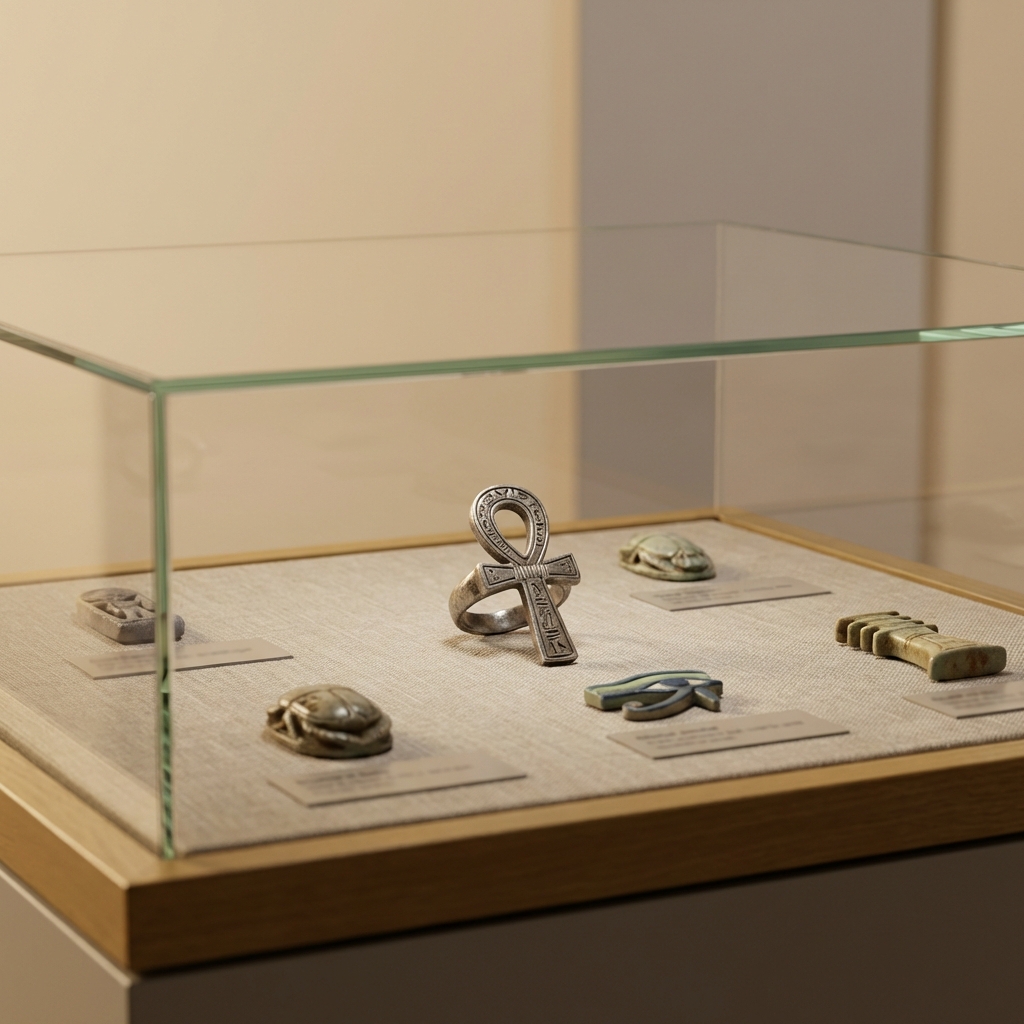
Step 2: Check provenance and presentation. Look for documentation, collection history, condition notes, and any restoration notes attached to the listing. A piece presented with clear provenance as an Egyptian antiquity invites a reading as wearable history; a ring framed as occult, syncretic, or modern fashion will be read differently Metropolitan Museum of Art page on Egyptian symbols.
Step 3: Consider your community and likely outcomes. Ask how your family, workplace, and congregation will likely interpret the symbol. If public wearing could cause confusion or lead others to question your witness, weigh that potential cost against your reasons for wearing the ring and consider alternatives.
Conversation prompts to bring to a pastor or mentor include: How would you read this object in our local context? Would wearing it publicly cause confusion for others? Does the listing show clear provenance or restoration notes? These prompts help keep the conversation focused and practical Christianity Today commentary on wearing non Christian symbols.
How provenance and presentation affect reception of a silver ankh ring
An object represented as an original Egyptian artifact will typically be read by scholars and many collectors through its historical context, with attention to material, style, and condition notes; that historical framing often lowers the likelihood it will be treated as a devotional sign by knowledgeable viewers Metropolitan Museum of Art page on Egyptian symbols.
By contrast, a modern silver ankh ring sold as a fashion piece, or presented with syncretic or occult associations, will be read according to that framing and may trigger pastoral concerns about devotional use or perceived allegiance to non Christian practices Encyclopaedia Britannica entry on the ankh.
When reading a listing look for explicit documentation lines: mention of collection history, condition notes, restoration notes, and any provenance or paperwork. Listings that omit these details should be treated with caution if your decision depends on the piece being genuinely ancient or historically significant Encyclopaedia Britannica entry on the ankh.
Common mistakes and pitfalls when choosing symbolic jewelry
A frequent mistake is assuming a motif carries the same meaning across cultures and times. The ankh in an Egyptian funerary setting does not equal a Christian cross; conflating distinct iconographies can lead to misunderstandings when discussing the piece with others Encyclopaedia Britannica entry on the ankh.
Another pitfall is failing to consider community impact. Wearing a silver ankh ring without clarity of intent or explanation can produce confusion or concern among family or faith communities, which is avoidable through prior conversation and transparent presentation Christianity Today commentary on wearing non Christian symbols.
Practical scenarios: sample decisions about a silver ankh ring
Scenario A: A documented ancient silver ankh ring offered as wearable history. If the listing includes condition notes, collection history, and restoration documentation, and you intend to wear the piece as historical jewelry, many curators and prudent pastors will read the choice as a collector s decision rather than devotional practice Metropolitan Museum of Art page on Egyptian symbols.
Scenario B: A modern silver ankh ring marketed with occult or syncretic associations. In this case the presentation raises pastoral red flags: if the piece is promoted or used in ways that suggest devotional practice outside Christian worship, most cautious pastoral advice will discourage wearing it publicly in a Christian context GotQuestions Q and A on Christians and pagan symbols.
Scenario C: A decorative ankh motif worn in a mixed faith social setting. If your intent is decorative and you can state that plainly, weigh the social context and be prepared to explain the piece as aesthetic or historical rather than devotional; community reaction will vary and personal conversation often resolves misunderstandings Christianity Today commentary on wearing non Christian symbols.
Caring for an ancient or antique-style silver ankh ring
Read condition notes and restoration notes carefully before purchase. Condition statements indicate whether a piece has been stabilized or repaired, and restoration notes tell you what was done; those details affect how you should handle cleaning and wear.
For routine care keep silver away from abrasive cleaners and avoid DIY polishing that can remove historic patina. If a piece appears to have active corrosion or delicate repairs, consult a professional conservator rather than attempting aggressive cleaning yourself.
How to raise the topic with your faith community or leader
When you bring this question to a pastor or mentor, use concise questions and provide documentation. Sample opening lines: I am considering a silver ankh ring as a piece of historical jewelry; here are the listing s provenance notes. How would you read this in our local context? These prompts help keep the conversation practical and focused on communal witness GotQuestions Q and A on Christians and pagan symbols. You can also contact us via Aurora Antiqua contact page for listing questions.
Be open to denominational guidance. If your tradition emphasizes strict avoidance of non Christian symbols in devotion, weigh that teaching seriously and consider alternatives such as wearing a different collectible piece or keeping the ankh ring for private study rather than public wear.
Conclusion: balancing historical meaning, personal conscience, and community care
Deciding whether to wear a silver ankh ring is ultimately a matter that combines historical awareness, personal conscience, and attention to community impact. When you prioritize provenance, state your intent clearly, and speak with trusted leaders, you honor both the artifact s context and your faith commitments Encyclopaedia Britannica entry on the ankh.
Use documentation, conditional language, and pastoral conversation to make a decision that respects historical meaning while caring for the witness you bear in your community.
Historically the ankh is an Egyptian symbol tied to life and funerary practice and is not originally a Christian sign; how it is read today depends on context, presentation, and intent.
Many Christians wear ankh motifs as decorative or historical jewelry, but prudent guidance is to clarify your intent, check provenance, and consider how your community will interpret the piece.
Ask whether public wearing could cause confusion in your congregation, whether the piece is being used devotionally, and whether the listing shows provenance and condition notes.
More from Aurora Antiqua
References
- Amulet of an Ankh, inv. no. 1894.103, Art Institute of Chicago
- Ring, Victoria and Albert Museum, London
- Pectoral Cross, Cleveland Museum of Art
- Une bague-amulette judéo-chrétienne, Persée, Revue des etudes juives
- Emergency Red List of Egyptian Cultural Objects at Risk, International Council of Museums (ICOM), Paris
- 1995 Convention, UNIDROIT, International Institute for the Unification of Private Law, Rome
- Silver and plate, Icon, The Institute of Conservation (UK)
- Protecting silver cultural heritage objects with atomic layer deposited, Heritage Science (Springer Nature)
- Ankh, Wikipedia
- Catechism of the Catholic Church, IntraText, Holy See