


Looking for the real thing? Browse genuine ancient rings for sale, each piece one of one, individually authenticated, with documented provenance. For the background, see the guide to ancient jewelry.
What engraved rings are and why historical context matters
Definitions: engraving types and common motifs, faun engraved ring
A faun engraved ring as a requested personalization can be a simple shallow inscription or a deeper intaglio-style cut, depending on method and surface. When a collector asks for a faun engraved ring the first decision is whether the request is an addition to an existing antiquity or a modern personalization of a contemporary band. (see our ancient Roman rings collection)
Engraving on rings generally falls into two broad families: shallow surface marking done with light contact or ablation, and deeper cutting techniques that remove metal to form a legible groove or motif. Each approach affects the ring differently in terms of permanence and surface appearance, and those differences matter especially for antiquities and pieces with historic patina. Conservation guidance recommends careful consideration of minimal intervention before altering historic metalwork, since patina and surface treatments can carry contextual information and value for research and display The British Museum conservation guidance.

Patina, provenance and condition notes change the decision to engrave. A gently worn bezel, a preserved surface finish or a written provenance entry can suggest that any irreversible alteration should be postponed or avoided. Those factors often determine whether a conservator or a jeweller should be consulted before proceeding.
Before any physical work begins, the assessment should start with material identification, band thickness, presence and proximity of settings, and any prior restorations. These elements together form the baseline that a responsible provider will record and reference when recommending an appropriate method or advising against alteration.
Can you engrave an existing ring? Key factors to check first
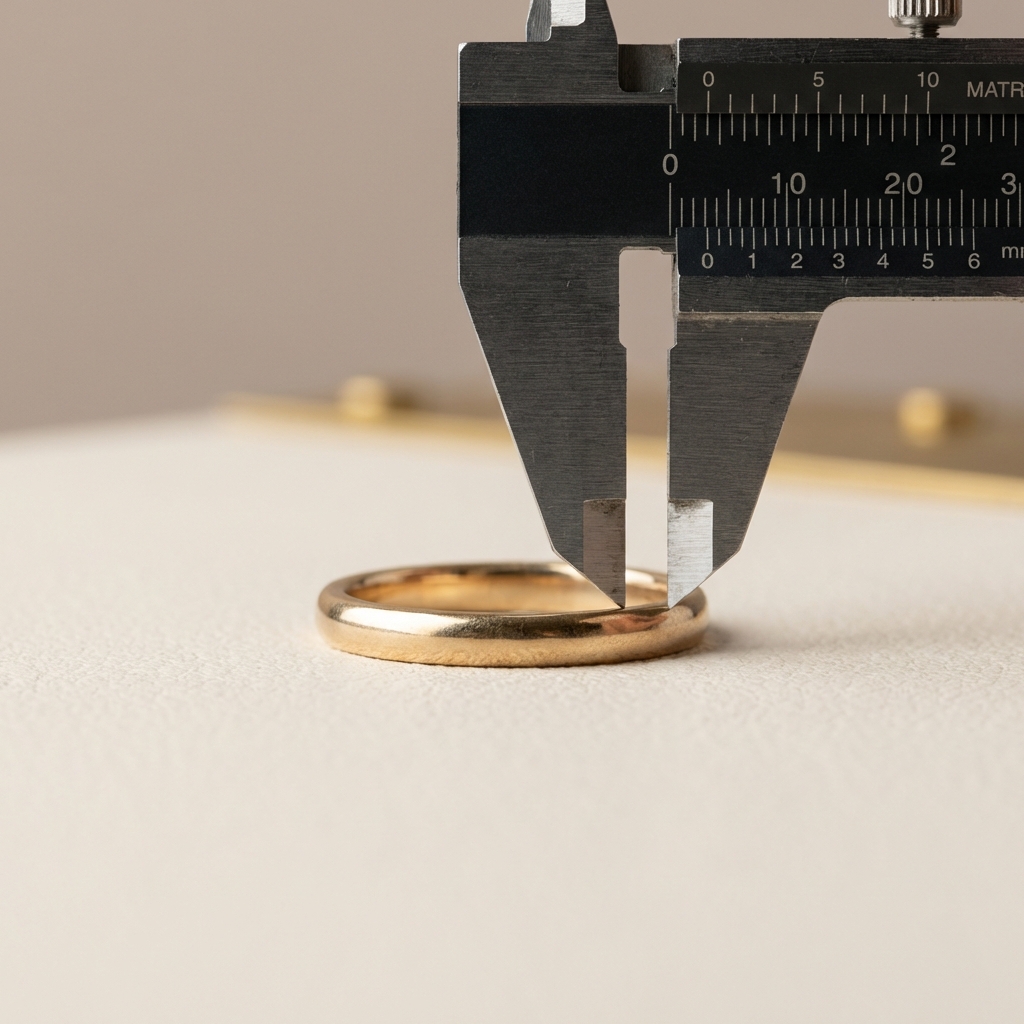
Whether an existing ring can be engraved in practical terms depends first on metal type and band thickness. Thin bands or soft plated finishes often rule out safe engraving without risk of damage, surface delamination or loss of finish, so they merit particular caution when personalization is requested Stuller Insight on ring engraving.
1) Metal type and plated finishes: Solid precious metals such as heavier gold alloys frequently tolerate shallow engraving better than very soft alloys or plated base metals. Plated or treated finishes may delaminate if cut or heated, so conditional testing is usually advised before committing to a design.
2) Band thickness, cross section and hidden thin spots: The safe engraving depth is limited by the band cross section and by any internal thin points created by past repairs. Measuring thickness at the intended inscription site is a basic step; a jeweller will note millimeter values and may decline to engrave if a safe metal depth cannot be confirmed Rio Grande technical guide.
3) Gemstones, settings and proximity risks: Engraving close to settings carries measurable risk from heat, vibration or mechanical stress. For rings with stones near the planned inscription, many providers recommend removing the stone or using protective fixtures during the procedure to reduce the chance of damage Trotec Laser guidance on jewelry engraving.
4) Prior restorations and concealed repairs: A visible seam or a past solder can hide a thin area under a restored section. If a restoration is suspected, the provider should document and, where appropriate, seek a conservator opinion to verify that engraving will not breach a repaired area.
Practical checklist for a first conversation with a provider: state the metal and any plating, measure the band at the narrowest point, note any proximate stones, and ask whether a test or a mock-up is part of the service. These items form the starting point for a safe, conservative decision-making process. For examples, consult our rings collection.
Engraving methods explained: laser versus hand
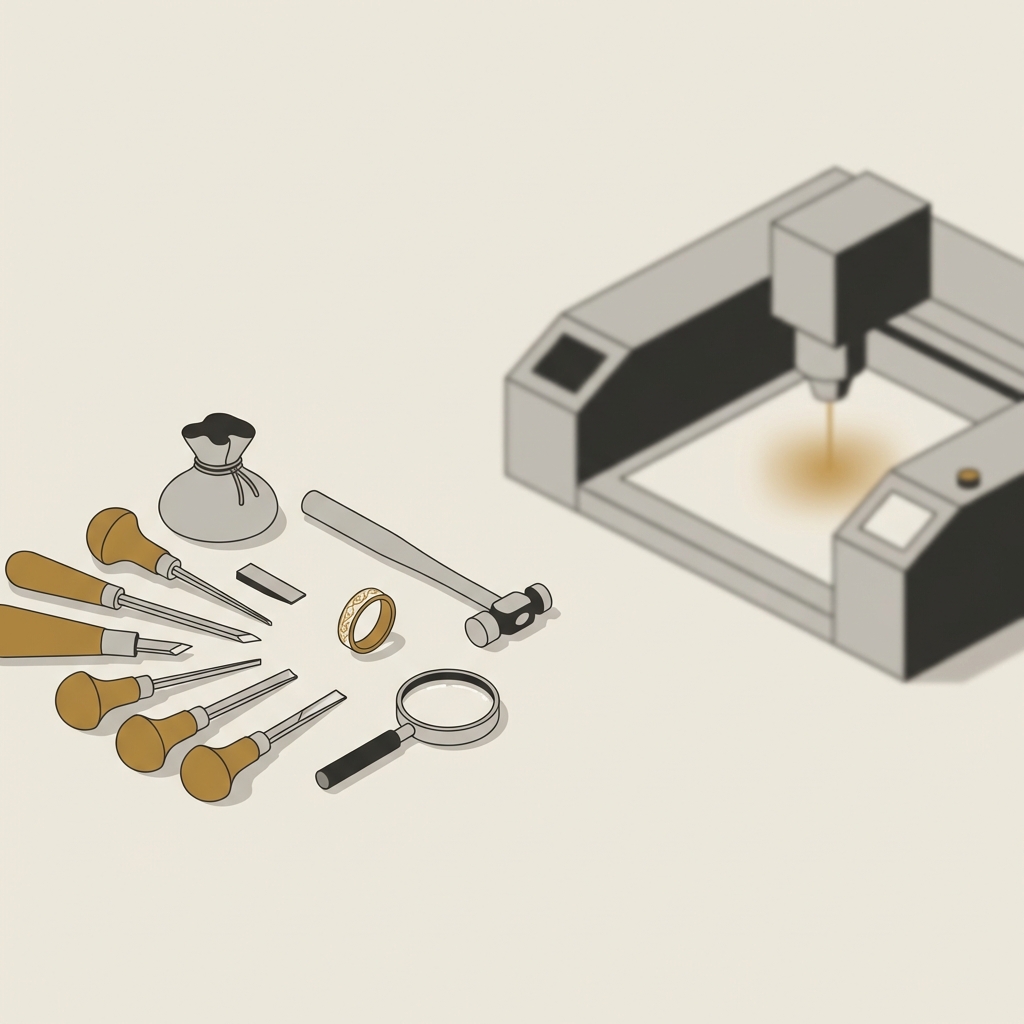
Laser engraving works by removing or marking surface material through controlled energy pulses. It is fast, repeatable and often lower-contact than deep hand cutting, which makes it a common choice for precise interior or exterior inscriptions on modern rings Epilog Laser technical guide.
Hand engraving uses tools such as a burin to physically cut metal. This method produces deeper, tactile grooves and allows a high degree of artistic control for decorative motifs, but it is more invasive and typically requires a skilled artisan to manage depth and finish Ganoksin on engraving techniques.
It can be in many cases, but the decision depends on metal, band thickness, setting proximity, and whether a conservation assessment supports the alteration; document everything.
When deciding which method matters most for your ring, consider whether you want a shallow, low-profile inscription or a deeper carved motif that will remain prominent after light wear. The choice can also hinge on band thickness and whether the ring carries a historic surface that should be disturbed as little as possible.
Trade-offs in speed, cost and permanence are real: laser services tend to be faster and often less expensive for simple text, while hand engraving is typically slower and more costly when deep or decorative work is required. For many collectors the decision balances aesthetic goals and respect for the original surface condition Stuller Insight on methods and workflow.
Choosing the right method for antique and patinated rings
Conservation-first guidance advises avoiding irreversible alteration when a piece has historic patina or archaeological significance. If the ring is described in collection records or has condition notes, those documents should inform the decision and may support postponing any engraving The British Museum conservation guidance. See The rules of remodelling antique jewellery sympathetically for additional perspective.
Laser engraving may be less invasive for shallow text on delicate surfaces because it can remove very little metal and minimizes mechanical contact. However, laser energy can still affect treated or plated finishes and can transfer heat toward nearby stones, so protective measures are still important when a laser is used Epilog Laser technical guide.
Hand engraving is preferable when a deep, decorative cut is desired and when the piece can structurally tolerate the work. For antique rings where the original workshop marks or patina are important, hand engraving should only be considered after a conservator or experienced engraver has provided a written assessment of risk and potential impact E.C.C.O. Professional Guidelines (II): Code of Ethics, European Confederation of Conservator-Restorers'.
When in doubt, obtain a written condition note that records the pre-existing state. That note should describe patina, areas with visible wear, prior repairs, and any documentation that underpins the ring's provenance. A clear pre- and post-work record helps future owners and conservators understand what has changed.
Service workflow: inspection, testing and documentation
A typical provider workflow begins with a pre-engraving inspection that measures thickness, photographs the planned area, checks for prior repairs, and assesses the finish and setting. These steps aim to identify thin zones and potential hazards before any tool touches the metal Stuller Insight on inspection and workflow. See Antique Restoration | Crane Jewelers Limited for a practical guide.
The next step is a method recommendation and a test or mock-up. Many providers will offer a shallow proof or a temporary marking so the client can approve placement and font before committing to a final cut.
measurement and visual inspection tools for engraving assessment
Measure at the narrowest point
Ask for specific questions during the workflow: will the provider remove nearby stones, is a mock-up included, and will the service produce a written condition note after work? These questions form a practical script to use in the initial consultation. For further questions see our questions and answers page.
Laser services are often faster in turnaround, and many labs price shallow text work lower than hand engraving. For antique pieces, however, the value of a slower, documented approach can outweigh a quick, cheaper option because documentation preserves provenance context and clarifies what has been altered.
Aftercare, conservation impact and provenance considerations
After engraving, gentle cleaning is the primary recommendation. Avoid aggressive polishing that can thin shallow engraving and blur the detail. Instead use soft cloths and mild detergents when needed, and keep routine maintenance minimal to preserve both the cut and any surrounding finish Vintage Jewellery Care Tips and Rio Grande aftercare guidance.
Record any change in written condition notes so future owners or conservators understand the alteration. A short entry that states the method used, the location of the engraving, and the date of the work is often sufficient to maintain provenance clarity.
When the piece is archaeologically significant or has an important patinated surface, consider consulting a conservator before and after engraving. Conservators can advise on whether the alteration is reversible, how it may affect long-term stability, and how to document the intervention for collections records The British Museum conservation guidance.
Common mistakes, red flags and how to avoid them
A frequent error is skipping a measurable inspection. Providers who do not measure thickness or inspect settings increase the risk of unforeseen thin areas or hidden repairs being breached during engraving. Always confirm that the provider will measure and photograph the area before work begins Stuller Insight on inspection failures.
Red flags to watch for include: rushing the mock-up step, performing work without suggesting stone removal when required, and failing to offer a written pre- and post-condition note. These behaviors suggest the provider may not be following best practices for historic or delicate rings.
Follow @auroraantiqua for workshop insights and condition notes
Before you agree to engraving on an antique piece, request a written condition note and consider a conservator consultation to clarify risks and document the decision.
If a provider downplays prior repairs or refuses to document changes, consider walking away. A responsible workflow protects the object and the owner by ensuring that alterations are deliberate, recorded and as minimal as possible.
Practical examples, scenario checklist and final decision flow
Scenario A, thick gold band without stones: A solid gold band with ample cross section is typically the easiest case for engraving. If the band measures safely at the intended location and shows no plated surface, shallow laser text or modest hand engraving can be acceptable options, provided the provider documents the procedure and keeps a pre-work condition note Epilog Laser guide.
Scenario B, thin plated band or prior repair: A thin band, especially a plated example, often advises against engraving because the plating can delaminate and the remaining metal may be too shallow to accept a clean cut. In such cases the recommended actions are to defer engraving or to seek a conservator opinion and a test mock-up Rio Grande guidance.
Scenario C, ring with a gemstone close to the planned engraving: When a stone sits within a few millimeters of the intended text, removal or protective fixturing is commonly recommended to prevent heat transfer or mechanical shock to the setting. Ask the provider whether they will remove the stone or use an appropriate fixture during the operation Trotec Laser advisory.
Printable decision checklist in prose: confirm material and finish, measure band thickness, note stone proximity, check for restoration history, require a test proof, and secure written pre- and post-work condition notes. If any single item raises doubt, consult a conservator or delay the work until documentation supports proceeding.
Final decision flow: if the ring is structurally sufficient, has no close stones, and no conservation objections are recorded, engraving may proceed under a documented workflow that includes a test and a condition note. If the ring fails any single checkpoint, prioritize documentation and conservator advice over immediate personalization.
For collectors who value wearable history, keeping the intervention minimal and well recorded preserves both the object and its story for future owners and for scholarship. A thoughtful approach aligns the desire for personalization with respect for the ring's past.
Not every ring is a suitable candidate. Metal type, band thickness, plating and nearby gemstones determine whether engraving is safe, and a pre-engraving inspection is the right first step.
Laser engraving can be less invasive for shallow text, but it still carries risks for treated finishes and stones; a conservator assessment is advised for historically important pieces.
Request a written pre-engraving condition note that lists measurements, visible repairs, finish and the recommended method, and keep a post-work note recording what was done.
More from Aurora Antiqua
References
- Hallmarking Act 1973, UK Government, legislation.gov.uk (The National Archives)
- Hallmarking, The Assay Office Birmingham
- Archaeological materials, Icon, The Institute of Conservation (UK)
- E.C.C.O. Professional Guidelines (II): Code of Ethics, European Confederation of Conservator-Restorers'
- Leitfaden Standards Bewahren, Deutscher Museumsbund e.V
- Standards: Konservatorische Behandlung von archäologischen Funden (conservation of archaeological finds), Bundesdenkmalamt Österreich
- Collections Care: Metal Objects, State Historical Society of Iowa
- How to Care For Your Jewellery: The Ultimate Guide by the National Association