


Looking for the real thing? Browse authenticated ancient artifacts, each piece one of one, individually authenticated, with documented provenance. For the background, see the guide to ancient jewelry.
Quick answer: are egyptian scarab beetle ring considered a good luck charm?
Short summary
An egyptian scarab beetle ring, when ancient in origin, is best understood in the context of Egyptian symbolism for the sun and rebirth rather than as a direct, universal good luck charm. Curatorial descriptions emphasize the association of scarabs with the sun god Khepri and themes of regeneration and protection, meanings that can suggest benefit or safeguarding without equating to a modern notion of luck British Museum.
Ancient scarabs are primarily tied to renewal, protection and administrative use; modern descriptions that call them 'good luck' charms are reinterpretations that build on ancient symbolism rather than exact continuations of historical belief.
What this article will cover
This piece will outline what scarabs meant in ancient Egypt, how the idea of scarabs as talismans for luck developed in modern contexts, concrete signs to distinguish ancient scarab rings from later remakes, and a step by step checklist a buyer can use to evaluate a listing. Practical provenance, condition and testing advice appears later to help collectors make informed choices
What scarabs meant in ancient Egypt: religion, rebirth and administrative use
Religious symbolism linked to Khepri and the sun
In Egyptian religious vocabulary the scarab links to Khepri, a solar aspect often described in museum literature as connected to daily renewal and regeneration; this is the core symbolic field recorded by major collections and reference works Encyclopaedia Britannica.
That association meant the beetle motif could stand for cyclical rebirth and for the visible renewal of the sun, not necessarily a generic guarantee of good outcomes. Where scholars and curators describe scarabs they emphasize ritual and symbolic translation rather than a one word equivalent in modern languages British Museum.
Everyday and official uses: seals and identity
Beyond religious symbolism scarabs functioned as seals and personal identifiers; many examples bear intaglio designs used to impress clay or wax, which links them to administrative and practical roles in households and offices The Metropolitan Museum of Art. Collections such as the Royal Ontario Museum also provide object pages showing typological variation for comparison ROM Collections.
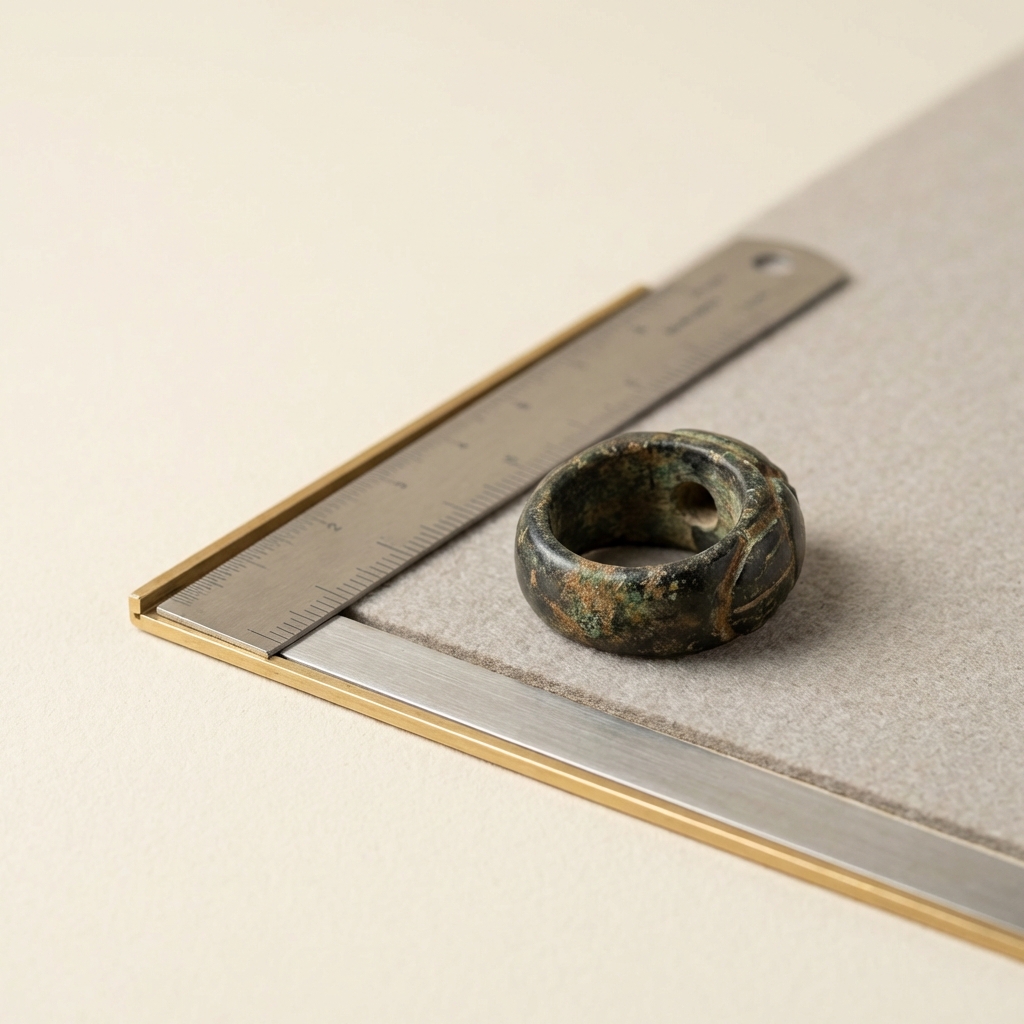
Because scarabs occur with inscriptions or iconography and were used in sealing, their role could be both functional and symbolic, serving identity, record keeping and protective purpose within the same object Heart Scarab of Nefer, The Cleveland Museum of Art.
Many museum display notes treat examples as both amuletic and administrative, and institutions such as the Brooklyn Museum give object entries that emphasise protective use in funerary contexts Brooklyn Museum.
How museums and reference works describe scarabs
Museum catalogues and descriptive essays repeatedly treat scarabs as amuletic and administrative objects, noting wide chronological use and variation in form; these institutional descriptions form the baseline for understanding what a scarab originally signified The Metropolitan Museum of Art.
Because authoritative collections present both material and contextual data, they help readers see why scarab iconography is best read within a set of related concepts, such as Khepri, rebirth and sealing, rather than reduced to a single modern slogan
How modern 'good luck' claims developed and what they mean today
From ancient protection to modern marketing
Calling a scarab a "good luck" charm in contemporary markets is often a simplification that builds on ancient themes of protection and renewal but maps those ideas onto modern notions of luck and personal benefit; this development is a cultural reinterpretation shaped by trade and popular imagination British Museum. For example, museum shop descriptions such as those at the Institute for the Study of Ancient Cultures note scarabs as important amulets sometimes likened to good-luck charms ISAC Museum Shop.
compare a scarab image to museum typologies and catalogues
Use museum images for visual comparison
The reinterpretation varies by market and region; some sellers position scarabs explicitly as charms meant to bring good fortune, while others emphasize heritage, symbolism or aesthetic value. That range reflects contemporary demand more than a single historical truth Journal of Egyptian Archaeology.
Cultural reinterpretation and varying meanings
Modern meanings are not uniform; collectors and wearers may value scarab rings for historical resonance, protective symbolism, visual appeal, or as conversation pieces, and those uses coexist with marketing descriptions that use 'good luck' shorthand British Museum collecting guidance.
Scholars also note open questions about how people in different regions and periods experienced amulet efficacy, which means contemporary claims about a scarab's 'power' should be treated as interpretive and context dependent rather than as a simple continuation of an ancient belief
How to tell if an egyptian scarab beetle ring is genuinely ancient or a later remake
Typology and stylistic indicators
Typology is a first filter: shape, proportions, intaglio motifs and overall workmanship often fall into recognizable types that museums and typology guides document; matching a suspected scarab to established typologies increases confidence in antiquity Scarab. In: UCLA Encyclopedia of Egyptology (Kathlyn M. Cooney), University of California, Los Angeles.
Stylistic indicators are not decisive on their own but they narrow possibilities; for example certain base shapes and inscribed formulas are demonstrably earlier or later within published sequences, so typology is a comparative tool rather than a final proof
Technical clues: drill marks, patina and mounting
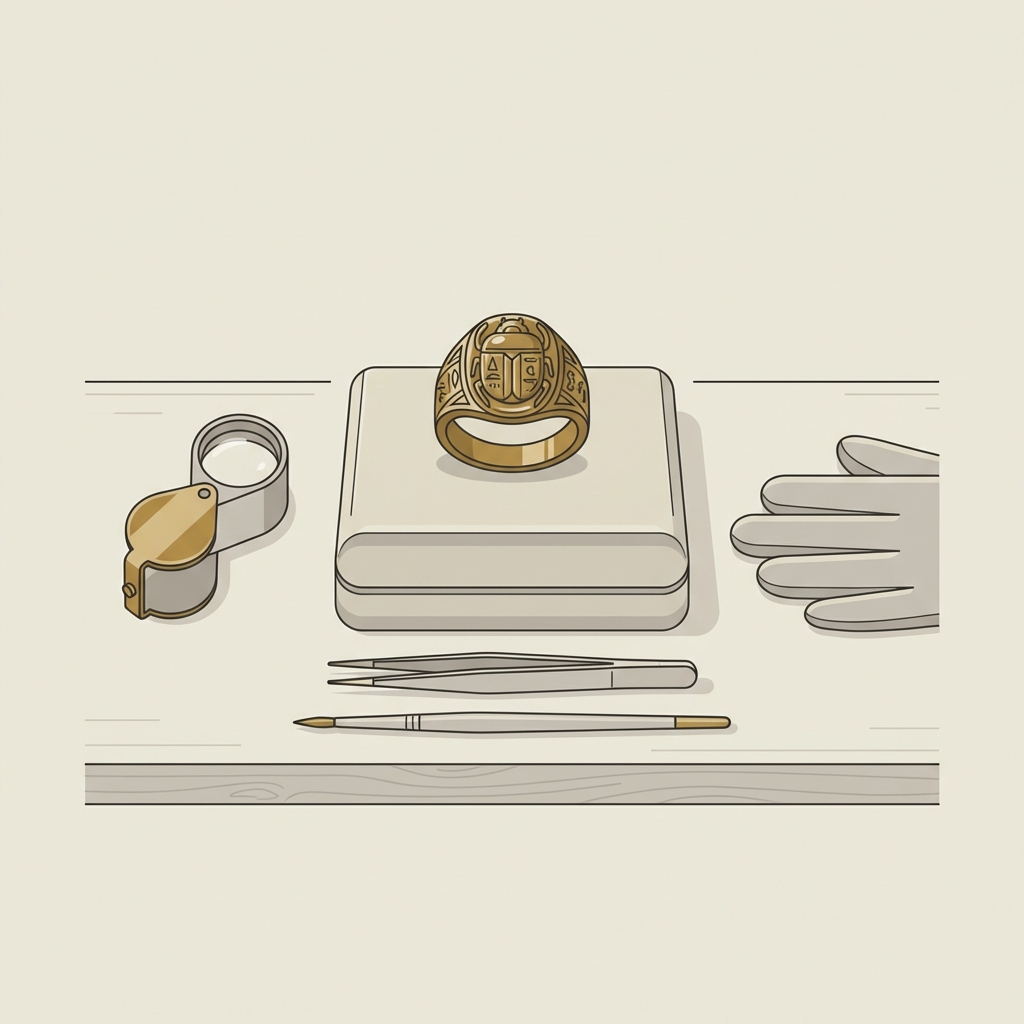
Technical clues such as drill direction and drill morphology, surface wear consistent with long term burial or handling, and naturalized patina can help distinguish ancient elements from modern work; curatorial guides describe these features as key diagnostic signs Ashmolean Museum.
Mounting methods are also informative: a scarab set into a modern bezel or soldered with modern alloys may suggest repurposing even when the scarab itself is old. Looking at how joins are executed and whether any modern filings or tool marks are present can be decisive
When scientific testing or provenance is needed
Provenance and find context provide the strongest non destructive evidence; where those records are thin, consider targeted scientific work. For example, gemological tests can identify a stone type and elemental surface analysis can sometimes separate modern restoration from ancient material British Museum collecting guidance.
Because testing and documentation carry costs, buyers often balance the level of verification against the price and their collecting goals. If provenance and typology point strongly in favor of antiquity, detailed testing may not always be necessary, but when doubts remain testing raises confidence
A practical buyer checklist for egyptian scarab beetle ring shoppers
Photos and measurements to request
Start by asking for high resolution photos that show the scarab from multiple angles, macro images of drill holes and the undersurface, scale measurements, and clear shots of the ring's hoop and bezel. Good images reveal tool marks, wear and patina nuances that low resolution pictures hide British Museum collecting guidance.
- Request at least one macro photograph of the scarab's drilled bore or suspension hole.
See behind the scenes on @auroraantiqua
Save or download this checklist to refer to when examining listings; a short checklist makes it easier to compare photos and descriptions without missing key details.
- Ask for measurements in millimeters for the scarab length, width and the ring internal diameter.
- Request magnified images of surface wear and any soldered joins on the ring bezel.
Documentation to insist on
Ask sellers explicitly for provenance or collection history notes, previous ownership details and any accompanying documentation; useful provenance can include prior catalog entries, collection inventory numbers or sale catalog references that tie the object to an established collection scarabée ; amulette, Louvre site des collections, Musee du Louvre, Departement des Antiquites egyptiennes, Paris.
When a listing claims museum or dealer provenance, request copies or clear descriptions of the documentation rather than accepting a brief statement. Transparent restoration and condition notes should specify what was stabilized, repaired or left untouched
When to seek expert or lab verification
Consider third party verification if the item is expensive, if the provenance is vague, or if testing would materially change your willingness to buy. Specialist gemological or materials analysis and targeted imaging can clarify stone identity and detect modern adhesives or recent metalwork British Museum collecting guidance. If you are unsure where to send an object for assessment, consult our contact page to locate appropriate services or start by asking the seller for past reports.
If you are unsure where to send an object for assessment, start by asking the seller for past reports and consult independent specialists or curators who publish on typology and authentication. A short expert opinion can be decisive in borderline cases
Condition, restoration and why transparency matters for scarab rings
Typical preservation states and what they mean
Many ancient scarabs show wear consistent with age, including surface smoothing on raised areas, small chips on edges, and patchy patina where burial conditions varied; such features are not defects in the modern sense but evidence of age and use British Museum collecting guidance.
Collectors should expect variation from piece to piece; some scarabs preserve sharp intaglio lines, others have been worn down by centuries of handling or burial. Read condition notes as narrative context for how the piece will appear when worn or displayed
Restoration notes: what to ask and what they can reveal
When sellers provide restoration notes they should say whether repairs were stabilizing, cosmetic or reversible, and list materials used. Clear statements about stabilizing cracked stone, consolidating loose fragments, or leaving patina untouched are important for assessing conservation history About us, International Association of Dealers in Ancient Art.
A legitimate restoration note increases transparency but does not by itself prove authenticity. The key is that restorations be described with enough specificity to let you judge how recent interventions might affect appearance and handling
How condition affects display, wear and care
Expect that an ancient scarab set into a ring will need gentle wear practices and occasional conservation care; fragile drilling areas, soft mounting adhesives and thin metal hoops can require professional attention if you plan to wear the piece regularly British Museum collecting guidance.
For display, support mounts and limited handling will reduce stress. When in doubt about stability, ask for a conservator note or professional advice on safe wear and storage
Common mistakes and red flags when evaluating scarab rings
Overreliance on marketing language
One common error is to accept broad claims that the object "brings good luck" without corroborating provenance or technical evidence; marketing shorthand can obscure the difference between modern appeal and historical meaning British Museum collecting guidance.
Another frequent problem is uncritical acceptance of vague provenance statements such as 'private collection' without dates, documentation or collection history. Vague histories reduce confidence and are a prompt for further questions
Ignoring technical wear patterns
Buyers sometimes focus on visual charm while missing subtle tool marks or inconsistent patina that indicate modern intervention. Look for uniformity of wear across contact points, consistent drill characteristics and naturalized surface changes before assuming authenticity Ashmolean Museum.
When sellers decline to provide magnified images of suspected wear areas, treat that refusal as a red flag and proceed with caution

Accepting undocumented provenance
Failing to request documented provenance is another major mistake; provenance can include collection inventory numbers, sale catalogs or curator notes that tie an object to a known history. When sellers provide detailed provenance, it does not prove antiquity by itself but it changes the balance of evidence in a buyer's favor British Museum collecting guidance.
If provenance is unavailable, be prepared to accept additional uncertainty and consider expert opinion or testing before a purchase
Practical case examples: reading three imagined scarab ring listings
Example 1: well-documented museum-provenanced ring
Listing details: high resolution photos, a collection inventory number, and a provenance statement referencing a catalog entry. In this scenario typology matches published examples and the paperwork ties the ring to a recognized collection, which increases confidence in antiquity OIP 118. Scarabs, Scaraboids, Seals, and Seal Impressions from Medinet Habu, Institute for the Study of Ancient.
Action: verify the catalog reference with the issuing collection when possible and request any available conservation reports. When documentation aligns with typology and condition, a buyer can reasonably consider the piece as likely ancient
Example 2: suspiciously 'perfect' patina and vague history
Listing details: flattering lighting, a uniformly smooth surface described as 'original patina', and a short provenance note such as 'private collection, unknown date'. Uniform patina and lack of bore or wear detail can signal a modern surface treatment rather than long term burial or handling Journal of Egyptian Archaeology.
Action: ask for magnified images of drill holes and the underside, request raw photographs without filters, and if the seller cannot comply, treat the listing with skepticism
Example 3: later period scarab repurposed into a modern ring
Listing details: the scarab bears stylistic traits associated with a later historic period but is mounted in a clearly modern bezel with visible modern solder and alloy differences. In such cases the scarab itself may be old while the ring is a modern assembly, which matters for condition and pricing British Museum collecting guidance.
Action: ask the seller to describe the mounting work, request close photographs of joins, and consider a written statement about whether the bezel is contemporary to the scarab or a later addition
Wrap-up: what buyers should take away about egyptian scarab beetle ring and luck
Summary of evidence-based takeaways
Ancient scarabs are best read in relation to Khepri, renewal and protective functions rather than as a single ancient label for good luck; museum and encyclopedic descriptions emphasize rebirth and administrative use as central interpretive frames Encyclopaedia Britannica.
Modern claims that scarabs bring good luck are frequently cultural reinterpretations and marketing shorthand that build on ancient symbolism but do not replicate the precise contexts and beliefs of ancient users British Museum collecting guidance.
Practical next steps for interested buyers
Before buying, request high resolution photos, clear condition and restoration notes, and provenance documentation where available; when uncertainty remains, consider specialist advice or targeted testing to increase confidence in age and material. Treat a scarab ring as wearable history with interpretive layers rather than as a simple luck-bringing object The Metropolitan Museum of Art. For general questions the site Q&A is a useful starting point Q&A.
Careful documentation and transparent seller notes are the most reliable tools for making an informed purchase decision
No. In ancient Egypt scarabs are mainly linked to the sun god Khepri and ideas of rebirth and protection. Modern 'good luck' descriptions are later interpretations and marketing shorthand.
Compare typology to museum examples, examine drill marks and patina in magnified photos, request provenance notes, and seek specialist advice or testing when doubts remain.
Ask for high resolution photos, measurements, condition and restoration notes, collection history or catalog references, and any conservation or lab reports if available.
More from Aurora Antiqua
References
- OIP 118. Scarabs, Scaraboids, Seals, and Seal Impressions from Medinet Habu, Institute for the Study of Ancient
- Scarab. In: UCLA Encyclopedia of Egyptology (Kathlyn M. Cooney), University of California, Los Angeles
- Heart Scarab of Nefer, The Cleveland Museum of Art
- scarabée ; amulette, Louvre site des collections, Musee du Louvre, Departement des Antiquites egyptiennes, Paris
- Scarab, National Museums Liverpool (World Museum)
- About us, International Association of Dealers in Ancient Art
- Research report: export licensing and provenance, GOV.UK, Department for Culture, Media and Sport (DCMS)
- Emergency Red List of Egyptian Cultural Objects at Risk, International Council of Museums (ICOM), Paris
- Client Challenge, JSTOR
- ISAC Museum Shop, isac.uchicago.edu