


Looking for the real thing? Browse genuine ancient artifacts for sale, each piece one of one, individually authenticated, with documented provenance. For the background, see the guide to ancient jewelry.
Quick answer: Can an antique scarab ring be genuine?
Short verdict
Yes, many antique scarab rings can be genuine ancient objects, but each candidate must be evaluated on its own merits. Visual evidence, such as a carved steatite or glazed faience body, consistent toolmarks, and an aged patina, often points toward antiquity, while clear provenance and specialist assessment materially strengthen confidence in attribution. For these reasons, buyers should treat each listing as a hypothesis to be tested rather than an automatic fact, and reserve firm statements for pieces supported by documentation or laboratory analysis.
Scholars and curators note that scarabs and scaraboids are a widespread class of Egyptian amulets and seals found in major museum collections, which provides many comparative examples for assessing style and material British Museum collection overview.
What determines authenticity
Primary factors that determine whether a ring is an authentic ancient scarab include the object's material and glaze, the carving and toolmarks visible under magnification, the presence and pattern of patina and wear consistent with long use or burial, the palaeography of any hieroglyphic inscriptions, and the existence of reliable provenance and export documentation. Scientific methods can add independent lines of evidence but are typically most useful when interpreted by a specialist alongside visual and documentary information The Metropolitan Museum of Art object notes.
Portable, non invasive techniques such as pXRF, Raman and FTIR have become more accessible since the early 2020s and can reveal modern materials or surface treatments that are inconsistent with ancient production, but each method has limits and works best as part of a combined approach Journal of Archaeological Science review.
Quick reminder of common non destructive tests and what they can and cannot show
Tests are informative but need expert interpretation
What is an antique scarab ring and why were scarabs used?
Forms and materials of scarabs
In Egypt, scarabs and scaraboid objects are small amulets and seal forms that were frequently mounted into rings or set as personal seals. A scarab typically shows a stylised beetle back and a flat base often incised with an intaglio design or hieroglyphs; scaraboids may vary in form and decoration but belong to the same functional family. Museums maintain extensive examples that illustrate the variety in shape and mounting styles British Museum collection overview.
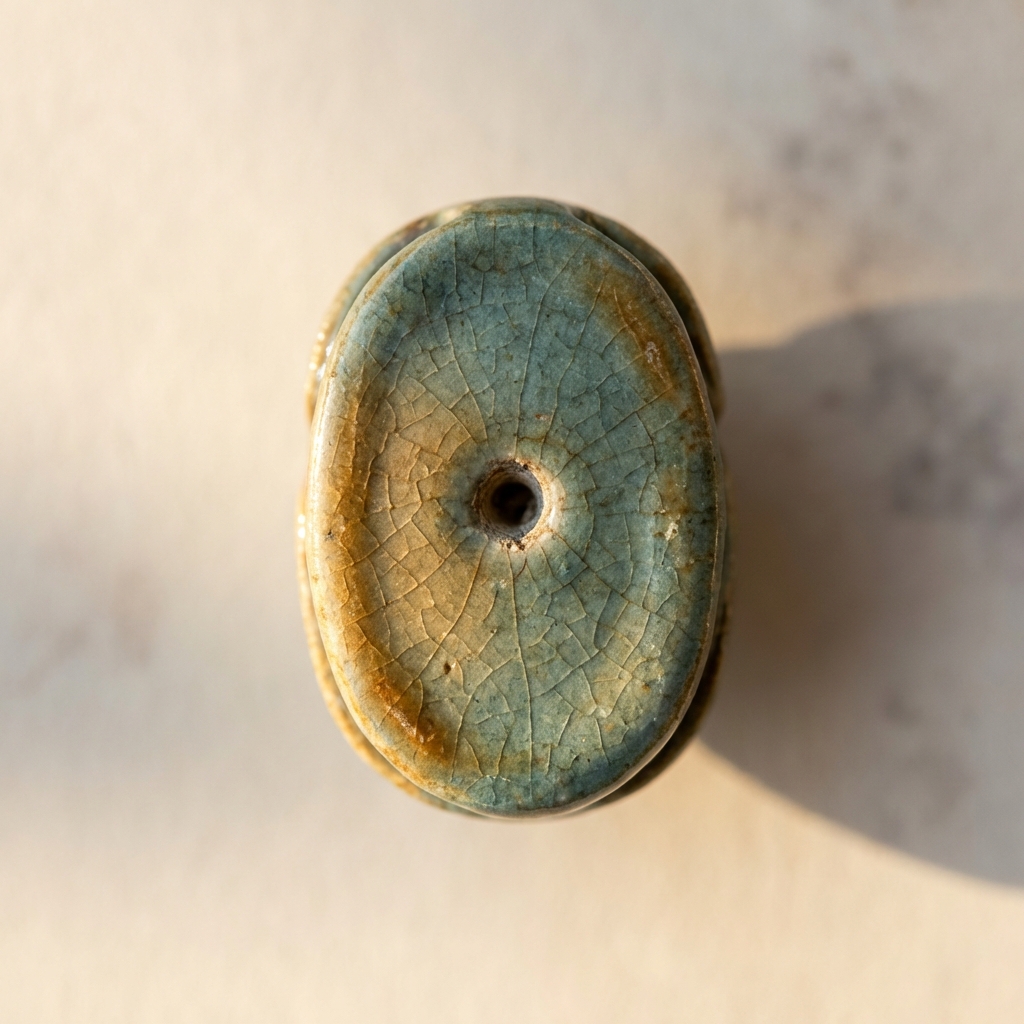
Common materials include steatite, which is often glazed and fired to become what collectors call faience, hard stone varieties, and occasional semi precious materials such as carnelian or agate when a higher status object was intended. The material and glaze texture are primary clues reviewers use to separate ancient pieces from modern imitations The Metropolitan Museum of Art object notes.
Function as amulets and seals
Scarabs served a range of purposes across Egyptian periods. They could be protective amulets worn on the body, administrative or personal seals used to impress clay and wax, or small votive objects placed with the dead. Because they were functional items produced across centuries, stylistic variation and reuse are common, and comparable pieces in institutional collections help date and contextualise examples found on the market J. Paul Getty Museum collection highlights.
When a scarab is mounted in a ring, the mounting style and later metalwork can help date when the object was turned into wearable jewelry, a detail that can be relevant to condition notes and attribution. Descriptions that state materials, measurements, and visible repairs are especially useful for assessing such hybrid objects.

How specialists visually identify an antique scarab ring
Material and glaze clues
Specialists begin with material identification: a true faience glaze has a glassy, often slightly crazed surface and a body texture that differs from modern polymer pastes or glazed modern reproductions. Steatite, when fired and glazed, shows particular fracture and glaze behavior that museums and conservators use for comparison, and well documented institutional examples are a practical visual reference The Metropolitan Museum of Art object notes.
Photographs that include macro images of the base, glaze under raking light, and cross sections when available are especially helpful for preliminary assessments, because they make material clues visible without destructive testing.
Carving, toolmarks and iconography
Carving style, the pattern of toolmarks and the palaeography of any hieroglyphic inscription are central to assessing a scarab. Ancient toolmarks tend to be consistent with hand tools and show specific microscopic patterns; by contrast, modern rotary or stamped marks often leave different traces. Curators consult comparative collections to evaluate whether iconography and character forms align with known periods and workshops J. Paul Getty Museum collection highlights.
For sellers, including close ups of inscriptions, lateral profiles and the base under magnification helps specialists and buyers spot inconsistencies early. If inscriptions are present, a specialist in Egyptian palaeography can often provide a dated range based on script style and layout.
Patina, wear patterns and drill holes
Patina and wear that are coherent with long use or burial contexts are another important clue. Natural surface deposits, microabrasion on raised edges, and consistent wear on contact surfaces are difficult to replicate uniformly and are therefore informative when present. Photographs showing base wear and drilled mounting holes are especially valuable because these details can indicate long term use or secondary mounting events British Museum collection overview.
Practical photo checklist for sellers and buyers: provide high resolution images of the obverse and reverse, macro shots of any inscription, side profiles, the base under raking light, drilled holes and the inner surface of any mounting. These views are the minimum needed for a useful first pass at scarab identification.
View listing examples and condition notes on our shop and social updates
Browse listings that include full condition notes and the detailed photo views described here to see how these elements appear in real examples.
If visible clues are ambiguous, or the object will carry significant value, seek specialist input before purchase. When uncertainty persists, independent analysis or a report from a trusted conservation professional can materially reduce risk.
Scientific and non destructive authentication methods
portable XRF Raman and FTIR: what they detect
Portable XRF, Raman and FTIR are non destructive methods commonly used today to detect elemental and molecular signatures that distinguish ancient materials from modern substitutes. Portable X ray fluorescence can reveal elemental composition and detect modern additives or metals in glazes, while Raman and FTIR spectroscopy identify mineral and organic constituents of glazes and binding phases; interpreted together, these techniques can flag inconsistencies with ancient recipes Journal of Archaeological Science review.
These techniques do not by themselves produce a dating certificate, but they often rule out certain modern materials or confirm that surface treatments are compatible with known ancient compositions. For many collectors, a short non destructive report that rules out obvious modern materials is a useful middle ground.
Thermoluminescence and limits for small glazed objects
Thermoluminescence dating can sometimes be applied to fired mineral bodies to estimate the last time an object was heated, but for small glazed scarabs the method can be invasive or yield equivocal results, and its use is limited in practice. Conservators and laboratories therefore weigh the cost, sampling needs and potential gain from TL before recommending it for small or glazed scarabs Journal of Archaeological Science review.
Because of these limits, many assessments in the 2020s rely on portable spectroscopy combined with visual and curatorial evidence rather than invasive dating methods.
Combining lab data with visual and curatorial evidence
Scientific measurements are most persuasive when integrated with specialist visual assessment and reliable provenance. A pXRF result that matches expected elemental patterns for faience strengthens a visual attribution, but the same result interpreted without context can be misleading. Good practice combines laboratory data, condition and restoration notes, and collection history to build a coherent case for an attribution American Institute for Conservation guidance.
If you plan to commission testing, discuss scope, costs and turnaround with the lab in advance, and ask how results will be reported and interpreted in plain language.
Provenance legal checks and ethical buying for scarab rings
Provenance documentation to request
Ask sellers for written provenance statements that list prior ownership, acquisition dates, and any collection history notes. Provenance documents can include invoices, catalog entries from previous collections, or letters from recognized experts; these records help establish the object's legal and ethical history and are central to responsible collecting practices American Institute for Conservation guidance.
Many Egyptian scarabs are authentic ancient amulets and seals, but a careful combination of visual assessment, provenance checks, and, when needed, non destructive analysis is required to determine whether a given piece is genuine.
Core paperwork to request includes any export or customs documentation, prior sale receipts, collection accession notes, and written statements about restoration or conservation work. When such records are absent, treat attributions as provisional and prefer conditional language in descriptions.
Legal framework and export history
The 1970 UNESCO Convention on cultural property informs many countries' laws and museum best practices; when a clear export or legal ownership trail is absent, the ability to lawfully resell or exhibit an object may be compromised. Buyers should therefore take export history seriously and factor it into purchasing decisions UNESCO 1970 Convention.
Practical steps include asking the seller whether export paperwork exists, whether the item was imported or exported under a legal permit, and whether any previous institutions or collections are named in the paperwork.
When a missing history is a red flag
A missing or vague history does not prove falsification, but it does reduce confidence and increases the need for careful visual assessment and, where appropriate, laboratory checks. If the seller cannot provide clear provenance or documentation, approach the purchase with caution and consider seeking an independent opinion.
A practical buyer checklist for evaluating an antique scarab ring
Photo and measurement checklist
Request the following from any seller before you commit: high resolution images of the obverse and reverse, macro shots of any inscriptions, side profiles, the base under raking light, drilled mounting holes, and close ups of any repairs. Also request full measurements and weight. These items are the minimum needed for a useful first pass at scarab identification British Museum collection overview.
Well composed images reduce the need for immediate travel or lab tests and allow competent sellers or independent consultants to spot obvious red flags early in the process.
Condition and restoration notes to request
Ask for explicit condition notes that describe what has been stabilised, what repairs were made, and what was left untouched. Restoration notes should state whether adhesives, modern fills or consolidants were used and whether any metalwork is a later addition. Clear restoration and preservation notes are a key capability buyers should expect from reputable listings and they make later conservation or display decisions easier American Institute for Conservation guidance.
When a listing lacks these notes, ask follow up questions and request more images. Honest sellers will usually provide added detail when asked.
When to pay for independent testing
Independent testing becomes appropriate when the piece has substantial value, when visual evidence is ambiguous, or when provenance is incomplete and the potential risk justifies expense. Simple non destructive screens, such as a pXRF scan, can often be arranged at modest cost relative to the value of a high quality piece and can rule out obvious modern materials Journal of Archaeological Science review.
Decisions about testing should weigh likely benefit, cost, and how the findings will be used. Labs and conservation departments can advise on which suite of tests is most informative for a specific object.
Common forgery techniques and signs of artificially aged scarabs
How forgers mimic ancient patina
Forgers may use modern pastes shaped to mimic steatite or faience, apply surface treatments to simulate glaze or patina, or artificially age surfaces using chemicals and heat. These techniques can produce convincing surface effects but often leave telltale inconsistencies under magnification and with spectroscopy J. Paul Getty Museum collection highlights.
Uniform wear across an entire surface or suspiciously regular drill marks are practical red flags; authentic wear is usually selective and corresponds to how the object was handled or mounted.
Red flags in modern reproductions
Watch for modern tool traces such as rotary cutter marks, perfectly regular drill holes that contrast with hand drilled ancient holes, and glaze chemistry that does not match known ancient recipes. Sellers that cannot provide clear images of drilled areas or the base should be queried further, because these details are informative for scarab identification The Metropolitan Museum of Art object notes.
If several red flags appear together, consider seeking a conservator's opinion or laboratory evaluation before proceeding with a purchase.
What conservators look for during assessment
Conservators and lab specialists examine microscopic toolmarks, microstratigraphy of surface deposits, and the chemical fingerprint of glazes or fills to separate genuinely ancient production from modern imitation. When multiple independent indicators point the same way, assessors can provide a reasoned attribution; when indicators conflict, they will usually recommend further testing or a conservative attribution Journal of Archaeological Science review.
How Aurora Antiqua approaches sourcing and documentation for antique scarab rings
Curatorial standards we apply
Aurora Antiqua acts as an expert curation reference and trust layer for buying ancient jewelry online, presenting curated ancient rings spanning Roman Greek Byzantine Islamic Celtic medieval and post medieval periods, and offering condition notes and historical context so buyers understand what they are seeing. Listings emphasise measurements, materials, and any restoration notes to help set appropriate expectations.
Where available, provenance and documentation references such as collection history notes or verification letters are included in the listing. This approach aligns with best practices that recommend transparent documentation and condition reporting American Institute for Conservation guidance.
What documentation buyers see on listings
Typical listing documentation includes clear photographs, condition and restoration notes explaining what was stabilised or left untouched, and any provenance details that the seller can reasonably supply. Because documentation availability varies by piece, Aurora Antiqua uses conditional language and does not promise certainty when records are incomplete.

Listings also include restoration and preservation notes that describe what was stabilised or repaired, and buyers can request additional images or documentation when needed for their decision process.
Conclusion: practical next steps and responsible expectations
When to buy with confidence
Buy with the most confidence when a piece combines consistent visual markers, clear provenance documentation, and, where appropriate, supporting laboratory results interpreted by an expert. This combined approach gives the strongest, most defensible basis for a confident attribution and responsible ownership American Institute for Conservation guidance.
When a listing lacks provenance or shows ambiguous material evidence, treat attributions as provisional and seek further documentation or testing for high value items.
If you need more verification
If questions remain, commission specific non destructive tests, request a written opinion from a conservator or museum affiliated specialist, or ask for precise provenance documents. Conservative, conditional language in descriptions helps ensure that buyers and sellers communicate uncertainty clearly, which is a healthy practice for the market.
Careful documentation and a willingness to seek independent analysis are the most effective ways to reduce risk and cultivate a collection that is both meaningful and responsibly acquired.
Look for authentic materials like faience or fired steatite, hand toolmarks, consistent patina, drilled mounting evidence, clear condition notes, and, where needed, non destructive lab tests and provenance documents.
Portable XRF, Raman and FTIR spectroscopy can detect modern materials or surface treatments, but they need specialist interpretation and are best combined with visual and documentary evidence.
Provenance and export documentation are important for legal and ethical reasons and considerably increase confidence; missing history reduces certainty and may justify further checks.
More from Aurora Antiqua
References
- Scarab. In: UCLA Encyclopedia of Egyptology (Kathlyn M. Cooney), University of California, Los Angeles
- Heart Scarab of Nefer, The Cleveland Museum of Art
- Das altägyptische Totenbuch (Book of the Dead), spell 30B, Nordrhein-Westfälische Akademie der Wissenschaften und der Künste
- scarabée ; amulette, Louvre site des collections, Musee du Louvre, Departement des Antiquites egyptiennes, Paris
- Scarab, National Museums Liverpool (World Museum)
- Amulet in the form of a winged scarab, Collections, Antiquities Museum, Bibliotheca Alexandrina Antiquities
- OIP 118. Scarabs, Scaraboids, Seals, and Seal Impressions from Medinet Habu, Institute for the Study of Ancient
- Emergency Red List of Egyptian Cultural Objects at Risk, International Council of Museums (ICOM), Paris
- Federal Register, U.S. Customs and Border Protection, Department of Homeland Security
- Fighting the illicit trafficking of cultural property, UNESCO