


Looking for the real thing? Browse our ancient artifact collection, each piece one of one, individually authenticated, with documented provenance. For the background, see the guide to ancient jewelry.
What is an Egyptian scarab and why collectors value them
An Egyptian scarab is a small amulet or seal shaped like the dung beetle that was used across many periods in ancient Egypt for personal identification, ritual use and funerary deposition. Collectors see scarabs as compact artifacts that connect iconography, wear and context in a single object, and wearable examples such as scarab rings bring that history into private collections. The phrase ancient egyptian scarab ring price is relevant to buyers because condition, material and documentation materially influence what a collector should expect to pay.
In archaeological and museum contexts scarabs appear in funerary assemblages, votive deposits and as personal seals or jewelry, and many in collections were originally used in life rather than as museum display pieces. Descriptions that note burial use, surface accretions or repair history help explain how an object entered the market and why condition notes are important to assessing value and authenticity. Museum conservation overviews discuss materials and manufacture that help place individual pieces in context British Museum Conservation & Scientific Research.
Brief cultural and functional context
Across periods the scarab motif carried evolving meanings, from rebirth symbolism to administrative seal use, and the same compact shape appears across funerary and everyday contexts. For buyers this dual role matters: an item used as a personal seal may show different wear than one kept in a tomb, and those differences affect condition reporting and the likely market treatment by sellers and curators.
Why scarab rings appear in collections and listings
Scarab rings are common in antiquities listings because the scarab form was easily adapted to a bezel setting, and many examples survive in working metal mounts. Collectors prefer pieces with clear condition notes, visible wear consistent with use, and any collection history that can be documented, since these points reduce uncertainty about authenticity and value.
Common materials and manufacture signs to look for
Authentic scarabs are typically made from a small set of materials: faience, glazed steatite and common gemstones such as carnelian or agate. Knowing these materials and how they behave under magnification is a primary step in scarab materials identification and in judging likely authenticity. Recent conservation surveys summarize typical material and manufacture markers to look for when evaluating an object Journal of Archaeological Science. See a technological study of ancient faience on ScienceDirect.
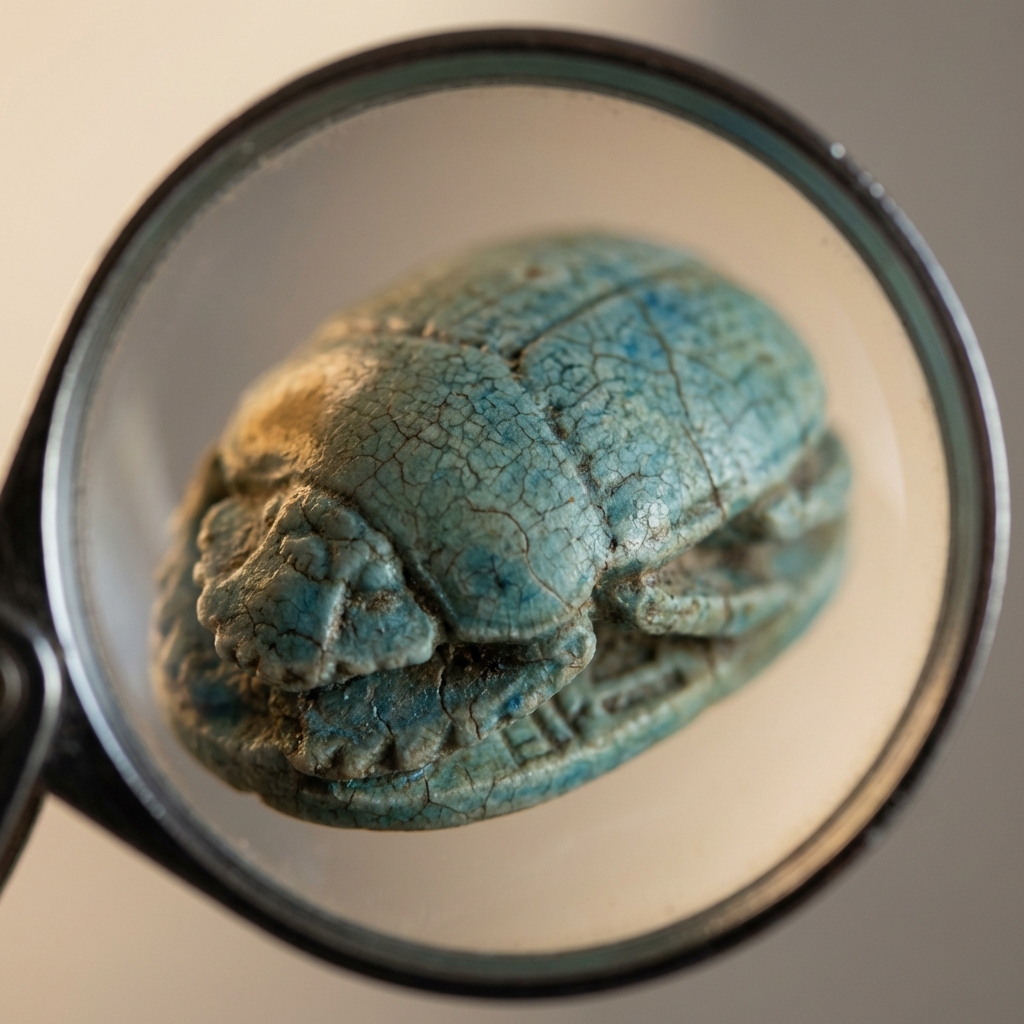
Faience is a glazed silica material that often shows a micro cracked glaze surface and a particular glaze thickness when examined with a loupe. Glazed steatite may retain traces of an intensified glaze where burial and soil chemistry interacted with the surface. Gemstone scarabs such as carnelian were often hand carved and polished, and their drill holes and intaglio work carry distinct hand tool signatures. Conservation guidance helps explain these material differences in practical terms Getty Conservation Institute. A spectroscopic study illustrates color and glazing variation under analysis spectroscopic study.
Under high magnification hand carving generally produces irregular, slightly rounded tool marks and a drill hole profile that narrows where the tool entered and widens slightly where it exited, while modern machine carving often leaves unnaturally sharp, parallel striations. Look for wear that is consistent with long term burial or handling rather than fresh, uniform abrasion.
Glazing and patina are additional clues. Genuine burial wear often shows localized glaze thinning, fine surface micro cracking and soil staining that follows topography, rather than a uniformly bright, even glaze that suggests recent artificial enhancement. Museum conservation resources outline how glazing and burial interaction appear under close inspection British Museum Conservation & Scientific Research.
Compare curated examples and condition notes
See curated examples with condition notes and provenance to compare what true burial wear and documented restoration look like before you buy.
A simple, step-by-step non-destructive checklist you can use in person or from photos
Start with the right tools: a 10x to 20x jeweler's loupe, a strong directional light, a UV flashlight, and a small magnet and portable scale if you can measure mass for a density check. These tools support a practical scarab authenticity test that flags likely modern copies.
When you inspect photos or an object in hand, use a routine sequence: general form and proportions, bezel or mounting evidence, close magnified study of the carved face and drill holes, and surface checks under UV light. A careful, ordered approach reduces the chance of missing telling details such as casting bubbles or modern glue.
Key visual checks include looking for glazing micro cracks, the drill hole profiles mentioned earlier, and wear patterns that match the object's supposed use. Modern fakes often show perfectly sharp tool marks or casting seams and bubbles; these are common replica giveaways when visible under magnification. Conservation practice recommends using magnification and microscopy as an initial screen Getty Conservation Institute.
Basic physical checks can help: a magnet checks for unexpected ferrous repair pins or recent additions, and a quick density estimate can flag materials that do not match expected faience or gemstone densities. UV light can reveal modern adhesives or surface coatings that fluoresce differently from long buried glazes. These are non destructive screening steps that indicate when to press for more documentation or specialist testing Gemological Institute methods overview.
Use systematic non destructive checks, request provenance and condition documentation, and commission targeted lab tests when price or gaps in documentation justify the expense.
When you evaluate listing photos ask for close-ups of drill holes, the reverse face of the scarab, the bezel seat and any interior of the mount, and request scale photos that include a ruler or known object for size verification. Clear condition notes and additional angles drastically reduce uncertainty and should be requested politely.
What good provenance and documentation look like
Provenance can be a collection history, a prior auction or catalogue reference, conservation reports, or a verification letter from a recognized specialist. These elements help build confidence by showing where the object has been since discovery and how it entered markets or collections. Guidance on provenance and acquisition practices explains why these records are important to buyers and institutions Portable Antiquities Scheme guidance.

Useful provenance elements include named prior collections, catalogue or auction lot references, dated acquisition entries and independent conservation or laboratory reports. When sellers provide those elements, read them closely: a dated photograph or a catalogue citation that matches the item description adds weight to the object's collection history.
Provenance is one of the strongest practical indicators available to buyers because it situates an object in documented history and can be independently checked when references are clear. When provenance is vague or absent expect to place greater emphasis on condition notes and, if the price is significant, on targeted scientific testing The Metropolitan Museum of Art provenance guidance.
Advanced verification: what specialist lab tests can and cannot tell you
Specialist analyses such as X ray fluorescence, scanning electron microscopy and thermoluminescence each reveal different aspects of material and manufacture, and they are tools to use when provenance gaps or price levels justify the expense. XRF gives elemental surface composition and can indicate whether a glaze or stone contains elements consistent with expected ancient recipes or modern materials. A non destructive XRF study provides comparative data PDF.
SEM provides high magnification surface imagery and can show microstratigraphy or tool mark details that are not visible with a loupe, while thermoluminescence is used for dating fired materials such as faience or heated steatite when sampling is permitted. Scientific surveys describe the strengths and limits of each method and recommend combining approaches where practicable Journal of Archaeological Science.
Outline when to commission XRF SEM or thermoluminescence for scarab verification
Commission testing for high value items or unclear provenance
Lab tests are not always decisive on their own. XRF reads surface chemistry and can be affected by dirt, conservation coatings or restoration, and thermoluminescence requires careful sampling and has error ranges that specialists must explain. When tests are recommended it is usually because the expected price or the provenance gaps mean the potential benefit outweighs cost and sampling risks Gemological Institute methods overview.
Decide to test when the price is substantial relative to your risk tolerance, when provenance is missing or inconsistent, or when stylistic questions remain after careful visual inspection. A combined approach that pairs condition notes, independent conservation reports and targeted lab tests provides the strongest practical case when an objective finding is needed.
How condition, restoration and disclosure affect trust and pricing
Sellers and curators often include restoration notes that describe whether a piece was stabilized, had a repaired break, or received surface consolidation. Clear restoration notes that describe what was done and why support buyer confidence because they allow a more accurate assessment of structural integrity and appearance.
Transparent condition notes increase buyer confidence but do not by themselves guarantee authenticity or future market value. Conservation and acquisition guidance encourages clear disclosures and third party reports to reduce information asymmetry between buyer and seller Portable Antiquities Scheme guidance.
Typical restoration language to look for includes whether repairs were reversible, whether modern adhesives were used and whether any material was replaced. Wording that specifies who performed the work and when, or that cites a conservation lab report, suggests careful practice and reduces ambiguity about the current state of the object.
When restoration notes are absent or vague, treat the item as higher risk and ask for more detailed photographs and, if the price warrants it, an independent condition assessment. That conservational clarity helps align price expectations and reduces surprises after purchase.
Decision framework: buy, seek testing, or walk away
Assess risk relative to price and documentation using a simple decision flow. If the scarab is low priced and provenance is absent, a conservative approach favors passing or buying only for educational display rather than as a documented collection piece. If documentation is partial and the item is mid priced, request more photos, condition notes and provenance details before committing.
ancient egyptian scarab ring price
For high priced items, or when provenance gaps and unusual materials coincide, seek specialist testing and independent reports before purchase. A clear procedural threshold is to consider testing when the price exceeds what you would accept as a loss without objective verification, and when condition and provenance do not supply sufficient confidence Journal of Archaeological Science.
Risk factors that push toward testing include stylistic mismatch for the claimed period, unexpected materials, obvious modern tool marks, or opaque restoration statements. When these are absent and provenance and condition notes align, a conservative purchase with clear documentation may be reasonable.
If you decide not to buy, document your concerns and ask the seller for clarifying information. Sellers who respond with dated photos, conservation reports or catalogue references often increase buyer confidence; sellers who avoid or deflect reasonable requests are a common red flag.
Common fakes, red flags and buyer mistakes to avoid
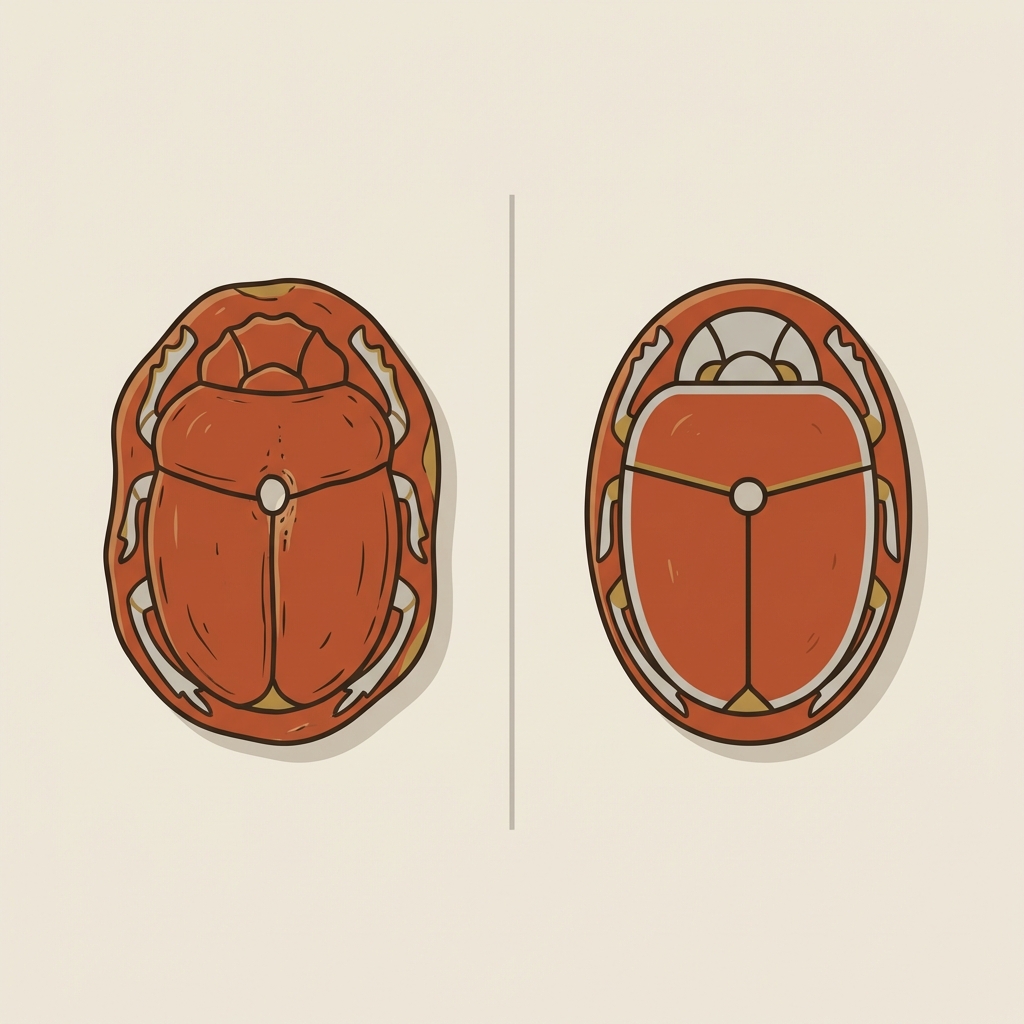
Common replica giveaways include perfectly sharp modern tool marks, casting seams or bubbles, and uniform, artificially bright glazing that does not show localized wear or burial staining. These signs are often visible under magnification and are widely cited as telltale indicators by conservation practice Getty Conservation Institute.
Buyer mistakes include relying solely on a single photo, ignoring restoration disclosures, or assuming authenticity from confident seller language without documentation. A second commenter or independent appraiser can help spot inconsistent claims and reduce impulse decisions based on photos alone.
When you see a potential red flag escalate your questions: request detailed close ups of drill holes, the bezel seat and any internal repairs, and ask for a short explanation of how the piece left its prior collection if applicable. Clear, specific requests often reveal whether the seller can substantiate claims.
Practical examples, a printable pre-purchase checklist and closing recommendations
Scenario 1, low priced with no provenance: If the asking price is modest and no provenance exists, consider the object as decorative rather than documented. Ask for additional photos and a clear condition statement, and buy only if the price matches your tolerance for uncertainty.
Scenario 2, mid priced with some documentation: If partial provenance exists, request catalogue references, dated photos and any conservation notes. If these are satisfactory and magnified photos show consistent wear, a careful purchase with retained documentation is reasonable.
Scenario 3, high priced with gaps: For an expensive scarab with unclear provenance or unusual materials, commission targeted testing and seek an independent report before purchase. Combining lab analysis with conservation notes reduces the chance of a costly mistake and provides a firmer basis for valuation The Metropolitan Museum of Art provenance guidance.
Printable checklist summary: 1) Request high magnification photos and scale images, 2) Inspect material and drill hole profiles, 3) Run basic non destructive checks such as magnet and UV, 4) Ask for provenance elements and condition notes, 5) Commission lab tests for high value or unclear cases.
Closing recommendation: Approach purchases with conservative expectations, prioritize clear condition and provenance documentation, and use non destructive screening to decide whether to escalate to lab testing. For collectors seeking curated, documented examples consider vendors who publish condition notes and provenance references to reduce risk.
Use a 10x loupe to inspect tool marks, check drill holes and glazing under magnification, shine a UV light to reveal modern adhesives or coatings, and use a small magnet to detect unexpected metal repairs. These steps flag likely fakes but cannot prove antiquity alone.
Provenance is one of the strongest practical indicators; named prior collections, catalogue references and conservation reports materially increase confidence and should be requested before higher value purchases.
Commission testing when the item is high priced, provenance is missing or inconsistent, or visual checks leave unresolved questions; targeted tests such as XRF or thermoluminescence are appropriate when the expected benefit outweighs cost.
More from Aurora Antiqua
References
- Scarab. In: UCLA Encyclopedia of Egyptology (Kathlyn M. Cooney), University of California, Los Angeles
- OIP 118. Scarabs, Scaraboids, Seals, and Seal Impressions from Medinet Habu, Institute for the Study of Ancient
- Faience Technology. In: UCLA Encyclopedia of Egyptology (Paul T. Nicholson), University of California, Los
- Gemstones. In: UCLA Encyclopedia of Egyptology (James A. Harrell), University of California, Los Angeles
- Exploring the Composition of Egyptian Faience (Falcone, Aquilino, Stoppa), Minerals (MDPI)
- Dating of Artifacts, Smithsonian Institution, Museum Conservation Institute (MCI), Washington
- Heart Scarab of Nefer, The Cleveland Museum of Art
- Das altägyptische Totenbuch (Book of the Dead), spell 30B, Nordrhein-Westfälische Akademie der Wissenschaften und der Künste
- Federal Register, U.S. Customs and Border Protection, Department of Homeland Security
- Publications and Reports, The Getty