


Looking for the real thing? Browse genuine ancient artifacts for sale, each piece one of one, individually authenticated, with documented provenance. For the background, see the guide to ancient jewelry.
What an Egyptian scarab beetle ring is
Definition and distinguishing features (egyptian scarab beetle ring)
An egyptian scarab beetle ring is, in straightforward terms, a finger ring that incorporates a scarab-shaped amulet as its central element, typically shown as an oval beetle on a flat base and mounted within a bezel or set into a hoop.
Typological studies and object records show that scarab amulets commonly combine a carved or molded beetle upper surface with a flat underside that can be inscribed, and that many examples were adapted to wear as rings by drilling or by setting into a metal or composite bezel Scarab (artifact) article and World History Encyclopedia scarab entry.
Materials vary; many ancient scarabs were made from steatite that was sometimes glazed to resemble faience, while others appear to be cut from stone or semi precious materials such as carnelian, and these material differences affect weight, color and wear patterns.
Functionally, scarab rings often overlap with seals and pendants but differ in daily use: a seal scarab tends to emphasize an intaglio base for impressing clay or wax, while a ring makes the object wearable and visible, turning the amulet into wearable history rather than a replica with only decorative intent Metropolitan Museum of Art collection records.
See curated scarab rings and documentation examples
The curated listings show condition notes and comparative photos so you can match visual features and documentation when considering a scarab ring.
When examining a candidate object, look for the oval beetle silhouette, a flat inscribed underside, and either evidence of a drilled hole used for suspension or a flush surface suggesting it was designed to sit in a bezel; these physical features are primary clues to original manufacture and intended use Scarab, National Museums Liverpool (World Museum).
How ring use differs from scarab pendants and seals
Rings make the scarab a personal, wearable amulet, which changes how it is encountered in daily life compared with pendants that hang at the throat or breast; seals emphasize impressions and official use, while rings combine personal symbolism with display.
Collectors should therefore treat ring-mounted scarabs as hybrid objects: they are amuletic, often personal, and sometimes adapted from objects that originally served as seals or pendants, which is why provenance and close visual comparison with museum examples matter.
Scarabs and Khepri: creation, renewal, and the morning sun
Who Khepri was in Egyptian belief
In Egyptian religion the scarab is most strongly associated with the god Khepri, a solar deity symbolically tied to the morning sun and themes of creation and daily renewal, a reading supported by encyclopedic and museum interpretations Encyclopaedia Britannica Khepri entry.
That association frames many interpretive statements about scarabs: when a collector or catalog calls a scarab a symbol of rebirth or creation, they are usually referring to this specific connection to Khepri rather than to a single, uniform meaning across all periods or contexts.
How the scarab beetle became a solar symbol
The scarab's symbolic role developed through imagery and ritual linking the beetle with the sun's daily rising; museums and reference essays emphasize the metaphor of emergence and renewal that connects the beetle to the solar cycle and creative force Metropolitan Museum essay on amulets and Metropolitan Museum of Art amulet essay.
It is important to remember the scarab is a polyvalent symbol: while the solar reading is central in many modern explanations, exact meanings for an individual scarab depend on period, inscription and archaeological context, and should not be assumed without supporting evidence.
Historical uses: protection in life and symbolic rebirth in burial
Everyday amuletic use across periods
Scarab amulets were used from the Middle Kingdom through the Late Period in everyday contexts as protective and lucky objects, carried or worn to invoke wellbeing and favorable outcomes, a long-standing interpretation in museum literature Metropolitan Museum of Art amulet essay.
Worn forms included beads, pendants, and rings; their presence in domestic assemblages and personal graves suggests a broad social circulation beyond elite or strictly funerary use.
Collectors should understand the scarab primarily as a polyvalent symbol linked to Khepri, creation, renewal and protection; the precise meaning of any ring depends on material, inscription, patina and documented provenance, so meaningful interpretation rests on evidence and museum comparanda.
In funerary contexts scarabs take on a renewal role: specialized heart scarabs placed over the chest or heart of the dead in New Kingdom burials were meant to assist the deceased in judgment and symbolic rebirth, a function noted in museum catalogues and object entries British Museum scarab collection search.
For collectors, the distinction between life-use amulets and funerary heart scarabs matters because form, size and inscriptions differ, and those differences help indicate whether an object was intended for daily wear or a ritual context.
Types, materials and typical manufacture of scarab rings
Shape and base: oval beetle and flat inscribed underside
Typical scarab typology includes a beetle-shaped top surface and a flat underside that may bear an intaglio or hieroglyphic inscription; many examples were drilled for suspension or adapted to fit a metal bezel when worn as a ring
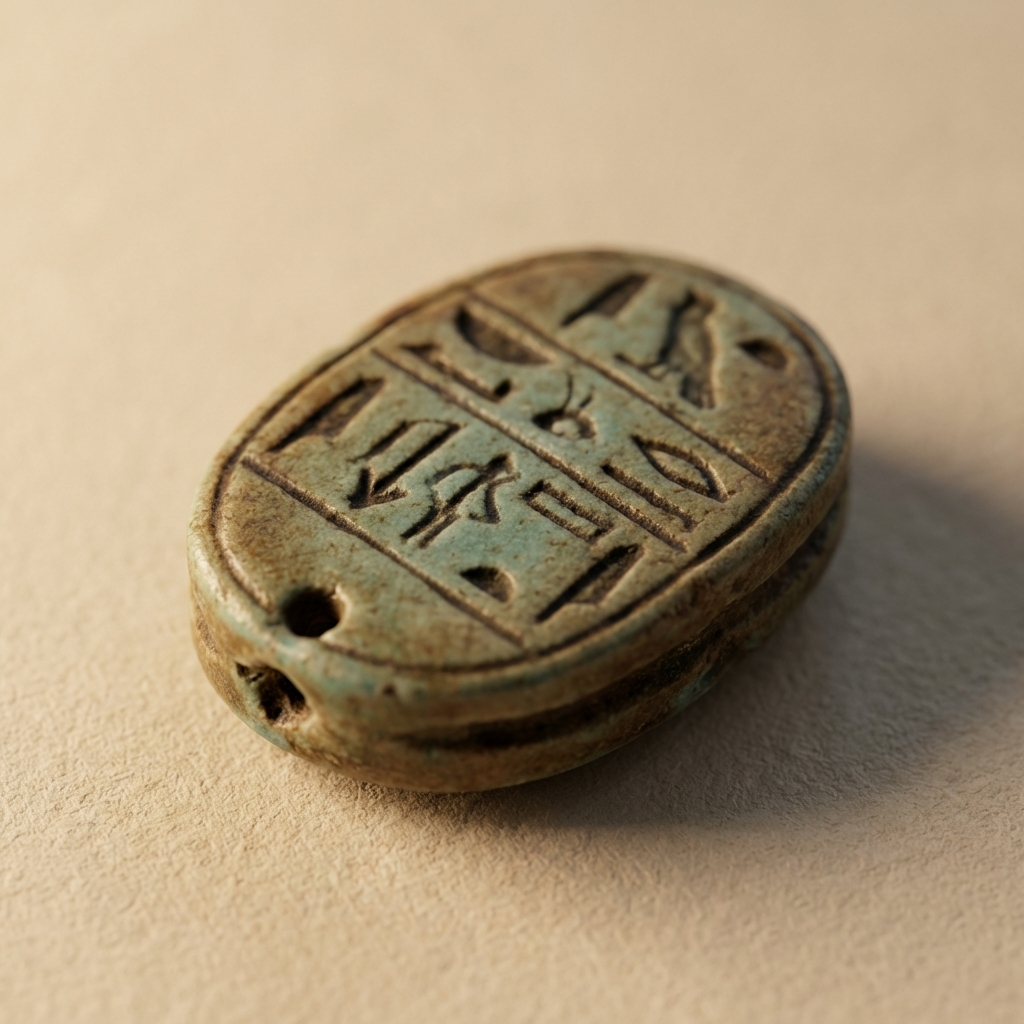
Typical scarab typology includes a beetle-shaped top surface and a flat underside that may bear an intaglio or hieroglyphic inscription; many examples were drilled for suspension or adapted to fit a metal bezel when worn as a ring McClung Museum paper and World History Encyclopedia scarab entry.
Collectors should learn to read the base: a deeply cut intaglio used for sealing is different in function and wear from a shallow hieroglyphic inscription intended as an identification or invocation.
Common materials and glazing techniques
Materially, steatite was widely used and often glazed to imitate the brighter faience look, while harder stones and occasional semi precious materials such as carnelian were also employed for higher status objects; museum collection entries list these materials as typical and help distinguish likely ancient manufacture from later copies Metropolitan Museum of Art collection records.
Glazing and surface treatment can indicate period and technique: original glazed steatite often shows certain wear and weathering patterns that differ from modern glazing, which is one of several checks used when evaluating an object.

When scarabs are mounted into metal rings, examine the bezel and shoulders: a flush fit with wear consistent with age supports a longer history of handling, while a modern solder or inconsistent metal patina may indicate later alteration or remounting. Compare with pieces in our ancient Roman rings collection.
Reading the base: inscriptions, names and magical formulae
What inscriptions commonly say
Bases sometimes bear names, titles or short prayers, and in other cases contain magical formulae; these inscriptions are a primary means to interpret function and, in some cases, help with dating by comparison to logged parallels in museum catalogues British Museum scarab collection search.
Because inscriptions vary in length and style, a collector should avoid simple translation attempts unless backed by specialist comparison; museum records provide the parallels needed to interpret common phrases and formulae.
Why inscriptions matter for interpretation and dating
An inscription can point to ownership, official titles, or a ritual formula, and this evidence is often the single most informative feature for assigning a probable use or cultural context, though it should be combined with material and typology checks Metropolitan Museum of Art collection records.
Collectors should therefore request detailed photographs of the base and, when possible, a transcription or expert reading before accepting claims about identity or age based solely on surface appearance.
How scarab styles and emphasis changed across periods
Middle Kingdom forms and uses
Middle Kingdom scarabs frequently functioned as seals and personal amulets and often emphasized clear, compact carving suitable for impression work, a trend documented in typological studies and museum collections Metropolitan Museum of Art amulet essay.
These objects commonly appear in personal equipment and may show wear patterns consistent with frequent handling or sealing usage.
New Kingdom funerary elaboration
In the New Kingdom some scarabs become more elaborate in funerary contexts, notably with the rise of heart scarabs that are larger and explicitly inscribed to participate in the afterlife judgment rituals, which is reflected in museum descriptions and burial assemblage records British Museum scarab collection search.
While these period trends are useful, collectors should avoid dating an object on style alone; a full assessment pairs stylistic markers with material analysis and provenance comparanda.
Identification checklist for collectors and buyers
Step by step visual and documentation checks
Start with a systematic visual review: confirm the oval beetle silhouette, inspect the flat base for inscriptions or intaglio, check for drilled holes or bezel marks, and look for patina and surface weathering consistent with age OIP 118. Scarabs, Scaraboids, Seals, and Seal Impressions from Medinet Habu, Institute for the Study of Ancient.
Next, request documentation: provenance or collection history, any verification letters, and high resolution or magnified images of joins, drill holes and the base; these items are often decisive in distinguishing ancient manufacture from later reproductions.
A short practical checklist to use when visually inspecting a scarab ring
Keep photos and documentation together
If questions remain, consider specialist tests and comparisons: X ray fluorescence for material, microscopic imaging for tool marks, and comparison to museum catalogues can all contribute to a confident assessment. See the Aurora Antiqua homepage.
When in doubt, consult a conservator or an independent specialist who can examine the object in hand and advise on likely period, material, and any later interventions.
Evaluating condition: restoration notes and patina
What restoration and preservation notes should say
Good restoration notes describe exactly what was stabilized, what was repaired, and what was intentionally left untouched; they give dates or ranges for work and note the materials and adhesives used so future conservators know what to expect Metropolitan Museum of Art collection records.
For collectors this transparency matters because restoration can affect handling, display choices, and potentially obscure original features that are important for typological comparison.
Signs of ancient versus modern repairs
An authentic patina that is consistent across joins and exposure areas is a positive indicator, while fresh tool marks, inconsistent solder, or modern adhesives visible under magnification are common signs of recent repair or remounting.
Ask sellers for microscope images of any repair area and for a clear description in the condition notes; this helps separate routine conservation from invasive restoration that alters the object's character.
Provenance, documentation and verification steps
Types of provenance documentation to request
Useful provenance items include a collection history, prior ownership notes, dated photographs or catalogue entries, and any verification letters from specialists; such documents allow buyers to trace an object's recent history and check for known origins British Museum scarab collection entries.
Verification letters that reference a visible feature or comparison help more than blanket statements of age, because they tie the opinion to observable evidence.
How museums and catalogues support verification
Museum collection entries and catalogues provide comparanda for typology and inscription parallels; comparing a candidate piece to published examples helps test claims and refine dating or function assessments Metropolitan Museum of Art amulet essay.
Remember that provenance claims require documentation; a story without records is insufficient for a rigorous collector, so prioritize sellers who supply verifiable collection history and condition notes that match visual evidence.
Common mistakes and buyer pitfalls with scarab rings
Mistaking modern reproductions for antiquities
Modern reproductions sometimes mimic shape and glazing but lack consistent wear, correct drill patterns, or patina, and photographs alone can be misleading; close examination and documentation checks reduce this risk Egyptian faience glazing by the cementation method part 1 (Matin & Matin), Elsevier, Journal of Archaeological.
Watch out for cast copies with uniform surface texture, modern adhesives, or machine drilled holes that differ from hand drilled ancient examples.
Overreading symbolic meaning without context
It is common to project broad themes onto a scarab without considering inscription, form or provenance; while the scarab often carries themes of protection and renewal, specific symbolic claims should be supported by inscriptions or context.
As a rule, prefer cautious, evidence based language in listings and catalogue notes rather than absolute symbolic declarations that are not documented.
Practical examples: interpreting three scarab ring scenarios
Example 1: a steatite scarab with short name inscription
Scenario: a small steatite scarab set in a simple bezel carries a single short name on the base. Visual checks show glazing wear and a drilled suspension trace.
Interpretation: the name could indicate ownership or dedication; collectors should request a clear transcription and compare it to museum parallels before accepting a firm dating or symbolic claim British Museum scarab collection search.
Next steps: ask the seller for a magnified image of the base, provenance notes, and any prior catalog references.
Example 2: a glazed faience scarab with drill marks and no provenance
Scenario: a glazed faience scarab shows drilled holes and an intact glazed surface but the seller provides no provenance beyond a short description.
Interpretation: drilled holes and glazing are consistent with wearable manufacture, but absence of provenance requires caution; compare glaze chemistry where possible and seek specialist advice if the price or attribution suggests significant value World History Encyclopedia scarab entry.
Next steps: request more images, ask about past ownership, and consider independent material testing if the object is costly or presented as an important antiquity.
Example 3: a carnelian scarab with detailed catalog reference
Scenario: a carnelian scarab ring includes a clear catalogue reference to a published entry and a documented collection history that aligns with the seller's paperwork.
Interpretation: a stone like carnelian and a catalogue reference both strengthen the case for ancient manufacture and provide comparanda for dating and symbolic reading; still confirm that the inscription and wear match the cited catalogue entry Metropolitan Museum of Art collection records.
Next steps: verify the catalogue citation, request condition and restoration notes, and consider asking a conservator to inspect any joins or mounting features.
Caring for and preserving an ancient scarab ring
Handling and storage tips
Handle ancient scarab rings with soft gloves or clean hands, avoid exposure to harsh cleaners, and store in stable humidity and temperature with soft supports to prevent abrasion.
Keep detailed photographs and condition notes with the object so future owners or conservators have a baseline for comparison, and avoid DIY cleaning that could remove patina or traces important for study.

When to consult a conservator
If an object shows active flaking glaze, loose settings, or unclear repairs, consult a qualified conservator before any attempt at cleaning or remounting; restoration notes provided by sellers should be reviewed with the conservator to plan appropriate treatment Metropolitan Museum of Art collection records.
Conservators can also advise on safe display mounts and environmental controls suited to small mixed material objects like scarab rings.
How museums and scholarship approach scarab interpretation
Using museum collection entries and recent catalogues
Museum object records and catalogue essays are primary resources for typology and inscription parallels; consulting these sources helps refine dating and understand shifts in symbolic emphasis over time Metropolitan Museum of Art amulet essay.
When referencing museum examples, note the entry details and avoid implying institutional authentication for items that are not part of those collections.
Why recent publications matter for dating and typology
Typology and dating practices evolve as new finds and analyses appear, so recent museum catalogues and updated online object records often provide the best comparative material for collectors and researchers Encyclopaedia Britannica Khepri entry.
Consult multiple museum records when possible to avoid relying on a single comparative example, and prefer entries that include high quality photographs and detailed condition notes.
Summary and what a scarab ring communicates to a collector
Key takeaways
The scarab commonly communicates themes associated with Khepri, including creation, renewal and protection, and these general symbolic threads are useful starting points for interpretation Encyclopaedia Britannica Khepri entry.
Determining an individual object's specific meaning requires attention to material, inscription, patina and provenance; use the checklist, request documentation, and consult museum catalogues or specialists where needed.
Next steps for interested buyers
If you are considering acquiring a scarab ring, apply the visual and documentation checks described here, browse our rings collection, ask for condition and restoration notes, and seek specialist input for inscriptions or material testing when appropriate.
With careful comparison to museum examples and transparent provenance, scarab rings can be meaningful additions to a collection of curated ancient rings that emphasize context and documented history.
A heart scarab is a larger funerary amulet typically placed over the chest in New Kingdom burials to participate in judgment and symbolic rebirth, while regular scarabs were often smaller personal amulets used in life or as seals.
No, material is important but not definitive; convincing identification combines materials, tool marks, patina, drill patterns, inscriptions and provenance or comparative museum references.
Request scientific testing when provenance is incomplete and the object is costly or claimed to be significant; common tests include elemental analysis and microscopic imaging to check for modern tooling.
More from Aurora Antiqua
References
- Scarab. In: UCLA Encyclopedia of Egyptology (Kathlyn M. Cooney), University of California, Los Angeles
- Das altägyptische Totenbuch (Book of the Dead), spell 30B, Nordrhein-Westfälische Akademie der Wissenschaften und der Künste
- Heart Scarab of Nefer, The Cleveland Museum of Art
- Artifacts: Amulets, Mummification, Online Exhibits, Spurlock Museum of World
- OIP 118. Scarabs, Scaraboids, Seals, and Seal Impressions from Medinet Habu, Institute for the Study of Ancient
- Scarab, National Museums Liverpool (World Museum)
- scarabée ; amulette, Louvre site des collections, Musee du Louvre, Departement des Antiquites egyptiennes, Paris
- Amulet in the form of a winged scarab, Collections, Antiquities Museum, Bibliotheca Alexandrina Antiquities
- Egyptian faience glazing by the cementation method part 1 (Matin & Matin), Elsevier, Journal of Archaeological
- Scarab (artifact), Wikipedia