


Looking for the real thing? Browse our full ring collection, each piece one of one, individually authenticated, with documented provenance. For the background, see the guide to ancient jewelry.
What we mean by ancient rings: definition and context
An ancient ring is an original historic object produced in antiquity or the medieval period, not a modern reproduction. Typical periods labelled in the market include Roman, Greek, Byzantine and medieval, and the term usually refers to rings made in their original workshops that have survived with age-related wear and repairs. Using the phrase ancient ring in buying or conservation contexts implies the object is presented as an original antiquity rather than a later replica or modern copy.
When assessing whether a piece is an ancient ring, listing information that accompanies the object matters as much as the visible object itself. Clear condition notes, restoration notes and any provenance or collection history help describe what has been stabilised, what was left untouched and where past interventions were performed. For legal and ethical reasons, buyers also need documentation that addresses ownership and export history where relevant, because cross-border rules informed by international agreements can affect whether an object can be legally transferred or worn across jurisdictions UNESCO 1970 convention overview.
Watch condition and provenance walk-throughs on Instagram
Download a printable pre-wear checklist to compare condition notes and provenance before you decide to wear an ancient ring.
In practical terms for collectors, the catalogue entry for a curated ancient ring should include material description, any stabilisation or conservation work, and a provenance summary. Aurora Antiqua presents curated ancient rings with condition notes, restoration notes and provenance-style documentation when available, so readers can judge not only aesthetics but also the ring's suitability for occasional wear and handling.
Short answer: can you wear ancient rings?
Yes, in many cases ancient rings can be worn, but only after careful checks. Wearing is reasonable where the metal and structure are stable, there is no active corrosion, and legal title and provenance are clear. This is a conditional conclusion: suitability depends on material stability, structural integrity and documentation rather than appearance alone.
There are clear caveats. Rings with active copper-alloy corrosion, loose mounts or undocumented repair histories present elevated risk for further damage if worn. Likewise, unresolved provenance questions or export restrictions can make wearing inappropriate until title is clarified. For readers asking can you wear ancient rings, the short practical rule is this: do not assume wearable without a condition report or conservator input, and pause if legal provenance is unclear conservation guidance on metalwork care.
How to assess material and condition before wearing
Start with a careful visual review of photographs and, if possible, an in-hand inspection. Look for a stable patina, intact bezel and hoop, and evidence of secure joins. Signs of concern include flaking or powdery deposits on copper-alloy surfaces, soft or newly filled solder lines, hairline cracks and any movement at the bezel or shoulders. Condition notes in a listing should explicitly describe whether any stabilisation was undertaken and whether areas of concern were left untouched.
Home cleaning can remove protective surface layers and obscure diagnostic features, so avoid abrasive or chemical cleaning at all costs. Major conservation bodies recommend minimal-intervention care for ancient metal jewellery and discourage DIY cleaning that can cause irreversible damage British Museum conservation guidance.
If you see signs of active corrosion, instability or extensive prior repairs in photos, seek professional assessment rather than making a wearing decision on appearance alone. A conservator can provide a condition statement and, when needed, a stabilisation plan that describes what interventions are recommended and why. Restoration notes can clarify whether work was cosmetic, structural or aimed at stabilisation and how that affects future wearability.
When reading condition notes, note the distinction between stabilised and untouched treatments. Stabilised typically means conservators have intervened to arrest deterioration, while untouched indicates the seller or collection kept the original surface and any active issues are disclosed. Such distinctions directly affect whether the ring can be safely handled or worn over time.
Corrosion risks: bronze disease and other metal problems
Copper-alloy rings can suffer from a progressive corrosion process commonly called bronze disease. It often appears as pale green or blue powdery patches, active pitting, or localized blistering of the surface. Active corrosion can continue to progress if the object is exposed to moisture, salts or handling that transfers contaminants, so identifying signs of bronze disease is a key step before any decision to wear.
Treatment and stabilisation of active corrosion are specialist tasks requiring identification of corrosion products and controlled intervention. Untreated active corrosion can advance with handling, so prudent buyers and owners should not rely on household remedies or ad hoc cleaning; instead, consult a conservator for diagnosis and stabilisation review of pXRF and conservation methods.
Testing and authentication: non-destructive methods
Many reputable sellers and conservators use portable X-ray fluorescence, known as pXRF, to learn a ring's metal composition and surface characteristics. Portable X-ray fluorescence can provide rapid elemental readings that help indicate alloy types and support attributions when combined with microscopy and visual study. These first-line approaches are widely used as pragmatic, non-invasive tools for initial assessment survey of non-destructive methods.
Suggest pXRF screening and seller summaries
Ask for the device model when available
When asking a seller about testing, request a short summary of pXRF readings, a note on sample locations and any microscopy observations. If the seller or curator can provide these non-destructive screening results, they are useful information that helps you and any conservator judge material stability and authenticity without invasive sampling.
Provenance and legal checks before you wear or buy
Legal frameworks such as the 1970 UNESCO Convention and national import and export laws make provenance and legal title central to responsible collecting. Good sellers should disclose relevant ownership history and any export or import restrictions that affect an object. Proper documentation helps buyers avoid legal complications and supports ethical stewardship UNESCO 1970 convention overview.
Request specific documents when you are considering a ring for wear: collection history, prior ownership notes, export permits where applicable and any verification letters or analytical summaries. Market reports also emphasize that provenance and documentation are primary drivers of collector interest and marketability, so clear records serve both legal and practical purposes Auction Terminology, Christie's.
Do not accept vague provenance statements when the seller will not supply further documentation. If title or export history is unclear, delay wearing or crossing borders with the piece until the matter is resolved. Ethical collecting practices require that buyers treat provenance gaps as a material factor in decisions about handling and display.
Sizing, repairs and conservation-minded interventions
Resizing, soldering or otherwise altering an ancient ring introduces structural risk. Removing or adding metal, reheating joined areas or adding modern solder can stress original joins and obscure maker's marks, so such work should only be undertaken with conservator oversight and a clear plan for reversible or minimal intervention. Conservators and specialized jewellers can coordinate approaches that document and limit changes to the original fabric of the ring Archaeological materials, Icon, The Institute of Conservation (UK).

Good practice is to obtain a full condition report and photographs before any work is authorised. That record should describe current joins, areas of prior repair and the method proposed for resizing. Where possible, use compatible materials and reversible techniques, and document all interventions in restoration notes so future owners and conservators understand what was changed and why.
When a ring is structurally fragile, accepting it as found and using it as a display or study piece rather than for wear can be the best option. In other cases, minimal stabilisation to secure a bezel or stop active corrosion may enable limited, occasional wear with clear monitoring plans.
Preparing an ancient ring for occasional wear
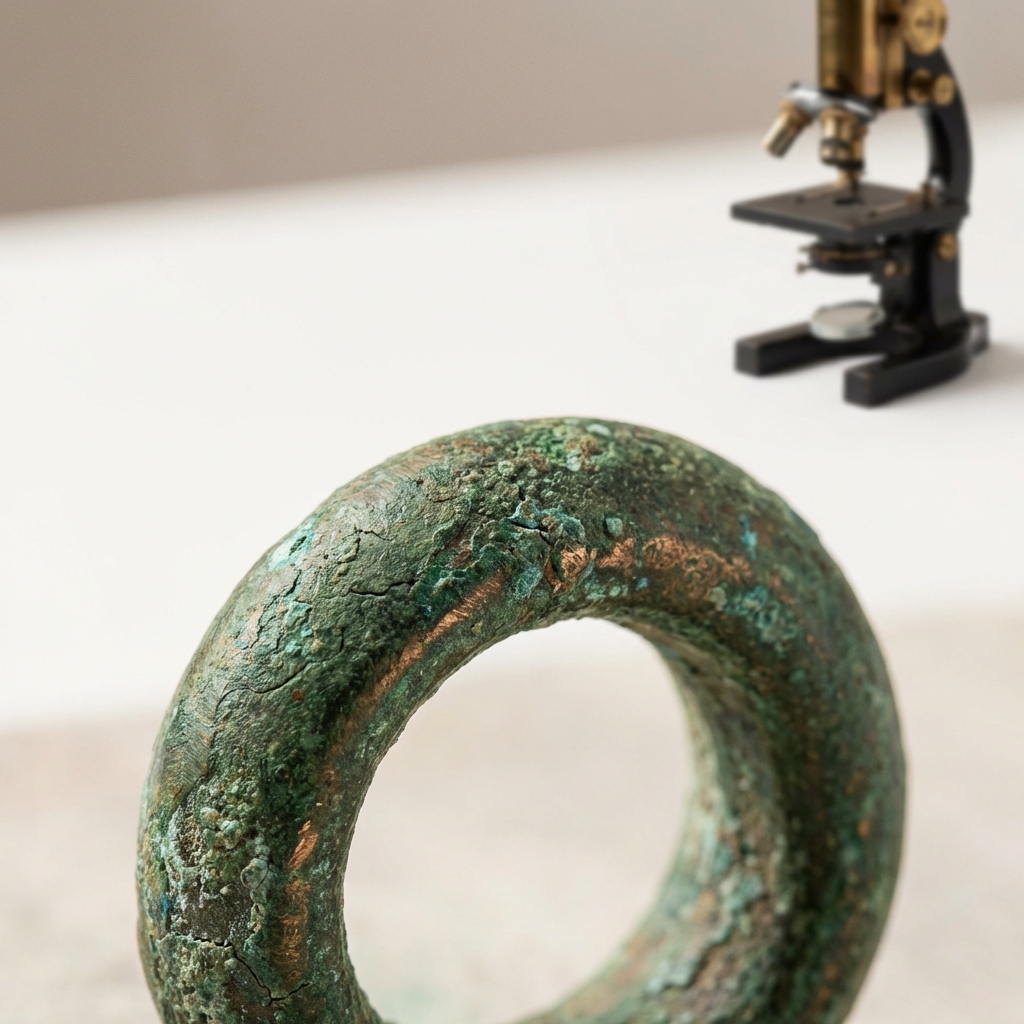
Before first wear, confirm a short pre-wear checklist: a recent condition report, confirmation that there is no active corrosion, stable mounts and a documented record of any repairs. Photographic documentation of the ring from multiple angles and a dated condition note are useful baseline records to compare against after use.
Choose suitable occasions that minimise risk: avoid wearing the ring while washing hands, in humid or salty environments, during gardening, cooking or heavy manual tasks. Limited, careful wear reduces the chance of impact damage and moisture exposure that can accelerate deterioration. Recording the circumstances of each wear session can help owners detect changes over time conservation guidance on metalwork care.
Daily wearing risks and safe practices
Several everyday hazards increase risk for ancient jewelry: contact with chlorine from pools, household cleaners and even some cosmetics can alter metal surfaces; perfumes and lotions can leave residues that encourage corrosion; and physical impacts can cause deformation or dislodge settings. Recognising these hazards helps owners choose safe routines.
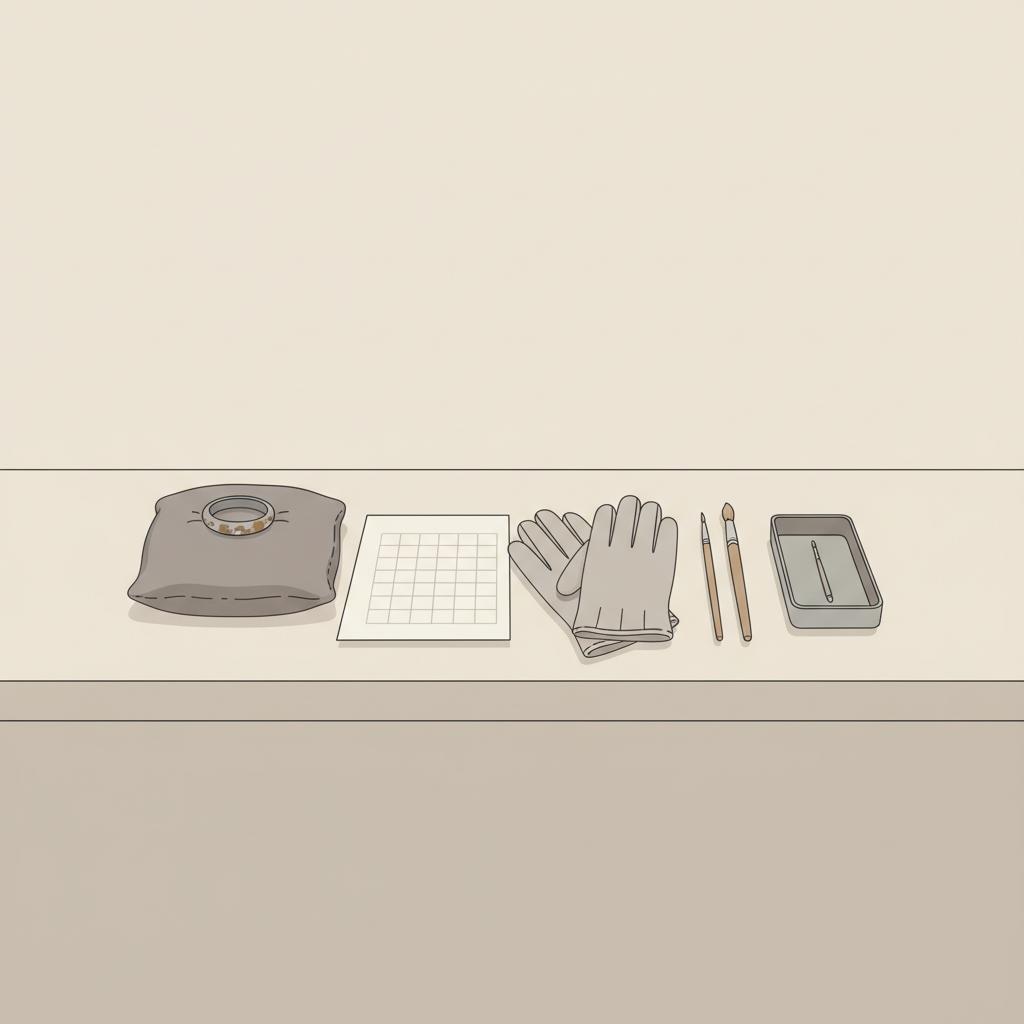
Simple protective practices cut risk significantly. Remove the ring before tasks that involve water, chemicals or hard surfaces. Store rings separately in padded compartments to prevent rubbing against harder modern jewelry. If you notice fresh corrosion, movement in a bezel or new surface changes, stop wearing the ring and seek reassessment from a conservator or the seller.
Storage, insurance and long-term care
Store ancient rings in stable conditions with low relative humidity and away from reactive materials. Padded boxes or acid-free compartments reduce abrasion, and silica gel can help stabilise local humidity for sensitive copper-alloy objects. Separation from modern jewelry avoids contact with harder metals or settings that might scratch or dent ancient surfaces.
For insurance and conservation records, maintain condition reports and dated photographic documentation. Insurers and conservators typically ask for a condition report, clear images and any provenance or restoration notes. Update those records after any stabilisation, repair or wearing incident so the object's documentation remains current and useful for future caretakers Object ID, International Council of Museums.
Buying checklist: what to demand from a seller before planning to wear
Before planning to wear, request core documents: detailed condition notes, restoration notes that describe what was done and why, provenance statements or collection history and any analytical test results such as pXRF summaries. These items help you and any conservator assess whether the ring can be handled or worn safely.
Be alert for red flags: lack of documentation, vague dating or refusal to provide export or title information are strong reasons to pause. Acceptable uncertainties can include partial provenance where older ownership is recorded but some earlier history is unknown, provided the seller explains limits transparently and supplies conservation records where available Research report: export licensing and provenance, GOV.UK, Department for Culture, Media and Sport (DCMS).
Typical mistakes and pitfalls to avoid
Home-cleaning and abrasive attempts are common mistakes that damage patina and remove diagnostic surface layers. Polishing or chemical cleaning can strip evidence used for dating and attribution as well as remove a protective surface; this is why major conservation bodies recommend against DIY cleaning for ancient metal jewelry conservation guidance on metalwork care.
Another common error is assuming authenticity without documentation. Accepting vague claims without provenance or analytical notes can expose buyers to legal and ethical problems. Similarly, quick repairs without conservator consultation can create structural risks and obscure original features that are important for future study.
Practical scenarios and case studies
Scenario 1: A bronze Roman ring in photographs shows a stable, dark green patina with no powdery deposits and a solid hoop. The seller supplies a recent pXRF summary showing copper-rich alloy and a conservator's condition note confirming no active corrosion. With documented stabilisation and clear condition reporting, a conservator may advise limited, occasional wear for display or social use, along with instructions to avoid moisture and impacts.
Scenario 2: A medieval silver ring with visible solder lines and prior repairs is listed with restoration notes describing historic solder additions. Microscopy reveals filling material and reheated joins. In this case, a conservator would typically recommend against reheating or further intrusive resizing and may suggest reversible stabilisation for the joins before any attempt at wear. The presence of detailed restoration notes helps make an informed decision whether to accept the ring as a study piece rather than a wearable item E.C.C.O. Professional Guidelines (II): Code of Ethics, European Confederation of Conservator-Restorers'.
Conclusion: a cautious pathway to wearing wearable history
Wearing ancient rings can be a rewarding way to engage with history, provided that decisions are rooted in condition, material stability and legal clarity. The key criteria are material stability, clear condition notes, documented provenance and conservator oversight for any repairs or resizing. When those elements are in place, occasional, careful wear may be appropriate.
Next steps for interested collectors: request condition and restoration notes, ask for pXRF or microscopy summaries when available, obtain photographic documentation before first wear, and consult a conservator for any suspected active corrosion or planned interventions. A conservative approach protects both the object and your stewardship responsibilities as a collector.

Look for a recent condition report, absence of active corrosion, stable mounts and clear restoration notes. If in doubt, seek a conservator assessment before wearing.
Resizing carries structural risk and should only be done with conservator oversight using compatible, reversible techniques. In many cases accepting the ring as found is safer.
Yes. Unresolved provenance or missing export documentation can create legal or ethical issues. Request collection history and any permits before moving or wearing a piece across borders.
More from Aurora Antiqua
References
- Archaeological materials, Icon, The Institute of Conservation (UK)
- Conserve O Gram 10/2: Caring For Silver And Copper Alloy Objects, National Park Service, US Department
- E.C.C.O. Professional Guidelines (II): Code of Ethics, European Confederation of Conservator-Restorers'
- Standards: Konservatorische Behandlung von archäologischen Funden (conservation of archaeological finds), Bundesdenkmalamt Österreich
- Hallmarking Act 1973, UK Government, legislation.gov.uk (The National Archives)
- Auction Terminology, Christie's
- Research report: export licensing and provenance, GOV.UK, Department for Culture, Media and Sport (DCMS)
- Object ID, International Council of Museums
- Evaluation of a two rubber band technique for finger ring removal, PMC, Annals of the Royal College of Surgeons