


Looking for the real thing? Browse authenticated Ancient Roman rings, each piece one of one, individually authenticated, with documented provenance. For the background, see the guide to Roman jewelry.
What are ancient roman seal rings? Definition and historical context
Ancient roman seal rings, often called signet rings, were personal rings set with engraved intaglios used to impress a device into wax or clay as a form of authentication for letters, property markings, and other private acts. Scholarly summaries and museum catalogues describe signet rings with hardstone intaglios as a persistent feature from the Republic through the Imperial period and attest to their role in everyday authentication practices in many Roman households and offices, with examples conserved in public collections and catalogues Britannica signet ring entry and our Ancient Roman Rings collection.
Definition: a personal signet ring is typically an ancient ring whose bezel bears a carved image in low relief, an intaglio, intended to leave a reversed impression when pressed into a soft sealing medium. This definition helps separate wearable, personal signets from other sealing objects that appear in Roman contexts.
Yes. Romans used a system of seals that included personal signet rings with engraved intaglios, clay and wax impressions on documents and goods, and lead or bronze administrative sealings for official control, each serving related but distinct functions.
Seal objects in the Roman world are a related but broader category that includes the impression itself, for example a wax or clay sealing on a document or container, and separate metal sealings such as lead tags used by administrations and merchants; archaeological and catalogue literature treat these together as a system of authentication rather than as a single object type Met Museum overview of engraved gems.
Museums and publications use the term intaglio to describe the carved negative image that produces a positive impression in a sealing medium, and they place these examples within a long chronological span. The continuity and variation of forms across centuries means that a ring described as a signet may vary widely in material, size, and sophistication while still performing the same basic function.

Seals in practice: signet rings, clay and wax impressions, and official lead seals
Personal signet rings were worn and used to authenticate correspondence and mark property; archaeologists recover rings and impressions that point to daily and legal practice. Collections and catalogues record many personal signets that are associated with private use and civic paperwork, supporting the interpretation that such rings functioned as personal authorising devices Britannica signet ring entry.
Clay and wax sealings survive in the archaeological record mainly as impressions, not whole seals, because the organic or soft materials often decay while impressions in harder packing or preserved contexts remain. These impressions appear on letters, containers and closures and provide direct evidence that sealing was a routine way to close and authenticate documents and goods Portable Antiquities Scheme overview of sealings.
Beyond private use, lead and bronze seals and tags were used in fiscal, military and logistical contexts to control shipments, validate receipts or secure official documentation. Epigraphic finds and thematic studies document their role in administration and supply chains across the empire, and these metal sealings form a separate class of evidence from wearable ring intaglios Journal of Roman Archaeology thematic overview.
Materials and making: intaglio stones, metals, carving and casting techniques
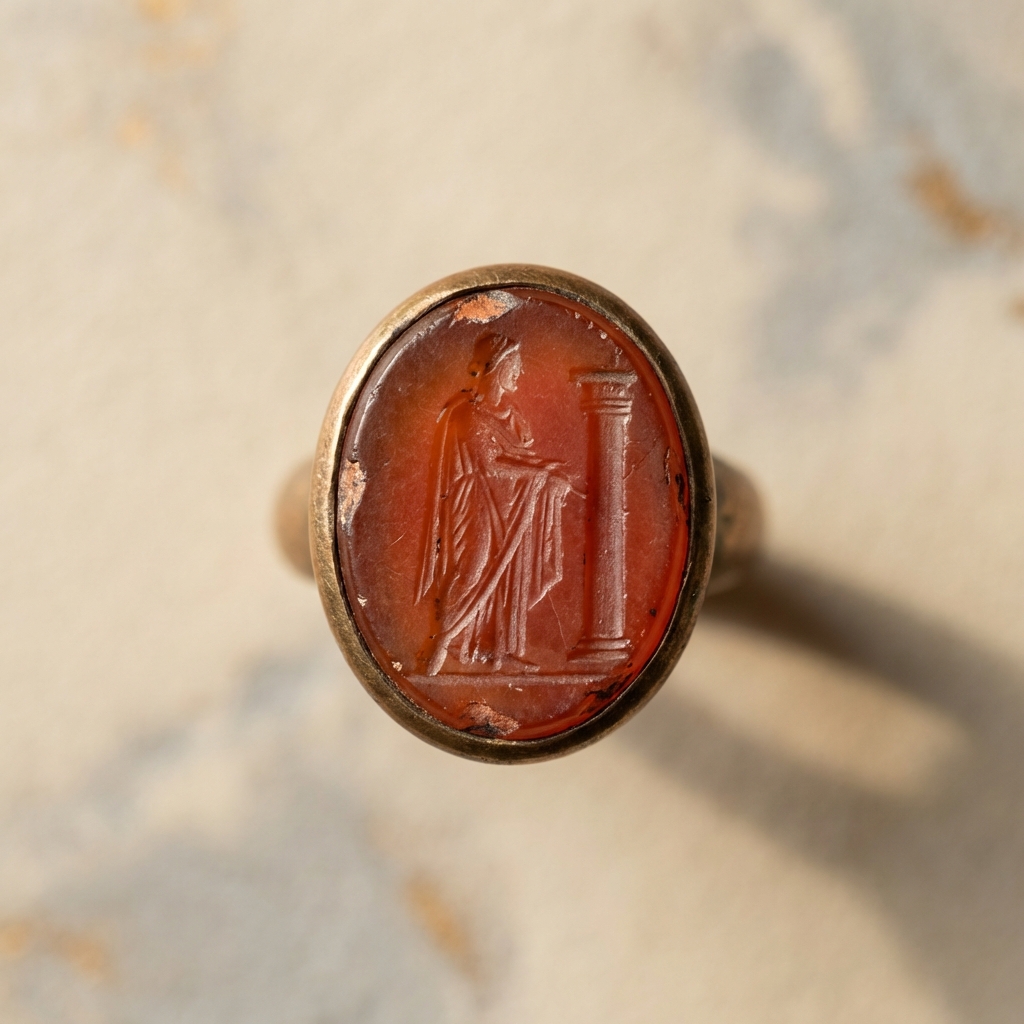
Roman signet rings and intaglios were made from a set of common materials: hardstones such as carnelian, agate and jasper for engraved gems, and metal mounts in gold, silver or bronze for the ring body. Reference works and museum technical summaries list these stones and metals as standard components in engraved gem production and mounting across the Roman period (see Getty Museum publication) Met Museum overview of engraved gems.
Alongside finely cut hardstone intaglios, archaeological assemblages include simpler cast metal rings and engraved metal tablets, which often reflect lower price points or different social uses. The contrast between carved gem intaglios and cast metal signets helps explain why material and workmanship remain key signals when assessing likely date and social function (see Berganza's history of gemstone engraving) Oxford Academic technical studies on engraved gems and rings.
Technical signs to look for include low relief carving that follows known intaglio conventions, microscopic tool marks from stone cutting, and casting seams or sprue remnants on cast rings. These manufacturing traces are the kind of detail reported in technical studies and museum condition notes used for typological attribution Oxford Academic technical studies on engraved gems and rings.
a brief comparison checklist to guide visual research on intaglios
use museum catalogues for comparisons
Careful comparison with published catalogues and high resolution images in museum databases helps place a ring within known workshop traditions and regional styles; those catalogues are the baseline before any laboratory testing is considered.
How Romans used seal rings: social, legal and commercial functions
In private and household contexts, signet rings could function as a personal signature, authenticating letters, domestic agreements and property transfers. Literary and material evidence indicate that personal seals served as a recognizable mark of authority within families and households, and catalogued examples show consistent use across social strata Britannica signet ring entry.
Legal and contractual practices sometimes relied on sealed documents or objects where a signet impression indicated consent, a transfer of goods, or the closure of a formal record. Epigraphic and documentary evidence alongside museum-held rings illustrate that sealing and signing were complementary practices in formal transactions Journal of Roman Archaeology thematic overview.
Commercially, seals and sealings appear on packages, amphorae and storage containers, and signet impressions could confirm a proprietor or shipper. Archaeological recoveries of seal impressions from trading hubs and provincial sites show that sealing practices had a commercial dimension as well as intimate personal and legal roles Portable Antiquities Scheme overview of sealings.
Practical identification checklist for ancient roman seal rings
Start with a visual inspection. Look at the bezel shape and how the intaglio sits in the mount, check for a stable patina that is consistent with long surface alteration, and note whether the mounting style fits catalogued typologies for Roman rings. Books and museum entries provide reference typologies to compare against the object in hand Met Museum overview of engraved gems.
Under magnification, search for tool marks and carving traces on hardstone intaglios or sprue lines on cast metal rings; microscopic evidence of ancient cutting or casting can greatly increase confidence in attribution when paired with other data. Technical reports and museum conservation notes outline the specific traces scholars associate with period techniques Oxford Academic technical studies on engraved gems and rings.
Request provenance and documentation. Ask sellers for collection history, prior ownership notes, and any laboratory reports. A documented findspot or a reliable chain of custody materially increases confidence in a Roman attribution compared with undocumented examples Portable Antiquities Scheme overview of sealings.
Condition and restoration notes matter. Clarify what was stabilized, what repairs were made and whether any modern reworking occurred on the bezel or intaglio. Conservation summaries in museum and dealer records are the standard format for describing these interventions and their possible effect on appearance Britannica signet ring entry.
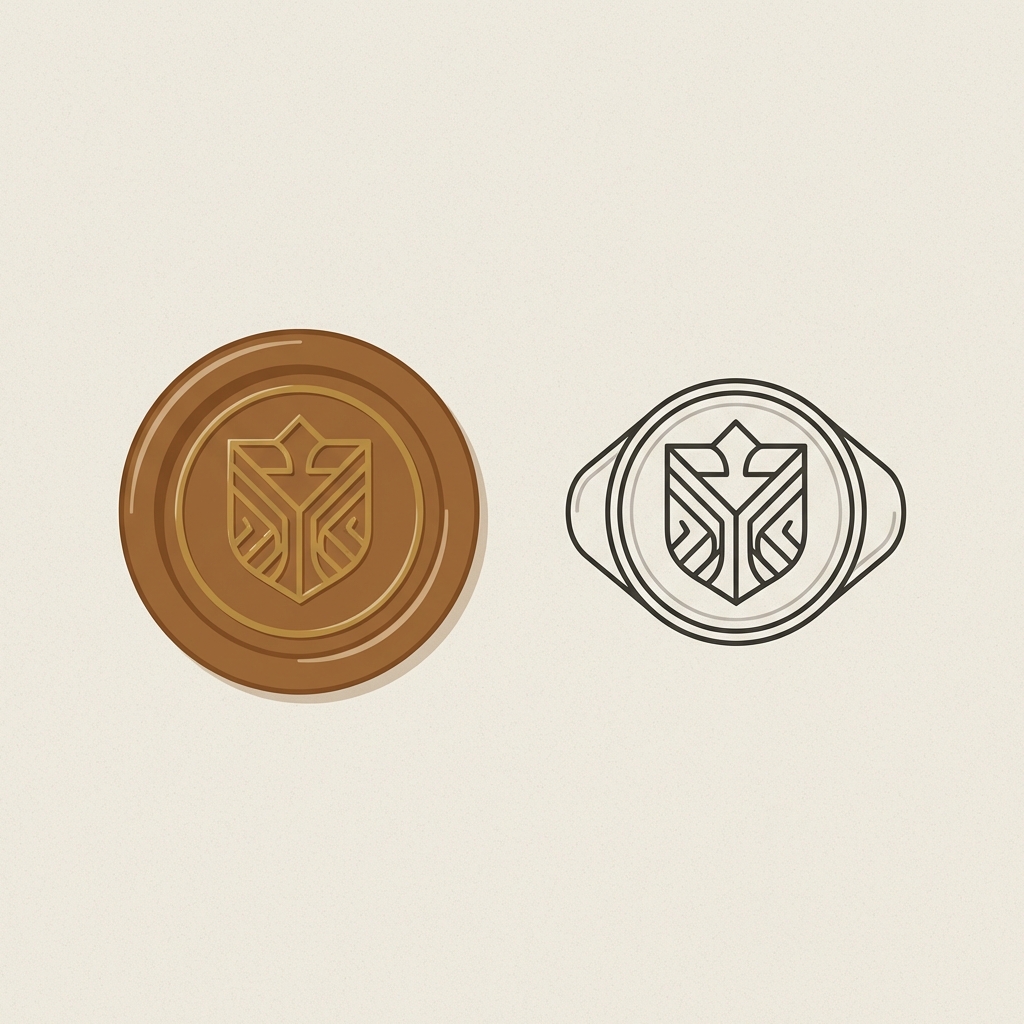

When comparing an object to reference examples, use consistent photo angles, include scale and measurements, and, where possible, obtain high magnification images of the intaglio face and the inner hoop for maker marks or repairs. These simple data points make comparative work and technical review more effective. See examples in our rings collection.
Scientific testing, provenance and conservation considerations
Gemological testing can confirm whether a stone is carnelian, agate or jasper and exclude modern imitations; metallurgical and isotopic studies of mounts can indicate alloy composition consistent with Roman-period practices. Specialist laboratory analyses are the clearest route to distinguishing secure finds from later copies when combined with archaeological context Oxford Academic technical studies on engraved gems and rings.
Provenance and findspot information significantly improve attribution. A secure find context recorded by excavation, or detailed collection history documented over decades, provides the strongest non-scientific evidence for dating and function. Many museum catalogues highlight how provenance materially affects confidence in assignments Portable Antiquities Scheme overview of sealings.
Conservation and restoration notes should state clearly what was stabilised, what was repaired and what was left untouched, so that buyers and researchers understand interventions and their implications for study and display. Condition reports in museum and dealer records typically follow this practice and help clarify what evidence remains original Britannica signet ring entry.
Common pitfalls, fakes and attribution errors
Modern fakes and later recut intaglios can mimic period iconography and surface wear, so a convincing appearance alone is not sufficient evidence. Technical testing and documented provenance are often required to separate secure Roman examples from later imitations Oxford Academic technical studies on engraved gems and rings.
Restorations and modern mountings can obscure original features and create false signals; a modern bezel or re-set intaglio may make a later object look older than it is. Clear restoration notes that describe the scope and date of interventions reduce the risk of misattribution Portable Antiquities Scheme overview of sealings.
See behind the scenes at @auroraantiqua
Explore curated listings and detailed condition notes or contact us with documentation questions.
Avoid relying solely on stylistic or iconographic arguments. Style comparisons are useful but not decisive without scientific tests or provenance, because iconography can be copied across periods and regions. Asking for laboratory reports and chain of custody information is the best practical safeguard Journal of Roman Archaeology thematic overview.
Archaeological case studies: Pompeii, Vindolanda and provincial finds
Domestic contexts like Pompeii preserve evidence of personal belongings and household practices that include seal rings and impressions, and those assemblages help scholars understand private uses of signets within urban households. Published site catalogues and museum presentations place these finds into everyday contexts Met Museum overview of engraved gems (see Lang Antiques overview of rings) Lang Antiques.
Vindolanda and other military or provincial sites yield examples that illuminate supply chains, administrative practice and personal equipment of soldiers and officials. These provincial finds indicate regional variation in sealing practice and show how administrative and private uses could overlap in frontier settings Uncovering Roman Carlisle 2024 autumn excavation announced, Cumberland Council.
Findspot data and linked impressions allow researchers to connect a sealing to a specific object, context or date range, which in turn supports functional interpretations. Where impressions survive, they can sometimes be matched to intaglio motifs and thereby link a ring to a documented use Portable Antiquities Scheme overview of sealings.
Buying responsibly and closing takeaways
Ask sellers for clear photos, measurements, condition and restoration notes, and any provenance or lab reports before purchase. These requests are standard due diligence and help separate well documented pieces from undocumented objects of uncertain origin Oxford Academic technical studies on engraved gems and rings.
Use conditional language when evaluating claims of age or origin and prefer pieces with documented collection history or technical study where possible. A documented provenance or a laboratory result increases confidence, but attribution often remains probabilistic and should be framed that way.
Aurora Antiqua presents items with contextual descriptions, condition notes and provenance summaries when available, and we encourage collectors to request documentation and high magnification imagery. The brand aims to support informed collecting without asserting absolute guarantees about origin or value. Read more on our Questions and Answers blog.
Romans commonly used personal signet rings to mark letters, seal containers and indicate ownership in private and some formal settings, though larger administrative control used separate lead or bronze seals.
Typical materials include hardstones such as carnelian, agate and jasper for the intaglio, and gold, silver or bronze for mounts, with simpler cast metal rings also common.
Request clear photos and measurements, condition and restoration notes, and any provenance or laboratory reports; documented findspot or long collection history increases confidence.
More from Aurora Antiqua
References
- A Corpus of Roman Engraved Gemstones from British Sites, University of Michigan Press / BAR Publishing
- Art & Architecture Thesaurus Full Record Display (Getty Research)
- Fund des Monats August 2019 (Find of the Month), Landesamt für Denkmalpflege und Archäologie Sachsen-Anhalt
- intaglio (gemma incisa) Mercurio stante, 100 dC, 299 dC, Istituto Centrale per il Catalogo e la Documentazione
- Signet Ring, Victoria and Albert Museum, London
- Uncovering Roman Carlisle 2024 autumn excavation announced, Cumberland Council
- Les Intailles antiques de Liberchies, Persée, L'Antiquite Classique
- Une intaille magique au Musée d'Arles (Bouches-du-Rhône), Persée, Revue archeologique de Narbonnaise
- Journal of Roman Archaeology, Cambridge University Press
- Ancient Gems and Finger Rings: Catalogue of the Collections, The Getty
From Aurora Antiqua
We sell authenticated ancient & medieval pieces, each individually examined before listing and backed by a Lifetime Authenticity Guarantee. One of a kind, sold once, never reproduced.
Browse Ancient Roman Rings →