


Looking for the real thing? Browse authentic ancient signet rings, each piece one of one, individually authenticated, with documented provenance. For the background, see the guide to Roman jewelry.
What is a Roman signet ring? A clear definition
A Roman signet ring is best understood as an object that combined personal ornament with a practical function: many rings from the Roman period were fitted with carved intaglios that could be used to impress a seal and so authenticate documents or packages, while also serving as visible jewellery for the wearer Minerva listing.
Typical catalogue descriptions therefore note both function and form, naming the metal of the hoop and the stone type for the intaglio, because buyers use those details to assess likely period and use Auriga product page (see the Ancient Roman Rings collection).
Follow behind-the-scenes updates from @auroraantiqua on Instagram
If you want to see well-documented examples that pair condition notes with clear photos and measurements, consider subscribing to inventory updates or viewing curated listings to follow how similar items are presented.
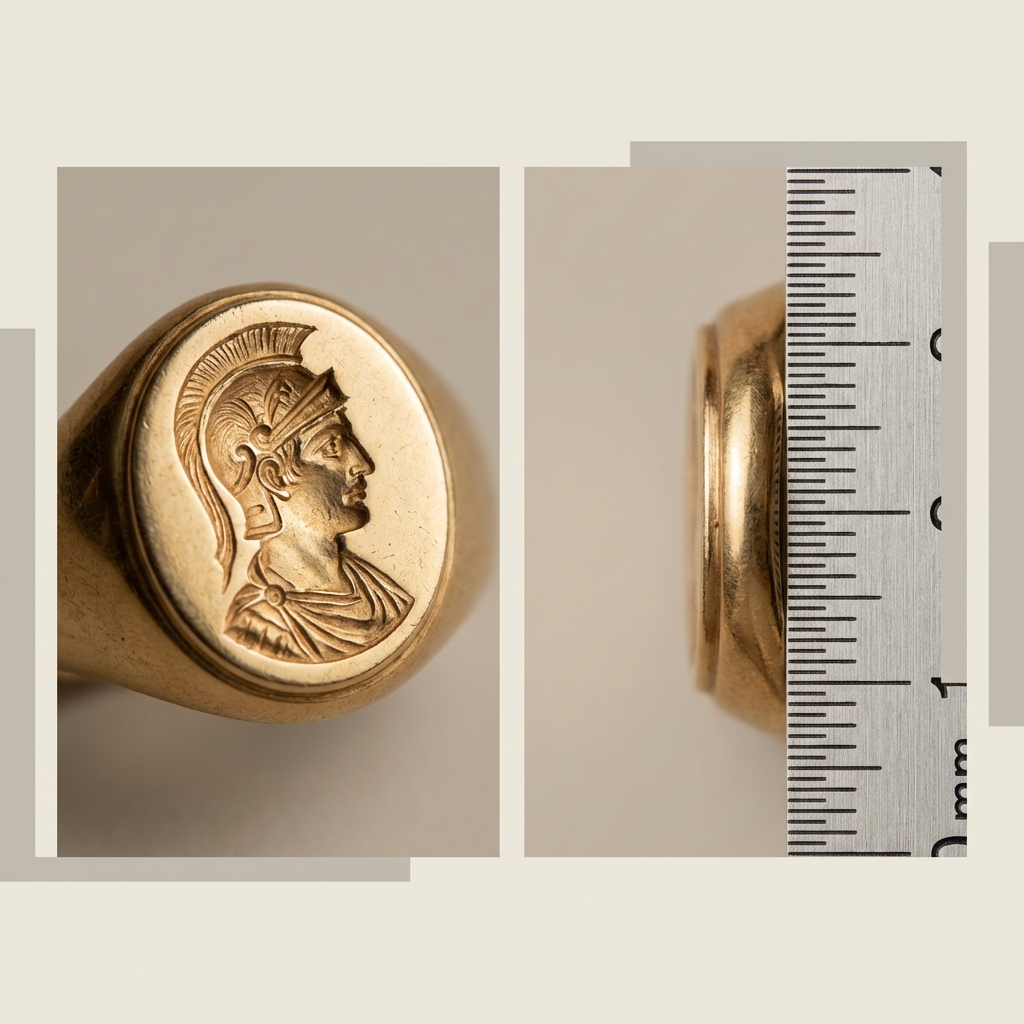
Surviving Roman signet rings are commonly made in gold, silver or copper-alloys and are often set with carnelian, jasper or comparable stones carved as intaglios; auction and catalogue entries usually record these materials because they are central to identification and dating Celestia listing.
Reputable sellers tend to include condition and provenance fields in listings; these help readers judge whether wear is consistent with age and whether restoration has altered an object’s appearance or integrity Numerius listing.
Quick historical context: when and why Romans used signet rings
Signet rings appear across the Roman period in both private and public contexts, used by people who needed a personal seal as well as those who wore rings mainly as jewellery; sellers and catalogue notes often reflect this social range when they describe provenance and likely use Minerva listing (see a Portable Antiquities record for a comparable find here).
Martial imagery - helmets, crested figures and standards - is a recurring motif on Roman rings and may point to a wearer’s service, association with military life or an aspirational identity tied to virtues such as courage or loyalty, though interpretation benefits from comparison with dated parallels Minerva listing.
Catalogues that group examples by motif and material allow readers to place an item within a broader timeline and social distribution, which is why many modern listings include comparative notes or references to similar items in their descriptions Auriga product page.

Reading a gold ring with roman soldier: iconography and what it can mean
Common soldier motifs and their possible readings
When a ring shows martial detail, typical elements to look for include helmets, crested figures, standards or torso armour. These motifs can signal actual service or function as symbolic shorthand for martial virtues; sellers often describe such imagery in listing fields to offer initial context for interpretation Minerva listing.
side-by-side photographic comparison template for intaglio and hoop details
Use consistent lighting and scale
Limits of iconographic interpretation
Iconography is a useful starting point but rarely proves a wearer’s precise identity on its own; context from provenance, findspot data or comparable dated examples is necessary to narrow a reading and avoid over-interpretation Minerva listing.
Short labelled examples help: a helmet motif may be associated with soldiers, but similar helmets also appear in symbolic or cultic contexts; a standard or vexillum carved on an intaglio is more suggestive of explicit military connections, and catalogue comparisons are the practical route to test those suggestions Auriga product page.
How Roman signet rings functioned: seals, identity and daily wear
Seal impression and administrative use
The carved intaglio could be pressed into wax or clay to leave a mirror-image impression that acted as a personal seal; this administrative function is one reason intaglios are central to catalogue descriptions and to statements about an object’s likely historical use Minerva listing.
Wear patterns from daily use
Rings used regularly as seals often show specific wear: flattened or softened intaglio details, abrasion on the bezel edge and rubbing on the hoop where it contacts other surfaces; condition notes in listings should refer to these signs so buyers can weigh functional use against later conservation or repair Auriga product page.
Identification checklist every buyer should use before buying a gold ring with roman soldier
This checklist gives practical, copy-ready steps to request and verify information before committing to a purchase:
- Ask for high-resolution photos from multiple angles, including a scale reference and macro shots of the intaglio, bezel edges and interior of the hoop.
- Request exact measurements in millimetres for bezel dimensions, hoop thickness and internal diameter.
- Require written provenance or collection history where available and explicit restoration and condition notes.
- Look for period-consistent toolmarks, original patina and evidence of casting versus modern reworking.
- For higher-value items, ask whether independent specialist reports or laboratory tests exist and request them if necessary.
As a practical illustration of a well-documented listing that presents these fields clearly, see the product example used by the catalogue for photographic and condition standards Auriga product page (and comparable auction listings at Berganza).

Simple visual checks you can perform from photos include verifying consistent patina, checking for casting seams or evidence of hand finishing, and comparing the intaglio carving style with other dated examples to see if it fits established patterns Numerius listing, or ask on specialist forums such as Forum Ancient Coins.
Materials and intaglio techniques: what to look for in metals and stones
Common stones used in Roman intaglios include carnelian and jasper, which were often carved in low relief and set within simple bezel surrounds; listings usually name the stone type and bezel style because these details help narrow dating and regional practice Minerva listing.
Hoops were commonly cast and then hand-finished; close inspection of toolmarks and casting traces is therefore informative for dating and attribution, and catalogues that reference these manufacturing features make it easier for buyers to judge consistency with period practice Celestia listing.
When in doubt, laboratory analysis can confirm alloy composition and stone identity, but sellers should be transparent about whether such tests exist rather than implying them; worded condition and restoration notes are the starting place for deciding if testing is necessary Minerva listing.
Dating and production clues: how experts assign a period
Specialists assign dates by comparing stylistic features, toolmarks and manufacturing traces with securely dated parallels; workshop attribution often rests on subtle combinations of intaglio style and hoop construction that appear repeatedly in well-documented examples Minerva listing.
Request high-resolution photos with scale, exact measurements, written provenance, clear restoration notes and independent reports for higher-value items; use stylistic comparison and documented evidence together to form an assessment.
Scientific techniques such as metallurgical analysis and gem testing support stylistic assessments but are not always decisive on their own; listings that combine clear stylistic argument with available test results or specialist reports give the strongest basis for a confident attribution Celestia listing.
Readers should watch the language sellers use: phrasing that indicates an estimated dating or a suggested workshop is different from definitive statements supported by documented excavation or independent specialist reports Diana listing.
Condition, conservation and restoration notes buyers should read
Original patina is an important surface feature that both preserves and signals age; it commonly appears as a colouration or surface texture that catalogues describe and photograph because removing it can obscure identification clues Celestia listing.
Common restoration disclosures include stabilisation of cracks, re-setting of a loose intaglio and non-invasive surface cleaning; sellers who list these actions and provide before/after documentation allow buyers to judge how intervention affects appearance and structural integrity Numerius listing.
Ask sellers to state whether repairs were stabilising or additive in nature, and request dated photos of any work done; clear restoration notes are a signal that a listing is attempting to be transparent about conservation choices Minerva listing.
Buying decision criteria: how to weigh authenticity, condition and documentation
Use a simple tiered approach to decide what to ask for next: low-risk items are modest in value and well-documented, medium-risk items have partial provenance or visible issues that need explanation, and high-risk items are high value with unclear documentation and should prompt independent testing where possible Numerius listing.
Independent testing - metallurgy for alloys, gem analysis for stones and microscopy for toolmarks - increases confidence but should be proportionate to the item's value; insist on dated reports and specimen identifiers if tests are provided Celestia listing.
Balance price signals against documentation: a low price with strong provenance is different from a low price with no documentation, and condition notes that disclose restoration reduce uncertainty even if they alter aesthetic expectations Minerva listing.
Typical mistakes and red flags when evaluating ancient rings
Avoid these common errors: relying on a single photo, accepting vague provenance without documentation, and assuming dramatic descriptive language replaces evidence; each of these shortcuts can hide uncertainty that only more information will resolve Diana listing.
Watch for modern tooling marks, inconsistent patina on adjacent surfaces, or freshly re-polished areas that conflict with an otherwise ancient appearance; sellers who note and photograph these issues demonstrate advisable transparency Celestia listing.
Practical examples: reading Aurora Antiqua listings for comparison
Catalog entries from the same curator are especially useful because they present similar fields for material, intaglio technique, condition and provenance; reading these entries side by side helps buyers see which details are consistently reported and which vary between items Auriga product page and in our rings collection.
Comparing how martial motifs are described across listings clarifies interpretation: one entry may label a helmet as symbolic while another notes a strong military association because of accompanying provenance or a find context, and these differences matter when you form a purchase assessment Minerva listing.
Note where clear restoration notes appear and where they are absent; a listing that provides before-and-after images or explicitly states which conservation methods were used offers a stronger basis for buyer evaluation Numerius listing.
How to ask sellers and request tests or provenance documentation
Copy-ready questions you can send to a seller include: "Can you provide high-resolution images of the intaglio, bezel and interior hallmarks with a millimetre scale?" and "Do you have written provenance or collection history for this item, and can you share dated images taken before any restoration?" Celestia listing.
When to request tests: ask for metallurgical or gemological testing for items at higher value tiers or when documentation is incomplete; explain that reports should be dated and indicate the laboratory or specialist who carried them out Minerva listing.
Keep a written record of seller responses and request additional photos with the same scale and lighting if needed; these steps create a paper trail that helps if you later seek an independent opinion or return the item Auriga product page. For more Q and A style guidance see our Questions and Answers hub.
Care, wearing and display for an ancient ring
Wear gently and avoid impact or exposure to household chemicals; even surface oils or friction can alter delicate patina, so limit active wear and choose occasions where the ring is unlikely to be struck or abraded.
Store on a soft surface away from direct sunlight and avoid abrasive contact with other jewellery; for display, use mounts that do not press on the stone or bezel and consider a humidity-controlled case if the piece is metal-sensitive.
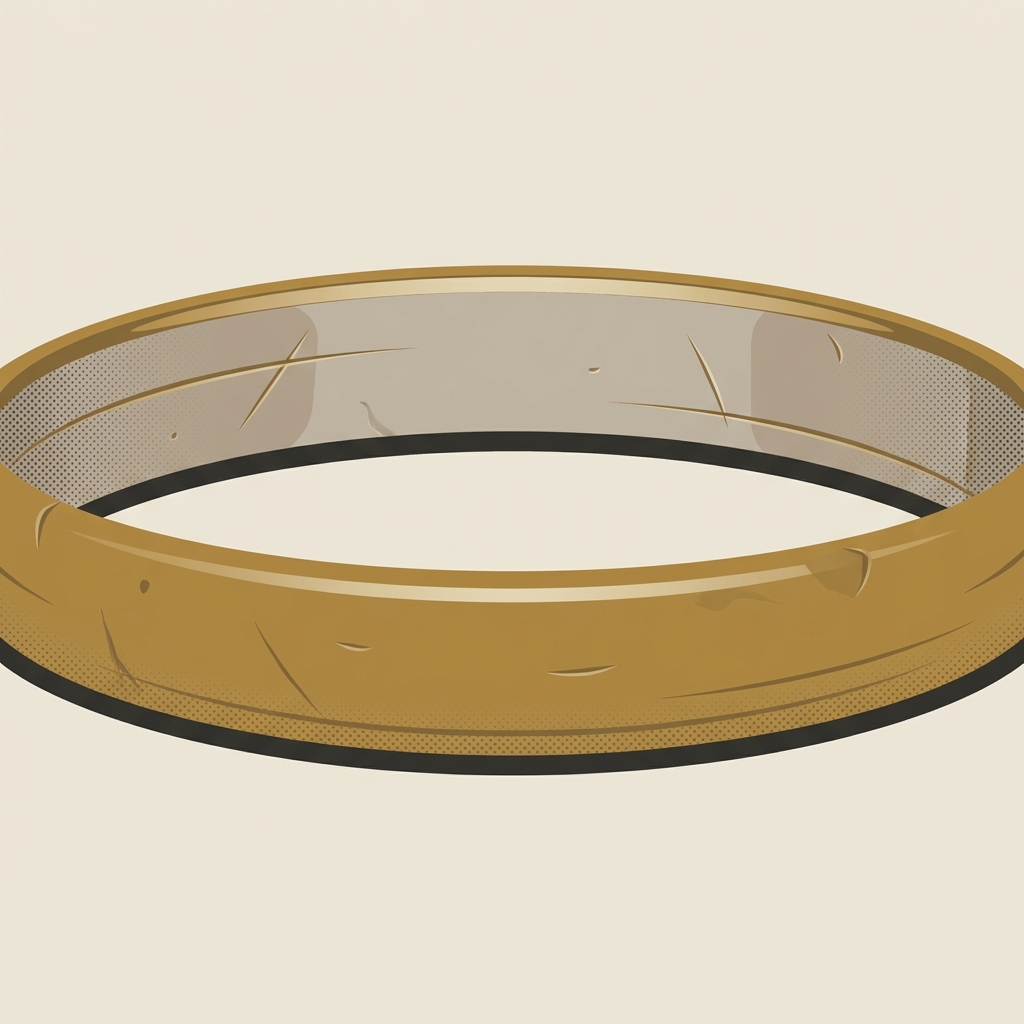
Before any conservation or restoration, seek professional advice and request documentation of proposed interventions; a conservator can recommend stabilising measures that preserve identifiable features rather than removing historical surface layers.
Conclusion: responsible steps to buy and enjoy wearable history
Photographs, measurements, provenance and clear restoration notes are the primary tools a collector uses to assess a Roman signet ring; insist on these fields before choosing to pursue a purchase Numerius listing.
Iconography such as a gold ring with roman soldier can guide interpretation but rarely proves identity on its own; combine visual reading with documentary context and, for higher-value items, independent testing or specialist reports to raise confidence Minerva listing.
Use the checklist and questions provided here as a practical starting point, and document seller responses so that your decision is based on transparent information rather than description alone Auriga product page.
Look for consistent patina across the stone and surrounding metal, period-consistent toolmarks, and comparison with dated parallels; request high-resolution macro images and, if uncertain, independent specialist examination.
Not for every piece; reserve metallurgical or gem testing for higher-value items or where documentation is incomplete, and ask for dated reports from recognised laboratories when they are provided.
High-resolution photographs, exact measurements, written provenance or collection history when available, and explicit restoration or condition notes are the essential documents to request.
More from Aurora Antiqua
References
- Signet Ring, Victoria and Albert Museum, London
- Roman gold finger ring with intaglio, Collections Online, Amgueddfa Cymru, Museum Wales
- Martin Henig, The Veneration of Heroes in the Roman Army: The Evidence of Engraved Gemstones, Britannia 1 (1970), via JSTOR
- Uncovering Roman Carlisle 2024 autumn excavation announced, Cumberland Council
- Fund des Monats August 2019 (Find of the Month), Landesamt für Denkmalpflege und Archäologie Sachsen-Anhalt
- Investigating Ancient “Bronzes”, J. Paul Getty Museum and Getty Conservation Institute, Los Angeles
- Gemstones from Roman Britain: Recorded in the Portable Antiquities Scheme, University Debrecen, Hungary
- Research report: export licensing and provenance, GOV.UK, Department for Culture, Media and Sport (DCMS)