


Looking for the real thing? Browse our signet ring collection, each piece one of one, individually authenticated, with documented provenance. For the background, see the guide to ancient jewelry.
Definition and origins of the signet ring
Signet rings began as functional tools for authentication in antiquity, used to impress a personal or official device into wax or a soft medium to close letters and mark property. This practical origin is central to understanding how surviving rings look and why intaglio, bezel shape, and hoop proportion often differ from later decorative rings, as explained by The Metropolitan Museum of Art in its overview of rings and their functions The Metropolitan Museum of Art.
In museums and collection entries, Roman examples frequently show intaglio cut into semi-precious stones or metal, set within a bezel designed to press a clear seal. The British Museum's object essays on Roman jewellery help clarify how bezel form and carved intaglio served sealing purposes and why many Roman rings survive with tool marks and wear consistent with repeated use The British Museum.

It is useful to distinguish functional seal-rings from later signet-like rings that became primarily symbolic or decorative. Functional examples tend to have a flat or slightly convex face designed for sealing, a well protected bezel, and evidence of use, while later decorative pieces may prioritize portraiture or ornament over a clean sealing surface. For readers considering a gold ring with roman soldier as an object, consulting our Ancient Roman Rings collection helps set expectations for wear, preservation, and how the piece should be handled in daily life.
How to place a gold ring with roman soldier: historical and modern options
Across history and regions, finger placement for a signet has varied. In British and Anglo traditions a man's signet is commonly associated with the little finger of the left hand, a convention still cited in modern etiquette writing, which frames the pinky as a space for family seals and understated formality V&A. See our Q&A on what finger Romans wore rings on.
Continental practice and older professional customs sometimes placed a seal on the index finger or on the ring finger, depending on local habit, social rank, or the practical need to press a seal while holding a document. Museum catalogues describing Roman and other ancient examples show a range of placements and uses, so historical precedent offers few absolute rules and more useful context for choice The British Museum.
Contemporary style authorities tend to recommend flexibility: choose placement by personal symbolism, workplace norms, and comfort, rather than enforcing a single rule. Practical modern guidance often emphasizes non-dominant hand wear and proportionate sizing to reduce rotation and protect carved surfaces Debrett's.
Practical framework: choosing the finger for a signet ring
Begin by defining the ring's intended role. Is the piece a working seal, a daily statement, or an heirloom that will be worn sparingly? A working or demonstration seal will demand a stable, easy to use finger, while an heirloom may be best kept for occasional wear or display. The British Museum's collection notes on Roman jewellery underscore that intended use affects practicality and conservation choices The British Museum.
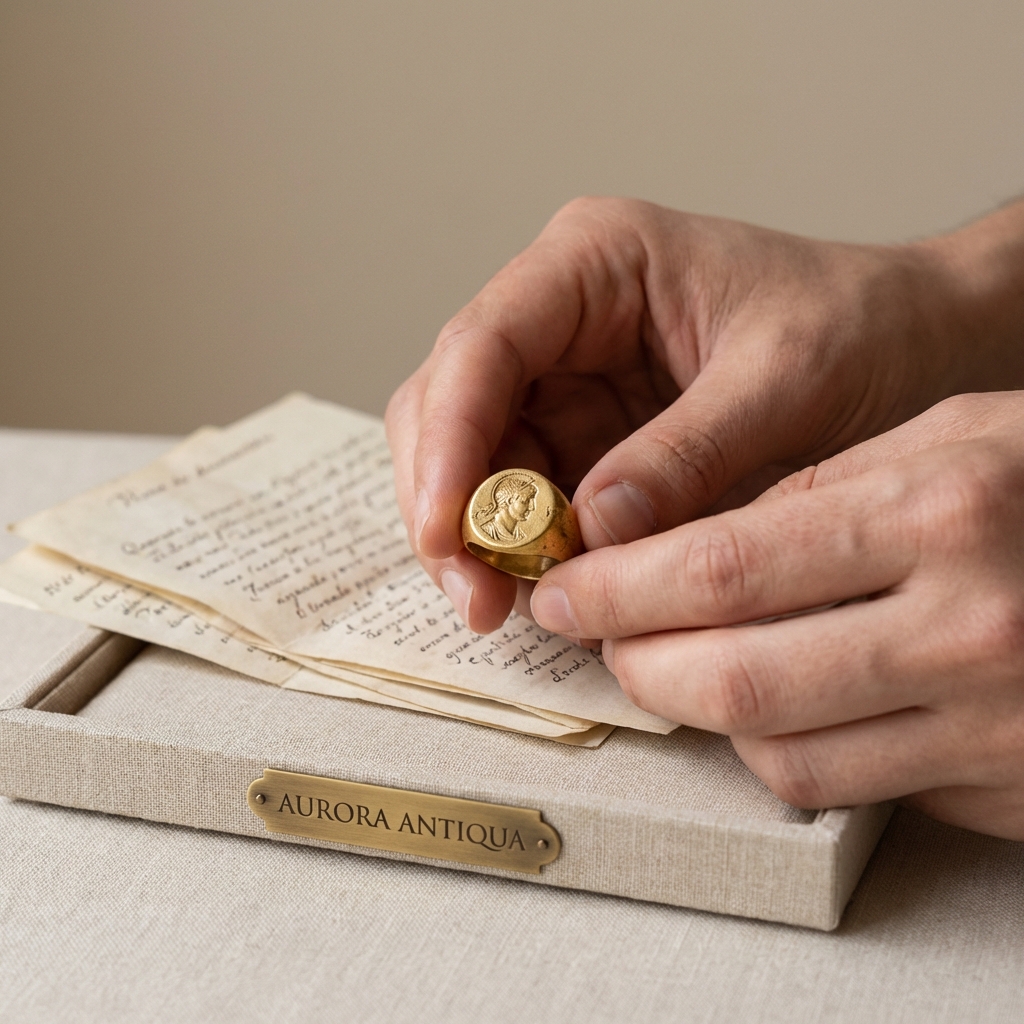
Next, follow a short fit-and-test routine to assess whether a finger will suit the ring. Try a snug fit that resists rotation but does not constrict circulation. Check bezel proportion relative to the finger so that the intaglio does not overhang the sides, and test the ring during normal movements to see if it rubs surfaces or rotates. These steps translate conservation advice into quick, practical checks, consistent with museum conservation guidance V&A conservation guidance.
Quick fit and wear test for a signet ring
Repeat checks after a day of wear
As a rule of thumb, wearing the signet on the non-dominant hand reduces incidental knocks and abrasion, which is especially important for an authenticated antique or a finely carved intaglio. If the ring will be used for formal sealing demonstrations, ensure the finger chosen allows the wearer to apply gentle, even pressure without awkward wrist motion, which can strain settings or dislodge delicate stones.
Etiquette and symbolism: what different fingers signal
Wearing a signet on the left little finger carries a history of family and heirloom association in British and Anglo contexts. Etiquette guides often present this placement as understated and traditional, suitable for someone who wants to signal lineage or continuity without a bold show of status Debrett's.
By contrast, index-finger placement historically conveyed authority or a professional function in some continental contexts, where the hand used for public acts or office could be linked to civic role. Museum essays on rings emphasize that these associations varied with region and period and that material culture rarely maps onto a single social meaning across centuries The Metropolitan Museum of Art.
Modern symbolism is flexible and often personal. Some wearers choose the ring finger to make the signet more visible as a statement, while others prefer the pinky for discretion. Contemporary commentators suggest aligning choice with how the wearer wants the ring to function in daily life rather than feeling bound to one tradition GQ.
Conservation and common mistakes when wearing ancient gold rings
When an item is an authentic or antique piece, prioritise condition notes, restoration history, and any provenance documentation before regular wear. Conservators and museum guidance recommend reviewing these records to understand prior interventions, which affects how safely the ring can be worn and under what conditions V&A conservation guidance. For additional handling recommendations see preventive guidance from the Canadian Conservation Institute Canadian Conservation Institute.
Common mistakes that increase damage risk include wearing an antique signet during heavy manual tasks, ignoring loose or altered settings documented in restoration notes, and attempting aggressive cleaning that removes patina. These actions can accelerate wear or destabilise repairs that are structurally important, as noted by museum conservation resources V&A conservation guidance. Practical care tips are also available from conservation groups such as the WSHC Conservation Corner.
Follow @auroraantiqua for behind the scenes conservation and condition notes
Please consult condition and restoration notes and, when in doubt, seek conservator advice before wearing an authenticated antique ring regularly.
Immediate care steps are simple and effective: remove the ring for strenuous activity, keep it away from household chemicals and personal care products, and store it on a soft surface or in a padded case when not worn. Routine checks for rotation, loose stones, or fresh tarnish help catch issues early and align with practical conservation recommendations from collection professionals The British Museum.
Practical examples and scenarios: pinky, ring, index decisions
Scenario A, tradition-first: a wearer who inherits a family signet and wants to honour convention may choose the left little finger. For daily wear, ensure a snug fit to prevent rotation and remove the piece for manual work; etiquette guides and museum entries suggest this placement for lineage pieces and family seals V&A.
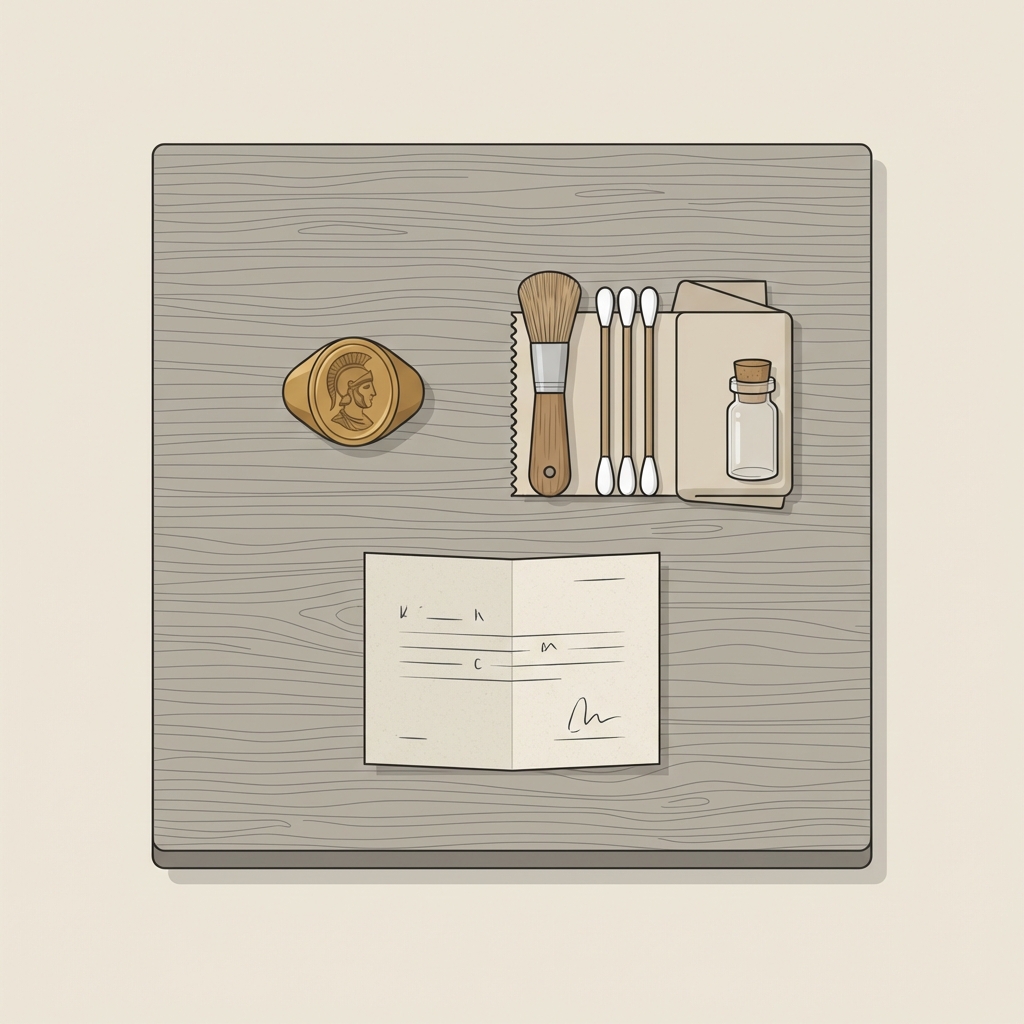
Dos: verify fit, review any restoration notes, and limit exposure to knocks. Donts: do not wear the ring while gardening or during tasks that risk bending or abrading the bezel.
Scenario B, statement or status: when a wearer wants greater visibility, the index or ring finger can give a bolder silhouette. Historical collections include examples where prominent rings were worn on more visible fingers for social effect, so choosing index or ring can be historically grounded and visually effective The Metropolitan Museum of Art.
Dos: match bezel size to finger breadth to avoid overhang, and choose a finger that supports the ring without strain. Donts: avoid forcing a heavy bezel on a slender finger where it can rotate and rub against adjacent digits.
Scenario C, heirloom and display: if the ring is to be worn infrequently or kept primarily as a wearable artifact for special occasions, prioritise documentation and conservator input. Museum conservation advice recommends minimal handling for fragile treatments and clear storage protocols so the piece can be preserved for future generations V&A conservation guidance.

Final checklist before wearing a gold ring with roman soldier
Review condition notes and any restoration history supplied with the item, and confirm provenance or documentation when available. This step helps determine whether regular wear is advisable and what limitations to observe, following guidance from museum collection professionals The British Museum.
Test the fit on the intended finger: the ring should sit comfortably, resist easy rotation, and not overhang the sides of the finger. Try common movements for a day and note any rubbing or loosening that suggests a different finger or a temporary restriction on wear V&A conservation guidance.
There is no single correct finger; tradition often points to the left little finger in British contexts, but index or ring placements have historical precedent. Choose based on the ring’s intended role, fit, comfort, and the conservation needs of the specific piece.
If you find signs of loose settings, unexpected corrosion, or unclear restoration notes, seek conservator guidance before regular wear. When in doubt, a conservator can advise on structural stability and whether further stabilisation is needed before the piece is exposed to daily use V&A conservation guidance.
Final practical tips: prefer the non-dominant hand when possible, remove the ring for heavy work, and keep it in a padded case or on a soft surface when not worn. Consult the seller for full condition notes and ask for conservator recommendations if the listing documentation raises questions, keeping any mention of a shop or curator light and contextual. For simple home care guidance see a practical guide on how to take care of antique jewelry.
Possibly, but only after reviewing condition and restoration notes and consulting a conservator if there are structural repairs or fragile elements; prefer the non-dominant hand for regular wear.
No, the left little finger is traditional in British and Anglo contexts but continental and modern practice allow index or ring choices depending on symbolism and comfort.
Try a snug fit that resists rotation, wear the ring for a day during normal light activity to check for rubbing, and ensure the bezel does not overhang the finger.
More from Aurora Antiqua
References
- Pliny the Elder, The Natural History, BOOK XXXIII, Perseus Digital Library, Tufts University (edition Bostock)
- Aulus Gellius, Attic Nights, Book X, LacusCurtius, Bill Thayer, University of Chicago (Loeb Classical Library edition)
- Signet Ring, Victoria and Albert Museum, London
- Ring, Victoria and Albert Museum, London
- The Form of Solemnization of Matrimony, The Church of England
- Ring, The Cleveland Museum of Art
- Thumb Ring, The Cleveland Museum of Art
- BS EN ISO 8653:2026, TC, BSI, British Standards Institution
- Archaeological materials, Icon, The Institute of Conservation (UK)