


Looking for the real thing? Browse authentic ancient signet rings, each piece one of one, individually authenticated, with documented provenance. For the background, see the guide to ancient jewelry.
Introduction: why an ancient signet ring still matters
Collectors and history minded buyers often ask whether a pinky ring signals status, lineage, or simply style; an ancient signet ring can carry any of those roles depending on its original function and the wearer's intent, and many curated listings now include documentation fields that help sort those meanings rings collection Aurelia, medieval bronze ring listing.
@auroraantiqua behind the scenes and curated finds
Explore curated listings and editorial context at Aurora Antiqua for clear condition notes and historical context; this can help you decide what to investigate next.
This article is an evidence based primer aimed at buyers and curious readers: it links the historical functions of signet and intaglio rings to the practical steps you can take when assessing a listing or asking a seller questions. It focuses on identification, modern pinky ring meanings, and safeguards to reduce risk when considering a purchase.
As a curation reference, Aurora Antiqua is used sparingly here to illustrate how listings present provenance, condition notes and restoration summaries so readers learn what to look for when shopping for an ancient ring.
Definition and context: what is an ancient signet ring?
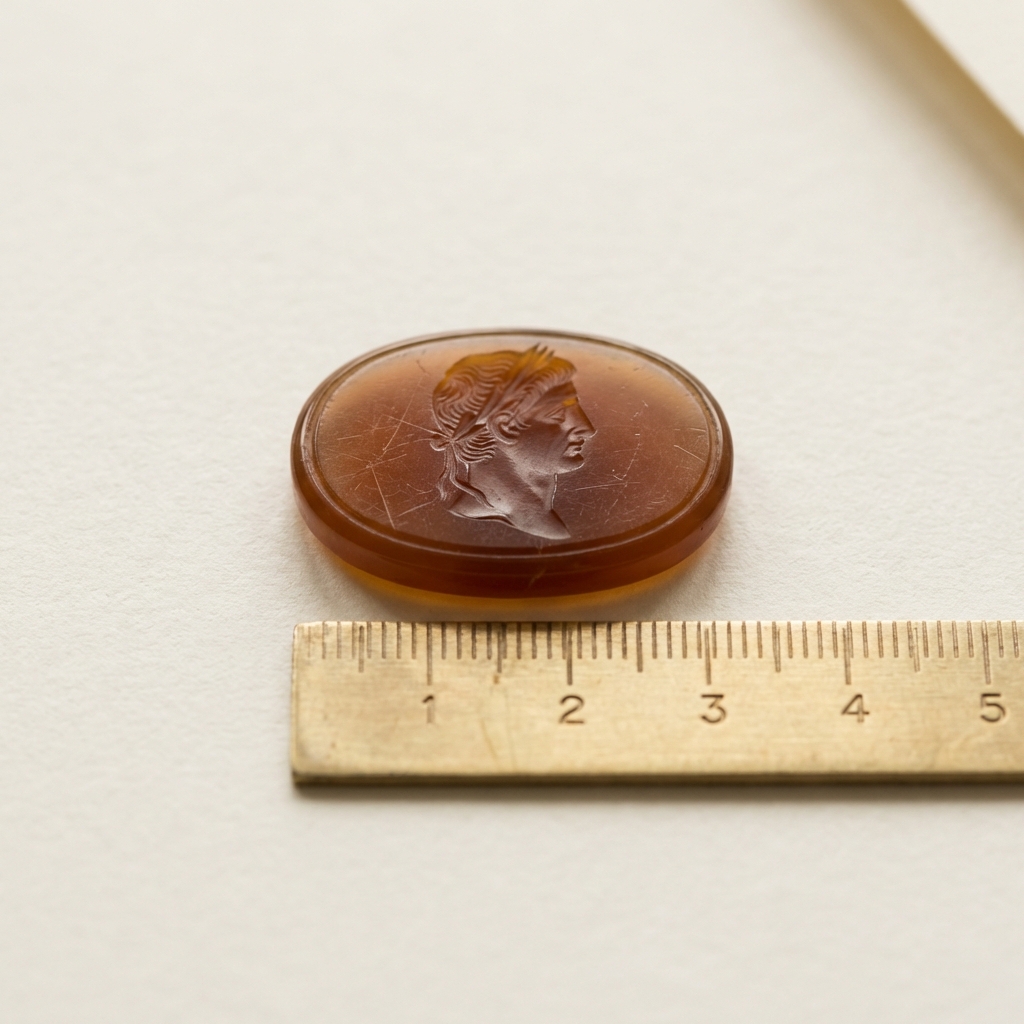
An ancient signet ring is typically a ring with an incised or recessed design intended to be impressed into a soft medium such as clay or wax; that incised design is often called an intaglio and it contrasts with raised or cameo motifs that were not primarily used for sealing. A Roman silver or gold ring with a recessed intaglio fitted into a bezel is a common example of this form ancient Roman rings collection 'Auriga' Roman silver intaglio listing Sotheby's overview of intaglio.
Materials and bezel profile matter: stones such as carnelian and jasper are often recorded in seal-friendly contexts because their hardness and surface polish take fine engraving well, and a raised or fitted bezel was designed to protect a recessed intaglio while still allowing it to function as a seal guide on ancient Greek stones. In plain terms, an intaglio is cut within the surface, a cameo is carved in relief, and the presence of a recessed motif is a primary clue that the ring could have served as a sealing device.
Short history: functions of signet and intaglio rings in antiquity
In Greek and Roman contexts, signet and intaglio rings frequently functioned as seals and personal identity markers, used to impress clay or wax for administrative, legal or personal purposes; they also acted as visible indicators of status in many cases Greek bronze ring listing Getty Museum resource on ancient gems.
Could a pinky signet signal heritage, style, or function?
Across the medieval and later periods these sealing practices were adapted and repurposed: bezel shapes and band forms changed, intaglio techniques evolved, and rings could serve simultaneously as seals, amulets, or display pieces depending on local custom and the owner's needs Roman bronze Numerius listing. In many collected examples the original sealing use is clear from the cut and wear; in others the motif may suggest amulet function or simply decorative intent.
Design features that tell you the ring's likely function
Bezel shape and engraving technique are strong signals. A recessed intaglio set into a fitted bezel that shows wear consistent with lateral contact is a design associated with sealing, while raised motifs and cabochon settings are less likely to have been used as practical seals Numerius listing.
Stone choice matters too: carnelian and jasper are commonly recorded as seal friendly in Roman examples because their surface holds fine engraving without excessive friability. A hard, finely engraved intaglio in jasper or carnelian is more likely to have functioned as a seal than a soft or heavily worn stone Roman gold carnelian listing.
Look also at band form and shoulders: broad shoulders can stabilize the bezel during use, and certain engraving techniques leave tool marks that indicate hand cutting consistent with ancient workshops. Wear patterns around the bezel rim and the intaglio surface can tell you whether the piece was handled in a sealing context or primarily worn as jewelry Auriga listing.
How to identify an ancient signet ring: a practical inspection checklist
When assessing photos, first zoom to the intaglio surface and bezel rim: an incised or recessed motif with crisp edges and minimal modern tool chatter is a positive sign, as is a bezel profile that appears to protect the engraved surface. Request high resolution images that include side, top and interior views to check for maker marks and repair evidence Minerva listing.
Ask the seller for measurements, weight, and a clear provenance statement or collection history. Many curated listings now include provenance documentation and restoration notes; these fields can change an assessment significantly because they provide context beyond photos alone Aurelia listing.
What it can mean today if a man wears a ring on his pinky
Modern interpretations are plural: a man wearing a ring on his pinky may be referencing a revived signet tradition, making a stylistic choice, or signaling personal or family heritage. The gesture alone does not map to a single social code and is best understood with context about the ring and wearer Bethlehem medieval ring listing context on intaglios in modern jewelry.
Regional and cultural variations matter and create uncertainty: finger placement in one era or place does not automatically equal the same meaning elsewhere. When possible, pair visual identification with provenance documentation to support any inference about intent or tradition Aurelia listing.
Buying decision framework: how to evaluate an ancient signet ring
Frame your decision around three objective criteria: documentation, condition, and matching evidence in photos. Documentation includes provenance or collection history; condition notes and restoration summaries explain what was done and why; and photos with measurements let you compare visual details to the text description Auriga listing.
Quick buyer checklist for images, provenance and restoration notes
Use before offering or requesting more information
Seek third party testing or a conservator assessment when provenance is incomplete, when materials are uncertain, or when significant structural repairs are reported. Tests and conservator reports can clarify metal composition, adhesive use, or modern interventions; use them to reduce uncertainty rather than as a substitute for a clear documented history Aurelia listing.
Risk signals that should lower confidence include missing measurements, vague restoration descriptions, excessive polishing that removes patina, and a lack of high resolution imagery. Treat these signs as prompts to ask for more documentation or to walk away from the listing until evidence is provided Minerva listing.
Condition, restoration and care: what to expect and how to preserve patina
Typical restoration notes for curated listings describe stabilization measures, repaired joins, and areas intentionally left untouched; those notes help buyers understand which interventions were minimal conservation and which were more extensive repairs Aurelia listing.
Preserve patina and avoid home cleaning that can remove surface deposits and historical residues. If cleaning or structural repair is necessary, consult a qualified conservator who can document methods and materials so the object's condition history remains transparent for future owners Minerva listing.
Do and don't list: do ask for restoration notes and before photos when possible; don't accept vague language like 'professionally cleaned' without clarification on methods used. These simple steps help preserve the artifact's integrity and provide a clear record for later care or research Auriga listing.
Typical mistakes and red flags when assessing listings
A common mistake is inferring firm dating or provenance from style alone without supporting documentation. Style can suggest a period but cannot replace a provenance statement or third party analysis when dating is important to you Numerius listing.
Stone identification by photo is another frequent pitfall: lighting, reflections, and image compression can mislead, and heavy polishing can hide repair evidence. If the material is central to your interest, request a formal description or lab report rather than relying solely on images Minerva listing.
Also beware of listings that lack measurements, interior photos, or closeups of the bezel rim. These omissions make it hard to check for modern alterations or to verify that the ring matches the description, and they are reasonable grounds to pause a transaction Aurelia listing.
Practical examples and annotated listings to learn from
The 'Auriga' Roman silver intaglio listing demonstrates features to notice: a recessed jasper intaglio in a fitted bezel, visible wear consistent with handling, and a clear listing that references an intaglio motif suitable for sealing. Such presentation helps readers connect description to visual evidence Auriga listing.
A Roman gold carnelian example shows how stone choice and bezel design can indicate seal-friendly intent: carnelian's hardness and fine engraving are historically associated with seals, and a securely set bezel supports functional use Minerva listing.
A Greek or early Hellenistic bronze ring can illustrate continuity and change: smaller workshops and different metal choices produced rings that were sometimes used as seals and sometimes served symbolic roles, so look for the same visual cues of intaglio, fitted bezel, and wear when reading these listings Chimaron listing.
Etiquette and modern wear: male pinky ring practices
Styling tips: a pinky ring worn with plain clothing can be presented as a conversation piece; when discussing the piece with others, use careful phrasing such as 'described as' or 'appears to be' for dating and materials unless documentation is supplied. This signals respect for the object's complexity and avoids overstating claims about origin Bethlehem listing.
Avoid making definitive social claims about wearer intent: if provenance or provenance narrative connects a ring to a family history, present that context clearly; otherwise frame any interpretation as one possible reading among several and encourage questions about origin and documentation Aurelia listing.
Conservation, storage and display for a collector

Keep original documentation, photographs and restoration notes together with the object and update condition notes after any conservation work. A conservator should be consulted for structural repairs or for cleaning that risks altering surface deposits; their reports become important parts of provenance documentation for future owners Minerva listing.
Conclusion and next steps for readers
Summary: an ancient signet ring can be a seal, an emblem, or a piece of wearable history; modern pinky wearing has multiple meanings and documentation is central to interpreting any single ring's past and present use. When assessing a listing, prioritize provenance, condition and clear restoration notes to reduce uncertainty Aurelia listing.
A pinky ring can be any of those. Determine likely meaning by examining the ring's intaglio, bezel and materials, reviewing provenance and restoration notes, and asking the seller for high resolution images and documentation.
Next steps: use the checklist in this guide, request high resolution images and condition reports, and consider a conservator or third party assessment when provenance is incomplete. For further reading and curated examples, explore editorial content and listings to see how description, photos and documentation work together when evaluating an ancient signet ring.
Look for a recessed intaglio suitable for sealing, a fitted bezel, wear consistent with age, and request provenance, high resolution images, measurements and restoration notes from the seller.
No, modern pinky wear can signal tradition, style, or personal meaning; finger placement alone is not a reliable indicator of family heritage without supporting documentation.
Consider third party testing or a conservator assessment when provenance is incomplete, material identification is uncertain, or the listing reports structural repairs.
More from Aurora Antiqua
References
- Pliny the Elder, The Natural History, BOOK XXXIII, Perseus Digital Library, Tufts University (edition Bostock)
- Aulus Gellius, Attic Nights, Book X, LacusCurtius, Bill Thayer, University of Chicago (Loeb Classical Library edition)
- Pliny the Elder, The Natural History, BOOK XXXIII, Perseus Digital Library, Tufts University (edition Bostock)
- A Corpus of Roman Engraved Gemstones from British Sites, University of Michigan Press / BAR Publishing
- Roman gold finger ring with intaglio, Collections Online, Amgueddfa Cymru, Museum Wales
- Ring, Victoria and Albert Museum, London
- Ring, The Cleveland Museum of Art
- Thumb Ring, The Cleveland Museum of Art
- Emilie Riha, Der römische Schmuck aus Augst und Kaiseraugst (Roman jewelry from Augst and Kaiseraugst), Römermuseum Augst
- Ancient Gems and Finger Rings: Catalogue of the Collections, The Getty