


Looking for the real thing? Browse authentic ancient signet rings, each piece one of one, individually authenticated, with documented provenance. For the background, see the guide to ancient jewelry.
Quick answer and why this question matters
The short, evidence based answer is that an ancient greek signet ring was most commonly depicted on the little finger or the ring finger, though the exact placement varied by period, region and the practical needs of sealing. Museum catalogues and object records, along with vase painting and portraiture, are the primary sources that support this pattern, and these collections help explain why curators report both pinky and ring use as common in different contexts British Museum collection (see History of Signet Rings).
Why this matters for collectors and conservators is practical as well as historical. If you are looking at an antiquity listing (for example our Ancient Greek Rings collection) or planning to wear an ancient ring, understanding typical finger placements helps with assessing likely fit, reading condition notes, and deciding whether a piece is suitable for occasional wear or only for display. The archaeological record rarely preserves the original placement, so reconstructions depend on combined lines of evidence rather than a single decisive proof Metropolitan Museum overview.
What is an ancient Greek signet ring?
In ancient contexts, a signet ring is a personal seal ring, typically a metal hoop with a bezel that bears an intaglio, meaning a design cut into the surface that could make a mirror image impression in clay or wax. The primary function of these objects was practical: to authenticate documents, secure containers, or leave an ownership or administrative mark. Many catalogues and curatorial essays emphasise the seal role as central to meaning and use Metropolitan Museum overview and other summaries exist History of Signet Rings - An In-Depth Look.
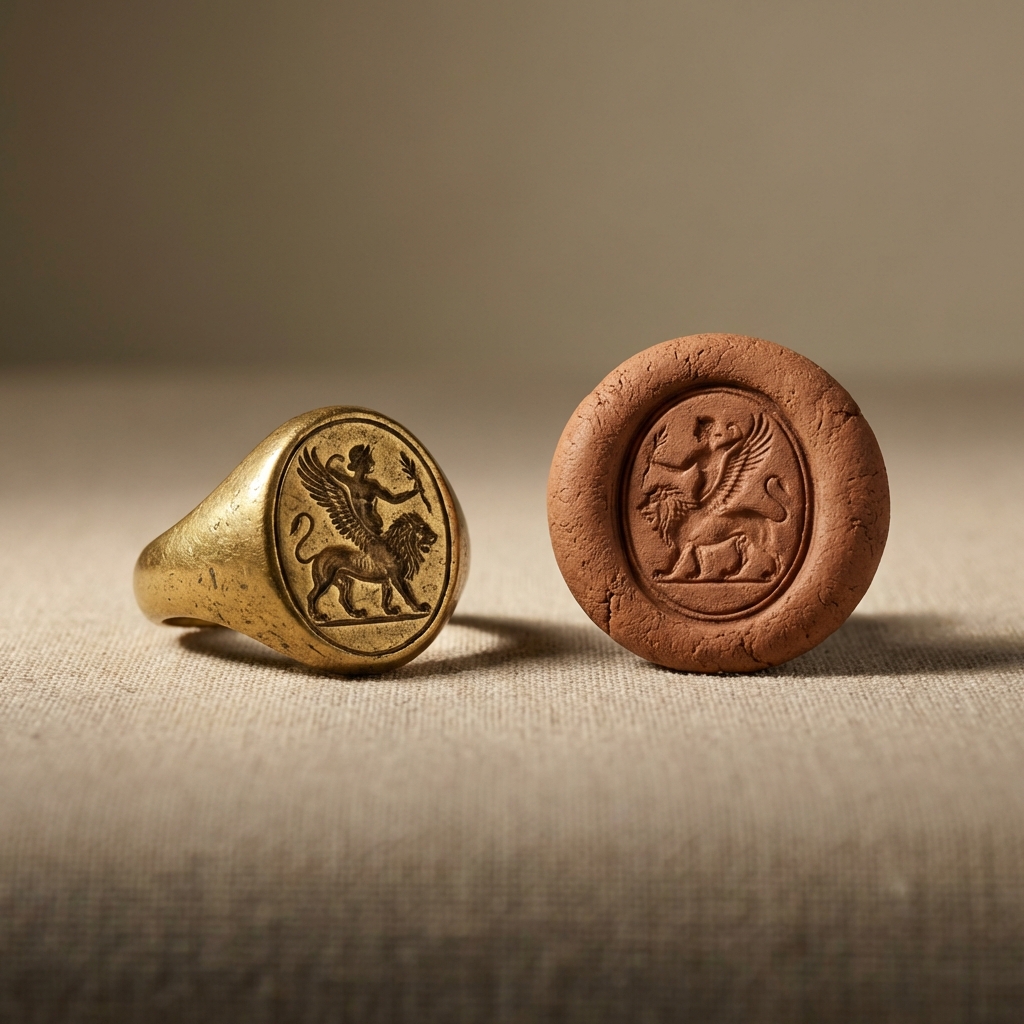
Physically, readers should look for a bezel with an intaglio scene or motif, a hoop proportion that matches likely digit size, and signs of wear consistent with repeated contact on the bezel or band. Typical materials range from bronze to gold, and gemstones such as carnelian or agate might be worked as intaglios in later examples. Patina, surface pitting and polished wear in the area of the bezel can all be informative, but listings should tie such observations to provenance and condition notes rather than offering standalone claims.
When evaluating a listing, note that terminology varies. Catalogues may use signet ring, seal ring or intaglio ring, and each term signals slightly different emphases. A careful listing will describe the bezel, the intaglio motif if readable, hoop diameter and any restoration or stabilization that was performed. That documentation is essential before any consideration of wearing, since original use as a functional seal does not mean safe modern use as a mechanical stamp.
What the archaeological and museum evidence shows about finger placement
Three types of evidence inform how signet rings were actually worn: iconography such as vase painting and sculpture, museum object records that document size and wear, and Roman era portraiture that sometimes shows rings on particular fingers. These combined lines often point toward use on the little finger or the ring finger, and curatorial summaries commonly present that as the prevailing pattern in many collections British Museum collection.

Iconography is particularly useful because it can show detail of hand poses, and those images often place seal rings where they were convenient for pressing into soft material. At the same time, the visual record is uneven in both geography and chronology, so it is risky to assume a single rule applied across all of ancient Greece American Journal of Archaeology study.
Practical measurement evidence in museum catalogues supports the visual record. Many Archaic and Classical hoops are smaller, consistent with wear on smaller digits, while later examples have broader hoops or larger bezels that would fit more comfortably on the ring finger. Collection notes and wear traces help conservators reconstruct likely use, but they seldom survive in a way that records the original finger with certainty.
Simple provenance and fit checklist for evaluating an ancient ring listing
Use with clear photos and measurements
Because iconography, object records and wear traces each have limits, the best practice for understanding placement is to read them together. That combined approach reduces the risk of over interpreting a single image or a single worn rim, and it is the basis for most modern curatorial reconstructions about how signet rings were worn in the ancient Greek world American Journal of Archaeology study.
How practical sealing needs affected which finger was used
Seal impressions and experiments with authentic intaglio shapes show that usability matters. If the owner needed to press a bezel into clay or wax with precision, they chose the finger that offered the best angle and control. Studies of sealing mechanics and epigraphic references to sealing workflows therefore indicate a pragmatic basis for finger choice rather than a fixed cultural rule Journal of Mediterranean Archaeology review. Further background on rings' history is available in Rings' Journey from Ancient Greek Tokens to ....
Textual and epigraphic sources add context about who sealed documents and in what settings, and those accounts imply that officeholders or agents performing administrative tasks prioritized dexterity. This can create patterns where a given role or workshop habit favored one finger, but the evidence remains fragmentary and varied across regions and periods.
The archaeological and iconographic evidence most often places signet rings on the little finger or the ring finger, but placement depended on period, function and practical sealing needs; conservators recommend prioritising condition and restoration notes before wearing.
Gendered prescriptions are not strongly attested in the surviving Greek sources, so it is safer to say there was flexibility and that social role and function often mattered more than sex. Where writers attempt to infer strict gender rules, they typically rely on later or nonrepresentative evidence rather than a broad ancient consensus Journal of Mediterranean Archaeology review.
Chronological and regional differences: Archaic to Roman periods
Across centuries, ring size and visibility shifted in ways that affect likely finger placement. Archaic and Classical rings are often slimmer, suggesting day to day use on smaller digits, and this aligns with wear traces in many museum entries that imply the little finger was a common choice in those eras Metropolitan Museum overview.
By the Hellenistic and Roman periods, intaglio work and larger bezels became more common as rings also served visible social display roles. These larger pieces are comfortable on the ring finger and can read as status markers as well as functional seals. Museum catalogue essays that discuss these chronological trends help explain why later examples are more often seen on larger digits Ashmolean Museum essay.

For a collector, this means the period and documented measurements matter for fit. A compact Archaic hoop that appears in a catalogue as having a narrow internal diameter is more plausibly worn on the little finger, while a later heavy intaglio may be best suited to the ring finger. Always consult the listing for hoop diameter and restoration notes or browse our rings collection before assuming modern fit.
Conservation, condition notes and modern wearing guidance
Conservators and curatorial guidance advise against using an authentic ancient ring repeatedly as a mechanical seal, because repeated pressure risks loss of surface detail and can stress fragile joins. The Smithsonian conservation guidance encourages caution and recommends following any specific restoration notes provided with a piece Smithsonian conservation guidance.
When reading a listing, check condition notes for language about stabilized repairs, areas left untouched, or loose bezels. Those details tell you whether a ring has been conserved for safe display or whether it is fragile and best handled only under controlled conditions. Documentation that includes collection history and restoration notes is a major trust signal for buyers of wearable antiquity.
Follow Jakob behind the dealer desk at @auroraantiqua
Explore curated ancient rings with condition notes and provenance summaries at Aurora Antiqua for examples of how documentation can guide wearing choices
Practical safety steps include measuring your finger against the hoop diameter, asking the seller for high resolution photos of the bezel and shoulder junctions, and avoiding pressing bezels into wax or clay. If you are intent on occasional wear, limit mechanical use and consider professional advice from a conservator to avoid accelerating wear.
Practical examples and scenarios for modern collectors
Case study A: imagine a small Archaic bronze hoop with a shallow incised intaglio and a narrow internal diameter. Historically this type would fit a pinky and likely served as a private seal for everyday marks. For a modern wearer, that piece may be comfortable on the little finger if condition notes report no loose bezel and if restoration notes indicate any repairs have been stabilized British Museum collection.
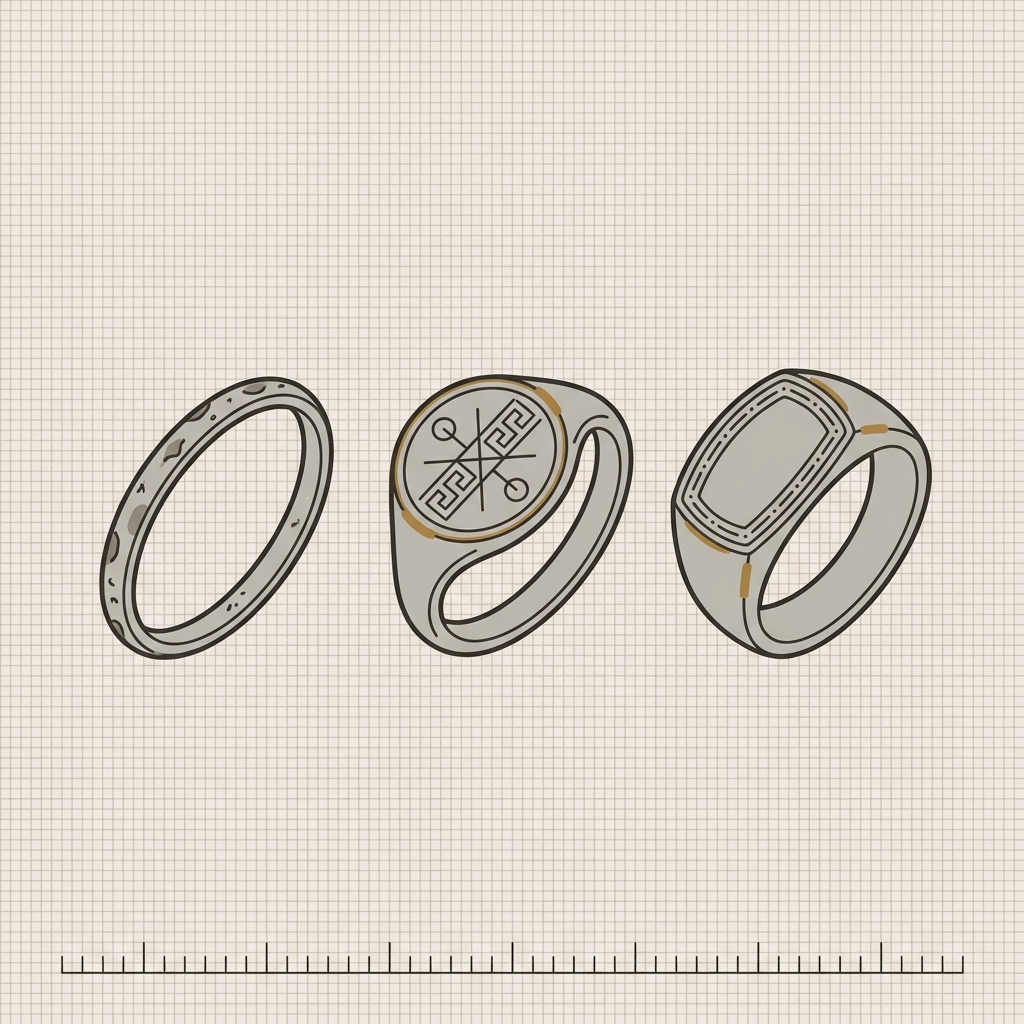
Case study B: a Hellenistic or Roman period intaglio set into a broad gold hoop with a prominent carved gemstone is typically a statement piece. Its size and bezel scale make the ring more practical on the ring finger, where the stronger digit can support a heavier artifact and where display value is maximized. Catalogues that highlight larger bezels and their state of preservation are the best guides for this type of decision Ashmolean Museum essay.
Checklist before wearing any ancient ring yourself: measure the internal diameter, request condition and restoration notes, confirm provenance and documentation if available, and consult a conservator before using the object as a functional seal. These steps reflect signet ring etiquette and seal ring conservation priorities that reduce risk to the object and to the owner.
Finally, remember that many choices are pragmatic. Historical evidence supports flexibility, so selecting the finger that fits the piece, preserves the surface, and aligns with documented restoration advice is both a responsible and historically defensible approach Smithsonian conservation guidance.
Conclusion: a practical, evidence-based takeaway
Recap: the balance of museum records, iconography and sealing practice studies shows that the little finger or the ring finger are the most commonly depicted placements for ancient Greek signet rings, but there is no single universal rule. Period, region, social role and practical sealing needs all influenced finger choice, and the visual record is uneven enough that cautious interpretation is required Metropolitan Museum overview.
For modern collectors the conservation first rule applies. Prioritise condition notes, documented restoration and provenance before wearing, and avoid using authentic ancient rings as repetitive mechanical seals. When in doubt, consult the listing documentation or a conservator, and treat wearable antiquity as an object that benefits from gentle, informed handling Smithsonian conservation guidance.
Museum evidence most commonly shows signet rings on the little finger or the ring finger, but placement varied by period, region and practical sealing needs.
Conservators recommend against regular mechanical use; follow condition and restoration notes and consult a conservator before any sealing attempts.
Request the hoop internal diameter, high resolution photos of the bezel and shoulders, and any restoration or provenance documentation before deciding.
More from Aurora Antiqua
References
- Aulus Gellius, Attic Nights, Book X, LacusCurtius, Bill Thayer, University of Chicago (Loeb Classical Library edition)
- Pliny the Elder, The Natural History, BOOK XXXIII, Perseus Digital Library, Tufts University (edition Bostock)
- Pliny the Elder, The Natural History, BOOK XXXIII, Perseus Digital Library, Tufts University (edition Bostock)
- Aegean and Cypro-Aegean Non-Sphragistic Decorated Gold Finger Rings, American Journal of Archaeology
- Thumb Ring, The Cleveland Museum of Art
- History of Signet Rings, International Gem Society, gemsociety.org