


Looking for the real thing? Browse authenticated ancient rings, each piece one of one, individually authenticated, with documented provenance. For the background, see the guide to ancient jewelry.
What is an ancient jade ring? Definition and historical context
An ancient jade ring is an artifact, typically a small wearable object made in antiquity where jade material was worked into a hoop, bezel or intaglio setting. For the purposes of collecting and appraisal, it is useful to treat such items as an ancient ring or wearable antiquity, one of a kind pieces that combine material, workmanship and, when available, documentation or collection history. If you are considering an ancient jade ring, expect descriptions that note material, estimated period, condition notes and any restoration notes provided by a seller.
Jade has been used for millennia across many regions and cultures for personal ornaments and symbolic objects, and the form and function of a ring can vary by workshop and period. Historical and archaeological studies show that the sources, working techniques and cultural meanings of jade differ by region, so a ring described as ancient may range in proposed age and origin; buyers should therefore treat dating as an estimate and rely on documentation when it is presented for verification Journal of Archaeological Science review.
Two types of jade: jadeite versus nephrite and why it matters
The single most important material distinction for market value is whether the object is jadeite or nephrite. These two minerals have different chemistry, textures and optical properties, and in specialist markets pieces described as high quality jadeite typically command higher prices than comparable nephrite pieces, all else being equal GIA jade overview.
Visually, jadeite can show stronger, more vivid color zones and greater translucency in some examples, while nephrite often appears softer, more fibrous and less refractive; however, visual cues are not definitive. Gemological labs remain the standard route for a definitive distinction because the mineral difference is chemical and structural and requires instrumental methods to confirm Gem-A information on distinguishing jadeite and nephrite.
How material quality and visible factors drive value
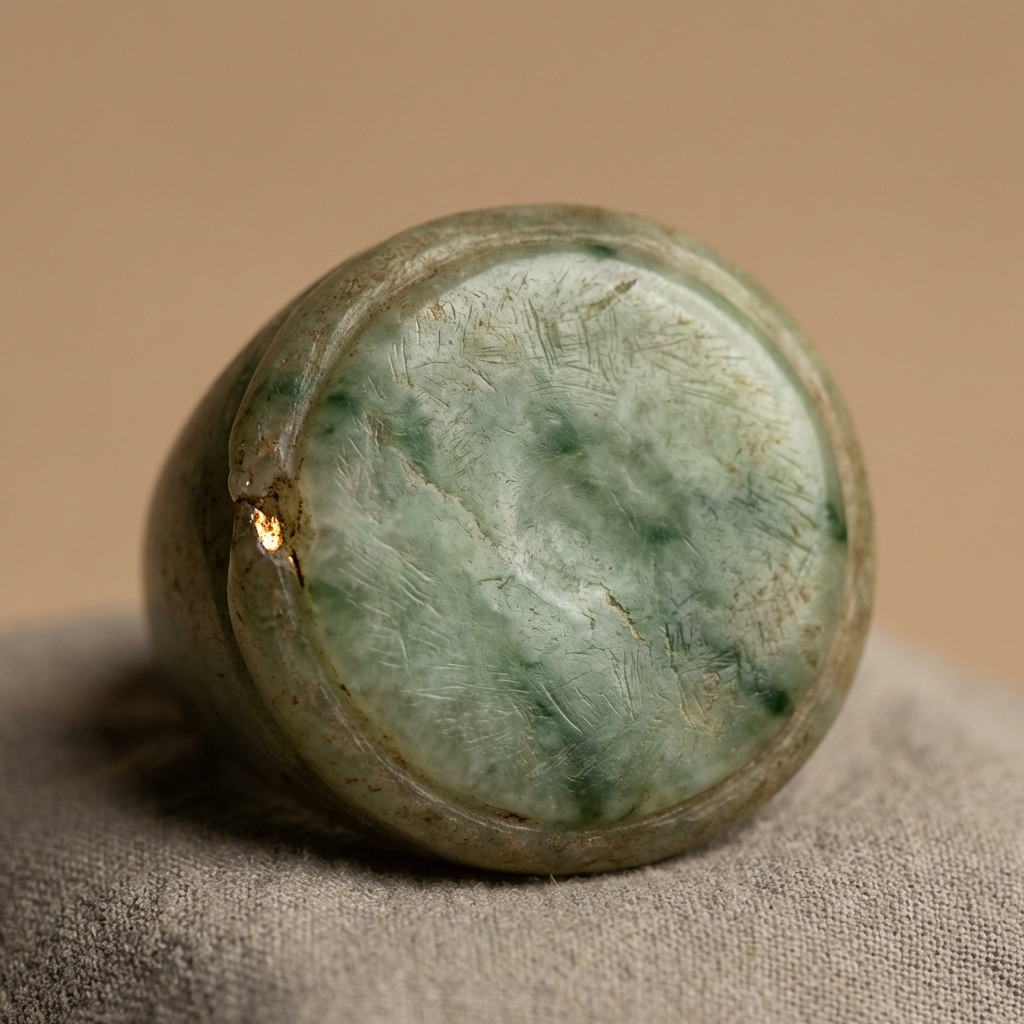
When assessing an ancient jade ring, visible factors such as color distribution, translucency, texture and the presence of inclusions or mottling are primary visual signals that collectors and appraisers use to estimate material quality. Strong, even color and higher translucency can increase demand for a wearable piece, while coarse texture or heavy mottling can reduce market interest, especially for jadeite examples.
See provenance, restorations and live finds on @auroraantiqua
Explore curated listings and documentation examples to see how sellers describe color, translucency and condition without making claims about future value.
Craftsmanship, iconography and carving detail also matter for market perception and collector interest. A finely executed bezel, a detailed intaglio or a historically significant motif can add to the object's appeal, particularly for collectors focused on cultural context rather than purely material grade. Market reports show that workmanship and documented context often change realized prices alongside material quality TEFAF art market report 2025. You can also read related blog posts on our blog for more on iconography and market context.
Small wearable pieces like rings follow different dynamics than large carved objects: scale limits how much dramatic color or translucency can appear, and fine detail, iconography and patina often weigh heavier in buyer decisions for rings than material grade alone. Consider both the material and the workmanship together when assessing value. See our rings collection for examples of wearable antiquities.
Common treatments and how they affect price
Polymer impregnation and other treatments, often referred to as B-jade or C-jade depending on the protocols, are common in the trade and can materially reduce market value unless fully disclosed and described in laboratory reports. Treatment detection is technical and visual checks are unreliable for detection, so buyers should ask for specific testing and full disclosure when treatment is possible Identification of Bleached and Polymer-Impregnated Jadeite, Gemological Institute of America (GIA), USA.

A documented example will present treatment information in a lab report section that lists the methods used, the findings (for example, whether polymer impregnation was detected) and any limitations of the test. If a seller provides only a brief certificate line without methods or spectral attachments, that is insufficient for confident assessment of treatment status.
Because treated pieces commonly sell for less, transparent disclosure and lab confirmation can actually protect both buyer and seller by setting market expectations. Always request explicit language about treatments in any documentation accompanying an ancient jade ring.
Scientific testing methods buyers should ask for
A useful short list of commonly accepted methods in 2024 to 2026 includes Raman spectroscopy, FTIR, XRF and microscopic analysis. Each method adds specific information: Raman and FTIR are effective at identifying mineralogical signatures and organic polymers, XRF gives elemental tendencies that help distinguish mineral types and microscopic analysis can reveal surface and internal features related to working, weathering or treatment GIA jade overview. For practical guidance on FT-IR testing see FT-IR Is an Effective Tool in Identifying Treated Jade and for wider discussions of complementary techniques see the nature review.
An ancient jade ring can be valuable, but value depends on material type (jadeite versus nephrite), treatments, laboratory testing, provenance, craftsmanship and condition. Documentation and transparent lab reports improve buyer confidence but do not guarantee future value.
Because no single test is universally definitive for every question, combined-method lab reports that list the exact techniques used and include spectral or photographic attachments increase buyer confidence. Ask for full test-methods and comparison to lab reference data rather than a one-line certificate that states a conclusion without supporting detail LMHC Information Sheet 11: Jade and related Materials, Definitions, Laboratory Manual Harmonisation Committee. For examples of spectroscopic and crystallographic studies see spectroscopic analysis.
Reading lab reports and what to look for
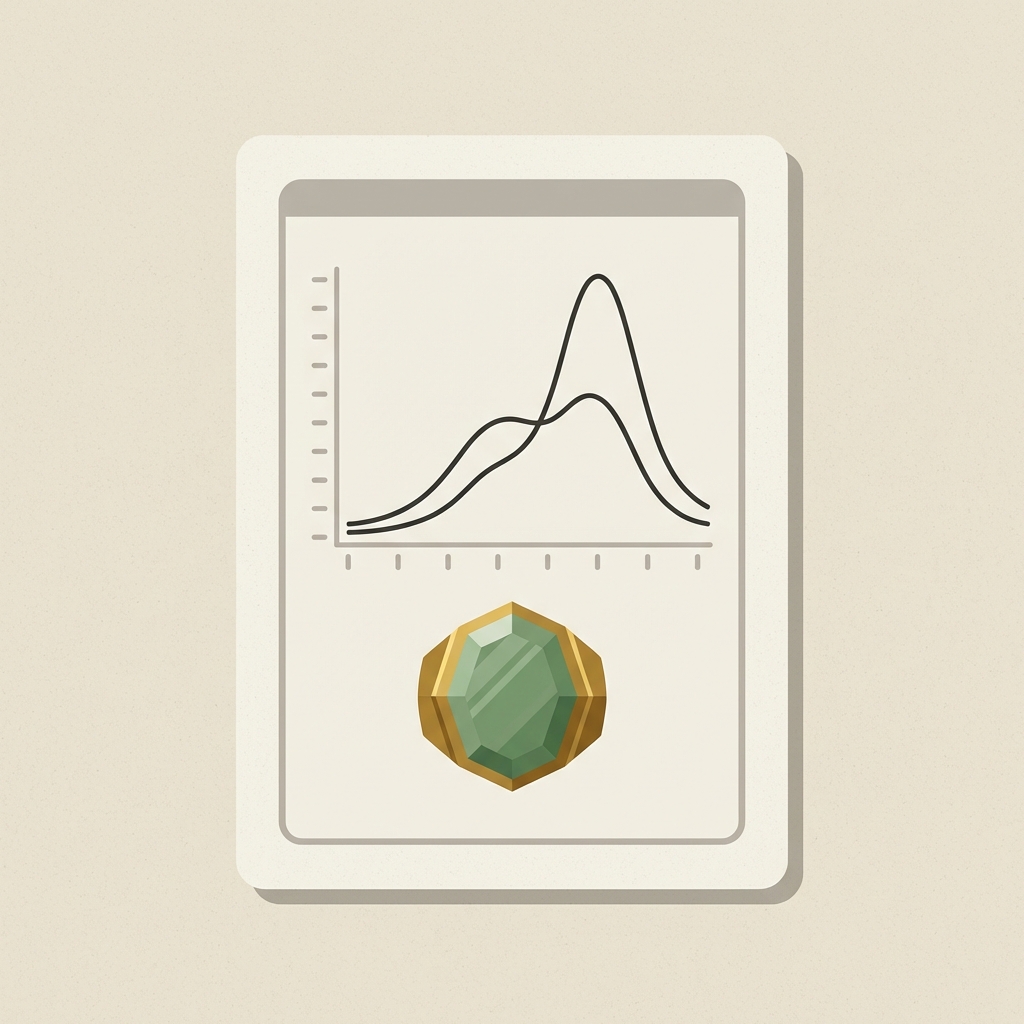
A strong lab report will list the methods used, use precise terminology such as jadeite or nephrite, report on treatment detection and, where possible, include spectral plots or microphotographs. Reports that explicitly state limitations and list comparison standards are more informative than short certificates that give a simple pass or fail.
Key fields to check include the laboratory name, date of testing, methods used (for example Raman, FTIR, XRF, microscopy), the mineral identification language, any detected treatments and attached data such as spectra or images. Vague language, unexplained abbreviations or missing methods are red flags; a certificate that does not list methods offers limited verification value GIA jade overview.
Provenance, documentation and their market impact
Provenance and clear documentation such as collection history, prior auction records and verification letters consistently raise buyer confidence and can affect realized prices, though provenance claims should be corroborated with tangible records or lab reports Auction Terminology, Christie's.
Request core provenance documents to support a ring's history
Ask for images or scans of original records
When provenance documents are present, look for dated ownership statements, prior auction lot descriptions and any photographic evidence tied to historical records. Clear provenance does not guarantee authenticity, but it does improve the context that buyers and specialists use to evaluate a piece and to cross reference with lab findings.
Where provenance is thin or entirely absent, expect lower buyer confidence and wider price dispersion; this is common in small wearable objects where collection histories were not always recorded for each item.
Condition, restoration notes and conservation
Typical condition notes for ancient rings include chips at the bezel, surface wear, patina development, and evidence of old or modern repairs. Sellers should present restoration notes that describe what was stabilized, repaired, or intentionally left untouched so buyers understand interventions and how they affect display and handling.
Restoration can range from careful stabilization, which prevents further loss, to visible repairs that alter appearance. Transparent restoration notes that specify materials used, date of work and whether the item was conserved or restored are useful for buyers to assess both visual impact and conservation history GIA jade overview.
How specialists and sales channels affect pricing
For selling or buying, specialist auction houses and vetted antiquities dealers remain recommended channels for transparent pricing and provenance verification, because they commonly offer documented histories, condition reports and access to specialist appraisals that private marketplace listings may not provide Auction Terminology, Christie's.
Different channels come with trade-offs: auctions provide public price discovery and cataloguing, vetted dealers can provide curated context and post-sale support, and private or online marketplaces may offer breadth but often require greater due diligence on the buyer's part. Consider the channel's transparency, fees and available documentation when deciding where to buy or sell.
A practical appraisal checklist for an ancient jade ring
Before purchase, work through a prioritized checklist: first confirm material ID or request lab testing, next ask for detailed lab report attachments showing methods and data, then verify provenance or collection history, review condition and restoration notes, and finally request high-resolution photos, measurements and any available comparanda.
Specific questions to ask sellers include which tests were performed and where, whether any treatments were detected and how they are described, for copies or scans of provenance documents, and for close-up photos of problematic areas. If a seller cannot provide these items, pause the purchase and consider third-party testing or specialist advice GIA jade overview.
When in doubt, seek a specialist appraisal or ask a lab whether a ring-sized sample was directly tested; sample size and testing limits should be described in the lab report to avoid overclaiming identification.
Typical mistakes and red flags when buying an ancient jade ring
Common mistakes include relying solely on photos, accepting vague provenance statements, overlooking treatment disclosure and ignoring lab-method details. One-line certificates without listed methods, unstated treatment status or inconsistent provenance claims are clear red flags that warrant further verification or walking away from the sale 16 CFR Part 23, Guides for the Jewelry, Precious Metals, and Pewter Industries, Federal Trade Commission, eCFR.
If you encounter a red flag, request full lab reports, ask for scans of provenance documents, and consider independent testing. These steps increase confidence and help avoid buying a misidentified or undisclosed treated object.
Practical scenarios: buyer profiles and what matters most
Collector profile: A collector seeking historical significance should prioritize provenance, iconography and detailed documentation. For these buyers, verified collection history and lab-confirmed material ID can justify paying a premium for contextual value rather than simply material grade TEFAF market report.
Wearable buyer profile: Someone seeking a wearable history piece for regular wear may accept visible wear and modest restoration if the ring is stable and photographed well. These buyers should prioritize clear condition notes, measurements and stabilizing conservation over perfect provenance.
In each scenario, align your documentation and testing expectations with the purchase goal: collectors should demand full lab reports and provenance, while wearable buyers may focus on condition, fit and stabilizing work.
Case examples from auction records and market reports
Market reports and auction records demonstrate wide price dispersion for wearable jade: modest, undocumented pieces often trade at much lower levels, while high-quality, documented jadeite examples achieve substantially higher realized prices. The primary drivers behind this dispersion are material type, treatment status, provenance, workmanship and condition, as reported in auction and market summaries Christie’s guide to jade. For comparable lots see our Ancient Roman Rings collection.
Because published price transparency varies by region and object type, buyers should interpret any single sale with caution and consider composite evidence from lab reports, provenance and comparative cataloguing to form expectations about price for a given ring.
Summary: is ancient jade valuable? Next steps for buyers
Short answer: an ancient jade ring can be valuable, but value depends on material type, treatments, lab testing, provenance, craftsmanship and condition. Jadeite versus nephrite is the central material distinction, treatments can materially reduce value if undisclosed, and comprehensive lab reports combined with provenance tend to raise buyer confidence and often affect price realization GIA jade overview.
Next steps: ask sellers for full lab reports that list methods and include spectral or photographic attachments, request provenance documents or collection history, review condition and restoration notes, and consult a specialist when necessary. Documentation improves confidence but does not guarantee future price movements; treat every claim as a starting point for verification Publication 561 (12/2025), Determining the Value of Donated Property, Internal Revenue Service (IRS), USA.
Visual cues are not definitive. Request a lab report that lists methods such as Raman, FTIR or XRF; these techniques can distinguish jadeite from nephrite more reliably than photos alone.
Treated pieces typically sell for less than comparable untreated material unless the treatment is clearly disclosed. Full lab disclosure helps set accurate market expectations.
Ask for lab reports that list methods and include spectra or images, provenance documents such as collection history or prior auction records, and clear condition and restoration notes.
More from Aurora Antiqua
References
- Identification of Bleached and Polymer-Impregnated Jadeite, Gemological Institute of America (GIA), USA
- LMHC Information Sheet 11: Jade and related Materials, Definitions, Laboratory Manual Harmonisation Committee
- The Gemstone Book, CIBJO Blue Book, Coloured Stone Commission, CIBJO, The World Jewellery Confederation
- 16 CFR Part 23, Guides for the Jewelry, Precious Metals, and Pewter Industries, Federal Trade Commission, eCFR
- Publication 561 (12/2025), Determining the Value of Donated Property, Internal Revenue Service (IRS), USA
- Auction Terminology, Christie's
- About us, International Association of Dealers in Ancient Art
- The Past Polluted: A Pigovian Approach to the Black Market in Antiquities, International Journal of Cultural