


Looking for the real thing? Browse genuine ancient rings for sale, each piece one of one, individually authenticated, with documented provenance. For the background, see the guide to ancient jewelry.
What an ancient jade ring is: definition and why context matters
An ancient jade ring is best understood as an ancient ring made, in whole or in part, from one of the minerals that the specialist literature calls jade, most commonly nephrite or jadeite, and which comes with archaeological or documented historic provenance. Precise dating and the material identification-nephrite versus jadeite-matter for interpretation because they link an object to specific regions, working traditions and symbolic vocabularies, and that affects how a ring might be read.
When a writer or collector asks what an ancient jade ring symbolizes, it helps to begin with cautious language: a motif or material can often indicate likely meanings, but those readings depend on context, burial or ritual use, and the written or museum scholarship that accompanies a piece. For material and treatment guidance, public gemology summaries are a useful starting point, particularly when they explain differences between nephrite and jadeite GIA overview.
A jade ring can symbolize status, protection, fertility or ancestral identity depending on material, cultural context and use; collectors should confirm material (nephrite versus jadeite), request provenance and condition notes, and consult museum or academic sources before accepting interpretive claims.
Aurora Antiqua approaches each listed ring as a curated antiquity, with clear condition notes, restoration notes where applicable, and any available provenance or collection history, so that buyers can see the evidence behind suggested dates and cultural attributions rather than only a label. See our rings collection for examples.
How and why people have assigned symbolic meaning to jade
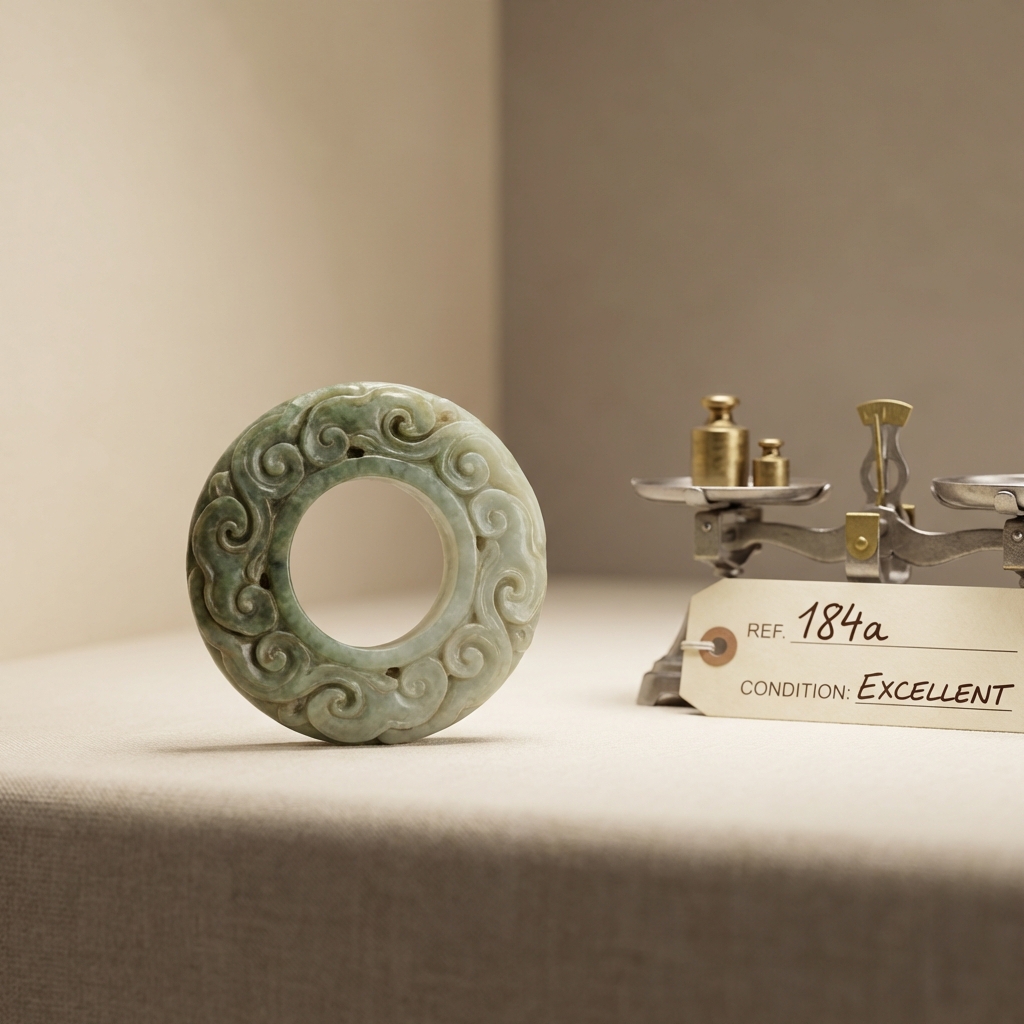
Cultures have assigned symbolic meaning to jade for several overlapping reasons tied to the material itself: the tactile smoothness, the durability that resists breakage, and the range of green and other colors that appear to change with oil and handling. These material qualities invite associations with qualities such as endurance, health, or renewal, and they are frequently discussed in museum interpretations and scholarly overviews for particular regions Metropolitan Museum Heilbrunn Timeline.
Beyond physical qualities, contexts of use shape symbolic reading. Objects used in ritual, elite display or burial settings tend to take on amplified meanings: protection for the living or the dead, status signaling, or links to fertility and life cycles. When museums describe jade in funerary contexts, they often stress how repeated use in ritual assemblages helps make those associations visible to later interpreters. For an accessible overview of Chinese jades, see Smarthistory's introduction to Chinese jade.
Core symbolic themes across cultures
Across geographic regions and periods, a few broad themes recur when scholars and museums describe what a jade ring symbolizes: status or elite identity; protection, especially in life and afterlife contexts; associations with life, water and fertility; and social or ancestral identity conveyed through heirlooms and transferred objects. Each of these themes can be emphasized differently by local tradition.
Readings that reduce a ring to a single meaning are often oversimplifications. For example, an object that appears to signal elite status in one assemblage might function as a protective amulet in another, depending on how it was deposited and documented; museum essays and archaeological literature remain the best sources to test such readings British Museum Americas collection. The Penn Museum also discusses historical and regional perspectives on jade in ways that can help compare claims Penn Museum: Jade.
Follow @auroraantiqua for provenance and process
When evaluating symbolism, prioritize clear provenance and condition notes over marketing language; these documents tell you why an interpretation is proposed and what evidence supports it.
China: virtue, harmony, protection and burial roles
In Chinese tradition, from Neolithic through later imperial eras, jade objects and personal ornaments have often been associated with moral qualities such as virtue and harmony, and with protective uses in both life and burial. Collections and interpretive essays emphasize these long-running associations rather than a single, static meaning, and the prominence of such themes is visible across museum displays and timelines Metropolitan Museum Heilbrunn Timeline. For focused museum writing on early Chinese jades, see the Harvard Art Museums overview A Spotlight on Early Chinese Jades.
Material matters within the Chinese record because nephrite was dominant in many early Chinese contexts, and certain types of carved objects have been recovered from ritual and funerary settings where their presence appears to be protective or status-related. For any specific ring that is claimed to be Chinese in origin, provenance notes and museum scholarship are the best guides to understanding proposed symbolism.
Aotearoa / Māori pounamu: ancestry, mana and taonga
In Aotearoa New Zealand, pounamu (often called greenstone) holds meanings that center on ancestry, mana and status as taonga. Pounamu pieces are frequently treated as heirlooms that carry social authority and personal history across generations, and many museum and museum-adjacent sources frame this practice as distinct from commodity-style jewelry exchange Te Papa Tongarewa on pounamu.

Because pounamu pieces commonly acquire meaning through the social histories that attach to them, attribution and cultural context should lean on local expertise and clear collection history rather than stylistic guesswork. When a seller, curator or catalogue notes a pounamu piece as taonga, that conclusion is easiest to verify when accompanied by collection history and condition notes that show how the object was treated over time.
Mesoamerica: life, water, fertility and elite identity
In ancient Mesoamerica, including Olmec and Maya contexts, jade-often jadeite-was tightly linked to concepts of life, water and fertility and was commonly associated with elite identity. Museum essays on Americas collections describe how carved greenstone objects appear in both ritual assemblages and burial contexts where those associations are strongest Smithsonian summaries on jade.
These ties are regionally specific: jadeite sources, carving traditions and the social roles of greenstone differ from the contexts in which nephrite was worked elsewhere. For readers, that means treating Mesoamerican symbolism as its own tradition with particular material and ritual anchors rather than assuming meanings transfer unchanged across regions.
Material differences and identification: nephrite versus jadeite
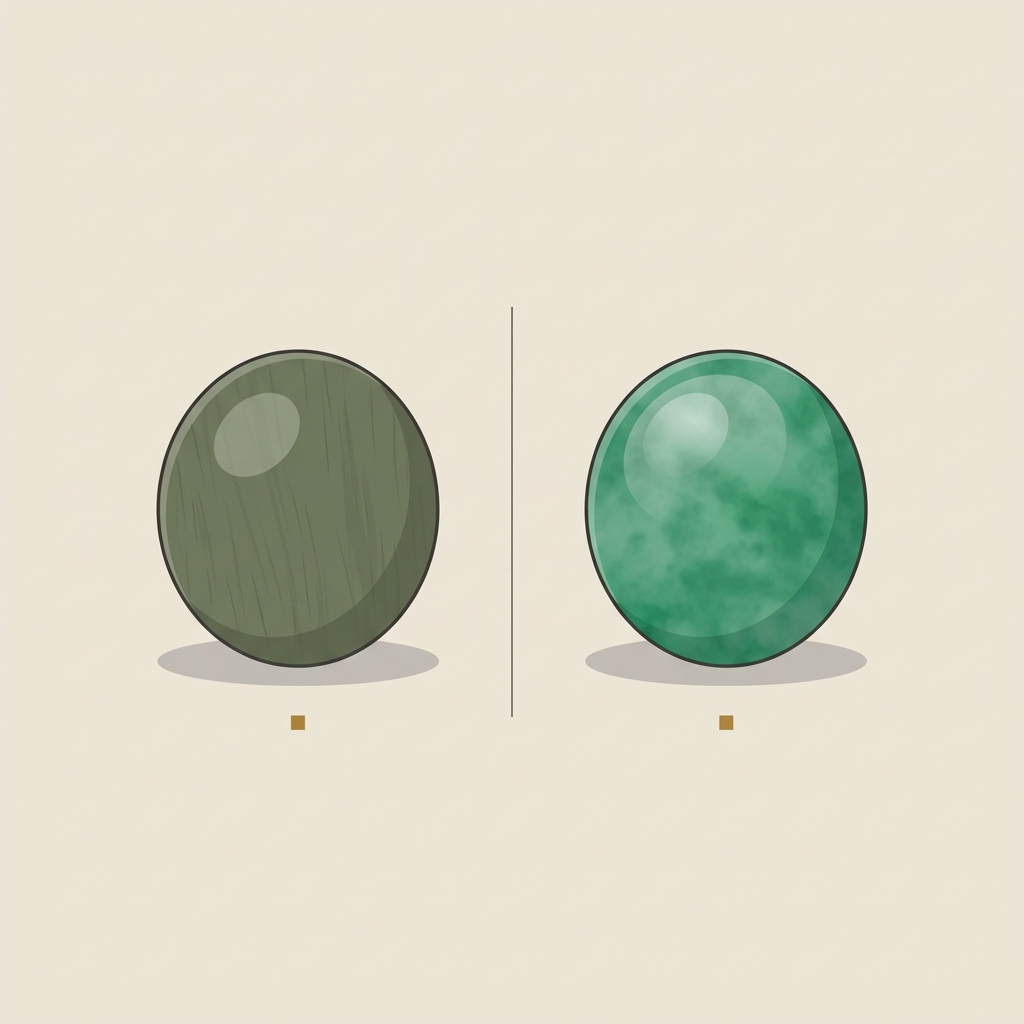
Material identification matters because nephrite and jadeite have different geographic distributions and working traditions that influence local symbolism and use. Nephrite was common in much of prehistoric China and in Pacific contexts, while jadeite is prominent in Mesoamerica and later exchange networks in East Asia; public gemology resources explain these contrasts and why they matter for cultural reading GIA overview.
For buying and interpretation, simple identification steps can reduce uncertainty: request a written material ID or a gemological report when available, and ask for clear condition notes and collection history. Scientific tests and specialist reports are the strongest way to separate nephrite from jadeite when a visually based claim is uncertain.
basic steps a buyer can use to confirm material and documentation
Start with documentation before testing
A practical evaluation framework for buyers
When evaluating an ancient jade ring, work through a checklist: confirm material (nephrite versus jadeite), request provenance and condition notes, ask about any restoration and request photographs of details such as the bezel and hoop. Gemological summaries and museum descriptions can help interpret cultural claims and are recommended reference points for higher-stakes purchases GIA overview. You can also compare with items in our ancient Roman rings collection.
Sample questions to ask sellers include neutral prompts such as: What is the basis for the proposed date and cultural attribution? Is there a collection history or sale record? Were any restorations performed and, if so, are there restoration notes? Has the material been tested by a recognized laboratory? These prompts treat attribution as an evidence-based claim, not an assertion. See our questions and answers hub for more seller prompts.
Reading iconography and motifs on rings
Common motifs on ancient rings can include abstract scrolls and vegetal forms, carved faces or symbolic shapes and, in some traditions, intaglio scenes cut into a hardstone bezel. Each motif can invite tentative readings, but the same motif can mean very different things in different places and times, so short motif lists are only a starting point for interpretation; museum iconographic essays are a useful comparative resource Metropolitan Museum Heilbrunn Timeline.
Iconography can mislead when motifs are reused, traded or later added to older objects. A stylistic resemblance without corroborating provenance or documented findspot is not proof of origin; when iconography is the only evidence for a cultural claim, treat the reading as provisional and seek further documentation.
Conservation, restoration and condition notes
Conservation and restoration notes influence interpretation because repairs or stabilizations can obscure original surfaces or alter perceived patina. Sellers should disclose common treatments such as adhesives used to stabilize fractures or metalwork added to support a fragile bezel, and buyers should read these disclosures alongside condition photographs and measurement data modern jade guidance.
Patina and wear consistent with age can be informative: edge rounding, tool marks and surface loss in high-contact zones often reflect use, while fresh tool marks or inconsistently applied surface finishes may indicate modern intervention. Conservative stabilization is preferable to invasive restoration for maintaining interpretive information.
Common mistakes and red flags when assessing symbolism or provenance
A common mistake is to assume a single stable meaning for a motif across regions or centuries; motifs travel and are reinterpreted, so contextual evidence is important. Another frequent error is to accept broad marketing claims without documentation, which can conflate symbolic language with modern wellness or lifestyle messaging modern jade guidance.
Red flags include missing provenance or vague collection history, absent material identification, condition notes that omit restoration disclosures, and sensational language that promises universal benefits or health effects. When these appear, ask for documentation or defer to museum and academic sources for interpretation.
Practical scenarios and short case examples
Scenario one: buying a putative Han-dynasty jade ring. If a seller dates a ring to a broad historical period, ask what evidence supports that date: publication, collection history, or laboratory testing. A ring with clear collection history and museum references permits a stronger cultural reading than a similar-looking object offered without documentation; when in doubt, request condition notes and a specialist opinion Metropolitan Museum Heilbrunn Timeline.
Scenario two: receiving a pounamu ring as a gift. In Māori contexts the meaning of a pounamu piece often follows through its social history, so ask about the piece's provenance and any family story attached to it. If the ring is presented as taonga or a transfer of mana, those claims are cultural and should be treated respectfully; local museum or iwi guidance can clarify customary practice Te Papa Tongarewa on pounamu.
Conclusion: responsible buying and using symbolism thoughtfully
Core takeaways are simple: an ancient jade ring can symbolize different things depending on material, cultural context and use, with recurring themes of status, protection, fertility and ancestral identity. Material identification and provenance are central to any confident interpretation, so prioritize those evidentiary elements when evaluating symbolism GIA overview.
Next steps for a prospective buyer include requesting written material ID, clear condition and restoration notes, and any available collection history or verification letters; consult museum essays or academic literature for motif readings, and approach symbolic claims with cultural sensitivity and caution.
Visual cues can hint at material, but reliable identification usually requires gemological testing or a report; request a written material ID or lab report and compare it with museum or gemological references.
Not always; protection is a common theme in many traditions but meanings vary by culture, context and the object's use, so avoid assuming a single interpretation without supporting provenance or scholarship.
Ask for material identification, condition and restoration notes, collection history or provenance references, and any verification letters or lab reports available.
More from Aurora Antiqua
References
- LMHC Information Sheet 11: Jade and related Materials, Definitions, Laboratory Manual Harmonisation Committee
- Identification of Bleached and Polymer-Impregnated Jadeite, Gemological Institute of America (GIA), USA
- The Jade Enigma (Gems & Gemology, Spring 1982), Gemological Institute of America (GIA), USA
- 16 CFR Part 23, Guides for the Jewelry, Precious Metals, and Pewter Industries, Federal Trade Commission, eCFR
- The Journal of Gemmology, 2009, vol. 31, nos. 5 to 8, Gemmological Association of Great Britain (Gem-A), London
- Formation of pounamu, Museum of New Zealand Te Papa Tongarewa
- Thumb Ring, The Cleveland Museum of Art