


Looking for the real thing? Browse our full ring collection, each piece one of one, individually authenticated, with documented provenance. For the background, see the guide to ancient jewelry.
Quick answer: can you buy an ancient jade ring in the US?
Short, plain-language verdict. There is no blanket federal ban on jade in the United States, but whether you can lawfully import or acquire a particular ancient jade ring depends on its country of origin, the presence of export paperwork and collection history, and whether the source or exporter is subject to targeted sanctions or trade restrictions. For how the State Department implements import controls under the Cultural Property Implementation Act, see the Department of State cultural property page Department of State cultural property page.
When the answer changes based on facts. Practical risk turns on a few concrete triggers: if a source country has a CPIA Descriptive List that covers jade or similar archaeological materials, imports without the specified export documentation can be denied; separately, sanctions can make jade from certain exporters unlawful without a license. Collectors should treat legality as item specific rather than categorical, and verify paperwork and official lists before purchase.
What to expect immediately. If you see a listing for an ancient jade ring, ask for clear export permits, collection history, and dealer invoices before making an offer. If paperwork is missing or origin is uncertain, the chance of detention or seizure rises when the item arrives at a US port of entry.
See provenance and condition walkthroughs on @auroraantiqua
Before you buy, pause to confirm export paperwork and check official lists rather than relying only on a seller summary.
What an ancient jade ring is and why origin matters
Definitions: ancient jade ring, antiquity, provenance
Defining the object. An ancient jade ring in this context is an antiquity described by age, style, and documented context rather than a modern replica; its legal treatment depends less on whether it is visually attractive and more on whether it is classified as an archaeological or ethnological object by a source country or by US authorities. When assessing a ring, collectors should focus on period attribution, material description, and any documentation that speaks to prior ownership.
Why provenance matters. Provenance and collection history are the principal ways to show lawful movement across borders; a clear chain of custody, prior collection records, and an export permit issued by the source country substantially reduce the legal uncertainty around cross-border transport and sale.

How geological source and cultural context affect legal treatment
Source country and cultural classification shape which laws and lists apply. The geological origin of the jade and the cultural context of the object can mean that a ring is treated as protected cultural property under bilateral agreements or national export rules; without reliable paperwork, these connections become the primary legal risk factors for import.
Core US legal framework that can restrict imports of jade
CPIA and Descriptive Lists
The Cultural Property Implementation Act allows the Department of State to identify classes of archaeological and ethnological materials, including jade objects from listed source countries, and place them on a Descriptive List that restricts import when specified export documentation is missing; for the State Department's explanation of this process consult the cultural property page Department of State cultural property page and the public docket on regulations.gov public docket.
Quick official lookups for collectors before purchase
Use this to confirm country and exporter status
Customs enforcement role
CBP enforces CPIA at ports of entry and may detain, seize, or deny entry to objects that match a Descriptive List or lack required documentation; collectors should assume CBP will review any declared cultural-property shipment and expect documentary proof to accompany the import, as described on CBP guidance pages CBP cultural property guidance. For recent CBP regulatory notices see the CBP bulletin CBP bulletin.
How these rules work in practice. A Descriptive List does not itself criminalize ownership in the United States, but it establishes import controls that make the entry of covered objects contingent on specific proof of lawful export; this is the principal statutory mechanism that can make an otherwise ordinary antiquity difficult or unlawful to import.
Sanctions, Myanmar, and why some jade is treated differently
OFAC sanctions that affected the jade sector
Targeted sanctions can change legality regardless of paperwork. In 2024 the US Treasury applied measures against entities tied to Myanmar's jade sector, meaning jade mined, processed, or exported under sanctioned companies or linked to prohibited parties generally may not be imported to the US without OFAC authorization; see the Treasury press release for the scope of those actions OFAC press release on targeted sanctions and the Federal Register notice Federal Register notice.
Human rights and illicit trade concerns
Why authorities act. Concerns about human-rights abuses, illicit controls, and the opaque nature of some jade supply chains motivated targeted measures and broader scrutiny of certain origins, and this context continues to influence enforcement priorities and advice to collectors; for reporting on the Myanmar trade and related concerns see investigative coverage Global Witness reporting on the Myanmar jade trade.
What this means for buyers. Even where export paperwork exists, sanctions can create an independent barrier to lawful import if an item is tied to designated parties; always check OFAC lists in addition to cultural-property Descriptive Lists before agreeing to a shipment.
How Customs and Border Protection enforces restrictions in practice
Typical port procedures and document checks
What happens at entry. When an ancient jade ring arrives in the United States, CBP officers review the shipment and supporting documents to determine whether it matches a Descriptive List entry or whether export documentation satisfies the import conditions; CBP guidance explains the kinds of documents and declarations officers typically expect to see at ports of entry CBP cultural property guidance.
Documentation CBP looks for. Expect requests for an export permit from the issuing authority in the source country, invoices that show chain of custody, and any third-party verification letters that help establish lawful export. Absent those documents, CBP can detain the shipment while seeking advice from the State Department or other agencies.
What happens if paperwork is missing
Detention, seizure, and buyer consequences. If required documentation is absent or insufficient, CBP may detain the object pending review, and in some cases deny entry and seize the item. For the importer or buyer, this can mean delay, loss of the object, or legal complexity while agencies decide whether lawful import conditions are met.
How buyers can reduce disruption. Properly declare cultural property on import paperwork, supply copies of export permits and collection history with the shipment, and communicate proactively with the carrier and CBP to avoid surprise detentions.
Practical due diligence checklist for buying an ancient jade ring
Documents and provenance to request
Core documents to request. Ask any seller for an export permit from the source country, prior collection records that show the item's chain of custody, a clear dealer invoice, and any available third-party verification letters; these documents are the foundation of a defensible provenance and can reduce the chance of seizure when importing.
Why each element matters. An export permit demonstrates legal exit from the source country, prior collection records create continuity of ownership, and a dealer invoice helps show legitimate commercial transfer; when present and credible, these items materially reduce legal risk and make engagement with CBP and authorities simpler.
Condition and restoration notes to review
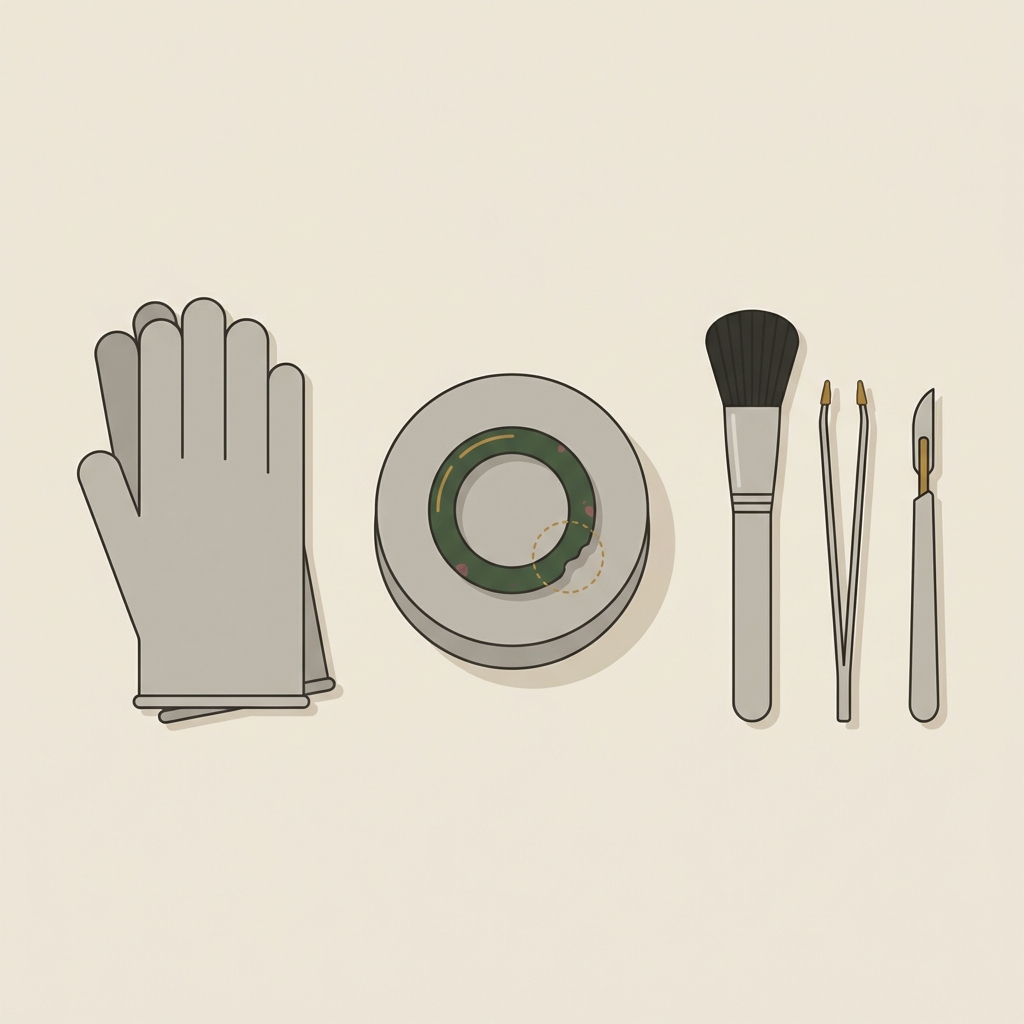
Condition matters for identification. Clear restoration and condition notes that explain what was stabilized, repaired, or left untouched help specialists and officials understand whether an object is an intact antiquity or a composite; sellers should disclose restoration work rather than leaving it vague.
How to read restoration notes. Look for details about repairs, conserved surfaces, and original areas such as bezel or intaglio that retain patina; missing or vague restoration notes increase uncertainty about authenticity and provenance and should prompt follow up questions.
Practical scenarios: buying from an overseas dealer, auction, or online
Scenario A: documented export permit and clear provenance
Lower risk but verify. When a ring arrives with an export permit and a clear collection history, the risk of CBP detention is reduced because you have the documentation CBP and the State Department typically expect; nevertheless, verify the issuing authority and confirm that the permit covers the object's class and date.
Recommended next steps. Keep authenticated copies of all paperwork, instruct the shipper to include documentation with the customs declaration, and retain communications with the seller about provenance.
No blanket ban exists; legality depends on origin, export documentation, and whether the item or its exporter is subject to CPIA controls or OFAC sanctions.
Scenario B: minimal paperwork and uncertain origin
Higher risk, consider walking away. If a listing offers minimal paperwork or only seller claims about origin, the chance of detention or seizure increases; buyers should either decline such purchases or require the seller to obtain formal documentation and legal review prior to shipment.
Practical choices. For mid-value items, insist on a refundable hold until papers are verified; for high-value or sensitive pieces, consider an independent provenance review or legal counsel before purchase.
Scenario C: suspected Myanmar origin or links to sanctioned parties
Special caution needed. If a seller indicates possible Myanmar origin or there are signs the exporter may be tied to entities named in sanctions, the item may be subject to OFAC controls and could be unlawful to import without a license; check the Treasury announcements and OFAC materials before proceeding OFAC press release on targeted sanctions.
When to avoid a purchase. If origin is uncertain and the seller cannot provide reliable export documentation or if an exporter appears on sanction lists, conservative collectors should avoid import unless they obtain clear legal authorization or confirm an exemption that applies to their case.
Common mistakes and red flags to avoid when evaluating jade listings
Claims to watch for
Vague origin statements. Red flags include vague or inconsistent origin claims, story-like provenance with missing dates or owners, and sellers who discourage independent checks; such indicators should prompt further inquiry before purchase.
Too-good-to-be-true pricing. Extremely low prices for supposedly rare antiquities often correlate with provenance gaps; treat unusually cheap offerings with skepticism and ask for full documentation before proceeding.
Documentation red flags
Warning signs in paperwork. Documents that lack an issuing authority, have inconsistent dates, or are presented as photocopies with no verifiable source should be treated cautiously; request certified copies or contact the issuing body when possible, as advised in museum and collecting guidance AAMD collecting and provenance guidance.
Restoration ambiguity. Listings that omit condition or restoration notes create uncertainty about how much of the object is original; ask for detailed treatment records to avoid importing a substantially altered object without disclosure.
How to work with dealers, auction houses, and shippers to reduce risk
What to ask dealers before purchase
Model questions. Ask sellers explicitly: which authority issued the export permit, can you provide prior collection records, do you have third-party verification letters, and what restoration work was performed; clear, documented answers help you and CBP evaluate lawful importability.
Polite but firm negotiating. Request that sellers include copies of the export permit and invoice with the shipment and that they confirm the issuing authority's contact details so you can verify documents if needed.
Working with shippers and declaring at customs
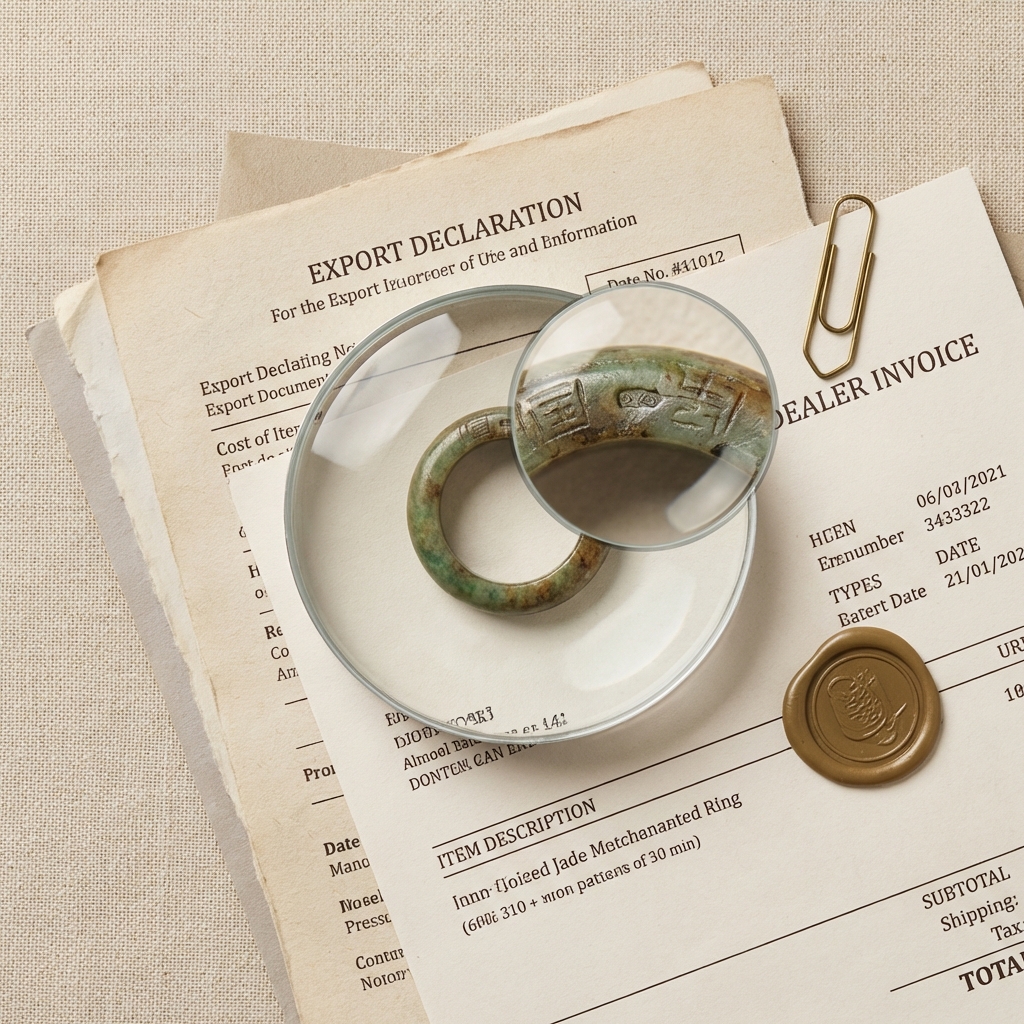
How to instruct a shipper. Tell your shipper to prepare a complete commercial invoice that lists the object's country of origin, to include copies of export permits with the shipment, and to mark the customs declaration to identify the item as cultural property where required.
Record keeping and contingency. Retain all shipment tracking, communications, and paperwork. If CBP detains a shipment, these documents will help you work through the review process more efficiently and demonstrate good-faith efforts to comply.
When to consult experts or legal counsel
Types of experts to consult
Who to call for verification. Consider independent provenance researchers, technical specialists who can advise on material and typology, and conservators who can interpret restoration notes; these experts help clarify questions that paperwork alone may not answer.
When testing is useful. Material testing can sometimes clarify geological source or treatment history, but standards for testing and interpretation are evolving, so use specialists who communicate limits and uncertainties clearly.
When to hire an art-law attorney
Legal counsel is appropriate when provenance gaps intersect with possible CPIA coverage or sanctions exposure, or when a planned import involves high value or complex documentation issues; an attorney can advise on licensing, pre-import filings, and risk tolerance.
Pre-import contact with agencies. For complex cases, attorneys often recommend contacting CBP or the State Department cultural heritage desk for guidance before initiating shipment to reduce surprises at the port of entry.
How international law like the 1970 UNESCO Convention fits in
UNESCO principles and US policy
International foundations. The 1970 UNESCO Convention on illicit trafficking of cultural property remains the foundational international instrument that underpins many CPIA actions and bilateral agreements, and it provides the policy rationale for national measures intended to limit illicit trade UNESCO overview of the 1970 Convention.
Why collectors should care. Understanding the Convention helps explain why some countries press for import controls and why bilateral agreements result in Descriptive Lists that cover classes of objects, including sometimes jade items tied to archaeological contexts.
Why the Convention matters for collectors
Implications for cross-border movement. Treaty principles translate into practical import checks under national laws; collectors moving antiquities across borders should therefore consult both international frameworks and the relevant national implements such as CPIA Descriptive Lists.
Practical reading list. Review official State Department resources and CBP guidance in addition to international materials to see how these commitments are applied in practice for specific source countries and object classes.
How a careful curator like Aurora Antiqua presents ancient jade rings
What to expect in a responsible listing
Transparent listing elements. A careful curator will present period attribution, condition notes, restoration notes, and any available provenance or collection history so prospective buyers can assess legal and scholarly context before they ask follow-up questions. See related items in our ancient Roman rings collection.

How condition and provenance notes are framed
What to look for in notes. Responsible descriptions separate original surfaces and patina from documented repairs, note where stabilization was performed, and cite collection history when available; such clarity assists both buyers and officials who assess import compliance.
Brand role and limits. A curator like Aurora Antiqua serves as an expert curation reference and a trust layer that explains eras and motifs and provides restoration notes, but presentation alone does not replace required export permits or official clearances.
Common documentation templates and what to look for in paperwork
Export permits and what they show
Key export permit elements. A reliable export permit should identify the issuing authority, provide a clear description of the object, include dates and reference numbers, and name the recipient or exporter; these elements make it possible to verify whether the document covers the specific object offered for sale.
Which issuing authority matters. The legal strength of an export permit depends on the issuing country's laws and the authority that issued the permit; when in doubt, verify directly with the issuing body or seek counsel.
Dealer invoices and chain of custody
What a clear invoice should include. Dealer invoices that support provenance state transaction dates, prior owner names where appropriate, the seller's contact details, and references to export documentation; they help establish a continuous chain of custody that CBP and other agencies use in review.
Inconsistencies that require follow up. Watch for invoices that omit dates, list vague origin terms, or fail to reference export permits; these items should prompt further verification or professional review before import.
Next steps and practical resources for collectors
Where to check official lists
Primary official sources. Before purchase or shipment, check the Department of State cultural property resources for Descriptive Lists, consult CBP cultural property guidance for import procedures, and search OFAC announcements for targeted sanctions that could affect a specific origin or exporter Department of State cultural property page.
Routine pre-purchase steps. Request export paperwork and prior collection records, confirm issuing authorities, and keep copies of every document the seller provides to reduce the chance of surprise enforcement action at import.
Simple pre-purchase checklist
Practical short checklist. Ask for an export permit, request a clear dealer invoice and collection history, search OFAC for sanctions relevant to the origin, and verify whether the State Department Descriptive Lists cover the object class; if documentation is incomplete, consider delaying purchase or seeking professional review.
When conservatism is appropriate. For items with uncertain origin or possible links to sanctioned entities, err on the side of documented refusal rather than attempting import without clear legal authority.
Conclusion: measurable ways to reduce legal risk when acquiring an ancient jade ring
Summary of the conditional rule. An ancient jade ring is not categorically illegal in the United States, but its lawful import and sale depend on origin, documentation, and whether targeted sanctions or CPIA Descriptive List controls apply to the source or exporter.
Highest-impact actions. Obtain export permits, verify provenance and collection history, check OFAC and State Department descriptive listings before shipment, instruct shippers to declare cultural property properly, and consult counsel for high-risk or high-value cases; these steps materially lower legal risk even though they do not guarantee outcome.
Final encouragement. Careful documentation, transparent condition and restoration notes, and measured engagement with authorities and specialists help collectors make informed, lower-risk decisions when considering an ancient jade ring for acquisition.
No. Ownership alone is generally not illegal, but importing an ancient jade ring can be restricted if it lacks export paperwork, is covered by a CPIA Descriptive List, or is tied to sanctioned exporters.
Request an export permit from the issuing authority, prior collection records, a detailed dealer invoice, and any third-party verification or restoration notes that clarify the object's history.
Check OFAC announcements for sanctions affecting Myanmar's jade sector, require clear export paperwork, and consider legal review before importing because sanctions can independently prohibit entry.
More from Aurora Antiqua
References
- Current Agreements and Import Restrictions, United States Department of State, U.S. Department of State, Bureau
- eCFR, Office of the Federal Register and Government Publishing Office
- Prohibited and Restricted Items, U.S. Customs and Border Protection
- J. Paul Getty Museum Collection Policy, Board of Trustees
- Red Lists Database, International Council of Museums (ICOM)
- Stolen Works of Art Database, INTERPOL
- 1995 Convention, UNIDROIT, International Institute for the Unification of Private Law, Rome
- LMHC Information Sheet 11: Jade and related Materials, Definitions, Laboratory Manual Harmonisation Committee
- Regulations.gov
- cbp.gov