


Looking for the real thing? Browse our full ring collection, each piece one of one, individually authenticated, with documented provenance. For the background, see the guide to ancient jewelry.
What is an ancient wedding band? Definition and context
The term ancient wedding band is used in modern listings to describe a circular finger ring that dates from antiquity or the medieval period and that was likely worn as a personal or symbolic object rather than a newly made piece of costume jewelry. In curatorial writing such rings are treated as antiquities, with emphasis on provenance, condition, and historical context rather than on commercial sizing or mass production.
In trade, an ancient wedding band typically appears as a single object with measurements, condition notes, and photography that show patina, surface wear, and any intaglio or motif present. Market practice reflects that many ancient rings reach the trade individually because each has a particular size and wear history that makes exact pairing uncommon. For a general overview of ring use and social meaning in antiquity see the Met Museum resource on jewelry in the ancient world Heilbrunn Timeline of Art History. For shopping or browsing within this category see our rings collection.
See condition notes and restorations on @auroraantiqua
Check the condition notes and measurements on a listing before you decide whether a single ring fits your needs; those details tell you what can safely be worn or altered.
Listing language you should expect includes explicit measurements, a statement of wear consistent with age, restoration notes that record any repairs, and provenance or collection history when available. Sellers focused on antiquities often include careful photographs of the hoop, bezel, and any intaglio to help buyers assess fit and appearance.
The Darry ring in collector language: what people mean
Among collectors the label Darry ring can be used as a market shorthand to describe a recognizable type or aesthetic, but it is not a single historical category with a universal function. The market label helps collectors group similar objects for comparison, yet it does not mean that the rings were always produced or used as matched pairs.
Specialist literature shows a wide range of functions for rings across periods and regions, from signet or intaglio rings to plain hoops worn for personal or symbolic reasons; these different roles make assumptions about pairing risky. For a concise historical background on ring use and diversity in meaning consult the Smithsonian overview on wedding rings and related traditions A Brief History of the Wedding Ring.

Core reason: each ancient ring is a unique antiquity
The primary practical reason dealers list single rings is that each object is physically and historically unique: size, local wear, and individualized repairs mean a second authentic ring that matches exactly is rare and often unavailable. Market practice treats such objects as collector pieces rather than mass produced jewelry, so single-item listings are common and expected.
Because each ring is an individual antiquity with unique size, wear, provenance, and conservation needs; these factors make authentic matches rare and encourage transparent single-item listings.
When a ring has been in circulation for centuries it often shows uneven wear, a distinctive patina, and evidence of repair that together record the life of the object; these are the very features buyers value but that also prevent easy pairing or swapping. Auction and dealer guidance for buying antiquities stresses reading condition reports and provenance statements to understand this uniqueness How to Buy Antiquities: provenance, condition and legal checks. For conservation management guidance see the ICCROM management guidelines Management Guidelines for World Cultural Heritage Sites.
When provenance is fragmentary, sellers typically present the ring with transparent collection history and restoration notes rather than assert a paired origin without documentary support. That transparency helps potential buyers assess whether a single surviving ring fits their collecting goals or whether a modern match would be preferable.
Historical evidence: were rings historically paired or single?
Museum and historical surveys indicate that rings served multiple, context dependent social roles across cultures and periods, so there is no universal ancient practice of issuing matched pairs. In many cases a single ring functioned as a personal emblem, sealing device, or wearable token and was not part of a matched set.
The diversity of ring types, including signet rings with intaglio and plain bands with iconography, supports a view that pairing was not culturally universal. Readers who want a compact, museum oriented discussion of how jewelry functioned in ancient societies can consult the Met Museum overview for accessible context Heilbrunn Timeline of Art History.
Where paired rings do appear in the record they are typically documented in specific find contexts or archival descriptions; absent that documentation a claim of pairing is a hypothesis that needs documentary backing rather than an assumption.
Legal and ethical frameworks that shape single-item sales
International agreements and museum ethics shape how dealers document and offer cultural objects, and these frameworks encourage clear single-item listing practices rather than informal re-aggregation of dispersed finds. The 1970 UNESCO Convention sets expectations for responsible trade in cultural property and is a recognized reference for provenance checks in the marketplace UNESCO Convention on cultural property. Additional UNESCO material on conservation and restoration is informative Conservation and restoration of archive materials.

Museum codes of ethics and acquisition guidelines further prompt sellers and institutions to document chain of custody, collection history, and legal title, and to avoid reconstructing dispersed collections unless legal and documentary clarity supports such action. For a statement of professional standards see the International Council of Museums code of ethics Code of Ethics for Museums.
These frameworks do not prevent trade in legitimate objects, but they do encourage sellers to present single items with clear provenance and documentation rather than assert paired origins without evidence.
Conservation and technical limits on resizing and replication
Conservation principles prioritize preserving original material, patina, and structural integrity, so many archaeological metal rings cannot be safely resized or altered without risk to those features. Conservators often advise caution because cutting, stretching, or soldering can remove surface evidence and compromise the artifact.
Technical guidance for metalwork conservation explains why attempts at aggressive resizing or intrusive repairs can damage a ring's metal matrix, surface corrosion layers, and any applied finishes; when assessing a piece, consult conservation sources for recommended handling and intervention limits Conservation of Metal Objects: principles and metalwork guidance and Getty conservation publications Archaeological materials, Icon, The Institute of Conservation (UK).
Recommend items to check before resizing or commissioning a match
Consult a conservator for technical resizing advice
Because careful conservation aims to retain wear consistent with age, many dealers and conservators prefer commissioning a modern sympathetic band rather than altering the antiquity. A modern reproduction preserves the original while giving the owner a wearable match that reflects historical aesthetics without risking the artifact. See our Q and A on wearing antiquities can you wear ancient rings.
Market practice and buyer guidance from auction houses
Auction houses and specialist dealers routinely present ancient rings as unique collector pieces, and their catalogues emphasize condition reports, clear photography, and provenance notes that help buyers evaluate an object. These documents are the central tools buyers use to understand what they are purchasing and to compare pieces.
Practical buying guidance recommends requesting high resolution images of the hoop from multiple angles, precise internal diameter and ring size measurements, and any conservation or restoration reports. For practical advice on how to read provenance and condition language consult buyer guidance from established collecting resources How to Buy Antiquities: provenance, condition and legal checks.
Decision criteria for buyers: a checklist before you buy
Before you commit to a purchase, ask for a written condition report, measurements in millimetres, and any documentation or letters that describe prior ownership. These items form a practical provenance checklist that helps verify whether a ring can serve your intended purpose.
Red flags include missing or vague provenance, images that hide key areas of wear, and restoration notes that indicate heavy rebuilding; such signs can affect both the integrity of the artifact and the practicality of resizing. When in doubt, ask whether a conservator has assessed the piece and whether any work was reversible or invasive.
To weigh sentiment, size, and conservation concerns, prioritize documented evidence over hopeful assumptions; a transparent seller will provide the restoration notes and collection history needed to make that judgment.
Practical options: keep one, commission a match, or seek a true pair
Owning a single authentic ring has advantages: it preserves an original object with its life history intact, offers a distinctive collector piece, and gives the buyer a tangible link to the past. When listed with condition notes and provenance, a single ring can be both wearable and historically meaningful. See related items such as our Ancient Roman rings collection for stylistic matches and references.
Commissioning a historically sympathetic modern band is a common alternative when a match is desired. A skilled maker can use the ring's dimensions, motif, and silhouette as a reference to produce a companion that looks harmonious without altering the original. Discuss materials, patination approach, and clear separation from the original so provenance remains intact.
Searching for a contemporaneous paired ring is reasonable only when documentary evidence or a specific find context suggests a pair once existed. Absent that documentation, hunting for a match can be costly and may not yield an authentic companion.
Typical mistakes and pitfalls buyers make
A frequent mistake is assuming a pictured ring is easily resizable; this overlooks conservation risks and the possibility that a ring's structure will not tolerate alteration. Improper resizing can remove patina and compromise the metal's integrity.
Another common error is trusting vague provenance phrasing without follow up: ask for collection history, import paperwork, or any letters of authenticity the seller can share. Photograph clarity matters too; indistinct images can hide repairs or surface loss.
Illustrative scenarios: three buyer journeys
Scenario A: A collector buys a single Darry ring to wear. They request a detailed condition report, compare measurements to their finger size, and confirm restoration notes describe only stabilization. With that documentation they accept a single authentic ring as a wearable heirloom and choose not to alter the artifact.
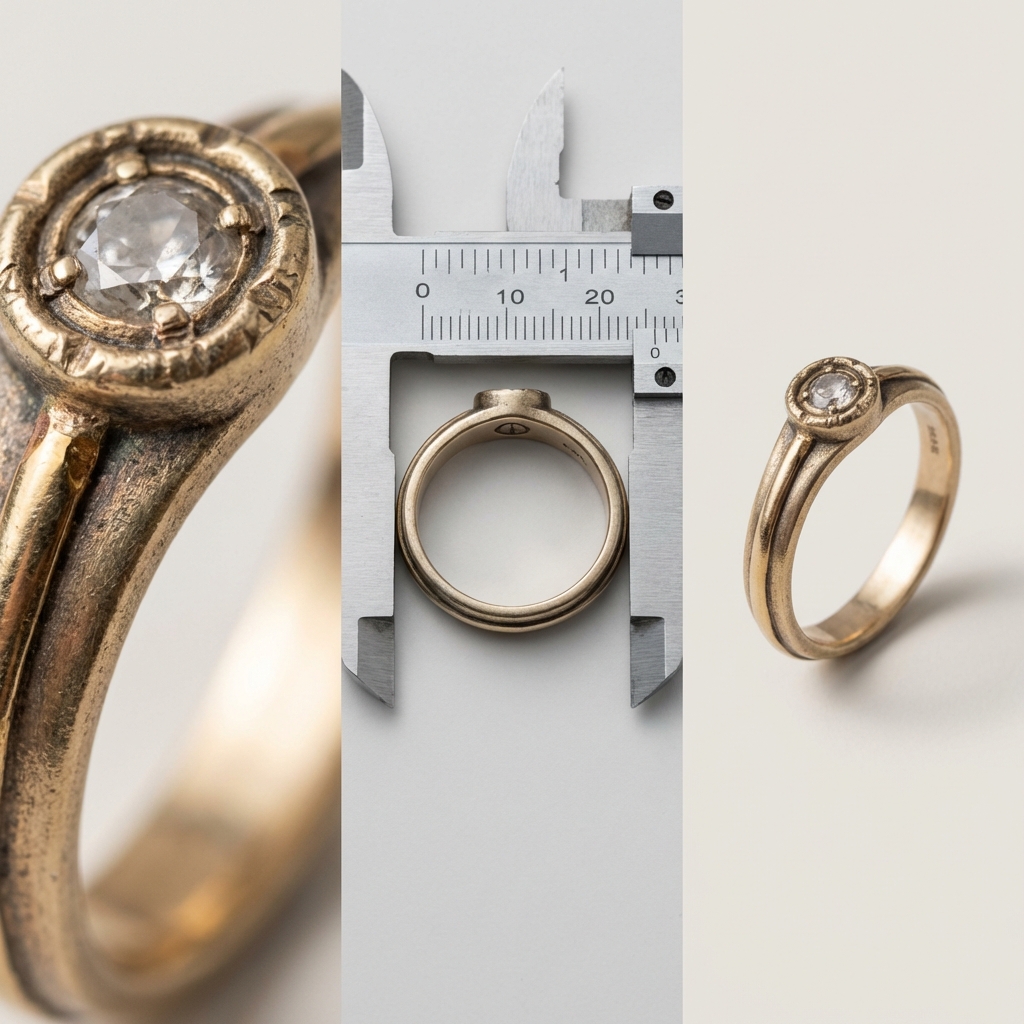
Scenario B: A buyer commissions a historically sympathetic modern band. After providing measurements and motif references from the antiquity, they work with a jeweller to create a noninvasive companion that can be worn together, keeping the original ring unmodified and documented.
Scenario C: A researcher seeks a documented pair. They prioritize archival records and ask sellers for collection history and any excavation context; only when two rings have matching provenance and compatible measurements do they treat the pieces as a possible pair.
How Aurora Antiqua frames and presents one-of-a-kind rings
Aurora Antiqua presents curated ancient rings spanning Roman, Greek, Byzantine, Islamic, Celtic, medieval, and post medieval periods with condition notes, restoration notes, and provenance and documentation references when available. Listings aim to explain the cultural context and physical condition so buyers can make informed choices without assuming pairing or investment returns.
The brand's role is an expert curation reference and trust layer: editorial descriptions explain motifs, likely dating, and workshop attribution where appropriate, while condition notes and restoration descriptions state what was stabilized, repaired, or left untouched. Use those notes as the primary evidence when deciding whether to buy one ring or pursue a match.
Conclusion: quick checklist and next steps
Top checks: request a full condition report, precise measurements, provenance and documentation, and any conservator assessments before buying a single Darry ring. These items form a concise provenance checklist and help you decide whether to keep the original, commission a modern match, or continue searching for a documented pair.
Next steps: ask the seller for restoration notes and high resolution photos, consult a conservator about sizing and alteration risks, and consider commissioning a modern companion band if you need a wearable match. Value the object for its one of a kind nature and prefer transparency over bold claims about pairing.
Not always; resizing can damage patina and structural integrity. Ask for a conservator assessment and restoration notes before any alteration.
Only clear, matching provenance or a find context supports pairing. Compare measurements, motifs, and documented collection history rather than assuming a match from appearance alone.
Request a condition report, precise measurements, restoration notes, and any provenance or collection history available.
More from Aurora Antiqua
References
- Archaeological materials, Icon, The Institute of Conservation (UK)
- ICOM-CC, International Council of Museums, Committee for Conservation
- E.C.C.O. Professional Guidelines (II): Code of Ethics, European Confederation of Conservator-Restorers'
- Leitfaden Standards Bewahren, Deutscher Museumsbund e.V
- Standards: Konservatorische Behandlung von archäologischen Funden (conservation of archaeological finds), Bundesdenkmalamt Österreich
- Auction Terminology, Christie's
- Ring, The Cleveland Museum of Art
- William Wytlesey's ring, Victoria and Albert Museum, London
- Pliny the Elder, The Natural History, BOOK XXXIII, Perseus Digital Library, Tufts University (edition Bostock)
- ICCROM