


Looking for the real thing? Browse our Medieval ring collection, each piece one of one, individually authenticated, with documented provenance. For the background, see the guide to buying ancient artifacts.
What people mean by an antique Knights Templar ring: definition and context
The phrase antique knights templar ring for sale commonly appears in market listings and can mean different things to different sellers and buyers. In some cases it describes an original medieval or crusader-period artifact; in others it is a later revival piece, a modern ceremonial ring, or simply a decorative object using Templar iconography. When a listing uses the word Templar, read that as a descriptive label that may indicate style, symbolism, or claimed historic association rather than an uncontested corporate origin.
Because the medieval order was legally suppressed in the early 14th century, many modern uses of the Templar name are revivalist or ceremonial and not direct continuations of the medieval corporate body, so listings will vary widely in accuracy and intent Encyclopaedia Britannica.
Follow @auroraantiqua for candid finds and provenance details
Download the concise checklist at the end of this article to help structure questions to sellers without pressure language or urgency.
In market practice, sellers and collectors use the Templar label in three common ways: as shorthand for a crusader-period or medieval dating claim, as a stylistic descriptor for motifs such as crosses and stars, or as a reference to later fraternal or Masonic uses of Templar imagery. Each use carries a different implication for provenance and verification; an object described as Templar should prompt specific documentary and physical checks before purchase.
For buyers searching for an antique knights templar ring for sale, this means setting expectations up front: be prepared to ask whether the item is presented as an original medieval ring, a documented later revival, or a modern ceremonial piece, and request the documentation that supports that classification.

Common uses of the Templar name in market listings
Listings described as Templar can be historically accurate, cautiously phrased, or misleading by omission; a seller might emphasise symbolism while offering limited provenance, or explicitly state a documented collection history. Look for named prior collections, sale catalog references, or photographic evidence tied to dated sources as signals that a claim is being supported. If those are missing, treat a medieval attribution as provisional and ask for further evidence.
How sellers and collectors use 'Templar' as a descriptive label
Collectors and sellers often use the phrase to indicate iconography rather than institution: crosses, eight-pointed stars, and certain seal forms may be described as Templar-like even when they lack secure dating. When a seller describes materials, workshop attributes, or dating, ask whether those statements are based on a specialist report, a catalog entry, or visual attribution alone.
Brief history: why there is no single continuous medieval Templar institution
The medieval Knights Templar were a distinct military and religious order in the medieval period, but their corporate structures were suppressed and legally dissolved in the early 14th century; 1312 is the commonly cited milestone for that suppression. This legal dissolution is the basis for the broader scholarly point that there is no single, legally continuous medieval institution that survives into the modern day Encyclopaedia Britannica.
Legal and administrative dissolution means modern claims of direct institutional continuity should be treated with caution. Where groups today use the Templar name, they typically represent revivalist, fraternal, or ceremonial organisations that draw on historical imagery and ritual rather than a lineal corporate descent from the medieval order.
Suppression of the medieval order
Medieval suppression involved legal processes, papal and royal actions, and the redistribution of assets; those historical events severed the corporate legal identity of the original order. For a buyer, that historical fact matters because it separates medieval provenance from later organisational claims: an object cannot, by default, inherit a continuous institutional title that was legally ended centuries earlier.
What 'dissolved corporate structure' means for continuity claims
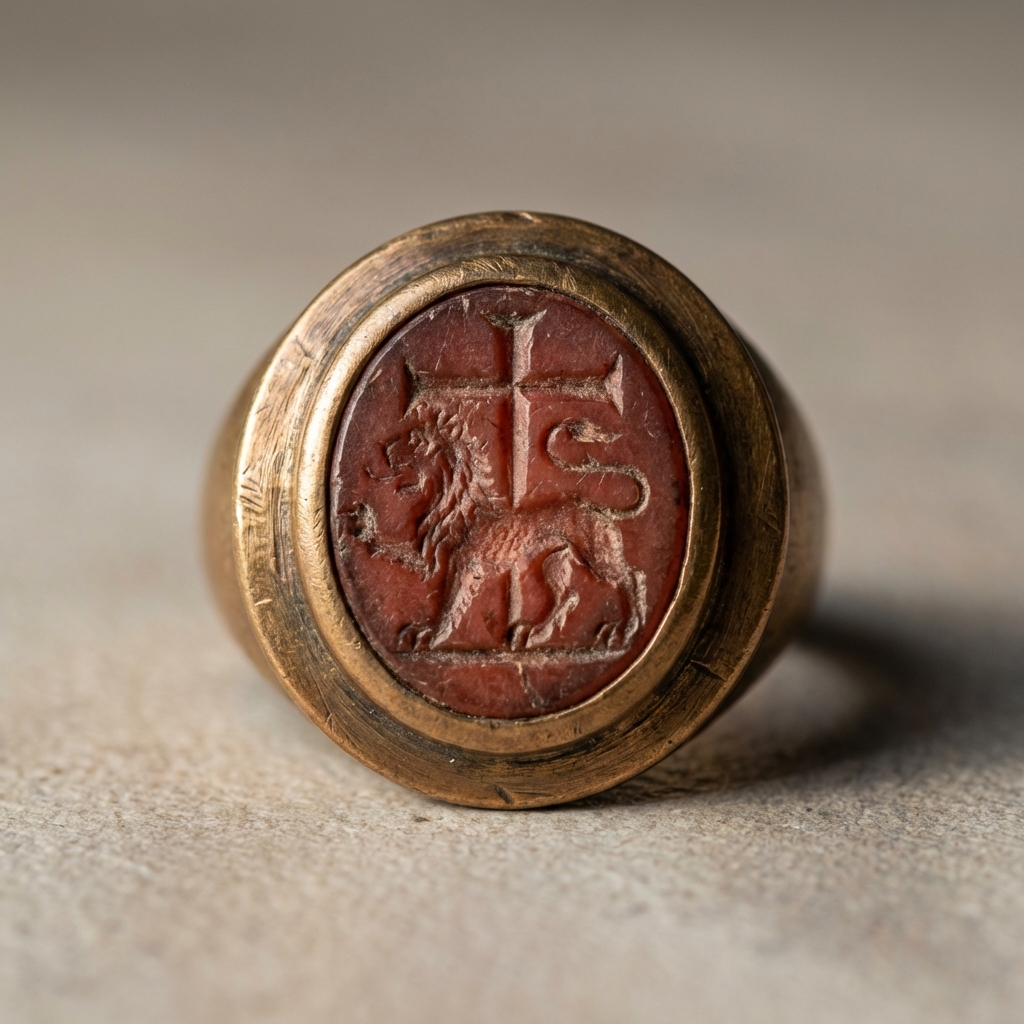
In practical terms, the dissolved corporate structure means modern organisations that call themselves Templar are separate social entities. Evaluating an object's age and origin therefore relies on material, comparative stylistic evidence, and documented ownership history rather than on any asserted organisational continuity.
Modern groups, Masonic degrees and Templar imagery: what buyers should know
Numerous contemporary organisations and groups use the Templar name or motifs in ceremonial, charitable, and fraternal contexts. These modern uses include self-styled revival orders and Masonic degrees that adopt Templar symbolism for ritual or heritage purposes, without an uncontested lineal descent from the medieval order OSMTH.
The Masonic Knights Templar degrees found in some Freemasonry systems are ritual and symbolic expressions that draw on chivalric imagery; they function within Masonic structures rather than claiming legal continuity with the medieval order United Grand Lodge of England.
There is no single, legally continuous medieval Knights Templar institution surviving today; contemporary organisations using the Templar name are revivalist, fraternal, or ceremonial groups and do not have uncontested institutional continuity with the medieval order.
For buyers this distinction matters: provenance linked to a modern fraternal owner tells you about recent custodianship but does not by itself establish medieval origin.
Types of contemporary organisations using the Templar name
Contemporary groups range from charitable societies that use the Templar name for identity and ritual to organisations that style themselves as orders; some public-facing groups provide transparent organisational histories, while others are informal associations. When a listing cites an organisational provenance, verify the documentation and ask whether the provenance references the object prior to the modern group's formation.
How Masonic Templar degrees differ from historical continuity
Masonic Templar degrees are typically conferred as part of additional chivalric ritual within Freemasonry and are not historical evidence for a medieval corporate link. If a seller points to Masonic ownership, treat that as a clear modern chain link and probe for any earlier, dated documentation that would support an older origin.
How specialists and auction houses assess an 'antique Knights Templar ring' for sale
Museums, auction houses, and reputable specialists use a standard dossier when evaluating ancient rings: named provenance or collection history, detailed condition notes, transparent restoration notes, cataloguing or sale references, and any certificates or independent reports. These elements form the backbone of due diligence and are routinely requested by serious buyers and curators About us, International Association of Dealers in Ancient Art.
Practitioners also advocate scientific or technical checks when visual assessment and provenance gaps leave dating uncertain. Common techniques include X-ray fluorescence for elemental analysis, metallurgical study for manufacturing traces, and gemological assessment when a gemstone is present; auction houses suggest independent reports where claims are contested Christie’s guide.
Provenance, condition and restoration notes
Request a written provenance chain that names prior collections, sale catalogue references with lot numbers, and dates. Condition notes should describe wear consistent with age, any stabilisation or repairs, and areas left unrestored; restoration notes must be candid about what was repaired and how, since restoration can alter visual attribution and structural integrity.
When scientific testing is recommended
Scientific analysis is most useful when provenance is incomplete, when stylistic dating is ambiguous, or when high value justifies expense. Tests such as XRF can show alloy composition consistent with expected medieval metallurgy, and metallurgical analysis can indicate manufacturing techniques; these assessments do not alone prove medieval origin but can support or challenge visual and documentary evidence.
A step-by-step buyer framework: how to evaluate a listing and decide whether to pursue a purchase
Step 1, provenance chain and documentation. Begin by asking the seller for a clear, written provenance that traces the object back to named prior owners or sale catalog references. Request dates, images from prior catalogues, and any letters or invoices that tie the piece to a dated collection. Reputable sellers will supply at least partial documentation and will be transparent about gaps or uncertainties Getty Provenance Index, J. Paul Getty Trust, Getty Research Institute, Los Angeles.
Step 2, physical examination and iconography. Ask for high-resolution images showing the bezel, hoop, shoulders, and any intaglio or motif details. Compare iconography to published examples of crusader-period rings and look for signs of period wear, tooling, and workshop traits; be aware that later reproductions may copy motifs while lacking depth of wear or correct manufacturing traces.

Step 3, condition, restoration and testing. Request explicit restoration notes and photos of joins, solder lines, or fills. If a seller claims medieval origin but cannot provide supporting documentation, ask whether independent testing has been done or whether they will allow a buyer-sourced specialist assessment. For higher-value items, an independent specialist report or laboratory analysis can be decisive in establishing material consistency with proposed dating Christie’s guide.
Step 4, legal and export considerations. Ask for any export licences, past customs paperwork, or documentation related to national controls. In many jurisdictions, lawful trade in antiquities requires evidence that export and ownership transfers complied with national law; absence of paperwork or a provenance gap that coincides with a period of possible illicit movement should be treated as a substantive red flag UNESCO 1970 Convention.
Step 1: provenance chain and documentation
Practical provenance checks you can request from a seller include named prior collections, sale catalogue references with lot numbers, dated photographs, or accession numbers from institutional records. If the seller refers to a prior auction, ask for the auction house and year so you can verify catalogue entries independently.
Step 2: iconography and stylistic clues
Iconography that may support a crusader-period attribution includes cross forms consistent with regional types, simple intaglio designs, and tooling traces consistent with medieval workshops. Conversely, machine tooling marks, modern soldering, or stylistic mismatches to known regional workshops are reasons for further scrutiny.
Legal and ethical filters: cultural-property rules and export/import considerations
International cultural-property guidance and museum provenance practice place documented provenance and due diligence at the centre of lawful and ethical collecting. The UNESCO 1970 Convention encourages states to prevent illicit import, export and transfer of ownership, and museum guidance emphasizes transparent provenance research as a legal and ethical requirement for dealing in antiquities UNESCO 1970 Convention.
For buyers, this means requesting any export licences or customs documentation that relate to the object's movement between countries, and checking whether national laws require specific paperwork for lawful export. Lack of export paperwork or large provenance gaps can signal legal or ethical issues that outweigh the aesthetic appeal of an object.
UNESCO and national export rules
National export rules vary and can affect whether a listed object may be lawfully traded across borders. If a seller cannot provide documentation that aligns with national requirements or with export controls applicable at the time of removal, consider pausing the transaction until independent legal clarity is obtained.
When to ask for export licences and provenance due diligence
If provenance ends with an anonymous purchase or an indeterminate period in the 20th century, request additional provenance research and, where appropriate, evidence of export licences or export declarations. Serious sellers will either hold such documentation or be open about its absence and the implications for cross-border sale.
Common mistakes, red flags and how to avoid scams when hunting an antique Knights Templar ring for sale
Typical red flags include unverifiable or vague provenance statements, price and rarity claims without documentation, inconsistent patina or wear that contradicts dating, and missing restoration notes. When these signs appear, ask targeted questions and request higher-resolution photos that show joins, solder lines, and inner band wear.
Another mistake buyers make is assuming organisational provenance equals medieval origin. Modern custodianship by a fraternity or Masonic body documents recent ownership but does not by itself prove a medieval date; treat organisational claims as one part of the chain that still needs older documentary or material support OSMTH.
Triage a ring listing for purchase readiness
Use this checklist to prioritise further checks
Simple verification prompts you can use when a seller is evasive include asking for the lot number and year of any claimed auction sale, requesting original catalog photos, and asking whether a third-party specialist has examined the piece. If responses are vague or delayed, treat that as a sign to escalate to independent advice.
Practical scenarios, sample questions to ask sellers and a concise checklist
Scenario 1, low-cost curiosity: for modestly priced rings bought for display, a buyer may accept limited provenance but should still request clear photos and a written condition note. Scenario 2, mid-range collector purchase: insist on named prior collections, sale references, and at least one expert opinion if dating is contested. Scenario 3, high-value acquisition: require a documented provenance chain, independent specialist report, and any available scientific testing before committing to purchase Christie’s guide.
Sample questions to copy and paste to a seller: Can you provide named prior owners or catalogue references? Are there dated images or invoices tied to prior sales? Have any scientific tests been performed and can you share the reports? Was any restoration carried out and are there photos of repairs? Can you supply export documentation for cross-border sales?
Compact checklist to request from any seller: condition photos of bezel and band, written restoration notes, named provenance or sale references, any laboratory reports, export paperwork if applicable, and a clear contact for follow-up. Use these documents to decide whether you need independent verification, a site visit, or laboratory testing before purchase.
Next steps: keep copies of all correspondence, save images and receipts, and consider an independent review if the item exceeds your comfort threshold. Careful documentation and a stepwise approach reduce the risk of purchasing an object with unclear legal or historical standing.

Look for a named provenance chain, consistent wear and tooling, clear restoration notes, and where necessary independent scientific reports; absent documentation, treat medieval attribution as provisional.
No, modern organisations using the Templar name are typically revivalist or ceremonial; their ownership documents recent custodianship but do not prove medieval origin.
Request written provenance with named prior owners or sale references, condition and restoration notes, any lab or specialist reports, and export documentation if the object crossed borders.
More from Aurora Antiqua
References
- About us, International Association of Dealers in Ancient Art
- Getty Provenance Index, J. Paul Getty Trust, Getty Research Institute, Los Angeles
- Research report: export licensing and provenance, GOV.UK, Department for Culture, Media and Sport (DCMS)
- Code of Ethics, International Council of Museums (ICOM), Paris
- Stolen Works of Art Database, INTERPOL
- 1995 Convention, UNIDROIT, International Institute for the Unification of Private Law, Rom
- Auction Terminology, Christie s, Auktionshaus
- The Past Polluted: A Pigovian Approach to the Black Market in Antiquities, International Journal of Cultural
- New Acquisitions of Archaeological Material and Works of Ancient Art, Association of Art Museum Directors (AAMD)
- Fighting the illicit trafficking of cultural property, UNESCO