


Looking for the real thing? Browse authenticated ancient rings, each piece one of one, individually authenticated, with documented provenance. For the background, see the guide to ancient jewelry.
Quick answer: which finger is a purity ring worn on? (and how this links to ancient christian ring practice)
Short answer, there is no single, universally required finger for a purity ring. Wearers most commonly choose the ring finger, the index finger, or the middle finger, and the choice often reflects whether the ring is intended as a private reminder, a denominational signal, or a public pledge. Modern purity-ring practices emerged in late twentieth century evangelical programs, which shaped how many people think about wearing these rings today True Love Waits history and mission. (See a practical jewelry guide on finger choice from Mountz Jewelers Mountz Jewelers.)
That modern usage sits alongside older ring traditions. Historically, wedding rings and devotional or signet rings followed different placement conventions, and those precedents help explain why some people place a pledge ring on the ring finger while others prefer a more visible finger.
See behind the scenes with @auroraantiqua on Instagram
Read the full guide below for a short decision checklist, practical tips on sizing and visibility, and notes on checking provenance and condition when a ring claims historical ties.
For readers who want the very brief practical takeaway: choose the ring that matches your intent. If the ring is mainly a private reminder, the ring finger is a common choice. If the goal is visible public affirmation, the index or middle finger is often used. If the item is an ancient christian ring sold as wearable history, prioritize the documented provenance and condition notes before you decide to wear it.
Definition and context: what a purity ring means and where the term ancient christian ring fits
When people say purity ring today they usually mean a symbolic ring associated with a pledge to abstain from sexual activity until marriage, a usage that became prominent in the United States in the early 1990s through organized campaigns and youth outreach programs True Love Waits history and mission. (See the Wikipedia overview for a concise summary Wikipedia.)
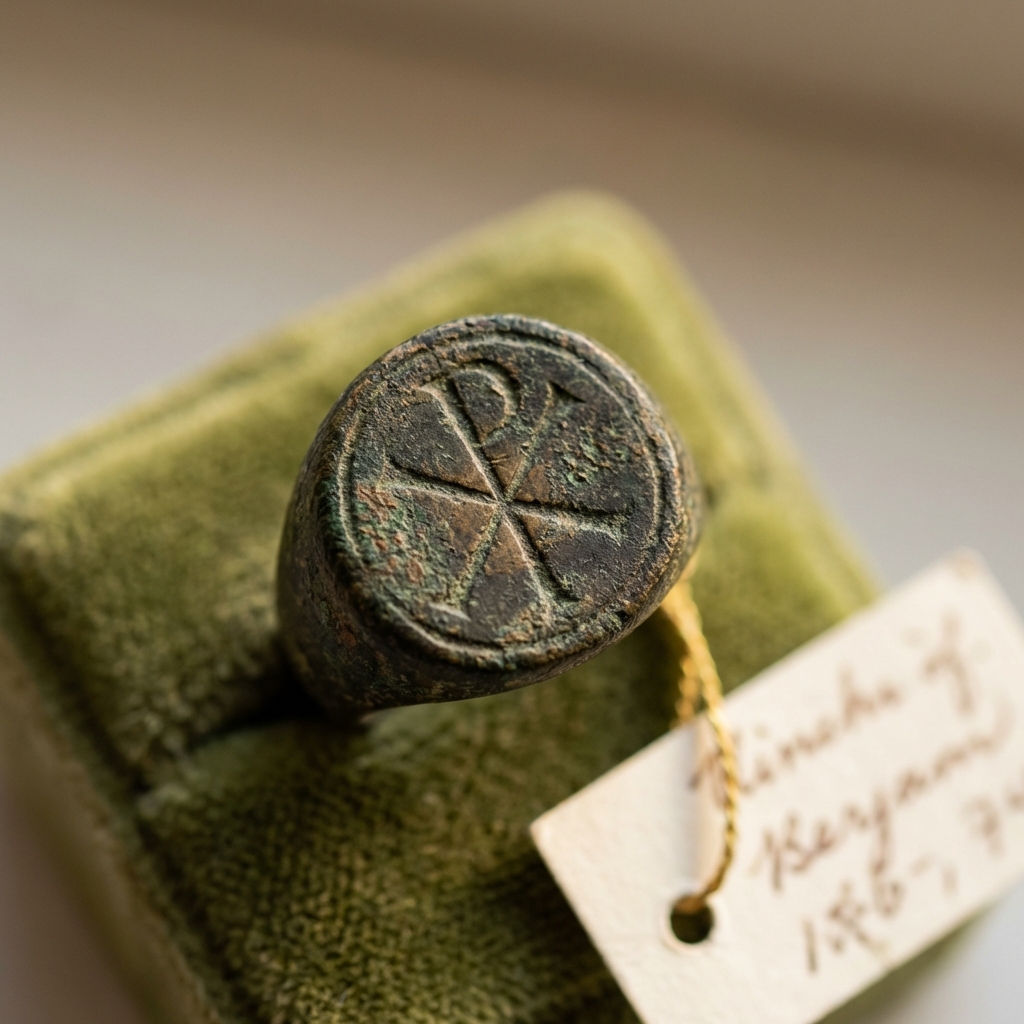
The modern purity ring is a late twentieth century cultural item and should not be conflated with rings made in earlier Christian eras. In collector and curatorial language, an ancient christian ring describes an artifact by period and style, not a pledge practice. Historical rings served many functions from devotional use to status display to sealing documents, and their meanings were shaped by era, region, and maker rather than by modern pledge campaigns Ring (jewellery) overview.
Because public attitudes toward premarital sex have changed in many Western societies since the 2000s, the social prominence of purity rings has diminished and diversified; what once read as a nearly uniform practice in some communities now appears in varied forms and with different meanings for different wearers Pew Research Center analysis.
For buyers and collectors the term ancient christian ring is best treated as a descriptor of origin, dating, or iconography. Sellers should include provenance, condition notes, and any restoration notes so that a potential wearer understands whether the object is suitable for long term wear as a modern pledge ring or better kept as a collector piece.
How finger placement developed: historical patterns and the modern evangelical standard
Across many historical periods, finger choice depended on function. Signet and devotional rings were frequently worn on the index or middle finger for visibility and practical ease when sealing documents or showing iconography, while wedding rings became associated with the fourth finger through longstanding cultural explanations such as the idea of a special vein connecting that finger to the heart, often called the vena amoris in popular accounts Ring (jewellery) overview.
These historical placements help explain contemporary options. A ring worn on the index or middle finger tends to be more visible and therefore suited to public signaling. A ring put on the fourth finger carries a private or relational connotation because of the wedding-ring tradition.
There is no single required finger; common choices are the ring finger for private symbolism, or the index or middle finger for a more visible public pledge, depending on denominational guidance and personal intent.
In modern evangelical contexts, organized campaigns and outreach groups helped normalize the use of a ring as a pledge item. Movements that began in the early 1990s taught young people to think of a ring as a physical reminder of a promise, and public ceremonies and outreach events further reinforced the practice About Silver Ring Thing. Personal accounts of wearing purity rings have also been discussed in mainstream coverage such as The Guardian personal story and reflection.

Denominational guidance and local church practice vary. Some communities explicitly recommend the ring finger as a preparatory symbol for future marriage, while others advise wearing the ring on a more visible finger so the pledge functions as a communal sign. In practice, many wearers choose based on comfort and intended visibility rather than strict rule books Purity culture analysis.
A simple decision framework: pick a finger that matches your intent
Step 1, clarify intention. Ask whether the ring is primarily a personal reminder, a denominational symbol, or a public pledge. This single question should guide placement: private reminder commonly suggests the ring finger; denominational signals or public pledges often favor the index or middle finger. You can also browse related items in the rings collection for examples of styles and fit.
Step 2, consider audience and visibility. If the aim is to make a public statement within a youth group or congregation, the index or middle finger increases visibility. If the aim is to keep the reminder more private and linked to later marital symbolism, the ring finger is a traditional choice tied to wedding conventions Ring (jewellery) overview.
Step 3, weigh comfort and fit. Rings intended for frequent wear should be sized for long term comfort, and anyone choosing to wear an older or antique ring should review condition notes and restoration details to understand how the piece will behave under daily use.
Step 4, consult community or program guidance. If the ring is part of a documented pledge program, look to the program's own recommendations but remember that practice varies by community and over time. Ultimately, personal meaning and safety should take precedence.
Practical considerations: visibility, comfort, and community norms
Visibility matters because it shapes how others read the ring. Index and middle finger placements are more noticeable, which supports public signaling goals, while the ring finger can be discreet and tie the ring mentally to marriage and commitment traditions. This difference in visibility is one reason different communities prefer different placements Purity culture analysis.
Comfort and safety are practical. Rings worn during manual work, sports, or childcare can catch or cause injury, so consider lightweight settings, the hoop width, and how often the ring will be removed. For antique or ancient pieces, check condition notes and restoration notes to see if the object has been stabilized for wear or is better suited to occasional use as a collector item.
Community norms influence what feels appropriate. Since public attitudes have grown more diverse on matters of premarital sex, what seems a standard practice in one church may be uncommon in another. Ask local leaders or peers if the ring will be read in the way you intend, especially if you hope for a public signal.

Typical mistakes and misunderstandings about purity rings
One common mistake is assuming there is a single correct finger. Practice varies widely by denomination, region, and personal choice, so presenting one finger as universally correct overlooks historical and cultural diversity Purity culture analysis.
Another misunderstanding is conflating modern pledge symbolism with the functions of ancient or medieval Christian rings. Historical rings served devotional, legal, and social purposes that differ from modern campaign-driven pledges; when a seller labels an object as an ancient christian ring, that phrase refers to period or iconography rather than to a continuity with modern purity movements Ring (jewellery) overview.
Finally, avoid assuming that wearing a ring will by itself produce behavioral outcomes. Reviews of abstinence-only programs show mixed and limited effects compared with comprehensive approaches, so it is sensible to see a ring as a symbol or personal aid rather than as a guaranteed behavioral tool Abstinence-only program review.
Practical examples and scenarios: common choices and why people pick them
Example 1, a private personal reminder. A wearer who wants the ring to prompt reflection and personal resolve may place it on the ring finger to link the symbol mentally to later marital commitments. That placement draws on wedding-ring associations and is often chosen when privacy and personal meaning are the priorities Ring (jewellery) overview.
Example 2, a public pledge at a youth event. Participants in outreach events or public pledge ceremonies frequently favor the index or middle finger for visibility. Such placement makes the pledge easier to notice by peers and leaders and matches the public, communal aims of many 1990s style outreach programs About Silver Ring Thing.
Example 3, a collector wearing an ancient christian ring as wearable history. A history-minded buyer who purchases an ancient christian ring for its iconography and age should prioritize provenance and condition notes. Some collectors wear pieces sparingly to preserve patina and avoid stress on unstable repairs, while others commission careful stabilizing conservation before regular wear.
match your intent to a finger choice
answer honestly for best fit
In the collector scenario, wearing an ancient christian ring without checking restoration notes can risk damaging a fragile hoop or bezel. Buyers should examine condition notes and ask sellers about any repairs done, and consider a professional sizing and stabilization before daily wear.
For youth or outreach settings, think about the social consequences of a visible pledge. If visibility is intended, discuss placement with a trusted leader to ensure the ring will be read in the way you intend within that community.
How sellers and collectors should present rings that connect to purity symbolism or ancient christian ring history
Sellers should clearly separate modern symbolic claims from historical description. If a listing references modern purity culture, cite the program origins rather than implying the artifact itself was used for that purpose. When possible, provide provenance, collection history, and transparent restoration notes so buyers can judge wearability and historical context Ring (jewellery) overview. Examples of related product groupings are available in the Medieval Crusader Rings collection Medieval Crusader Rings collection.
A responsible listing for an ancient christian ring will state the estimated dating and region, describe any repairs or stabilizations, and include high quality photographs of patina and hallmark or iconographic details. Keep brand mentions light and factual; for example, a curated seller can explain that they present items with documentation and condition notes without implying absolute authenticity or guarantees.
When modern purity symbolism is discussed, reference the programs that shaped the practice rather than suggesting ancient continuity. Readers benefit from knowing that the pledge-style use of rings is largely a late twentieth century phenomenon and that present-day meanings vary by community True Love Waits history and mission.
Conclusion: key takeaways on finger choice and the place of ancient christian ring context
There is no single correct finger for a purity ring. The ring finger, index finger, and middle finger are all used, and the right choice depends on whether the ring is meant as a private reminder, a denominational symbol, or a public pledge Purity culture analysis.
Also remember the distinction between modern pledge rings and historical objects labeled as ancient christian ring. If you are buying a historical piece, look closely at provenance and condition notes and be cautious about assuming it carries the same meaning as a contemporary purity ring Ring (jewellery) overview.
Practical next steps: clarify your intent, consult any denominational guidance you value, check sizing and condition, and ask sellers for documentation if the item claims historical origin. Those steps help align your choice of finger with both symbolic meaning and long term wearability. Visit the Aurora Antiqua homepage for navigation and collections Aurora Antiqua.
No. Practice varies; common choices are the ring finger, index finger, or middle finger depending on whether the ring is meant to be private, denominational, or a public pledge.
No. The term ancient christian ring describes period or iconography; modern purity pledges arose in the late twentieth century and are a distinct phenomenon.
Review provenance, condition notes, and restoration details, and consult a conservator or jeweler about sizing and stabilization before regular wear.
More from Aurora Antiqua
References
- Aulus Gellius, Attic Nights, Book X, LacusCurtius, Bill Thayer, University of Chicago (Loeb Classical Library edition)
- Pliny the Elder, The Natural History, BOOK XXXIII, Perseus Digital Library, Tufts University (edition Bostock)
- The Form of Solemnization of Matrimony, The Church of England
- Gimmel Ring, Victoria and Albert Museum, London
- Thumb Ring, The Cleveland Museum of Art
- Ring, The Cleveland Museum of Art
- William Wytlesey's ring, Victoria and Albert Museum, London
- Evaluation of a two rubber band technique for finger ring removal, PMC, Annals of the Royal College of Surgeons
- Purity ring, Wikipedia