


Looking for the real thing? Browse our full ring collection, each piece one of one, individually authenticated, with documented provenance. For the background, see the guide to ancient jewelry.
Quick answer: what a pinky ring can signify, and why ancient roman seal rings matter
A pinky ring on a woman often communicates personal style, a private emblem, or a deliberate reference to historical signet use rather than a single coded social meaning; in many cases it can be a wearable statement of identity or interest in heritage. This descriptive reading aligns with the way signet and intaglio rings functioned in the Roman world, where the object worked both as a practical seal and as a visible personal marker, and is useful background when someone chooses a historic or reproduction ring. Minerva listing, Aurora Antiqua
Follow behind the scenes on Instagram
For readers interested in documented pieces or fresh listings, following behind the scenes collections and condition notes can make it easier to decide which ancient pieces suit personal taste and collecting goals.
Because modern wearers may mean different things by a pinky ring, bringing historical context into the conversation helps avoid simple stereotypes: some people wear a pinky ring as a fashion choice, others as a private talisman, and others as a conscious echo of signet traditions. The rest of this article uses examples from curated listings to explain motifs, materials, and the practical checks collectors should use when evaluating ancient pieces.
What are ancient roman seal rings? Definition, context, and how they were used
Ancient roman seal rings, often described as signet or intaglio rings, combined a functional role and a social one: they could be used to impress a design into wax or soft clay, and they also served as a durable personal emblem worn on the hand. Surviving examples and curated catalogue entries make this dual role clear and help explain why a modern pinky ring may reference that past. Auriga listing, Aurora Antiqua
In definition: an intaglio is a carved or engraved design set into the bezel so the image reads when pressed into wax, while a signet ring is the broader category often carrying such an intaglio. Typical materials in surviving Roman examples include gold, silver, and bronze, and many listings draw attention to bezel form, hoop profile, and patina that is consistent with age. When sellers provide condition notes and restoration statements, those details are the practical evidence researchers and collectors use to assess an object. Numerius listing, Aurora Antiqua For broader background on engraved gems and gems used as seals, see the Getty Museum resource on ancient gems and finger rings: Getty Museum publication.
Roman signet rings appear across a wide chronological span and in many social contexts, from personal seals used for letters and legal acts to ornaments that signalled affiliation or protection. Catalogued specimens in curated listings serve as primary reference points for what scholars and collectors expect to see: material palette, carving style, and wear that matches the object history (see the Ancient Roman Rings collection). These characteristics are the foundation for reading meaning into a ring worn today.
Materials, motifs and symbolism in ancient roman seal rings
Carved intaglios on Roman rings show a stable set of motifs: deities such as Diana and Minerva, animals, mythological scenes, and occasional humorous or emblematic vignettes. These images could function as personal identifiers, protective symbols, or simply preferred iconography chosen by the wearer. Looking at motifs helps explain why a modern pinky ring with a huntress or warrior motif can read as a reference to protective imagery or personal affiliation. Diana listing, Aurora Antiqua A concise overview of engraved classical gems is also available from Christie's: Christie's guide.

Material choice and gem types, such as carnelian or agate, matter for both appearance and attribution: harder stones take finer intaglio carving, and metal type influences hoop form and likely social use. Careful listings describe bezel depth, carving technique, and visible tool marks; these stylistic cues are part of how specialists tentatively assign a ring to a period or workshop. Minerva listing, Aurora Antiqua
When you view photographs, focus on bezel detail and the carving depth of the intaglio: a well-cut figure will show clear lines and controlled negative space, which are the features that convey iconography when impressed. Listings that include condition notes and mention restoration or stabilization give a fuller picture of what part of the object is original and what was conserved for display and wear.
Who wore Roman signet and intaglio rings: gender, identity, and social context
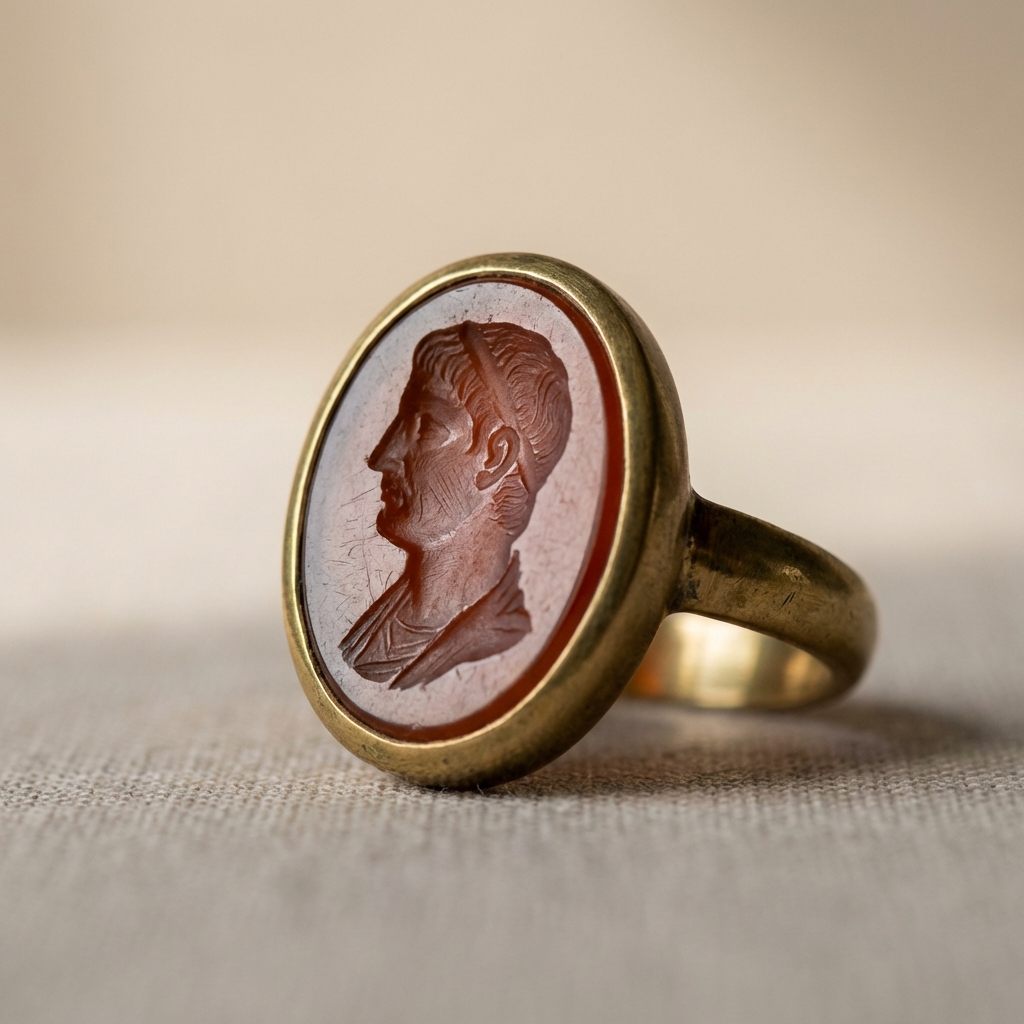
Surviving evidence indicates that both men and women in the Roman world wore signet and intaglio rings, with motif and style choices reflecting personal preference, practical need, or social standing rather than a strict gender code. The archaeological record and curated catalogues show examples across sexes and social roles, so reading a ring as exclusively masculine or feminine requires caution. Diana listing, Aurora Antiqua
Interpretation is limited by the survivorship of objects and by the specific contexts in which rings were recovered or recorded. Some motifs may cluster with certain owners in documentary sources, but many designs, such as deities or animals, have broad appeal and cannot be mapped directly onto a single social identity without supporting context such as inscriptions or securely dated find records. This is why provenance and collection history matter when we try to understand who originally wore a ring.
How a modern pinky ring relates to the signet tradition
Today a pinky ring on a woman most often signals personal style, a nod to historical signet tradition, or an interest in the symbolic meaning of the motif rather than a fixed social code. Choosing an ancient or historically inspired signet intentionally links a modern wearer to a long tradition of personal emblems, and the visual language of deity, animal, or scene can be read as heritage or personal symbolism. Minerva listing, Aurora Antiqua
Ask the seller for finger circumference and internal diameter before purchase
Request measurements taken with a soft tape or by an existing ring laid flat
Motif and material change how a pinky ring reads visually: a bold metal band with a carved intaglio reads differently from a delicate bezel with a small gemstone. For collectors this means being deliberate about how a ring will be worn and how its iconography will interact with other jewelry choices. When buying an ancient piece, consider how condition notes and bezel size affect everyday wearability and comfort.
Wearing an authentic ancient ring also requires care because patina and original surface textures are part of the object's history; for many wearers the appeal is wearable history rather than contemporary fashion, and that informs how they handle cleaning, polishing, and repair decisions. For practical guidance about wearing original ancient pieces see the post on wearing ancient rings: can you wear ancient rings.
How to evaluate authenticity, condition, and provenance of ancient roman seal rings
When assessing a Roman seal ring online, focus on a combination of physical features and documentary evidence: metal type, bezel and intaglio carving style, patina consistent with age, and any collection history or provenance notes provided. These criteria are practical and routinely cited in curated listings as the basis for attribution. Celestia listing, Aurora Antiqua For related examples within the shop, see the rings collection for reference: Rings collection.
Condition notes should state whether the piece was stabilized, repaired, or left untouched, and clear restoration notes help distinguish acceptable conservation from invasive alteration. Many reputable listings include specific language about what was done during conservation and why, which is the level of transparency collectors should expect before purchase. Numerius listing, Aurora Antiqua
Independent verification, such as specialist reports or readable collection history, adds confidence but may not always be available. Where third party testing or secure provenance is absent, treat the attribution as provisional and weigh the listing information accordingly. Requesting additional photos, close-ups of the bezel, and any paperwork that accompanies an object are reasonable steps for a cautious buyer.
Buying checklist and basic preservation tips for collectors
Pre-purchase checklist
- Clear, high-resolution photos showing bezel from multiple angles and the inside of the hoop
- Measurements: internal diameter or finger circumference and weight
- Readable condition notes and restoration statements
- Collection history or provenance summary where available
- Option to ask for additional images under magnification or a short video showing the patina and signing details
Short-term care and storage guidance
- Wear sparingly to protect fragile surfaces and patina
- Store flat in acid-free material away from humid conditions
- Avoid amateur polishing; consult a conservator for any surface treatment
Most often it indicates personal style, private symbolism, or a deliberate nod to historical signet traditions rather than a fixed social code.
When requesting additional documentation, ask specific questions: when was the item acquired, what does any prior collection label say, and are there written restoration notes. Clear, targeted queries help sellers provide the most useful information and reduce ambiguity about attribution and condition.
Common mistakes, red flags, and how to avoid being misled
Red flags include vague or absent provenance, inconsistent or artificially uniform patina across different parts of the ring, and catalog descriptions that assert precise dating without supporting documentation. Sellers who cannot or will not provide close photographs of the bezel and the inner hoop should prompt further caution. Celestia listing, Aurora Antiqua
Under magnification, modern tool marks or resurfacing techniques can indicate recent alteration; when restoration is disclosed, it should be accompanied by a clear description of methods used and materials applied. Acceptable restoration is transparent restoration, not concealed modification. If a listing glosses over repairs or uses ambiguous language, ask for detail or walk away.
Another common mistake is relying on surface appearance alone; patina that looks consistent from a distance can hide localized cleaning or infilling. Prioritise documentation and condition notes over marketing language, and when in doubt request expert input or a condition report from a conservator.
Practical examples from curated listings
The ‘‘Auriga" intaglio shows how motif and material combine to create meaning: a carved animal scene on a silver bezel with visible wear provides both iconographic and material cues that help place the piece within the Roman repertoire, and the listing’s condition notes explain which areas were stabilised. Auriga listing, Aurora Antiqua For more on the history of intaglios see this overview: Berganza.
The ‘‘Minerva" gold example illustrates how gemstone choice and fine carving can point toward workshop skill and intended display. The listing describes bezel carving and the carnelian material, which are the exact details collectors use when evaluating how a motif functions as both an impression and a personal emblem. Minerva listing, Aurora Antiqua
Comparing Roman and medieval examples is important because stylistic vocabulary changes over time: a medieval Gothic bezel and hoop profile can look superficially similar to a later Roman copy, so check period notes and listing language carefully to avoid conflating eras. The Aurelia listing highlights features typical of the later medieval period for comparison. Aurelia listing, Aurora Antiqua
Conclusion: reading a pinky ring as personal expression and curated history
Most often, a woman wearing a pinky ring signals personal style, a nod to signet tradition, or private symbolism rather than a single universal meaning, and connecting that choice to the documented practice of Roman signet rings provides useful perspective. When the ring is an ancient piece, its story is best approached through condition notes, provenance statements, and careful photographic study. Minerva listing, Aurora Antiqua
For collectors, prioritise clear documentation and conservative care: readable provenance, transparent restoration notes, and willingness from the seller to answer targeted questions are the most reliable practical criteria when assessing ancient roman seal rings. Approached this way, a pinky ring becomes a piece of wearable history that carries both personal meaning and a connection to a long material tradition.
Yes. Surviving examples and catalogued listings show signet and intaglio rings worn by both sexes, though motif and context help refine interpretation.
Request written restoration notes that state what was stabilised or repaired, the methods used, and any materials added, plus magnified photos of repaired areas.
Store flat in acid free material, avoid humidity, wear sparingly, and consult a conservator before any cleaning or repair.
More from Aurora Antiqua
References
- Catalogue of the Engraved Gems and Finger-Rings in the Ashmolean Museum, II: Roman, BAR Publishing, via Fulcrum
- Philip Kiernan and Klaus-Peter Henz, Rings from the Forbidden Forest, Cambridge University Press
- L'anneau sigillaire d'Arégonde, femme de Clotaire Ier, découvert à Saint-Denis, Bulletin de la Societe
- Ring, The Cleveland Museum of Art
- William Wytlesey's ring, Victoria and Albert Museum, London
- Leitfaden Standards Bewahren, Deutscher Museumsbund e.V
- About us, International Association of Dealers in Ancient Art
- Research report: export licensing and provenance, GOV.UK, Department for Culture, Media and Sport (DCMS)
- Ancient Gems and Finger Rings: Catalogue of the Collections, The Getty