


Looking for the real thing? Browse our full ring collection, each piece one of one, individually authenticated, with documented provenance. For the background, see the guide to ancient jewelry.
What an antique widows ring is and why it matters
The term antique widows ring appears across museum and reference literature as a form of mourning jewellery that can function as both a commemorative object and a personal emblem of continued attachment or remembrance. This framing follows established reference work that treats such rings as part of wider mourning practice rather than as a single universal symbol Encyclopaedia Britannica on mourning jewelry
In collecting terms, these pieces are best approached as artefacts with social meaning and material evidence. For buyers and relatives alike, the value of an antique widows ring depends less on a single motif and more on clear provenance, condition notes and any available documentation of its original use V&A notes on mourning jewellery

Readers should understand that the phrase widow's ring or mourning ring covers a range of objects, from specially inscribed memorial rings to ordinary wedding bands kept after bereavement. The distinction between an antique widows ring and a reproduction is important for interpretation and collecting, and descriptions should make clear whether a piece is an antiquity or a later copy.
Victorian mourning practices and the origin of the widows' ring
The Victorian era is the most clearly documented source for modern expectations about widow's rings because it formalised mourning jewellery practices such as hairwork, black enamel and standardised mourning periods; these practices shaped how later generations understood memorial rings V&A notes on mourning jewellery and a recent thesis discusses Victorian mourning hair jewellery in technical detail Victorian mourning hair jewellery thesis
Victorian memorial rings were often inscribed, set with hair or black enamel, and worn for specified periods as part of social custom rather than as private idiosyncrasy. Contemporary museum and editorial accounts emphasise these conventions without implying uniformity across all regions or social classes Smithsonian Magazine on Victorian mourning jewellery and an industry overview explains some of the period motifs GIA: Antique Victorian mourning jewelry
Symbols and materials: reading an antique widows ring
Common motifs on mourning jewellery include locks of hair set under glass, urns, clasped hands, and fields of dark enamel; each motif tended to signal a type of remembrance or relationship, for example clasped hands for a farewell or urns for memorialisation V&A notes on mourning jewellery
See behind-the-scenes documentation and curator notes at @auroraantiqua
For practical guidance, consult the buyer's checklist later in this article and contact the curator listed in a sales description with any provenance questions; treat the ring as a personal object and ask about condition and documentation before purchase.
Materials and technique are also informative: hairwork inserts, sealed glass compartments, and black enamel are physical signs that a ring was intended as memorial jewellery, while certain gemstones or engraving styles can suggest period or workshop origin. However, iconography and materials alone do not confirm intent without supporting provenance or inscription.
When you see a patinated bezel or an intaglio with wear consistent with age, these features can indicate long use rather than recent manufacture, but precise dating requires comparison with documented examples and specialist input British Museum blog on memorial rings
Dating an antique widows ring: signs and limits
Dating relies on a combination of style, materials and any inscriptions, but each of these cues has limits; for example, Victorian motifs were sometimes copied later, and simple shapes can persist across periods, so specialists recommend cautious attribution based on comparisons with documented examples British Museum blog on memorial rings
Physical features that can help with a provisional dating include the form of inscriptions, the technique used for hairwork, bezel construction and the nature of any decorative enamel. For confident workshop attribution or precise dating, seek museum comparisons or third-party evaluation rather than relying on motif alone.
Cultural and regional variation: why context matters
Not all traditions treated mourning jewellery the same way: some regions developed prescribed mourning durations and specific memorial objects, while others left the decision to individuals and families, which means contextual information is essential to interpretation Pitt Rivers Museum on English mourning jewellery
Wearing a partner’s wedding ring after bereavement often expresses ongoing attachment, memory or identity; meanings vary by individual and culture, so interpretation should rely on context and evidence rather than assumption.
Because practices vary, a ring that looks like a Victorian mourning piece in one country might have been used differently in another. Asking about regional origin, religious or family customs, and any accompanying documentation will often clarify whether a piece was presented as formal mourning jewellery or kept as a private token.
Modern reuse further complicates readings: some rings described in listings as widow's rings may be personal items worn by a surviving partner for memory rather than items originally made as memorial jewellery, so context and documentation matter for collectors and scholars alike Encyclopaedia Britannica on mourning jewelry
Emotional and social meanings of continuing to wear a partner’s ring
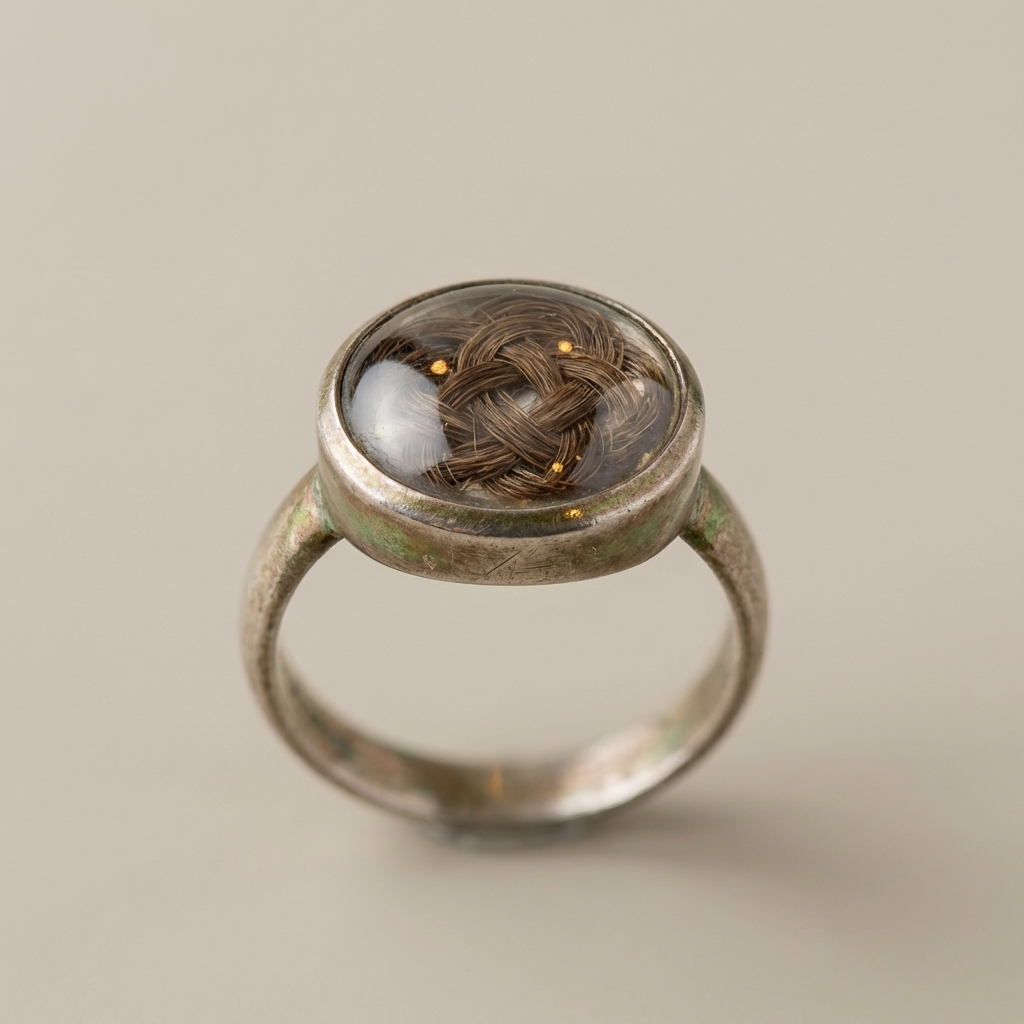
Wearing a partner’s wedding ring after bereavement often functions as an ongoing expression of attachment, memory or identity rather than a single fixed meaning; museum and reference sources describe this as a common pattern across many settings Encyclopaedia Britannica on mourning jewelry
Motivations can include personal memory, religious practice, social signalling or a deliberate step in bereavement that affects public presentation and decisions about remarriage. Because motives vary, it is respectful to avoid assumptions and to ask sensitively if discussing another person’s practice The Conversation on continuing to wear a partner's ring
How collectors should evaluate an antique widows ring before buying
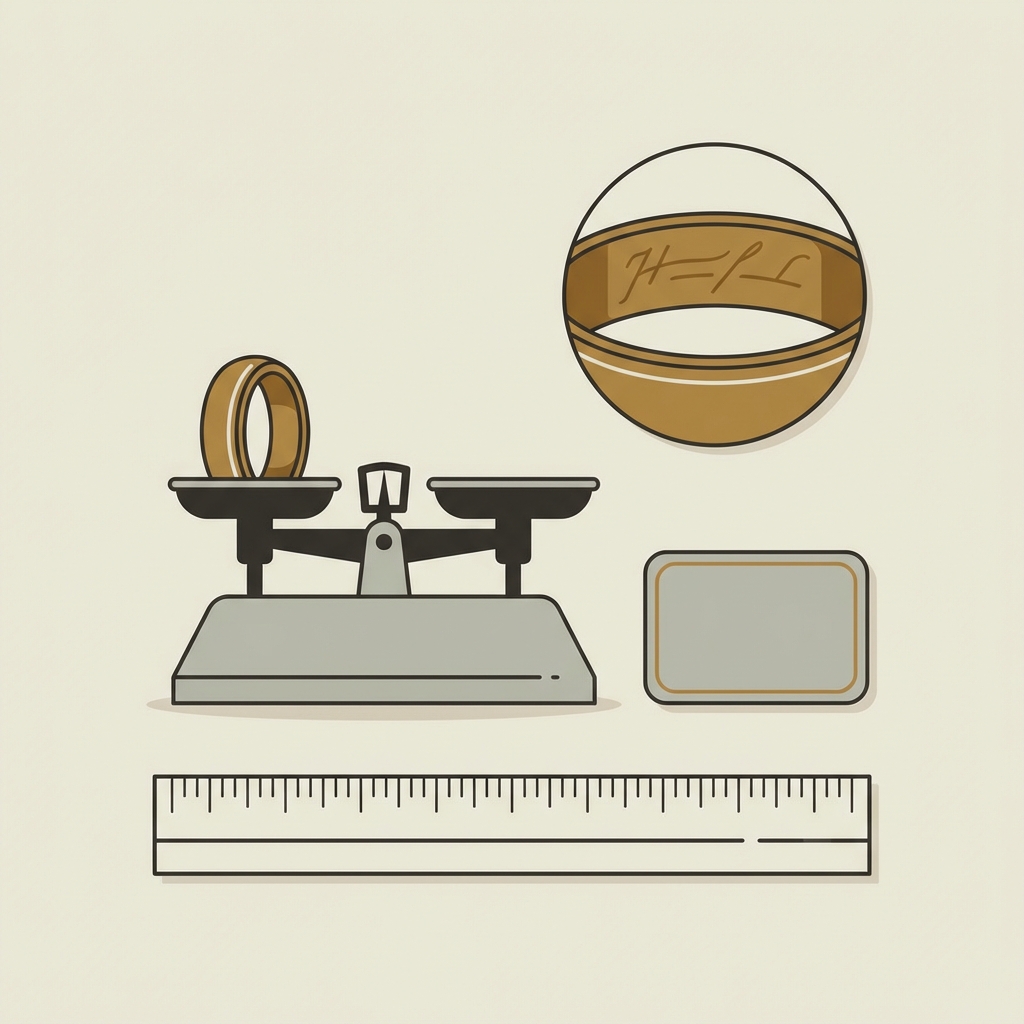
Buyers should request high-quality photos, measurements, clear close-ups of joins and repairs, any inscriptions, and all provenance or documentation the seller can provide; these items are the foundation of a responsible evaluation and a decent listing should present them plainly V&A notes on mourning jewellery and it can help to compare with other items in the store's rings collection.
Ask the seller for explicit restoration and condition notes. Typical stabilisations such as pinning a cracked bezel or re-adhering a loose hairwork panel should be described rather than concealed, because undocumented repairs complicate both dating and cultural interpretation.
A concise inspection checklist for an initial evaluation
Use photos to prioritise specialist queries
When in doubt, seek third-party assessment or a curator's view. A credible provenance or a documented collection history greatly improves the interpretive value of a mourning ring and reduces the risk of misattribution British Museum blog on memorial rings
Condition, restoration and conservation notes buyers should expect
Common condition signs on antique mourning rings include patina, wear consistent with age, small deformities in the hoop and repaired mounts; these are typical for antiquities and should not automatically disqualify a piece when clearly disclosed V&A notes on mourning jewellery
Conservation steps such as stabilisation, re-seating a bezel or consolidating fragile hairwork are acceptable when described in restoration notes. Buyers should be wary of listings that omit restoration history because undocumented interventions can alter how the object should be interpreted or conserved.
Sellers should provide provenance elements such as collection history, prior ownership notes and any verification letters; these records help situate a ring historically and ethically and are central to responsible curation V&A notes on mourning jewellery
Provenance, documentation and ethical sourcing for mourning jewellery
Where provenance is incomplete, transparent language about what is unknown is preferable to overstated claims. Clear documentation enables scholarly comparisons and helps buyers make ethically informed decisions rather than relying on assumption or marketing language British Museum blog on memorial rings
Typical errors and assumptions when interpreting widows' rings
A common mistake is over-reading iconography: a dark enamel field or a clasped-hands motif may suggest mourning but does not prove original intent without inscriptions or provenance to support that reading Encyclopaedia Britannica on mourning jewelry
Another frequent error is accepting vague provenance statements without documentary support. When provenance is thin or absent, treat dating and function as provisional and seek comparison with documented museum examples rather than making firm claims.
Practical examples and communication: reading a listing and asking sensitively
Read listings line-by-line: check that photos include a ring in hand for scale, close-ups of the bezel and inside the hoop for inscriptions, and any attached documents that show collection history. If an inscription is mentioned but not shown, ask for a clear photo before forming an opinion V&A notes on mourning jewellery
Suggested respectful questions to ask sellers or relatives include: Can you share any known collection history? Are there close-up photos of the inscription or hairwork? Has the ring undergone any restoration? Framing questions this way focuses on evidence rather than motive and keeps the conversation considerate The Conversation on sensitive questions and see the site's Q&A page for additional advice.
Short case studies: anonymised examples from museum and reference sources
A museum-documented Victorian mourning ring with a hairwork compartment, an inscribed date and a clear collection history illustrates how inscription and provenance together support an interpretation as a memorial piece. Where such documentation exists, the object's role as a mourning ring is much easier to demonstrate V&A notes on mourning jewellery and collectors can compare examples such as a commemorative ring listing commemorative ring listing.
A modern reuse example might describe a contemporary wearer who continues to wear a partner’s wedding band as an expression of ongoing attachment rather than because the ring was created as memorial jewellery. Such cases show the difference between original function and later personal meaning Encyclopaedia Britannica on mourning jewelry
Conclusion: respectful interpretation and a buyer's checklist
Checklist for a careful purchase: request high-quality photos and measurements, close-ups of inscriptions and bezel interiors, explicit restoration and condition notes, and any provenance documentation; when in doubt, seek specialist input or comparison with museum examples V&A notes on mourning jewellery
Finally, treat wearing a partner’s ring as a personal act that can mean many things. Respectful interpretation combines evidence-based research with sensitivity to individual practice and regional history Encyclopaedia Britannica on mourning jewelry
Look for inscriptions, hairwork inserts, black enamel and clear provenance, and request close-up photos and restoration notes; if documentation is missing, treat the attribution as provisional.
No. Continuing to wear a partner's ring can indicate memory, religious practice, identity or social signalling, and motives are personal; ask sensitively rather than assuming intent.
Collection history, prior ownership notes and any verification letters are most useful, together with clear photos, measurements and explicit restoration or condition notes.
More from Aurora Antiqua
References
- Ring, Victoria and Albert Museum, London
- Posy ring, London Museum (formerly Museum of London)
- Gimmel Ring, Victoria and Albert Museum, London
- The Form of Solemnization of Matrimony, The Church of England
- Publication 561 (12/2025), Determining the Value of Donated Property, Internal Revenue Service (IRS), USA
- About us, International Association of Dealers in Ancient Art
- ICOM-CC, International Council of Museums, Committee for Conservation
- Leitfaden Standards Bewahren, Deutscher Museumsbund e.V
- It's Not Without Caws That Crows Desecrate Their Dead, Smithsonian Magazine
- English Mourning Jewellery, england.prm.ox.ac.uk