


Looking for the real thing? Browse authenticated ancient artifacts, each piece one of one, individually authenticated, with documented provenance. For the background, see the guide to ancient jewelry.
What is the ankh and why an ankh ring matters
The term ankh refers to a distinctive ancient Egyptian hieroglyph most commonly translated as life or living, and it occurs repeatedly in images with gods and in funerary contexts where ideas about existence and the afterlife are expressed; when that sign is made into wearable form, as in an ankh ring, the symbol moves from text and image into everyday material culture, carrying both literal and layered meanings for different audiences Encyclopaedia Britannica.
Seeing an ankh in a ring connects the glyphs studied by Egyptology with the personal scale of jewellery and amulets. Rings and other portable objects made or decorated with the ankh served tangible functions in the ancient world and invite modern wearers to negotiate historic meanings alongside new ones.
Ankh in ancient material culture: amulets and jewellery
Museum collections and object records document the ankh as both a written sign and a physical amulet on jewellery and small portable items, showing continuity between iconography and wearable practice in pharaonic contexts British Museum collection.
See provenance and restoration in action on Instagram
The best place to start when assessing an ancient ankh on a listing is documentation: look for collection history, condition notes, and clear photographs that show patina and points of repair, and use the practical checklist later in this article when comparing candidates.
Examples in institutional collections include metal and stone ankhs used as pendants, inlays on rings and plaques, and carved amulets; these objects often survive with wear patterns and surface changes that reflect long use.
In museums and published catalogues, ankhs appear on objects made from gold, bronze, faience, stone, and composite materials; these material choices affected how the symbol was worn and preserved over centuries.
How the ankh functioned as a symbol of life in ancient Egypt
The core ancient meaning of the ankh as life or living is attested across encyclopedic and museum sources, and this semantic field often links the sign with breath, vitality, and the sustaining powers attributed to gods in iconography The Metropolitan Museum of Art: Heilbrunn Timeline.
In images, deities are frequently shown offering the ankh to pharaohs or holding it alongside other signs associated with sustenance and cosmic order; such pairings place the ankh within a broader set of life-related concepts rather than as an isolated motif.
Because the ankh appears both in inscriptions and in devotional or funerary scenes, its role is primarily iconographic and textual in the ancient evidence, which means modern symbolic readings need to be distinguished from what the sources actually record.
Three ways people read an ankh ring today
Contemporary readers tend to use three broad registers to interpret an ankh ring: historical or antiquarian interest, spiritual or feminist reinterpretation, and aesthetic or fashion uses based on style and subcultural signaling The Conversation.
Each register draws different cues: a collector looks for provenance and documentation, a spiritual wearer layers modern meanings like life or fertility onto the symbol, and a fashion wearer foregrounds form and visual impact.
When a woman wears an ankh the meaning depends on context: it can indicate historical interest, spiritual or feminist interpretation, or a fashion choice; assessing provenance and context helps clarify intent.
These readings are not mutually exclusive; the same object can carry heritage value, personal meaning, and stylistic appeal simultaneously, depending on wearer intent and audience interpretation.
When a woman wears an ankh: common signals and interpretations

When a woman chooses an ankh ring in public, viewers may read it through the immediately visible cues: accompanying jewellery, clothing, and stated identity all shape reception. Aurora Antiqua serves as a curator and reference layer for buyers who want context and documentation when considering wearable antiquities.
Common signals include an affinity for ancient imagery, an expressed spiritual identity, an aesthetic choice in line with a subculture, or a scholarly interest in material culture. Context and any shared statements from the wearer will usually resolve ambiguity.
It is important to remember that modern associative readings, such as linking the ankh to fertility or female anatomy, are interpretive layers added in contemporary commentary and do not replace the historical textual record World History Encyclopedia.
Separating ancient artifacts from modern reproductions
Buyers should treat provenance, condition, and documentation as primary indicators when determining whether an ankh ring is a genuine antiquity or a modern reproduction; reputable institutions and sellers list collection history, prior ownership, and any verification notes when available Encyclopaedia Britannica.
The physical condition of an object gives additional clues: original patina, consistent wear patterns, and appropriate signs of conservation are often present on genuine ancient pieces while modern copies may show artificially induced aging or perfectly new surfaces.
For practical comparison, photographically documented provenance and independent expert reports offer the most reliable way to assess claims; without those materials, stylistic similarity alone is insufficient evidence.
What to look for: provenance, condition notes, and restoration
Provenance language varies, but useful items include documented collection history, references to prior catalogues or exhibitions, and written verification from recognized scholars or institutions British Museum collection.
Practical provenance checklist for buyers
Use with listing photos
Condition notes should describe structural integrity, areas of loss, and any restoration or stabilization work; watch for language that clearly states what was repaired and what was left untouched, which helps you understand the object's displayability and risks of further intervention.
When in doubt, ask sellers for high-resolution images of joins, wear points, and the interior of rings, and request any lab or analytical reports that accompany the listing.
Questions to ask a seller before buying an ankh ring
To evaluate a listing, ask whether the item has documented collection history and whether the seller can provide prior ownership records or catalogue references that place the object in a known context.
Request detailed condition information: measurements, weight, photographs showing both sides and close-ups of joins or repairs, and a clear statement of any restoration or conservation work performed Encyclopaedia Britannica.
Other practical questions include whether independent testing exists, whether the seller permits third-party inspection, and whether the listing allows publication of images for external comparison with museum records.
Common misunderstandings and pitfalls
A frequent error is to treat modern interpretive narratives, such as readings that associate the ankh with uterus-like forms and fertility, as if they were direct ancient claims; such interpretations are modern associative readings and should be presented as interpretive rather than documentary World History Encyclopedia.
Another common pitfall is overvaluing visual similarity to known museum pieces without supporting documentation; stylistic resemblance alone does not confirm provenance or age.
Buyers also sometimes misread restoration as original manufacture. Clear restoration notes help distinguish later interventions from original surfaces and should be part of any responsible listing.
Practical examples and scenarios: reading intent across contexts
Collector scenario: A collector evaluates an ankh ring by prioritizing a documented collection history, explicit restoration notes, and high-resolution images that show patina and wear consistent with age. In this context the object is assessed as wearable antiquity or a documented artifact.
Spiritual wearer scenario: Someone who wears an ankh for personal spiritual reasons may adopt modern associations of life and fertility; the social meaning is negotiated within that community and depends more on expressed intent than on archaeological provenance The Conversation.
Fashion scenario: A wearer using the ankh primarily as a motif is signaling aesthetics or alignment with a particular look; here the piece functions like any other decorative jewellery and the wearer may not intend historical claims.
Care and display for ankh rings and small artifacts
If a ring is genuinely ancient or described as an antiquity, avoid daily wear until you have full documentation and clear conservation guidance; repeated handling can accelerate wear and obscure important surfaces such as patina British Museum collection.

For storage, use inert materials, stable humidity and light conditions, and separate compartments to avoid contact with harder metals; display mounts should support the object without stressing joins or thin metal.
Consult a professional conservator before any cleaning or structural repair; conservators can also provide documentation of interventions, which you should keep with the item and, when possible, include in any sale or transfer paperwork.
Ethics and cultural sensitivity when wearing ancient symbols
Wearing an ancient symbol like the ankh raises ethical questions about cultural sensitivity and appropriation; contemporary debates encourage wearers to acknowledge origins and to prefer documented pieces when asserting heritage claims The Conversation.
Respectful display includes learning about the symbol's contexts, avoiding claims that project modern beliefs back onto ancient communities without evidence, and listening to perspectives from the cultures and scholars who study the relevant histories.
When in doubt about wearing a recognizable symbol, favor learning and respectful acknowledgement over casual appropriation, and consider whether the piece is presented with transparent documentation when claimed as an antiquity.
Conclusion: interpreting meaning with context and respect
The ankh is an ancient Egyptian sign most commonly translated as life, and in material form it has been used as an amulet and decorative motif; modern readers layer new meanings onto that long history, so interpreting an ankh ring requires attention to context, documentation, and wearer intent Heilbrunn Timeline of Art History.
In practical terms, treat market claims with careful questions about provenance, look closely at condition and restoration notes, and respect contemporary debates about appropriation and respectful display. With these steps, a woman wearing an ankh can be read thoughtfully rather than hastily.
No. In ancient Egyptian sources the ankh is most commonly translated as life. Modern fertility readings are interpretive associations found in contemporary commentary.
Avoid household cleaning on ancient or uncertain pieces; consult a conservator before any cleaning to prevent damage to patina or structure.
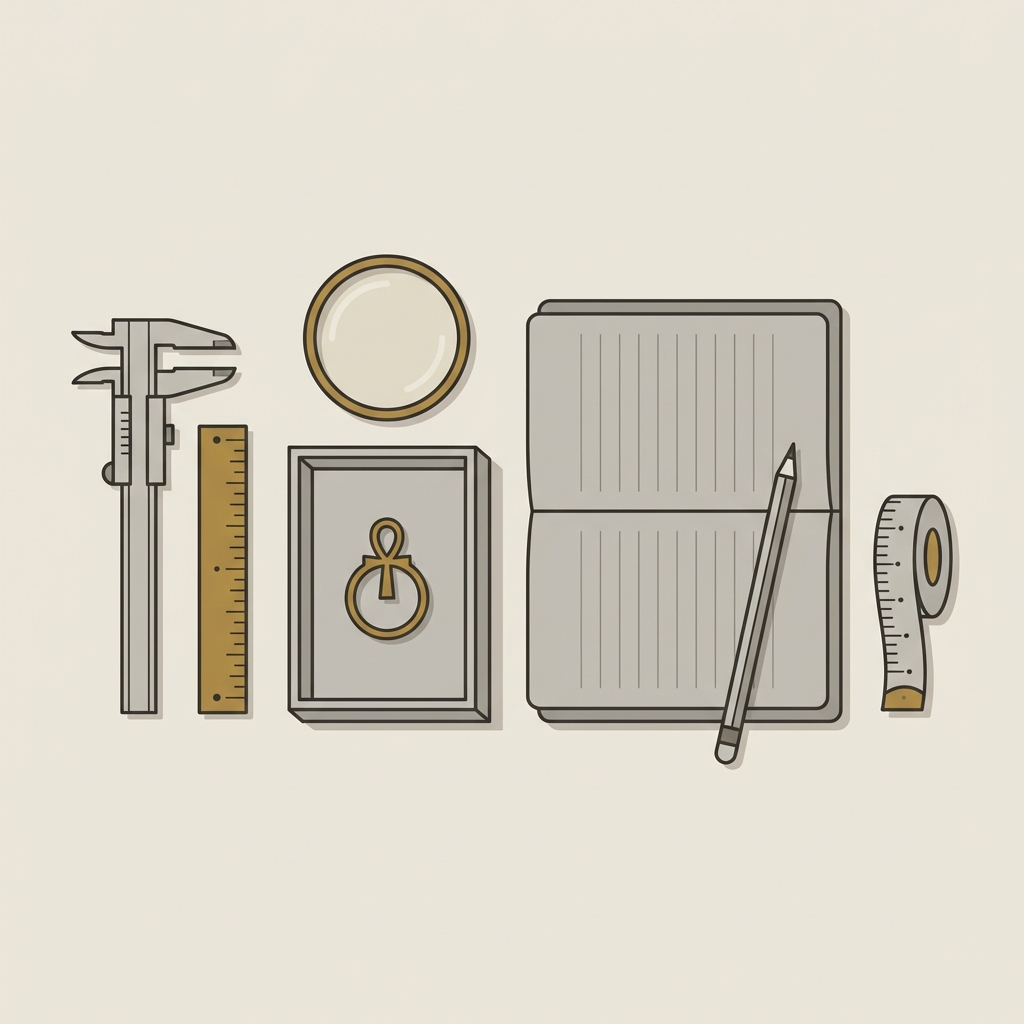
Look for documented provenance, clear condition and restoration notes, high-resolution photographs, and independent expert reports when possible.
More from Aurora Antiqua
References
- Amulet of an Ankh, inv. no. 1894.103, Art Institute of Chicago
- The Fitzwilliam Museum, Amulet: E.281.1896, University of Cambridge
- Artifacts: Amulets, Mummification, Online Exhibits, Spurlock Museum of World
- Faience Technology. In: UCLA Encyclopedia of Egyptology (Paul T. Nicholson), University of California, Los
- Ring, Victoria and Albert Museum, London
- How to Care For Your Jewellery: The Ultimate Guide by the National Association
- Archaeological materials, Icon, The Institute of Conservation (UK)
- Ankh, Wikipedia
- The end of Roe v. Wade would likely embolden global anti-abortion activists, The Conversation
- The Ankh, World History Encyclopedia, worldhistory.org
From Aurora Antiqua
We sell authenticated ancient & medieval pieces, each individually examined before listing and backed by a Lifetime Authenticity Guarantee. One of a kind, sold once, never reproduced.
Browse Ancient Artifacts →