


Looking for the real thing? Browse genuine Roman rings for sale, each piece one of one, individually authenticated, with documented provenance. For the background, see the guide to Roman jewelry.
What is a Roman glass bead necklace? Definition and context
Brief definition and typical forms
A roman glass bead necklace is a strand or grouping of small glass beads produced in the late Hellenistic through the Roman imperial period, typically dated between the late first century BCE and the fourth century CE, and found across the Mediterranean. Museum typologies place these beads within several recurring manufacture traditions and common shapes that appear in curated collections, making the term useful for both cataloging and collecting Corning Museum of Glass overview on Roman glass.
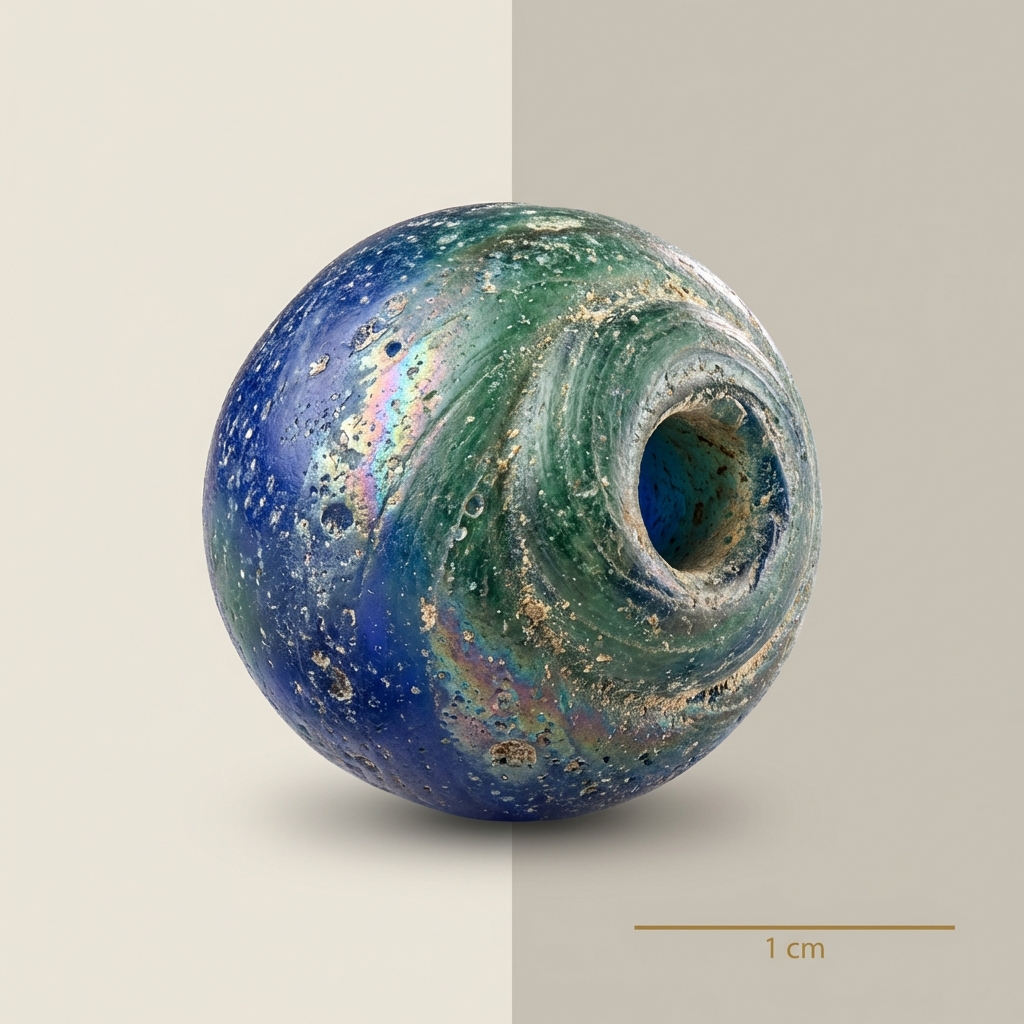
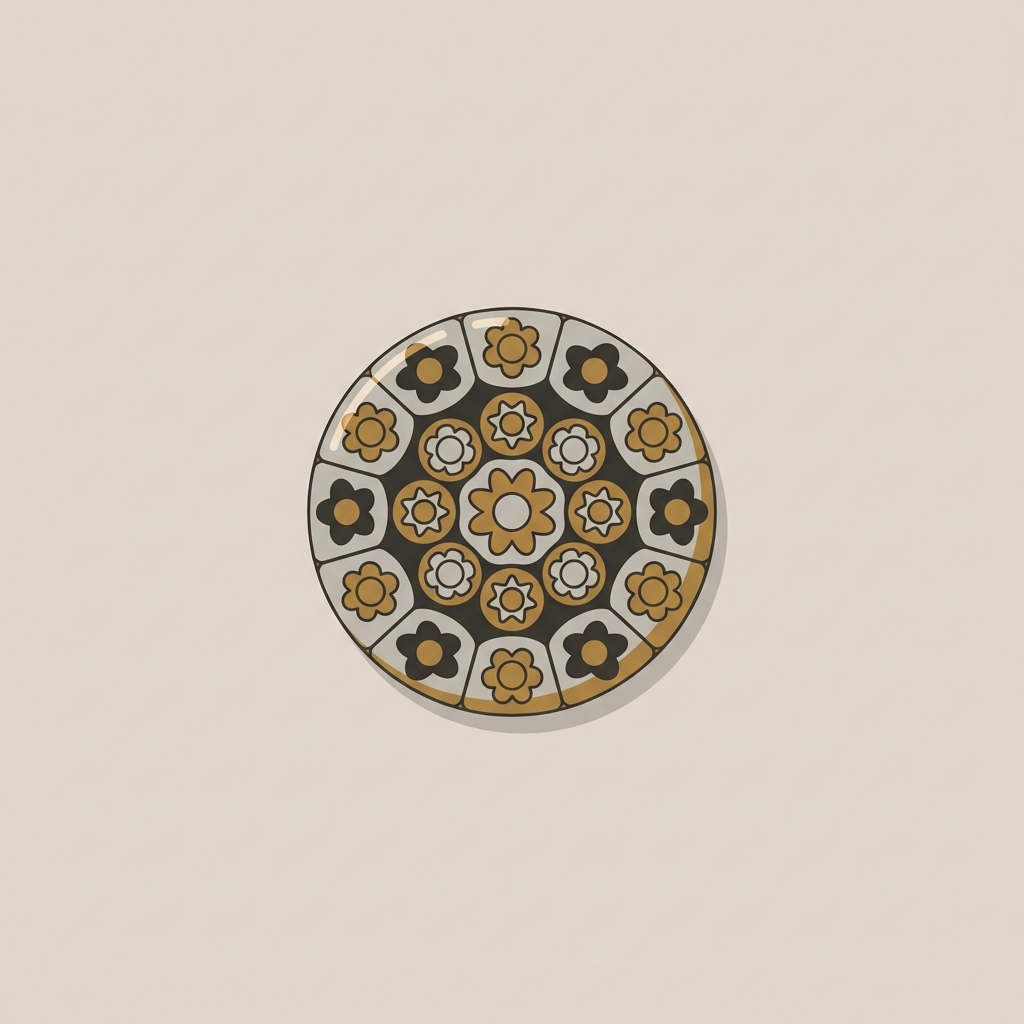
Typical necklace configurations include single-strand and multi-strand arrangements formed from monochrome wound beads, faceted or biconical types, and polychrome millefiori and cane elements. Colors tend toward blues and greens from common colorants and impurities, while more complex strands can include patterned millefiori disks and smaller drawn canes placed as spacers.
Where and when these necklaces were used
Beads like these were worn across social levels in the Roman world and appear in burial and domestic contexts; they can be recovered as loose beads, partial strings, or intact necklaces in archaeological assemblages. Collections and museum displays typically contextualize them with period dating, likely workshop attributions, and condition notes that help readers understand cultural use and wear consistent with age Metropolitan Museum of Art guide to glass in the Roman world.
For collectors seeking wearable antiquities, sellers such as Aurora Antiqua present pieces with condition notes, collection history, and restoration notes when available, to help buyers evaluate an object while avoiding absolute statements about provenance when documentation is incomplete.
How museums and collections present them
Museums commonly group beads by technique and typology, using photographic plates and catalog entries to show comparisons across contexts. These curated groupings are a practical first step for identification, because typology and shape often indicate likely manufacture methods and broad date ranges. For curated collection examples see our highlights collection page.

Short timeline: how Roman glass bead necklaces fit into Mediterranean production
Late Hellenistic roots and early Roman expansion
The origins of many Roman bead forms trace to late Hellenistic traditions that continued and diversified under the Roman empire, so a single strand can combine older shapes with newer decorative modes. Museum overviews emphasize continuity and adaptation in bead manufacture rather than abrupt stylistic breaks Metropolitan Museum of Art timeline on Roman glass.
Core periods of bead styles through the 4th century CE
Across the first centuries BCE and CE, core-forming and wound-rod beads were common, while later in the Roman period drawn techniques, millefiori and cane methods became more widespread for producing patterned elements. The gradual spread of drawn millefiori reflects technological shifts and changing tastes in ornamentation over time Corning Museum of Glass overview on Roman glass.
Because research continues to refine production chronologies and trade routes, collectors should remember that attributions to a narrow decade often rely on typological comparison rather than absolute proof, and that open questions remain about precise production to consumption pathways for specific bead groups recent review on beads and trade.
See condition and context on @auroraantiqua
When you consult a listing, look for clear photographs, condition notes, and any collection history. Aurora Antiqua provides contextual notes to help buyers evaluate pieces without implying certainty where documentation is limited.
How Roman glass beads were made: core-forming, wound, and drawn techniques
Core-forming: process and identifying marks
Core-forming involves shaping a temporary core of clay or other material, winding molten glass around it, and then removing the core after the glass cools; this technique leaves characteristic construction marks and can produce layered color bands and hollow beads that are common in early Roman strands Corning Museum of Glass overview on Roman glass.
Visual identifiers for core-formed beads include interior hollowness visible at perforation edges, thin-walled sections, and concentric layering where colors were applied in bands. Photomicrography or careful close-up photos often reveal these features more reliably than a single catalog image.
Wound and rod beads: characteristics and common colors
Wound beads are made by winding a thread of molten glass around a metal rod or mandrel; they can be solid or include air bubbles trapped during formation. These beads often show smooth rounded profiles and may exhibit bubble patterns and seam lines where the glass was joined during shaping Metropolitan Museum of Art guide to glass in the Roman world.
Common wound bead colors include a range of blues and greens, produced by iron and other impurities in the glass, and monochrome strands are frequently found in archaeological contexts. Close photographic comparison to museum plates can help separate genuinely ancient wound beads from later reproductions.
Begin with high-resolution photos that show hole edges, bead profiles, seams and surface weathering; request provenance and restoration notes and use compositional testing if visual indicators are ambiguous.
Drawn, millefiori and cane methods in later Roman-period beads
Drawn glass techniques produced canes that could be sliced to create millefiori discs and patterned beads; these appear more often in later Roman-period assemblages and are distinguished by their precise, repeating internal patterns. Technical studies of millefiori and cane production show clear manufacturing signatures that differ from core-forming and simple wound beads technical compositional study of Roman glass beads.
When evaluating a millefiori-dominant necklace, look for regular pattern repetition and smooth cross-section edges; those are good signs of drawn-cane work rather than surface decoration applied later.
Materials and composition: what the glass is made of and why it matters
Natron-based primary glass and its geographic sources
Most early Roman glass was made from a natron-based flux, a soda-rich primary glass produced in Levantine and Egyptian furnaces; compositional analyses over recent years support this broad pattern and help explain why many beads share similar base chemistry UCL summary of compositional studies and related open-access analyses.
Knowing that a bead's base glass is natron-based does not alone prove an exact place of manufacture, but it sets a useful expectation for the chemical families one will encounter in Roman-period beads.
Recycling, cullet mixing, and trace-element signals
Bead glass often includes recycled cullet and regional mixing, so trace element and isotope patterns reveal both primary sources and later reworking. These mixing processes can blur simple provenance claims because a bead may contain components from different production zones technical compositional study of Roman glass beads.
For collectors this means compositional results should be read as evidence that supports a likely production region rather than absolute provenance; the chemistry can narrow possibilities but not always assign a single workshop with certainty.
What compositional tests can and cannot tell you
Analytical techniques such as LA-ICP-MS and portable XRF provide valuable compositional fingerprints, with LA-ICP-MS offering higher precision in laboratory settings and portable XRF giving useful field-level data. Both help assess whether a sample fits expected natron-based compositions, but interpretation requires expertise and comparative databases compositional and provenance studies.
Tests cannot always resolve workshop-level attribution when recycling or mixing is present, so lab results are best used alongside typological and contextual evidence from catalog records or collection history.
Identifying a roman glass bead necklace in the field: a practical checklist
Visual cues: shape, seams, perforation and bubble patterns
Start with clear, high-resolution photos that show hole edges, profile shots, and close-ups of suspected seams; examine whether perforations have consistent tool marks, whether bubble distributions are natural, and whether seams or joins are visible at bead shoulders. Catalog comparison to museum plates is invaluable at this stage Metropolitan Museum of Art guide to glass in the Roman world.
Look for manufacturing seams where core-forming leaves faint lines, for smooth mandrel marks on wound beads, and for the regular internal patterns of millefiori where drawn canes were used. These visual clues are often decisive when interpreting photographs.
Surface weathering, iridescence, and patina indicators
Surface iridescence or weathering is commonly seen on ancient glass and results from long-term chemical interaction with burial environments. Genuine age-related iridescence usually shows layered, patchy colors and micro-cracking, while modern coatings or deliberate aging often appear uniform or sit on the surface without micro-weathering Metropolitan Museum of Art guide to glass in the Roman world.
Patina and weathering should be considered together with manufacturing marks because surface change alone cannot confirm antiquity; it is one signal among several.
When to seek scientific confirmation
If typology, patina and photographs provide mixed signals, portable XRF or laboratory analysis can increase confidence. Portable XRF is useful for field-level screening and can indicate whether base glass chemistry fits natron-based profiles, while lab analyses are needed for definitive trace-element work UCL summary of compositional studies.

Caring for and conserving roman glass bead necklaces
Everyday handling and storage recommendations
Handle beads with clean, dry hands or gloves, support strands gently to avoid stress at perforations, and store necklaces flat on padded supports or on soft mounts that distribute weight evenly. Stable relative humidity and avoidance of rapid temperature swings are important for minimizing further chemical change and physical stress V&A care guidelines for glass.
For display, avoid tight pin mounts that place strain on bead holes; instead use padded cushions, loops, or soft mounts that limit vibration and contact with hard surfaces.
Cleaning: what is safe and what to avoid
Avoid ultrasonic cleaners, strong solvents, and aggressive mechanical cleaning on ancient glass. Gentle dry brushing and controlled mechanical removal under a conservator's supervision are safer for removing dirt, while encrustation or fragile weathered surfaces should be left to professional conservators for assessment and treatment V&A care guidelines for glass.
If a seller provides restoration notes, review them for details on adhesives, resins, or restringing methods used, and ask whether treatments were reversible and documented in condition reports.
When to contact a professional conservator
Contact a conservator if beads show friable weathering, active flaking, or heavy encrustation that obscures surfaces, or if the strand has structural instability such as cracked perforations. Conservators can recommend stabilizing measures and document any intervention in restoration notes that a buyer should request before purchase V&A care guidelines for glass.
Buying, provenance and value: how to assess a roman glass bead necklace listing
Key provenance documents and what they show
Request clear provenance elements such as collection history, prior ownership notes, and any verification letters or lab reports that accompany a listing; these documents help place an object within a chain of custody and add context for dating and attribution Research report: export licensing and provenance, GOV.UK, Department for Culture, Media and Sport (DCMS).
Provenance materials do not guarantee a single production origin, but they are central to assessing how an object has been treated, documented, and studied over time.
A short checklist to request key provenance and condition information
Ask for dates and supporting documents
Condition, completeness and how these affect interest
Condition and strand completeness strongly influence how a collector evaluates a necklace; intact strands with consistent bead types and documented restoration notes are typically easier to interpret, while mixed or heavily repaired strands need closer scrutiny and more documentation Metropolitan Museum of Art guide to glass in the Roman world.
When restoration notes are provided, they should describe what was stabilized, what was repaired, and what was left untouched, using language that is specific and measurable.
Role of third-party testing and documentation
Third-party analyses, such as lab compositional reports or independent condition assessments, add an impartial layer of evidence that can support or refine visual identifications. Because markets and research contexts change, neutral documentation is useful for future re-evaluation UCL summary of compositional studies.
Practical examples: three necklace scenarios and how to read them
Millefiori-dominant strand: likely technique and signs
A millefiori-dominant strand that shows repeating floral or geometric cross-sections in many beads is likely to include drawn cane elements and can be tentatively dated to later Roman-period production styles; look for smooth sliced edges and consistent internal patterns in photos. Comparative examples in museum collections help confirm the interpretation Corning Museum of Glass overview on Roman glass.
Ask the seller for cross-section photos of representative beads and for any analytical reports that might support a drawn-cane attribution.
Mixed wound and drawn beads: what mixing implies
A mixed strand of wound monochrome beads and drawn millefiori elements can indicate either long use and repair over generations or deliberate assembly from several bead sets. In such cases, request measurements, high-resolution images of hole profiles, and any restoration notes to understand whether beads share consistent patina and wear consistent with age technical compositional study of Roman glass beads.
Mixed assemblages complicate prehistoric provenance claims, but well-documented collection history and condition notes can clarify how and when components were combined.
Heavily weathered or encrusted strands: conservation and documentation steps
When a strand is heavily encrusted or friable, avoid purchase without a conservator assessment; photographography under raking light and photomicrography can reveal manufacturing marks beneath deposits and help a conservator estimate treatment needs V&A care guidelines for glass.
Ask a seller for condition reports and for details about previous cleaning or chemical treatments, because such treatments can alter surface chemistry and complicate later analyses.
Common mistakes and pitfalls collectors make with Roman bead necklaces
Misreading surface iridescence or modern coatings
One common error is assuming all iridescence equals age; modern coatings and artificial treatments can mimic age-related weathering. Compare suspected iridescence with micro-detail photos and catalog examples before concluding antiquity Metropolitan Museum of Art guide to glass in the Roman world.
When in doubt, seek a conservator opinion or an independent compositional screen to separate genuine weathering from modern surface treatment.
Underestimating repair and restringing history
Restringing, replacement beads, and structural repairs are common and can affect both appearance and interpretation. Request restoration notes that list adhesives, thread types, and any replaced beads to understand the strand's treatment history Metropolitan Museum of Art guide to glass in the Roman world.
Prefer sellers who provide clear condition notes describing repairs rather than vague assurances about age or origin.
Relying on visual ID alone without documentation
Visual identification is a valuable first step but has limits; when provenance or composition is important to you, follow up with requests for photomicrography, compositional testing, or third-party reports before concluding on origin or date UCL summary of compositional studies.
Adopt practical habits such as asking for multiple angles, scale bars, and hole-edge close-ups to reduce the risk of misinterpretation.
Conclusion: responsible collecting and open research questions
Summary checklist for acquisition and care
When assessing a roman glass bead necklace, prioritize clear provenance documentation, specific condition notes, and conservative care plans. Ask for high-resolution photos, measurements, and any lab reports or restoration documentation before purchase About us, International Association of Dealers in Ancient Art.
Keep in mind that research into production to consumption routes and nondestructive provenance methods continues to evolve, so documentation and third-party analyses remain important for future re-evaluation.
Where research is still developing and how collectors can follow it
Open research questions include finer mapping of production to consumption for specific bead types and advances in nondestructive chemical provenance testing. Following museum publications and peer-reviewed compositional studies is the best way to stay informed about methodological advances.
As a curator of wearable antiquities, Aurora Antiqua aims to provide contextual descriptions, condition notes, and provenance references where available to help collectors make informed choices without implying absolute guarantees about origin or date.
Start with high-resolution photos showing perforations, seams, bubble patterns and surface weathering, compare to museum typologies, and request a seller's condition notes; seek scientific testing if signals are mixed.
No, avoid ultrasonic cleaning and harsh chemicals; use dry brushing for loose dirt and consult a conservator for encrustation or fragile surfaces.
Compositional tests narrow likely production regions and detect recycling, but they rarely assign a single workshop without supporting contextual evidence.
More from Aurora Antiqua
References
- About us, International Association of Dealers in Ancient Art
- Research report: export licensing and provenance, GOV.UK, Department for Culture, Media and Sport (DCMS)
- Stolen Works of Art Database, INTERPOL
- 1995 Convention, UNIDROIT, International Institute for the Unification of Private Law, Rome
- Archaeological materials, Icon, The Institute of Conservation (UK)
- E.C.C.O. Professional Guidelines (II): Code of Ethics, European Confederation of Conservator-Restorers'
- ICOM-CC, International Council of Museums, Committee for Conservation
- How to Care For Your Jewellery: The Ultimate Guide by the National Association
- The origin and spread of early natron glass in China, Nature
- PubMed Central