


Looking for the real thing? Browse authenticated Ancient Roman rings — each piece one-of-one, individually authenticated, with provenance.
Definition: what rhodium plating is and why it matters for a roman glass necklace
Rhodium plating is an electroplated, very thin decorative layer applied to metal jewelry to give a bright, wear-resistant finish and a uniform whitened appearance; it is usually measured in microns and intended as a surface coating rather than a structural change.
Collectors should care because a roman glass necklace typically combines ancient glass with a metal mount where surface appearance, patina, and stable joins are part of the object’s documented condition and character, and adding a modern bright finish can change how those features present and age. See related ancient Roman rings
Quick pre-purchase checklist for plated mounts
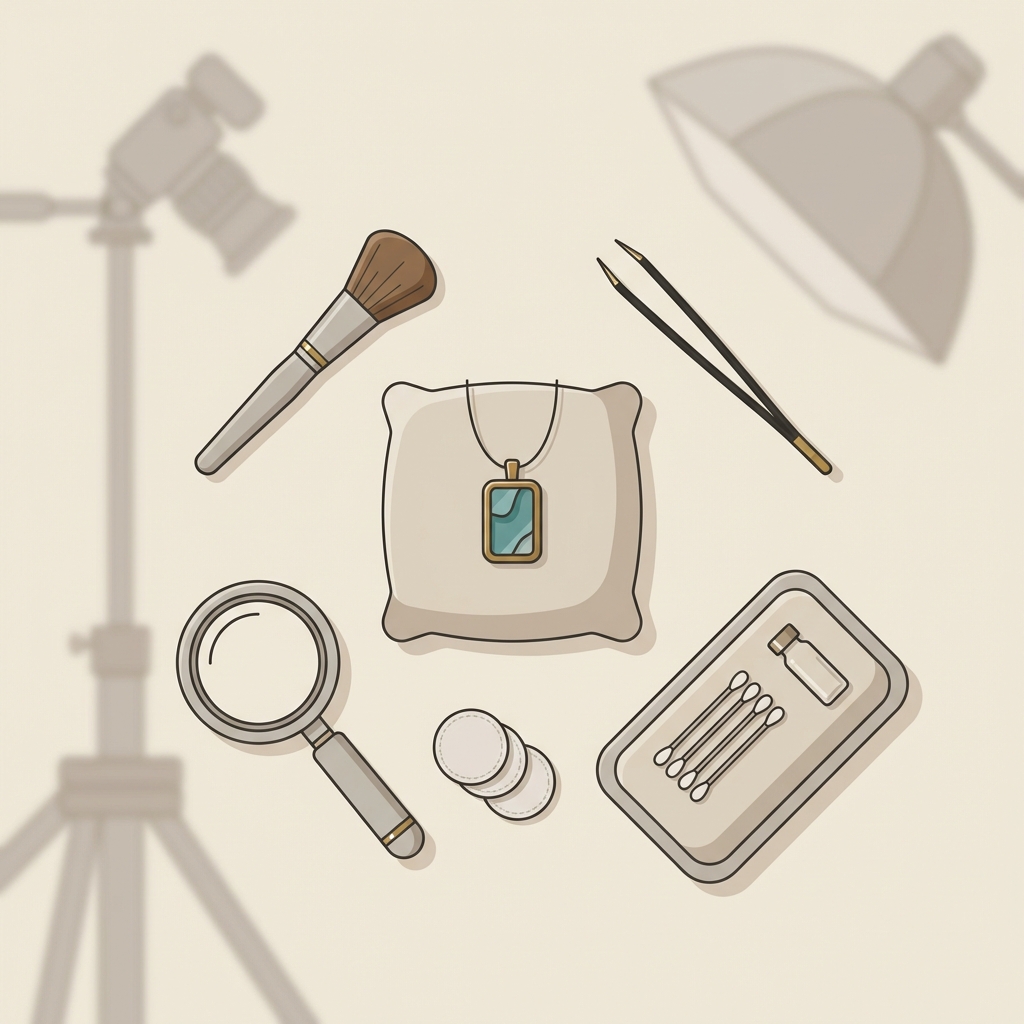
Keep condition photos
In plain terms, rhodium plating can improve immediate appearance but can also be temporary in normal wear and may not bond well where mounts meet glass or where metal is corroded, so the decision to plate should be made with the object’s age and fragility in mind GIA guidance on plating longevity.
How rhodium plating works and expected lifespan on jewelry
The basic electroplating process deposits a thin layer of rhodium onto a prepared metal substrate using an electrochemical bath; the substrate is cleaned, often struck with an intermediate layer such as nickel or a rhodium strike, then coated with the final rhodium layer for finish and tone.
Because the deposit is very thin by design, the visible bright layer can wear through with normal friction at contact points such as clasps, chain links, and bezel edges; conservation and trade guidance report typical consumer re-plating intervals of roughly one to three years for high-wear wearable pieces depending on use Rio Grande plating FAQ.
Several factors shorten that lifetime: frequent wear, abrasive cleaners, contact with skin oils and sweat, and the character of the substrate metal that supports the coating; a soft or corroded substrate accelerates loss of continuity and shine.

As an example, a pendant worn daily on a short chain that rubs against clothing and skin will typically show local loss of rhodium faster than a display piece worn occasionally, and the need for re-plating should be anticipated as part of routine maintenance industry briefing on plating care.
Main downsides of rhodium plating for a roman glass necklace
The most immediate downside is mechanical thinning and temporary wear: the bright rhodium layer is decorative and will typically require periodic re-plating to maintain appearance, which means additional treatment cycles over the life of the object GIA guidance on plating longevity.
Aesthetic downsides follow: a bright modern finish can reduce the visual presence of original patina, iridescence, or surface cues that help collectors assess provenance and condition, and this change can be unwelcome when the historic character is part of the value to the owner ICOM-CC and JAIC guidance on plating.
Follow @auroraantiqua for behind-the-scenes context
If you are considering a plated mount on an ancient object, pause to request condition photos and documented restoration notes before deciding to re-plate or accept a plated finish.
Practical conservation concerns include poor adhesion or uneven coating where a metal mount meets Roman glass, and the risk that bright plating will contrast with ancient iridescence or weathered surfaces in ways that look incongruent rather than harmonious Corning Museum of Glass conservation notes. For conservation treatment examples see conservation treatment on Roman glass.
Mechanical wear, thinning and impact on settings and bezels
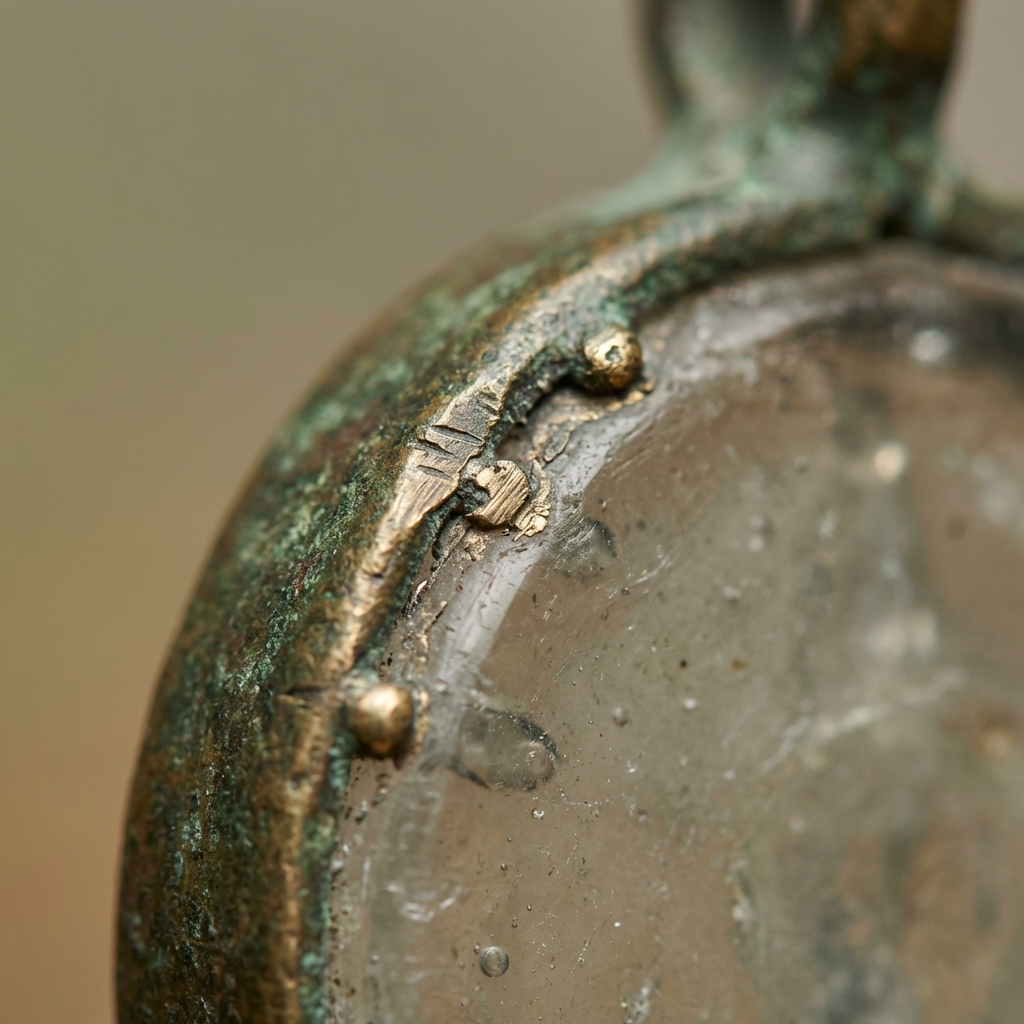
Altered fit is a real risk: a bezel that has been rounded by polishing or built up to hide losses can stop holding a fragment of Roman glass as securely as it once did, transferring stress to fragile points on the glass during normal wear or when the piece is handled for future conservation Corning Museum of Glass conservation notes.
Features commonly affected by repeated work include bezel edges, solder joints, and the contact face that seats the glass; each change can subtly change how the pendant sits, how tension distributes, and how easily the glass might shift under impact GIA guidance on plating longevity.
- Bezel edge rounding
- Solder joint thinning or reshaping
- Loosened fit between glass and mount
Effects of re-plating and polishing on antique settings
Bright modern finishes created by re-plating can mask tool marks, repairs, and other surface evidence that belong to the object’s collection history and condition notes, reducing the visibility of traits used by specialists to assess age and prior interventions ICOM-CC and JAIC guidance on plating.
That masking effect can complicate provenance assessment and future study because later researchers or conservators may not readily see earlier repair seams or patination patterns that were visible before plating.

For these reasons many conservation professionals recommend documenting condition thoroughly with high-resolution photography and written restoration notes before any re-plating is attempted, and to favour treatments that remain reversible and well recorded Corning Museum of Glass conservation notes.
Chemical and adhesion issues at metal-to-glass interfaces
Rhodium adheres poorly to non-metal substrates and to heavily corroded or chemically altered metal surfaces, so plating a mount that contacts Roman glass or rests on corroded copper-alloys may be uneven and short-lived Rio Grande plating FAQ. See also a study of Roman glass composition on Roman glass composition.
There are also open questions about long-duration chemical interactions between plated layers and corrosion products on historic copper-alloy mounts, and conservators note that the evidence base for decades-long effects is limited, so decisions should be cautious and conservative ICOM-CC and JAIC guidance on plating.
When plating is applied close to glass contact points, differential wear can lead to gaps or flaking at the junction between metal and glass, which increases risk to the glass during wear or handling Corning Museum of Glass conservation notes.
Conservation and museum perspectives on plating antiquities
Professional conservation guidance discourages routine plating of archaeological metal objects and instead favours minimal, reversible, and documented interventions to protect both the material and the evidential qualities of the object ICOM-CC and JAIC guidance on plating. Historic analysis and reporting on Roman glass conservation are available from heritage bodies such as Historic England Conservation and analysis of a Roman glass vessel.
Check condition notes and provenance, identify mount material, request high-resolution photos of joins, ask about prior plating, and consult a conservator for historic mounts to weigh aesthetics against conservation risk.
Conservators will consider plating only in special circumstances where the intervention is justified, fully documented, and unlikely to interfere with future study; they will also prefer approaches that can be removed without loss of original surface information and that minimize handling risk Corning Museum of Glass conservation notes.
For collectors, the practical takeaway is to ask whether a proposed finish has been applied with conservation oversight and whether detailed documentation exists that explains what was done and why.
Health considerations: contact allergies and exposure risk
Dermatology literature documents cases where contact dermatitis followed the failure of a plated finish because exposure to an allergenic base metal such as nickel occurred after the plating wore through; rhodium itself is rarely the cause but breached plating can reveal allergenic substrates review on contact allergy to precious metals.
Symptoms to watch for include localized redness, itching, or blistering at the sites that touch the skin; if such signs appear, clinical assessment and patch testing by a qualified clinician are advisable rather than self-diagnosis.
From a practical standpoint, a collector who plans to wear a plated roman glass necklace frequently should confirm the mount alloy and ask whether any intermediate layers such as nickel were used beneath the rhodium, because those layers are often the true source of allergy when plating fails GIA guidance on plating and care.
Decision framework: when to accept rhodium plating on an ancient piece
Use a short checklist to decide whether to accept, request, or avoid rhodium plating on a roman glass necklace: 1) review condition notes and provenance, 2) identify mount material, 3) ask about prior treatments and documentation, 4) consider intended use and wear frequency, 5) consult a conservator for historic mounts GIA guidance on plating considerations.
Weight the factors: if the mount is modern and intended for regular wear, plating may be a reasonable choice for aesthetics and corrosion resistance; if the mount is historic or exhibits complex corrosion products, prefer conservation-grade, reversible options and professional advice ICOM-CC and JAIC guidance on plating.
When in doubt, prioritize documentation and minimal intervention: clear photos, notes about soldering and joins, and written consent for any change will preserve information for future owners and conservators.
What to ask sellers and look for in listings for a roman glass necklace
Key questions to copy-paste to a seller: Has the piece been plated or re-plated? What is the mount alloy? Are there restoration or preservation notes? Can you provide high-resolution photos of each mount-to-glass join?
Interpret listing phrases carefully: read restored or stabilized with attention to the scope of work and who performed it, and request documentation or conservator reports when possible rather than accepting vague language. If you need assistance, contact us.
Ask for clear images of the bezel edge, solder lines, and reverse of the mount so you can assess whether plating covers prior repairs or obscures surface details that matter for provenance and condition notes Corning Museum of Glass conservation notes.
Common mistakes and pitfalls to avoid
A frequent error is assuming plating is permanent; in practice rhodium coatings are temporary and their loss can reveal underlying issues that would have been visible before plating Rio Grande plating FAQ.
Avoid over-cleaning or amateur polishing in an attempt to maintain shine, because abrasive methods accelerate loss of plating and can remove small amounts of the substrate, changing fit or geometry of bezels and joints ICOM-CC and JAIC guidance on plating.
Also be wary of accepting pieces where the seller cannot provide clear restoration notes or provenance; lack of documentation increases the chance that plating was used to conceal prior damage or repairs.
Practical scenarios and examples for a roman glass necklace
Scenario 1: a modern plated mount made to hold authentic Roman glass. Here the primary trade-offs are adhesion and lifecycle. If the mount is modern and plated for wear, re-plating cycles are likely and the principal concerns are adhesion at the join and the aesthetic harmony with the ancient glass; such mounts can be sensible for wear provided documentation is clear and the owner accepts periodic maintenance industry briefing on plating care.
Scenario 2: rhodium applied to an original historic mount. This raises stronger conservation concerns because plating can mask original surface evidence, increase handling for repeated re-plating, and potentially interact unpredictably with corrosion products; conservators generally prefer reversible, well-documented alternatives in these cases ICOM-CC and JAIC guidance on plating.
Recommended steps for each scenario include documenting condition thoroughly before any intervention, consulting a qualified conservator for historic mounts, and considering a display-only approach if the risks of wear and rework are high.
Conclusion and recommended next steps for buyers
The main downsides of rhodium plating on a roman glass necklace are clear: the finish is temporary and will wear, repeated re-plating and polishing can alter bezels and solder joints, and breached plating can expose allergenic base metals; these points argue for cautious, documented approaches rather than routine commercial plating GIA guidance on plating longevity.
Action list for collectors: verify condition notes and provenance, ask direct questions about mount alloy and prior treatments, request detailed photos of mount-to-glass joins, and consult a qualified conservator before authorizing re-plating on historic mounts ICOM-CC and JAIC guidance on plating.
Aurora Antiqua presents items with condition notes, provenance style documentation when available, and restoration notes to help buyers weigh these trade-offs carefully, and we recommend keeping a clear record of any intervention for future owners.
Rhodium plating can protect metal surfaces from immediate tarnish but does not strengthen the glass; it will wear and may require re-plating, and for historic mounts conservators usually prefer reversible, minimal treatments.
Typical consumer guidance suggests re-plating intervals of roughly one to three years for high-wear items, though actual lifetime depends on wear, substrate condition, and maintenance.
Rhodium itself is rarely the allergen; when plating fails and underlying metals such as nickel are exposed, contact dermatitis can occur, so check mount alloys if you have sensitive skin.
References
- https://auroraantiqua.com/collections/ancient-roman-rings
- https://www.gia.edu/gia-news-research-rhodium-plating-longevity-care
- https://www.riogrande.com/learn/rhodium-plating-faq
- https://www.jewelers.org/industry-reports/rhodium-plating-care-costs-2025
- https://conservation.fitzmuseum.cam.ac.uk/walking-on-eggshells-conservation-treatment-on-roman-glass/
- https://www.cmog.org/article/roman-glass-conservation-guidance
- https://www.conservation-us.org/publications/jaic-icomcc-plating-guidance-2021
- https://auroraantiqua.com/products/roman-silver-ring-auriga-red-jasper-intaglio-of-cock-drawing-a-chariot-driven-by-a-mouse-1st-3rd-century-ad-eu-57-us-7-5
- https://www.jewelers.org/industry-reports/rhodium-plating-care-costs-2025
- https://www.mdpi.com/2571-9408/6/4/194
- https://historicengland.org.uk/research/results/reports/5465/ConservationandanalysisofaRomanglassvesselandassociatedmaterialfromBotchergateCarlisle
- https://auroraantiqua.com/pages/contact
- https://onlinelibrary.wiley.com/doi/full/10.1111/cod.2024.contact-allergy-precious-metals
- https://auroraantiqua.com/