


Looking for the real thing? Browse our Ancient Roman ring collection, each piece one of one, individually authenticated, with documented provenance. For the background, see the guide to Roman jewelry.
Introduction: why a roman glass pendant matters to collectors
A roman glass pendant can be both a small artifact and a wearable fragment of antiquity, offering a direct material link to Roman workshops and trade networks. For collectors, these pendants often convey manufacture technique, historical usage, and a patina that speaks to long-term burial or reuse, details that matter when judging authenticity and condition. Corning Museum of Glass
Collectors value such pieces for a mix of aesthetic, historical, and contextual reasons, and a clear understanding of materials and documentation reduces the risk of misattribution. This article sets out a practical, museum-grounded framework to read photos and listings, and to decide when compositional reports or conservator input are necessary. Metropolitan Museum of Art overview
Follow behind-the-scenes collection and documentation
Use the checklist that follows to compare images and documentation, and download a printable version to take when corresponding with sellers.
This introduction does not repeat the concise orientation offered above. Instead the rest of this section explains what the guide will cover and who should use the checklist, helping readers move from curiosity to informed decisions.
The article is written for collectors, history-minded buyers, and anyone considering a purchase of Roman glass jewelry who wants clear steps to reduce uncertainty. It emphasizes conditional language and evidence-based criteria rather than definitive pronouncements, because many private objects have not been subject to laboratory analysis. British Museum research on glass
What is Roman glass? Definition, materials and common forms
In straightforward terms, Roman glass usually refers to natron-based soda-lime glass produced across the Roman world from roughly the first century BCE into Late Antiquity, and it includes many forms that later generations also copied. This chemical basis and timeframe mean that certain colors, textures, and manufacturing signatures recur across secure museum groups. Corning Museum of Glass
Natron acted as a flux in Roman recipes, lowering melting temperatures and yielding a largely soda-lime glass that differs chemically from many medieval and modern plant-ash glasses. For practical identification, the phrase natron-based signals a family of compositions that analytical laboratories can detect when a sample is tested. Journal of Archaeological Science review (see compositional study MDPI)
Collectors will most often encounter Roman glass as beads, small inlays, pendants, or fragments from vessels, while technical masterpieces such as cameo and mosaic glass serve as benchmarks for craftsmanship and technique. The Portland Vase and other cameo pieces remain important reference points for glassworking skill and decorative approaches. British Museum notes on the Portland Vase
Two manufacturing methods are particularly relevant for pendants. Core-formed objects date to earlier periods and show characteristic hollows and surface joins, while glass-blowing became widespread from the late first century BCE onward and leaves different marks such as mold seams or pontil traces on blown forms. Observing these technical signals helps place an object within broad production practices. Metropolitan Museum of Art overview
Visual clues like typical Roman color ranges, from deep blues and greens to amber and pale aqua, and weathering or patina layers consistent with burial, also assist identification. These clues are helpful but not definitive on their own, especially when modern glassmakers reproduce historic hues. British Museum research on glass
How to identify a roman glass pendant: a step-by-step framework for collectors
Visual inspection for a roman glass pendant: color, weathering layers, pontil and mold clues
Start by examining color and surface texture in high-resolution photos. Typical Roman palettes include deep blue, green, and amber tones, and surface weathering often appears as iridescent layers or fine, pitted crusts that develop with long burial; these features can indicate age but are not proof by themselves. When you use these visual markers, compare them to museum images and documented examples. British Museum collection overview
Look for manufacturing traces: a pontil mark or pontil scar is evidence of hand finishing on blown forms, while mold seams and flow lines can indicate later blowing or pressing techniques. Core-formed beads and pendants show different joins and hollows that a close-up photo can reveal. Use precise crop areas that include the base, edges, and any drilled suspension point. Corning Museum of Glass
A combination of natron-based composition, manufacturing traces such as pontil scars or core-formed joins, weathering layers consistent with long burial, and solid provenance or compositional reports increases the likelihood a pendant is Roman; no single feature is definitive alone.
Technical signals: production technique and stylistic context
Determine whether the piece is core-formed, blown, or a later imitation; each technique leaves distinctive marks and suggests particular date ranges. Core-formed pieces generally predate widespread glass-blowing, while blown items typically belong to the period after the first century BCE. Matching technique with stylistic motifs and wear patterns helps refine dating. Metropolitan Museum of Art overview
Stylistic context includes motifs, shapes, and how a pendant might have been worn or mounted. A pendant reworked into later jewelry can show secondary drilling or modern metalwork; such alterations do not always negate antiquity but do affect attribution and condition notes. When in doubt, ask the seller for detailed photos of any attachments and of the suspension point. British Museum research on glass
When lab analysis matters and what reports show
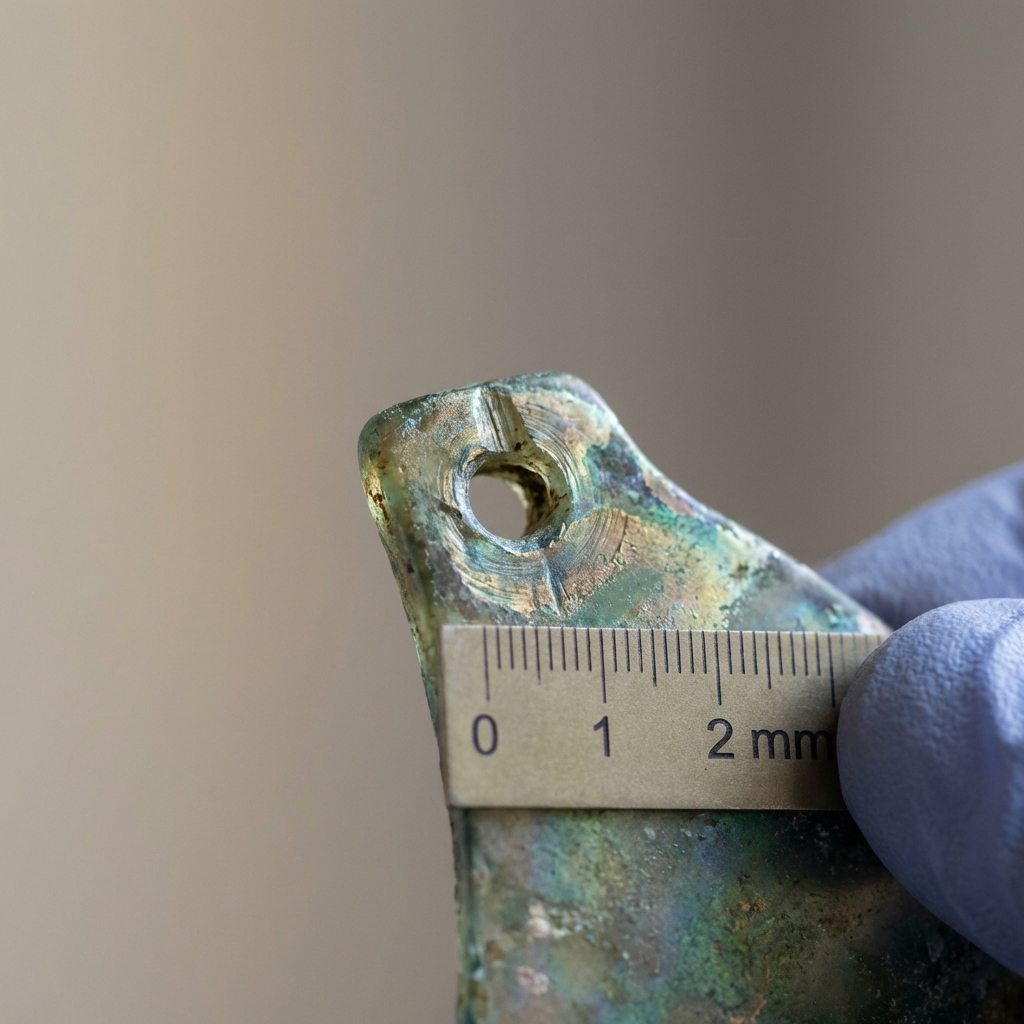
Compositional and isotopic analyses are high-value tools for provenance because they can distinguish major Roman production groups and source regions, information that visual inspection alone cannot supply. Where available, a lab report increases confidence by linking an object to known compositional groups, though sampling is often required and not every collectible has been tested. Journal of Archaeological Science review (see regional compositional work PMC article)
When a seller provides a compositional report, check whether the analysis references natron-based soda-lime glass and whether its elemental profile matches published Roman groups. Be aware that absence of a report increases uncertainty, and that reputable laboratories and peer-reviewed comparisons provide stronger evidence than unsourced claims. Journal of Archaeological Science review (see trace element provenancing methods Wiley)
Buying checklist and decision criteria for roman glass pendants
A compact buying checklist reduces ambiguity: request clear provenance or collection history, high-resolution photos that show manufacturing features, and any compositional or laboratory reports when available. Documentation and imagery together allow for an informed preliminary assessment. British Museum guidance
Essential photo angles include a full oblique view, a cropped detail of the suspension point or drill hole, close-ups of any surface weathering or iridescence, and base or interior shots where possible. These crops help reveal pontil scars, mold seams, and core-formation joins that are critical for attribution. Corning Museum of Glass
When evaluating documentation, give extra weight to a clear collection history or prior cataloguing in a recognized collection. Provenance can include prior ownership notes, catalog references, or inventory numbers that tie a piece to a documented history; these items lower uncertainty even where laboratory data are lacking. Journal of Archaeological Science review
Interpret restoration and condition notes carefully. Clear restoration descriptions should state what was stabilized, repaired, or left untouched, and may include photography of repairs. Visible modern adhesives, nonperiod metal mounts, or repainting can alter attribution confidence and should be disclosed. Trust sellers who provide transparent restoration notes and condition photographs. British Museum research on glass
Acceptable levels of uncertainty depend on buyer priorities. For display pieces of modest value, clear photos and provenance may be sufficient. For higher-value purchases, insist on a compositional report, an independent assessment, or a conservator review before completing a transaction. Journal of Archaeological Science review
Caring for and conserving roman glass pendants
Conservation guidance for archaeological glass emphasizes stable environmental conditions, minimal handling, and avoiding household chemicals that can harm surfaces or remove weathering layers; these measures reduce further deterioration and preserve evidence important to attribution. Getty Conservation Institute guidance
Simple handling rules include wearing nitrile gloves when possible, supporting thin edges to avoid stress, and keeping pendants on padded surfaces rather than hard trays. Avoid ultrasonic cleaners, alcohol, or peroxide treatments, and do not attempt abrasive cleaning that can remove patina or weathering layers. Getty Conservation Institute guidance

Some weathering layers may be original and carry diagnostic information; removing them without assessment can destroy evidence. Consult a conservator before any invasive cleaning or restoration, and ask for a written treatment plan if professional work is proposed. Getty Conservation Institute guidance
For display, choose stable humidity and avoid direct sunlight or strong heat sources. Cushion mounts or padded mounts reduce mechanical stress and help prevent microfractures. Keep photographic documentation before and after any intervention. Getty Conservation Institute guidance
Common red flags and mistakes when assessing roman glass pendants
Relying on color alone is a frequent mistake; modern glassmakers can reproduce historic hues and patination effects, so colors that look Roman are not proof. Always combine color with manufacturing marks, weathering details, and documentation. British Museum research on glass
Watch for vague provenance claims such as broad statements without dates or collection references. Listings that lack detailed photos of manufacturing features or of the pendant's suspension point make reliable assessment difficult, and these omissions are common in problematic attributions. Journal of Archaeological Science review
Modern restoration can obscure original manufacturing traces. Repairs that appear to mask edges, fill hollows with modern materials, or present incongruent tooling marks should prompt further questions. A transparent seller will supply condition notes and photos of the repaired areas. British Museum guidance
Another mistake is over-reliance on resemblance to museum pieces. Museum examples like cameo glass represent exceptional workshop outputs and are not a reliable baseline for all pendants. Use museum examples for technique reference rather than direct comparison of value or rarity. British Museum notes on the Portland Vase
Practical examples and scenarios: reading real listings and photos
A compact photo and documentation checklist collectors can follow
Use high-resolution crops
Below are three anonymized scenarios that apply the earlier framework. Each case is short and focused on signals to look for and exact questions to ask the seller.
Scenario 1, likely Roman
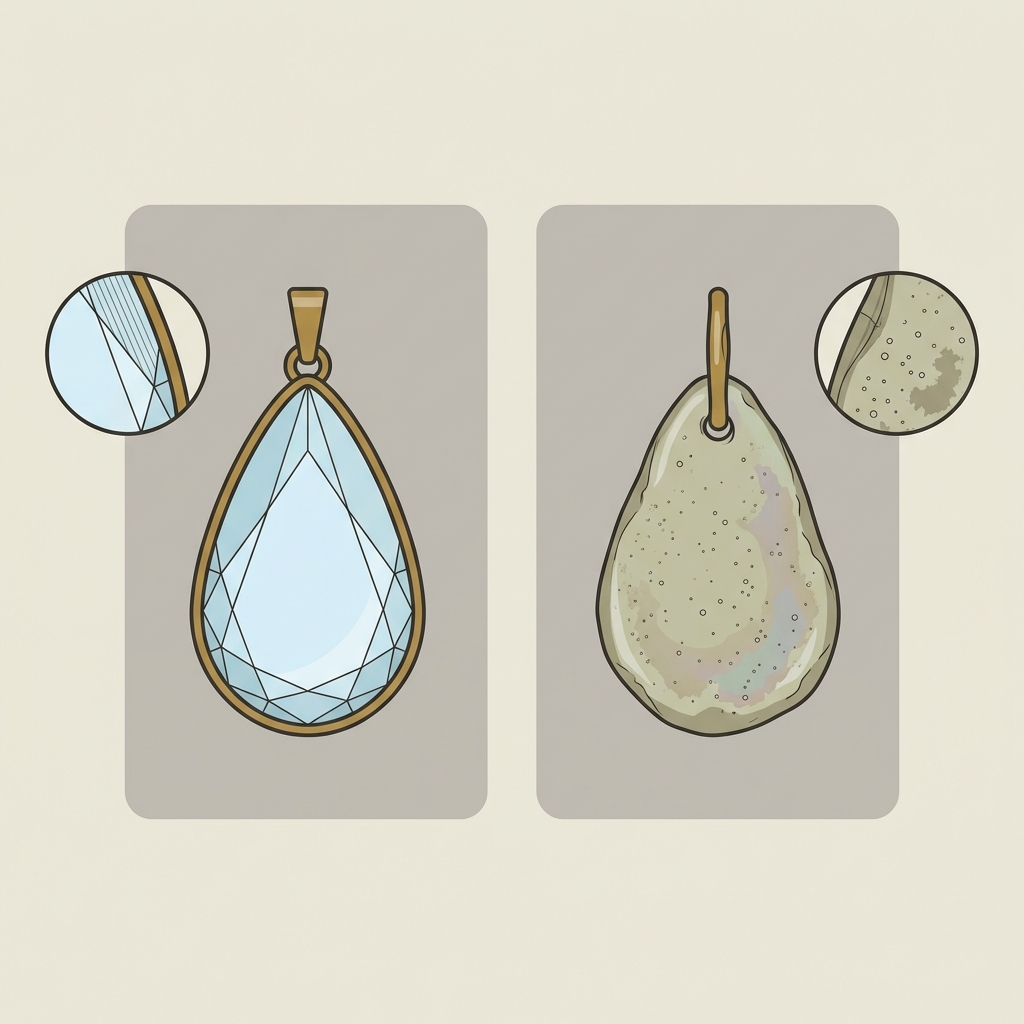
Listing shows a pendant with a green-blue hue, clear pontil scar on the base, and an iridescent weathering layer over much of the surface. The seller supplies a collection history dating to the mid 20th century and close-up photos of the suspension hole and the base. These features together raise the likelihood of Roman origin, though a compositional report would further strengthen confidence. Corning Museum of Glass
Scenario 2, uncertain
A pendant has a deep cobalt color and a drilled suspension, but photos are low resolution and there are no interior or base shots. The listing offers a vague provenance statement without dates. In this case, request high-resolution images of the base and suspension point, and ask whether any compositional testing exists; without better imagery or documentation the attribution remains uncertain. Journal of Archaeological Science review
Scenario 3, likely modern
High-gloss surface, uniform color without iridescence, and a modern metal fitting that appears factory-made suggest a modern piece or modern alteration. If the seller cannot provide manufacturing feature photos or provenance, the prudent stance is to treat the listing as a modern reproduction. British Museum research on glass
When requesting photos or documents, use precise wording. Ask for "full oblique view, suspension-point detail at 10x crop, base interior, and any prior collection labels or inventory numbers." For lab reports, request the lab name, date, and a copy of the elemental or isotopic data so you can compare it to published Roman groups. Journal of Archaeological Science review
Conclusion: responsible collecting and next steps
Summary checklist: start with provenance and collection history, ask for high-resolution photos showing manufacturing features, and seek compositional reports for higher-value purchases. Use conservator input for any invasive cleaning or uncertain restorations. British Museum guidance
Aurora Antiqua positions itself as a curator that provides condition notes, contextual content, and provenance-style documentation where available to help buyers make informed choices, and readers should weigh those materials alongside independent lab data when possible. For valuable pieces, a conservator assessment and documented compositional analysis are the next steps to increase attribution confidence. Getty Conservation Institute guidance
You can begin with high-resolution photos showing the base, suspension point, and surface weathering, and compare manufacturing marks such as pontil scars or mold seams to museum examples; however, a lab report increases confidence.
No, avoid household cleaners and abrasive methods; consult a conservator before any invasive cleaning because weathering layers can be diagnostic and easily damaged.
Ask for clear collection history or provenance notes, high-resolution photos of manufacturing features, and any compositional or laboratory reports when available.
More from Aurora Antiqua
References
- Gold finger ring with glass intaglio: a lioness (1995.85.2), The Metropolitan Museum of Art, New York
- bague, Louvre site des collections, Musee du Louvre, Departement des Antiquites grecques, etrusques et romaines
- Internet Archaeol. 40. Atkinson and Preston. Objects of personal adornment, Internet Archaeology, Council
- Echoes of Antiquity: Thorvaldsen’s Collections as a Reservoir of Motifs, Thorvaldsens Museum Archives
- A. M. Caggiani u. a., Corroborating the autoptic identification, Wiley, Journal of Raman Spectroscopy
- Archaeological materials, Icon, The Institute of Conservation (UK)
- About us, International Association of Dealers in Ancient Art
- Research report: export licensing and provenance, GOV.UK, Department for Culture, Media and Sport (DCMS)