


Looking for the real thing? Browse our full ring collection, each piece one of one, individually authenticated, with documented provenance. For the background, see the guide to ancient jewelry.
What did ancient Greek brides wear? A concise overview
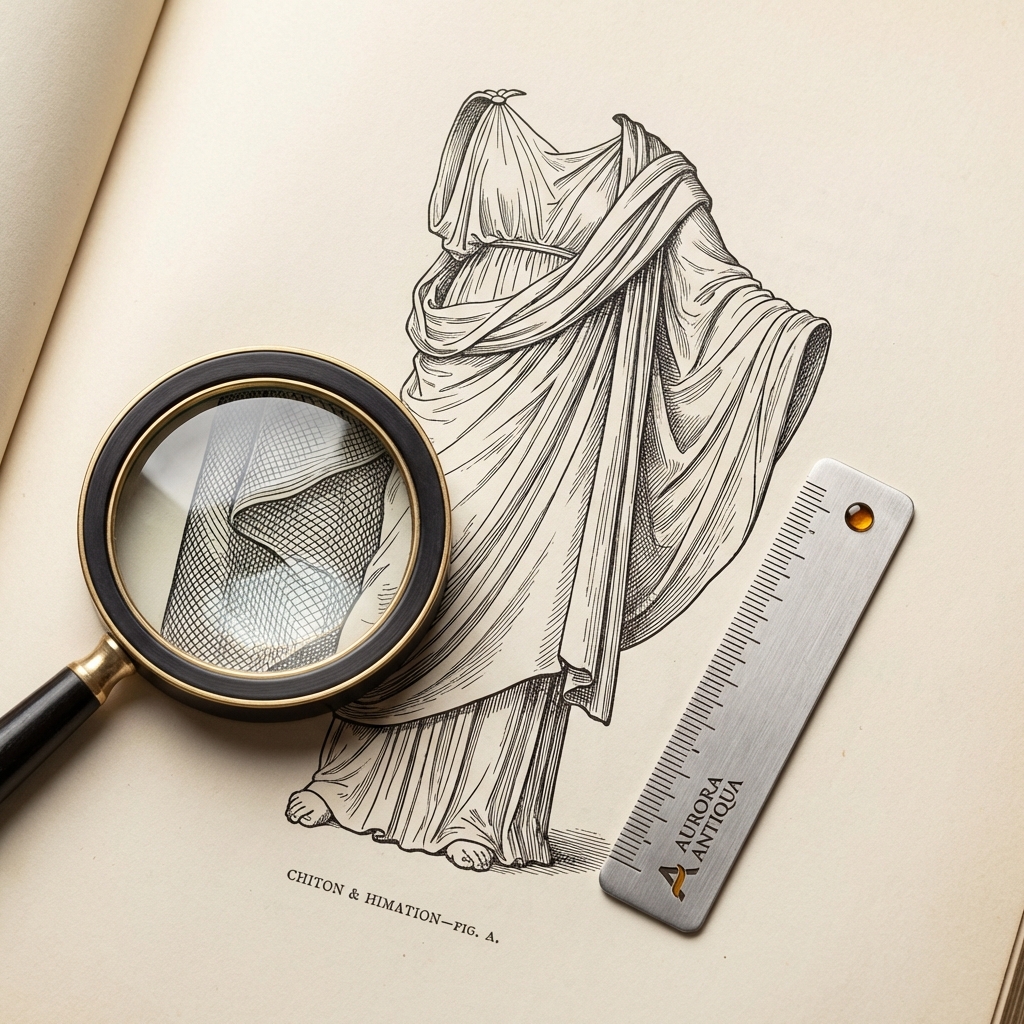
Reconstructions of ancient Greek bridal dress start from three core garments: the peplos, the chiton and the himation, which together form the foundation for how women were pictured and described in Classical and Hellenistic sources. These garment types and their variations are central to museum descriptions and scholarly summaries of Greek dress, and help explain why modern reconstructions focus on layered and wrapped forms rather than tailored silhouettes Metropolitan Museum, Dress in the Greek World
Visual sources such as Attic vases combined with museum catalogue descriptions and provenance information allow scholars to reconstruct likely bridal garments and associated jewellery, but firm claims require contextual evidence such as findspot or publication.
Visual sources such as Attic wedding vases and funerary stelai provide repeated images of marriage processions and handover scenes, and they are essential for interpreting how garments were worn and combined in ceremony. A careful reading of imagery alongside literary references shows both commonalities and regional differences in practice Metropolitan Museum, wedding vase examples
Social and regional variation is important to keep in mind. Elite portrayals often show richer metalwork, diadems and detailed textiles whereas rural or lower status dress, while following the same basic garment types, can look simpler in depictions and in the archaeological record. This means any single object that appears bridal must be read with context and catalogue notes in mind Oxford Research Encyclopedia entry on clothing and adornment
Key garments and ritual elements: peplos, chiton, himation and veils
Peplos, chiton and himation are the basic categories scholars use when describing ancient Greek female dress. The peplos is a rectangular wool garment folded and pinned at the shoulder then belted, the chiton is a linen or lighter fabric sewn or pinned at the shoulder to form a tunic, and the himation is an outer cloak used for wrapping and modesty. Museum catalogues and textile studies use these categories as starting points for dating and regional attribution Metropolitan Museum, Dress in the Greek World Met educators PDF
How these garments appear in images varies by period and locality. Linen chitons are more common in lighter, summer garments while folded and belted peploi are a frequent feature in many votive and ceremonial scenes. Curators note that reconstructions are approximate, because the surviving textile evidence is fragmentary and visual depictions stylise fabric folds rather than record weave details British Museum, Greece and Rome galleries
Veils and head coverings, often called epiblema or stephane in sources, appear in literary and iconographic accounts of weddings. In some regions and ceremonial contexts a veil was a distinct ritual element, and sources record the use of saffron or yellow garments or cloth in marriage rites. These colour associations are attested in texts and iconography, but they are not universal across Greece and should be treated as regional practice rather than a single standard World History Encyclopedia, Weddings in Ancient Greece

Because iconography and literature rarely give step by step garment instructions, scholars combine visual types with comparative textile studies to infer how garments were folded, fastened and layered for a bride. That interdisciplinary approach is why museum descriptions often present multiple plausible reconstructions instead of a single definitive outfit Metropolitan Museum, Dress in the Greek World
Old greek wedding rings: types, materials and meanings
Common ring forms and materials
Rings associated with marriages in museum catalogues range from simple bronze hoops to gold signet rings and rings set with engraved semi precious stones such as carnelian or agate. Bronze examples are common in everyday contexts while gold and intaglio rings are more typical of higher status burials and collections, reflecting differences in material availability and social display British Museum, jewellery and personal adornment
Collectors should note that the phrase old greek wedding rings appears in some listings but needs corroboration from findspot or iconographic context. A ring described as a wedding ring in a catalogue is sometimes identified on the basis of associated burial assemblage or inscription, while other times the attribution follows a typological parallel rather than direct evidence Metropolitan Museum, Dress in the Greek World
compare ring photos and measurements before purchase
check for repairs and patina
Intaglios, scarabs and amuletic uses
Engraved gemstones and intaglios appear frequently in elite contexts, serving as personal seals, status markers or amulets. Carnelian and agate are often identified in catalogues as typical materials for intaglio rings, where the engraved motif can provide clues to date and workshop traditions. Such stones can survive well archaeologically, and the engraving style is a key typological indicator for specialists British Museum, jewellery and personal adornment Getty publication on ambers
Rings could function as amulets or tokens exchanged at marriage, but proving a specific ceremonial use usually requires supporting evidence such as a labelled find context, imagery showing similar rings in wedding scenes, or inscriptions that tie an object to a marital dedication. Without those data, assigning a bridal function to a ring remains a plausible but cautious interpretation Metropolitan Museum, Dress in the Greek World
Veils, hairstyles and headpieces: how brides were crowned
Visual sources repeatedly show brides with hair bound, braided or held in nets, often finished with diadems or ribbons. These hairstyles appear across funerary and wedding vases and give a consistent visual vocabulary for bridal coiffure in many classical scenes British Museum, Greece and Rome galleries
Diadems and hair nets function both as decorative devices and as items with ritual resonance in imagery. In some depictions a metal or cloth diadem is associated with a ceremonial crowning, and the presence of a diadem in an elite burial is often noted by curators as part of the object's social signalling Oxford Research Encyclopedia entry on clothing and adornment
Exact regional names for hair nets or the precise construction technique are rarely recovered in the archaeological record, so descriptions commonly rely on the visual vocabulary established by vase painting rather than direct textile evidence. That is why catalogue entries typically use cautious language when linking headpieces to specific rituals
Jewellery beyond rings: necklaces, beads, diadems and intaglios
Museum surveys and catalogues record a wide range of jewellery associated with female burials and votive deposits, including bead strings, necklaces of glass and semi precious stones, metal diadems, and intaglio rings. These objects vary with status and regional economy, and catalogues often separate everyday adornment from items likely used in ceremonies British Museum, jewellery and personal adornment
When assessing pieces, restoration notes and condition statements in a catalogue entry are vital. Curators commonly record stabilisation work, loose elements or modern mounts, and these notes affect how a collector should read an object's present appearance. Restoration that is documented in an entry is useful information for judging both display and conservation needs Metropolitan Museum, Dress in the Greek World

Aurora Antiqua presents curated ancient rings alongside condition notes and provenance style descriptions to help collectors see what is known and what remains uncertain about an item. For small artifacts and jewellery, clear photographs and a transparent account of conservation treatments are especially important for assessment
How museums and scholars identify bridal dress and accessories
Curators and scholars combine typology, iconography and provenance or findspot information to propose bridal associations. For example, a figurative scene on a vase showing a procession or an ekdosis moment can support an attribution when objects with similar morphology are found in a relevant burial or deposit World History Encyclopedia, Weddings in Ancient Greece
Typology involves comparing an object to many catalogue entries and visual parallels, while provenance and collection history provide the contextual anchor that can turn a typological suggestion into a stronger attribution. When an object lacks a secure findspot, catalogues often use tentative language to indicate uncertainty Metropolitan Museum, wedding vase examples
Limitations are real: not every ring or diadem in a museum catalogue was excavated with secure contextual information, and later collecting histories can obscure original associations. That is why combining multiple lines of evidence is standard practice in museum attributions Metropolitan Museum, Dress in the Greek World
How to evaluate and buy old greek wedding rings and other bridal jewellery
When assessing an old greek wedding rings listing, start with the basics: clear, high resolution photographs showing the hoop profile, bezel face and any hallmarks or tool marks; accurate measurements including finger size or inner diameter; and a stated material with any testing or lab reports noted. Good listings make condition and restoration information prominent British Museum, jewellery and personal adornment
Next, examine the provenance and catalogue style description. Look for collection history, prior ownership notes, or citations to publications that mention the piece. A stated provenance pathway or catalogue entry citation does not prove every claim but it does provide the documentary trail needed for further inquiry Metropolitan Museum, Dress in the Greek World
@auroraantiqua behind the scenes and curated finds
Explore curated ancient rings with condition and provenance notes at Aurora Antiqua to see how documentation and photos are presented for small artifacts.
Ask sellers specific questions: when and where was the piece first published or catalogued, what conservation work was done, is there a findspot or accession history, and are there any tests that confirm metal or stone identification. Use typological comparisons with museum catalogue images to check stylistic claims rather than accepting a single phrase like wedding ring in isolation British Museum, jewellery and personal adornment
Because social status affects expectations about material and workmanship, treat a bronze hoop and a gold intaglio differently when thinking about whether each could be a bridal object. High quality intaglios and gold settings are more likely to indicate elite ownership, while simpler metals and beads are consistent with broader use across social groups Oxford Research Encyclopedia entry on clothing and adornment
Common mistakes and pitfalls when interpreting bridal objects
A frequent error is overreading iconography, for example assuming a ring must be a bridal token because similar rings appear in a depiction without checking whether the depiction is funerary, votive or domestic. Context matters and visual parallels alone do not prove ritual use Oxford Research Encyclopedia entry on clothing and adornment
Ignoring restoration and provenance gaps can mislead collectors. Modern repairs, re mounting or missing documentation can change how an object looks and how it should be interpreted. Check condition and restoration notes carefully and ask for details when they are not provided in a listing British Museum, jewellery and personal adornment
Finally, be cautious of catalogue language. Curators often use tentative phrasing when context is uncertain. Read catalogue entries for qualifiers and cross reference other entries rather than relying on a single description
Museum examples and scenarios collectors can study
Athenian vases that depict weddings and ekdosis moments are useful comparative material for understanding how dress, hair and accessories appear together. Looking at multiple vase examples helps form a typological expectation of how items such as veils, belts and bracelets are shown in ceremonial contexts Metropolitan Museum, wedding vase examples Art Institute publication
When reading a catalogue entry for a ring or diadem, note the recorded measurements, reported materials, condition description and any provenance statements. A typical museum entry records stabilisation or conservation work, descriptive typology and a findspot or collection history when available. Use those fields as a checklist when comparing private listings to public catalogue entries British Museum, jewellery and personal adornment
Practice reading entries by comparing three items with similar dates and styles in different collections. Differences in condition notes, the presence or absence of a findspot, and variations in described decorative technique reveal how much weight to give a bridal attribution for any single object Metropolitan Museum, Dress in the Greek World
Practical checklist and closing advice for collectors
Photography, measurements and condition notes are the first line of evidence for any purchase. Request additional views if needed and compare inner diameter measurements to standard ring size tables. Note any documentation that references publication or prior cataloguing, and ask for that citation when it is not provided Metropolitan Museum, wedding vase examples
Compare multiple catalogue entries and visual sources before accepting a single attribution. Use wedding scenes on Athenian vases and museum descriptions of dress as comparative anchors, and keep descriptions conditional when writing or speaking about a piece's bridal association Metropolitan Museum, Dress in the Greek World
Final advice is collegial: document inquiries and keep clear records of questions and seller responses, prioritise transparent condition and restoration notes, and use typological comparison rather than single phrase claims to judge whether an object can be meaningfully described as a bridal piece British Museum, Greece and Rome galleries
Certainty depends on context. A ring with a clear findspot or publication tied to a wedding scene is stronger evidence than a ring described as a wedding piece on typology alone. Check provenance and catalogue notes.
Ask for high resolution photos from multiple angles, exact measurements, clear condition and restoration notes, and any documentation of provenance or prior cataloguing.
They more often appear in elite contexts, but context matters. Materials, craftsmanship and findspot together help indicate likely social status.
More from Aurora Antiqua
References
- Ganymede jewelry (Gold, rock crystal, emerald), Greek, Hellenistic, ca, The Metropolitan Museum of Art, New York
- Gold openwork hairnet with medallion, Greek Ptolemaic, Hellenistic, ca, The Metropolitan Museum of Art, New York
- Pediment-shaped gold diadem, Greek, Hellenistic, ca. 330 to 300 BCE, Acc. 06.1217.1, The Metropolitan Museum of Art, New York
- Earring, Dumbarton Oaks Research Library and Collection, Trustees for Harvard University
- Pair of Earrings, Dumbarton Oaks Research Library and Collection
- couronne, Louvre site des collections, Musée du Louvre, Département des Antiquités grecques
- "Sappho" Earring, Harvard Art Museums / Arthur M. Sackler Museum, Cambridge, Massachusetts
- Aulus Gellius, Attic Nights, Book X, LacusCurtius, Bill Thayer, University of Chicago (Loeb Classical Library edition)
- Setna II: A Detailed Summary & Commentary, World History Encyclopedia, worldhistory.org
- The Getty
From Aurora Antiqua
We sell authenticated ancient & medieval pieces, each individually examined before listing and backed by a Lifetime Authenticity Guarantee. One of a kind, sold once, never reproduced.
Browse Authenticated Ancient Rings →