


Looking for the real thing? Browse our Greek ring collection, each piece one of one, individually authenticated, with documented provenance. For the background, see the guide to ancient jewelry.
What we mean by ancient Greek rings: definition and historical context
Chronological span: Archaic through Hellenistic
In museum catalogues, ancient Greek rings are treated as small metal hoops produced from the Archaic through the Hellenistic periods, most commonly in bronze, silver and occasionally gold, usually presenting a flat or slightly convex bezel used for decoration or intaglio carving, and serving both ornamental and functional roles for their owners, including use as signets
These rings appear across a broad chronological span and were used in personal adornment, identity display and sealing objects; the form and materials often reflect local workshops and available alloys, so the same basic vocabulary of hoop, bezel and intaglio can cover a wide range of dates and regions Metropolitan Museum Heilbrunn Timeline

Where rings were used and by whom, old greek wedding rings
Rings were owned by men and women and used in daily wear, ceremonial contexts and administrative acts where sealed documents or goods required a personal mark; signet rings with carved stones served as practical seals in addition to being jewellery
Collectors and historians pay attention to these functions because they affect wear patterns, where abrasion or polishing is likely, and what kind of imagery appears on a bezel, making provenance and collection history important parts of assessment Oxford Research Encyclopedia of Classics
Visual features and common types: what to look for first
Hoop shapes and cross-sections
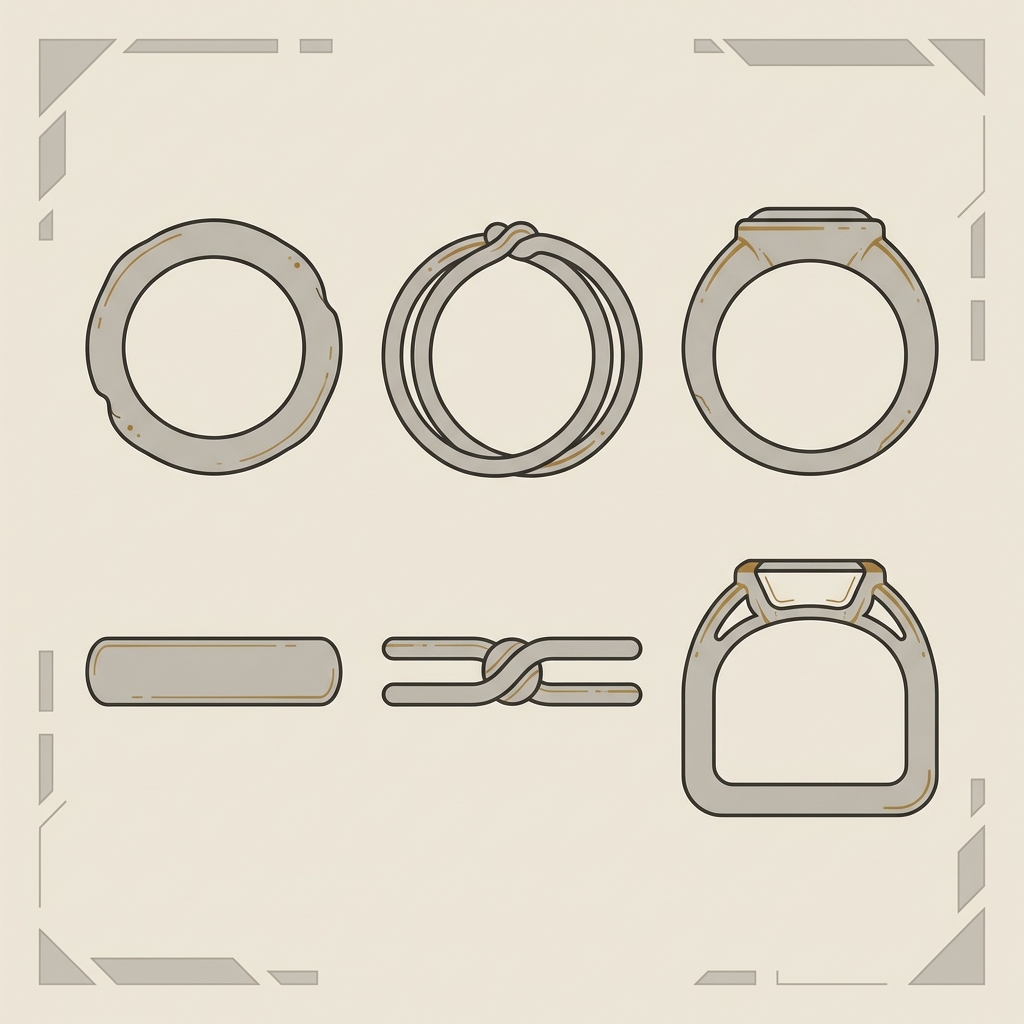
The hoop, or band, shows common forms: circular cross-sections, flat bands and more rounded profiles, and these choices affect how the ring sits and how wear appears in photographs; look at the hoop thickness and whether the cross-section changes near the bezel as a sign of hand finishing Metropolitan Museum Heilbrunn Timeline
Visual cues can be clear even in online listings, for example a flattened inner band suggests rework or resizing, while a consistently rounded section is typical of original casting and hand finishing
Ancient Greek rings are small metal hoops, most often bronze with some silver and gold examples, usually carrying a flat or convex bezel for decoration or intaglio seals; identify likely period by bezel shape, hoop cross-section, mount style and intaglio technique, and always check provenance and condition notes for greater certainty.
Bezel types are distinctive: flat bezels can carry incised decoration, convex bezels can hold intaglios, and plain ramps without imagery are also common; the bezel profile, how it meets the hoop and any evidence of soldering are key details to inspect in photos Oxford Research Encyclopedia of Classics
Signet versus plain decorative rings
Signet rings typically feature a carved stone or an engraved metal surface meant for sealing, while plain decorative rings may show relief motifs or punched designs; the presence of an intaglio, and how it is set, is a strong visual indicator of a former sealing use Aegean and Cypro-Aegean Non-Sphragistic Decorated Gold Finger Rings, American Journal of Archaeology
When judging images, request close-ups of the bezel from multiple angles, and a clear shot of the inner band and shoulders to see finishing marks and signs of past restoration
Materials and manufacturing techniques
Common metals and alloys
Most surviving Greek rings are bronze, with silver and gold examples recorded less frequently, and the metal choice influences corrosion patterns and the kind of conservation needed for trade or display Metropolitan Museum Heilbrunn Timeline
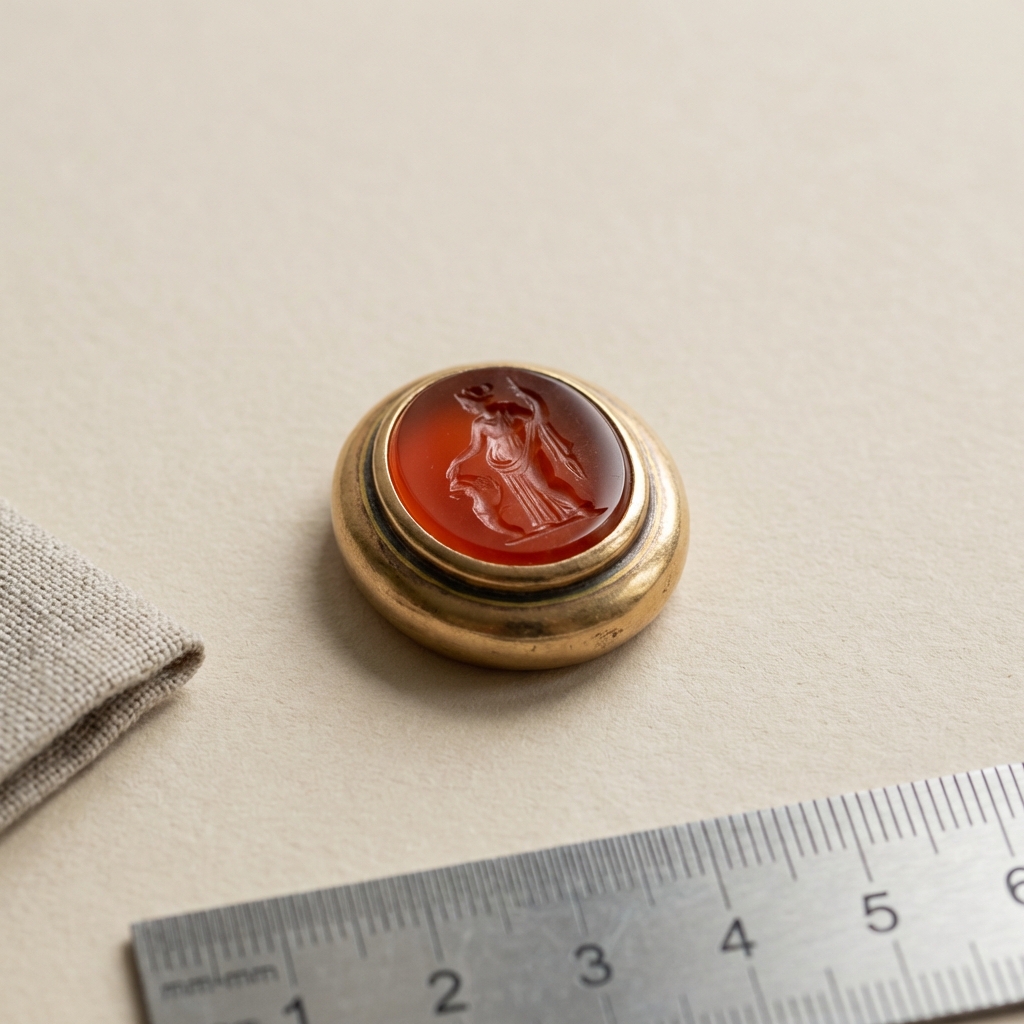
Bronze rings commonly develop a stable patina that collectors and conservators prefer to preserve, while silver can show surface depletion or chemical changes that require careful documentation British Museum collection notes
Casting, hand finishing and stone setting
Casting, hand finishing and stone setting
Technical studies indicate that hoops and bezels were usually cast, then refined by hand with filing and tooling, leaving tool marks and slight asymmetries that are useful to recognise in photographs Museum conservation reports
Stone setting for intaglios varied: many intaglios were carved separately, then fitted into a bezel by tight seating or by adhesive, and the traces of this process show at the bezel edge and under magnification Metropolitan Museum Heilbrunn Timeline
How intaglios were made and mounted
Intaglio stones such as carnelian and onyx were carved in the negative so that impressions could be used for sealing, and the cutting technique, depth and tool marks are often diagnostic for regional styles Oxford Research Encyclopedia of Classics
Signs of original mounting include a close seat to the bezel and minimal modern adhesive traces; where a stone appears to be set with modern cement or in a mismatched bezel, document this in condition notes and request conservation history Museum conservation reports
Motifs, iconography and regional styles
Common motifs: deities, animals, geometric patterns
Decorative themes commonly include mythological figures, deities, animals and geometric or floral motifs, and these are often chosen for personal or cultural meaning, including in ring seals where an image identifies an individual or a household British Museum collection
While motifs carry cultural associations, interpret them cautiously because similar images were used across regions and for long periods
Regional variants: mainland, Aegean and Macedonian styles
Scholars note regional differences in style and execution, with mainland Greek, island and Macedonian workshops showing distinctive proportions, carving depth and motif choices, but workshop attribution usually needs supporting context or analysis Hellenistic Gold Eros Jewellery: Technique, style and chronology, BAR Publishing, Oxford, via Fulcrum
Quick visual prompts to record bezel and mounting features
Use when photographing a listing
Interpreting symbols and workshop characteristics
Iconography can guide a tentative attribution, for example certain deity types or animal poses may be more frequent in specific areas, but motif alone rarely yields a firm date without provenance or testing Trésor hellénistique trouvé à Délos en 1964, École française d'Athènes, via Persée
When a seller or catalogue attributes a workshop, request the basis for that claim, such as a published typology or reference to comparable pieces in institutional collections
Dating features: how curators and collectors judge age
Which physical features help with relative dating
Curators use bezel shape, hoop cross-section, mount style and intaglio cutting technique as relative indicators for dating, because these features change in recognisable ways over time and across workshops Hellenistic Gold Eros Jewellery: Technique, style and chronology, BAR Publishing, Oxford, via Fulcrum
These markers allow a provisional placement of a ring within a broad range, but they do not replace context or scientific testing for firm dating
Limits of stylistic dating and the need for contextual evidence
Stylistic indicators are relative, and similar forms can persist or be revived, so provenance records, archaeological context or scientific methods are needed to increase confidence in an attribution Trésor hellénistique trouvé à Délos en 1964, École française d'Athènes, via Persée
If a listing lacks a clear collection history or documentation, treat firm chronological claims with caution and ask for the specific evidence behind them
When to seek scientific testing or provenance documentation
Request compositional analysis or thermoluminescence or similar testing only when attribution hinges on an unusual claim, and always ask for independent documentation or published comparisons before accepting precise dating statements Research report: export licensing and provenance, GOV.UK, Department for Culture, Media and Sport (DCMS)
Transparent provenance, clear condition notes and published parallels are the most practical ways to increase certainty for non-specialist buyers
Practical identification framework for buyers and collectors
Step-by-step checklist to evaluate a listing
Start with high-resolution images, multiple views and a clear shot of the bezel and inner band; request measurements for hoop diameter and bezel dimensions and a scale in photos to judge proportions Museum conservation reports
Follow @auroraantiqua for behind-the-scenes looks at condition, provenance and fresh finds
Use a short checklist and condition notes as your primary tools, and ask sellers for specific photographs and documentation before deciding to bid or buy.
Next, look for manufacturing traces such as seam lines from casting, tool marks from filing, and how an intaglio sits in its bezel; these details help distinguish original work from later alterations Metropolitan Museum Heilbrunn Timeline
Photos, measurements and condition notes to request
Ask for close-ups of the bezel in direct light, macro images of any stones, photos of the inner band and shoulders, and a note describing any stabilization or past restoration actions Museum conservation reports
Buyers should expect sellers to note where patina remains, whether any chemical cleaning was performed and how surface stabilisation was achieved
Common restoration treatments and how they should be reported
Common restoration treatments and how they should be reported
Typical stabilisation includes consolidation of fragile metal, careful removal of corrosive deposits and minimal gap-filling; these actions are normally recorded in condition notes rather than described as aesthetic upgrades Museum conservation reports
When a seller reports repairs or added modern metal, ask for documentation and photographs showing the intervention, so you can judge how it affects the object's integrity
What collectors should ask for in documentation
Request provenance statements, collection history, any prior auction or publication references, and photographic records of conservation work; clear documentation reduces ambiguity about a piece's background About us, International Association of Dealers in Ancient Art
If a seller cannot provide these baseline records, consider seeking an independent condition report before purchase
Typical pitfalls, red flags and how to avoid them
Common mistakes buyers make
Relying on motif alone for dating is a frequent mistake, as similar imagery can span centuries and regions; instead use motif as one input among physical features and documentation Trésor hellénistique trouvé à Délos en 1964, École française d'Athènes, via Persée
Other common errors include accepting vague provenance statements and overlooking restoration disclosures in listings
How to weigh ambiguous provenance or stylistic claims
Ambiguous provenance should prompt questions rather than acceptance; ask for the object's collection history, prior ownership notes and any third-party reports, and be wary of claims without supporting documentation The Past Polluted: A Pigovian Approach to the Black Market in Antiquities, International Journal of Cultural

Practical steps to reduce risk when buying
Ask for measurements, high-resolution images with scale, condition notes and any provenance documentation; when in doubt, consult a conservator or an independent specialist to review claims about dating or restoration Museum conservation reports
These steps help you weigh a listing responsibly and avoid common acquisition pitfalls
Examples and closing takeaways
Short annotated examples linking features to likely period
Example 1, a bronze ring with a flat bezel carrying an incised deity and a rounded hoop, suggests a functional signet that fits within known Archaic to early Hellenistic vocabularies, though firm dating requires provenance or comparative publishing Metropolitan Museum Heilbrunn Timeline
Example 2, a tight-fitted carnelian intaglio in a convex bezel with deep, precise cutting, aligns with signet practice across the 5th to 2nd centuries BCE, but similar technique can appear in different regions, so interpret with caution Oxford Research Encyclopedia of Classics
Final checklist and reading suggestions
Final checklist, request multiple high-resolution views, measure hoop and bezel dimensions, read condition and restoration notes carefully, and ask for provenance or published parallels before accepting precise dating claims Auction Terminology, Christie's
If you are considering a purchase, use these steps to reduce uncertainty and to understand how an object's visible features relate to likely production methods and period
Signet or intaglio rings, often set with stones like carnelian or onyx, were a common category of personal jewellery from the Archaic into the Hellenistic period and were used as both seals and adornment.
Request macro photos of the bezel edge, the inner band and the shoulders, and look for consistent tool marks, a close stone seat and clear condition notes that describe any stabilisation or adhesive use.
No, motif helps suggest cultural context but is a relative indicator; precise dating typically requires provenance, published parallels or scientific support.
More from Aurora Antiqua
References
- Aegean and Cypro-Aegean Non-Sphragistic Decorated Gold Finger Rings, American Journal of Archaeology
- Hellenistic Gold Eros Jewellery: Technique, style and chronology, BAR Publishing, Oxford, via Fulcrum
- Trésor hellénistique trouvé à Délos en 1964, École française d'Athènes, via Persée
- Research report: export licensing and provenance, GOV.UK, Department for Culture, Media and Sport (DCMS)
- About us, International Association of Dealers in Ancient Art
- The Past Polluted: A Pigovian Approach to the Black Market in Antiquities, International Journal of Cultural
- Auction Terminology, Christie's
- "Sappho" Earring, Harvard Art Museums / Arthur M. Sackler Museum, Cambridge, Massachusetts
- History of Signet Rings, International Gem Society, gemsociety.org
- Gem-A, The Gemmological Association of Great Britain