


Looking for the real thing? Browse genuine ancient rings for sale, each piece one of one, individually authenticated, with documented provenance. For the background, see the guide to ancient jewelry.
Ancient Rings at a Glance
The phrase Ancient Rings describes wearable metal and hardstone finger ornaments and seals produced across multiple cultures from the first millennium BCE into the early medieval centuries, frequently documented in museum catalogue entries and conservation reports.
In many cases these objects appear as signet faces, narrow hoops, broad bands, or mounted scarabs, and they combine functions of personal ornament, identity seal, and symbolic amulet across regions and periods. Museum and conservation literature provide the comparative typologies collectors rely on when evaluating listings, and these sources also shape the condition and restoration language you should expect to see in a reliable listing ICOM-CC conservation guidelines.
Watch close-up studies on @auroraantiqua
Use the checklist later in this guide to compare photos, measurements, and condition notes before you contact a seller.
This article follows a practical, museum-informed structure: we define key terms, cover materials and manufacture, examine typologies by region, explain curatorial identification steps, and finish with a compact checklist you can use when assessing listings.
Keep in mind that specific attributions and dating are conditional and should be tied to catalogue parallels or explicit documentation in the listing.

Defining an ancient ring: terms, dating, and provenance
For clarity here, an ancient ring is any finger-worn object produced in antiquity that serves as personal ornament, a seal, or an amuletic device, usually dated by typology, material, and documented parallels.
Dating given in catalogues or listings is typically estimated by period or century, for example Late Period, Hellenistic, or Roman, and it is best interpreted alongside provenance and any technical analysis reported for the object. Conservation guidelines recommend treating dating as provisional unless tied to catalogue entries or testing ICOM-CC conservation guidelines.
Collectors should request provenance and documentation when possible, such as collection history, previous sale records, or verification letters; good documentation lets you understand how a piece entered the market and supports a more confident attribution.
Materials and techniques common to ancient rings
Common metals for ancient rings include gold, silver, and bronze, while hardstones such as carnelian, agate, and occasionally amethyst are typical for intaglio faces and scarabs.
Manufacturing methods across cultures include casting for bands and bezels, engraving for metal decoration, and hardstone intaglio cutting for seal faces; conservators look for seams, tool marks, and patina as indicators of original manufacture or later intervention Emilie Riha, Der römische Schmuck aus Augst und Kaiseraugst (Roman jewelry from Augst and Kaiseraugst), Römermuseum Augst.
Ancient rings took forms such as intaglio signet rings, bronze hoops, scarab mounts, and transitional goldwork. Identification relies on comparing bezel and hoop morphology, materials and patina, and catalogue parallels, while requesting clear condition notes and provenance documentation.
Visual cues a buyer can check in photos include bezel profile, the cross-section of the hoop, and consistent surface patina; where intaglios are present, look for signs of re-cutting or modern tooling that can change the apparent motif.
When a listing states material identification, prefer wording like appears to be carnelian or described as silver unless the seller provides compositional testing or a credible catalogue reference.
Egyptian rings: signets, scarabs, and amuletic uses
Egyptian signet and scarab-style rings frequently pair hardstone faces such as carnelian or jasper with gold mounts or faience settings, and they often functioned as amulets in Late Period and Ptolemaic contexts British Museum catalogue pages on scarabs and rings.
Iconography on scarab faces commonly invokes protective and funerary motifs; listings should describe the motif and note any wear to the hardstone or losses to the mounting, which are typical condition points for these pieces.
Condition and restoration notes often mention where mounting was stabilised or where joins were reinforced; ask sellers to state exactly what was stabilised so you understand whether treatment affects display or wearability.
Mesopotamian seals adapted as finger-worn objects
Cylinder and stamp seals of Mesopotamia were primarily used to impress clay, but in some contexts they were adapted as bezel elements or worn on the finger, and securely dated examples are documented in museum catalogues for the first millennium BCE Oriental Institute reference on Mesopotamian seals.
When a seal-form element appears in a listing, compare the carved scene and its scale to catalogue parallels rather than relying only on stylistic description; documentation and catalogued parallels are central to confident attribution.

Market examples can lack continuous provenance, so a clear catalogue parallel or an explicit provenance chain in the listing materially strengthens the attribution and dating for seal-derived objects.
Greek rings: bronze hoops, engraved bezels, and thin D-shaped hoops
Classical Greek rings often appear as bronze hoops with engraved bezels that show animals, mythological scenes, or geometric motifs, and the thin D-shaped hoop is a recognisable form in many catalogue entries Ashmolean Museum collection notes. See also our ancient Greek rings collection.

Because bronze is softer than gold, look closely at hoop cross-sections and joins for casting seams or later repairs; photos taken at oblique angles can reveal manufacturing signs that straight-on shots obscure.
Regional workshop styles and common motifs are often described in museum essays and can help narrow attribution when a listing includes close-up photos and measurements for comparison.
Roman rings: intaglio signets, broad bands, and social function
Roman rings span a wide range from gold intaglio signet rings carved in carnelian or agate to simpler bronze bands worn by broader segments of society, as reflected in major museum collections Metropolitan Museum collection entries on Roman intaglios. See also our ancient Roman rings collection.
Intaglio faces in Roman rings frequently functioned as personal seals and status markers, and the same gem surface can show later re-cutting if the seal was reused across generations; good condition notes will mention such interventions.
When evaluating a Roman intaglio listing, compare the gem type, bezel form, and any signs of re-cutting to similar catalogued examples before relying on seller attribution.
Byzantine rings: Christian iconography and goldwork techniques
Byzantine rings commonly combine Christian iconography with advanced goldsmithing techniques, and catalogued examples show transitional styles that bridge Late Antiquity and later medieval practices Ring, Dumbarton Oaks Research Library and Collection, Trustees for Harvard University. See our Byzantine rings collection.
Inlaid gems appear occasionally, and ring shoulders or bezels may carry iconographic panels; cautious dating requires catalogue parallels or explicit workshop attributions in the listing.
Because Byzantine forms sometimes reuse earlier intaglios or gems, listings should describe any evidence of reuse or repurposing in condition notes to avoid misinterpretation of the combined features.
How curators and conservators identify and document rings
Curatorial identification focuses on morphology: bezel shape, hoop cross-section, manufacturing seams, patina, and microscopic tool marks that conservators record during study and conservation ICOM-CC conservation guidelines.
Non-destructive testing such as portable XRF or visual microscopy can confirm basic metal type and surface treatments, but these methods have limits and their results should be reported alongside condition and restoration notes for context Metropolitan Museum collection entries on Roman intaglios.
Photo and documentation checklist for assessing listing images
Use with seller questions
When you read a listing, request condition notes that specify any stabilisation, repair, or areas left untouched, and ask for magnified views of joins and the bezel to check for modern solder or recent filing marks.
Condition, restoration, and what to ask sellers
Typical restoration notes describe stabilised joins, reattached bezels, replacement adhesives, or cleaned surfaces; clear reporting helps you assess whether a ring is wearable or best kept as a display piece.
Good condition notes state what was done, who performed the treatment if known, and whether imaging or conservation reports accompany the work; ask sellers to provide such documentation or a photographic record of the work when available ICOM-CC conservation guidelines.
Model phrasing to request includes exact restoration steps and dates, whether any material was replaced, and whether a conservator recommended particular display or handling precautions.
Common mistakes and red flags when evaluating listings
Overreliance on a few photos without scale or oblique views can hide modern repairs or altered surfaces, so treat limited photography and vague provenance statements as a red flag and request more information before committing to a purchase Object ID, International Council of Museums.
Misreading patina or accepting bold authenticity claims without supporting documentation are frequent pitfalls; inconsistent wear patterns across a ring or modern tool marks near joins are cause for caution.
When in doubt, ask for clearer photos, comparative catalogue references, or non-destructive testing rather than relying solely on attractive images or journalistic descriptions in a listing.
Practical examples: assessing a listing step-by-step
Example 1, Egyptian scarab-style listing. Step 1, check photos from multiple angles including an oblique view to show bezel profile, and confirm measurements in mm so you can compare scale with catalogue parallels British Museum catalogue pages on scarabs and rings.
Step 2, read condition notes carefully for any stabilisation to the mounting or losses on the hardstone; ask the seller to clarify any unclear language.
Example 2, Roman intaglio signet. Step 1, confirm the gem type and look for signs of re-cutting under magnified photos, then compare the bezel and hoop form to museum entries for probable dating Metropolitan Museum collection entries on Roman intaglios.
Step 2, request provenance and any prior cataloguing or sale records; if the listing lacks these, treat the attribution as provisional and request non-destructive testing or specialist input.
A quick checklist for collectors before you buy
Checklist items to verify: photos from multiple angles including oblique views, clear measurements in mm, detailed condition notes, provenance or catalogue references when available, and a stated restoration history.
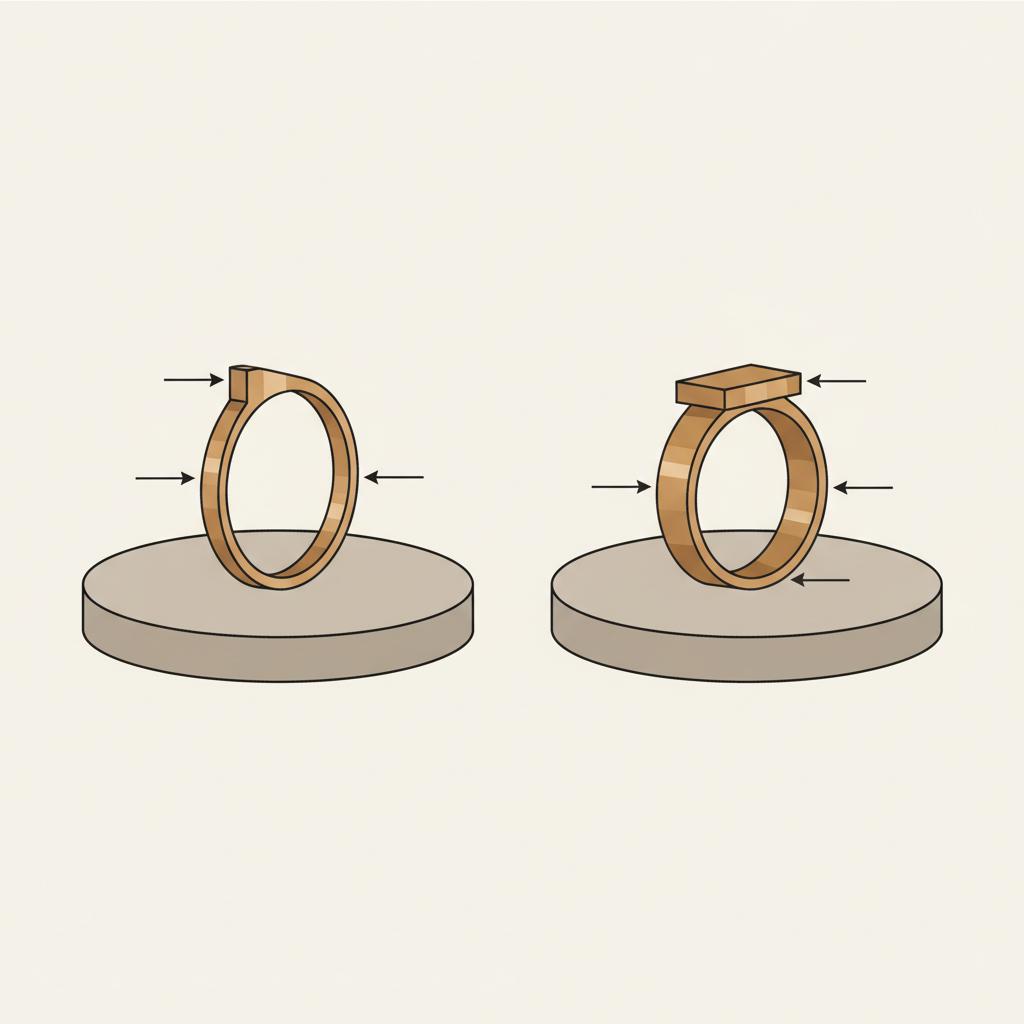
Priority requests, in order: must-have items are clear photos, measurements, and condition notes; helpful items are provenance documents and conservator reports; optional are historical essays or comparative notes from the seller.
Use conditional language when describing materials and dating unless the seller supplies credible testing or catalogue support, for example described as silver or appears to be carnelian.
Conclusion: Where to learn more and next steps
In summary, Ancient Rings take recurring forms across regions: intaglio signets and broad bands in Roman contexts, bronze hoops and D-shaped rings in Greek repertoires, scarab mounts in Egyptian contexts, and transitional goldwork in Byzantine practice; museum catalogues and conservation guidelines remain essential references for attribution Metropolitan Museum collection entries on Roman intaglios.
Aurora Antiqua positions itself as a curation reference that presents condition notes, provenance remarks when available, and restoration information to help collectors make informed choices without making absolute authenticity claims.
Look for signs of re-cutting such as fresh tool marks, inconsistent patina across the gem, and compare the motif to catalogue parallels; ask the seller for magnified images and a condition report that notes any reworking.
A useful provenance note lists prior ownership or collection history, any sale or auction records, and references to catalogue entries or conservation reports when available.
Non-destructive tests like portable XRF and visual microscopy can reliably identify elemental composition and surface features but have limits; ask for full reporting and combine results with condition notes and catalogue comparisons.
More from Aurora Antiqua
References
- Ring, Victoria and Albert Museum, London
- Finger Ring with Frog, The Cleveland Museum of Art
- Signet Ring, Victoria and Albert Museum, London
- Ring, Victoria and Albert Museum, London
- Internet Archaeol. 40. Atkinson and Preston. Objects of personal adornment, Internet Archaeology, Council
- Ring, Dumbarton Oaks Research Library and Collection, Trustees for Harvard University
- Emilie Riha, Der römische Schmuck aus Augst und Kaiseraugst (Roman jewelry from Augst and Kaiseraugst), Römermuseum Augst
- Object ID, International Council of Museums
- A. M. Caggiani u. a., Corroborating the autoptic identification, Wiley, Journal of Raman Spectroscopy
- ICOM-CC