


Looking for the real thing? Browse genuine Roman coins for sale, each piece one of one, individually authenticated, with documented provenance. For the background, see the guide to Roman jewelry.
What Matthew 22:15-22 actually reports: the coin shown and the question
The Gospel of Matthew describes a carefully staged exchange in which opponents test Jesus by asking whether it is lawful to pay taxes to the emperor. The narrative records that they bring a coin and ask the question, and that Jesus asks to see the coin before replying, an immediate detail that grounds the famous line usually paraphrased as "Render unto Caesar". For readers looking at material culture as well as text, that moment of showing a coin ties a short conversation to a concrete object and an image.
The passage is the primary textual basis for linking a Roman coin to the exchange; the verse itself records the visual and verbal elements without naming a mint or specific denomination. To read the scene responsibly is to start with the text and note that Jesus asks to be shown the coin before he answers, which shapes many later interpretations. For a direct reference to the scriptural wording, see Matthew 22:15-22 (ESV) on Bible Gateway, which gives the immediate sequence and wording used in modern translations Matthew 22:15-22 (ESV) on Bible Gateway.
Watch provenance and restoration stories on @auroraantiqua
Explore this brief guide for how the coin's image alters readings of authority and why careful numismatic context matters.
Readers asking what did jesus say about the roman coin should notice that the text does not supply a catalogue label for the object. Instead, it supplies a pragmatic detail: the coin is shown, its image matters to the argument, and the reply follows a question about civic obligation. That sequence makes the coin both a rhetorical prop and a material witness to imperial messaging. For discussion of why the coin's image was treated as significant in some commentaries, see the Bible Hub discussion of the coin's image Why is the coin's image important?.
Which coin do scholars and museums usually mean: denarius and similar silver issues
When scholars and museum guides connect the Gospel episode to a specific type of Roman money, they most often point to an imperial silver denarius or a similar silver issue that circulated in the first century. These coins commonly bear an obverse portrait of the emperor with surrounding titulature, features that make them natural candidates for a passage in which the coin's image is central. Numismatic overviews explain how such issues present an image and legend that claim authority and identity on the face of small objects British Museum coin guide. For a popular cataloguing perspective on the so-called tribute penny see a common dealer account of the Tribute Penny Tribute Penny of Matthew 22:20-21.
A concise description helps: a typical denarius obverse presents a head in profile, often with a laurel or radiate crown, and a legend that names the emperor and some of his titles. The presence of an imperial portrait on the coin makes it a visual assertion of power, which is why modern guides and catalogues mention denarii first when discussing the Gospel scene. For additional background that explains how the emperor's portrait functions on coinage, see the American Numismatic Society's overview of imperial coinage and portraiture nomisma.org: denarius, Nomisma.org (numismatic linked open data project).

Coins as imperial imagery: what a portrait and titulature signaled
Coins in the Roman world conveyed messages quickly and widely because they moved through markets and everyday exchanges. The combination of portrait and titulature acted as compact visual propaganda, associating the emperor's face and official style with authority and order. Museum and numismatic literature emphasize that images on coins shaped perceptions of legitimacy and were readable by many people in various local contexts British Museum coin guide.
That visual messaging is the reason the Gospel narrative's coin detail matters. When Jesus asked to see the coin, any portrait and inscription were available for interpretation by speaker and audience alike. The scene therefore pressures readers to consider not only the monetary value of the object but also what the image on its obverse communicates about sovereignty and public identity.
The Gospel reports that challengers showed Jesus a coin and asked about paying taxes; Jesus asked to see the coin and answered in a way often paraphrased as 'Render unto Caesar', a reply scholars read in different ways but that centrally treats the coin's image as part of the exchange.
Seeing portrait and legend together makes the object a compact claim to authority, a quality that many scholars highlight when they discuss why the question posed to Jesus was difficult to answer without upsetting either imperial or popular sentiment.
Taxation, coin circulation and the political stakes in first-century Judea
First-century taxation practices and the circulation of Roman coinage in Judea contextualize why the tax question was politically sensitive. Taxes under Roman rule were both a fiscal detail and a visible sign of imperial integration; paying a tax in coin with the emperor's image could be read as practical submission to fiscal authority in the province. Museum treatments of ancient coin circulation and historical notes help explain how tax obligations and coin use intersected under Roman administration Metropolitan Museum numismatic notes.
At the same time, historians stress that coin circulation varied locally and that different denominations and mints moved across regions in complex ways. The use of a coin showing the emperor could therefore carry heavy symbolic weight in dialogue about loyalty and community commitments. Understanding those circulation patterns helps explain why a question about taxes was more than a routine civic inquiry; it was a politically charged test of words and loyalties.

Why the question was framed as a trap: the challengers and their intent
The Gospel records that the questioners sought to trap Jesus between two unwelcome outcomes: endorsing payment of imperial taxes and alienating popular sentiment, or resisting payment and inviting charges of disloyalty to Rome. The presence of a coin in the scene made the challenge concrete, since the coin's image could be used to imply the emperor's claim to authority while also invoking local resistance to imperial demands. Careful readers will note that the narrative frames the question as a test rather than a neutral theological query Matthew 22:15-22 (ESV) on Bible Gateway.

Scholars caution that reconstructing precise motives for the questioners beyond the narrative requires care. The evangelist portrays intent, but historical reconstruction must allow for competing aims among different parties, including religious leaders and political actors who might have seen a public answer as an opportunity to unsettle Jesus.
Major interpretive framework: civic duty versus ultimate allegiance
A widely taught theological reading understands Jesus' reply as a principled distinction between civic obligations and ultimate allegiance to God. In this framework, the observer of the scene notes that Jesus recognizes a realm of practical civic duties, such as paying taxes, while reserving ultimate worship and loyalty for the divine. Encyclopaedia Britannica surveys this historical and theological reception and explains why many commentators adopt this balanced framework Encyclopaedia Britannica on 'Render unto Caesar'.
Proponents of this view point to the structure of the exchange in the Gospel and to the rhetorical effect of asking to see the coin: the image of the emperor makes a claim, and Jesus' reply parses the claim into different obligations. Readers exploring the render unto caesar meaning often see in the passage a model for distinguishing lawful civic duties from religious commitments without presuming a full political program in the text.
Alternative readings: irony, subversion and rhetorical strategy
Some scholars argue that the reply can be read as ironic or subversive, using the coin's portrait to expose the limits of imperial claims. In this account, Jesus' attention to the coin's image and his concise answer are seen as rhetorical moves that highlight how the emperor's likeness cannot make absolute claims on matters of conscience or worship. Overviews of modern interpretive debate discuss these alternate readings and the numismatic reasoning behind them; for a related art-historical and interpretive treatment see a scholarly essay on Christ with the coin Titian's Christ with the Coin.
From this perspective, the coin functions as a prop that invites listeners to notice the difference between surface authority and deeper allegiance. Scholars who favor the subversive reading emphasize the irony that the emperor's image, meant to assert dominion, becomes the occasion for a reply that limits imperial claim in spiritual matters.
Quick visual checks to compare coin photos and inscriptions
Use museum images where possible
Debate continues because the text is concise and rhetorically dense; both the principled and the ironic readings draw on the same textual details and on how coin imagery would have been perceived by a first-century audience.
Numismatic uncertainty: limits to identifying a single exact issue
The Gospel narrative does not name a mint, emperor, or denomination, so asserting a single precise issue is speculative. Numismatists note that while denarii and similar silver coins are common candidates, the text alone cannot confirm which exact issue was shown or where it was minted. For discussions of how numismatists treat portrait evidence and attributions, see the American Numismatic Society's guidance on imperial coinage Online Coins of the Roman Empire: Search, American Numismatic Society.
Practical reasons add to the uncertainty: circulation patterns varied, legends could be worn, and local preferences affected what coin types were common in markets. For these reasons, museum and catalogue notes often prefer phrasing such as appears to be or commonly identified as when linking a Gospel scene to a denarius rather than asserting a single certain identification.
How scholars advise applying the passage today: limits and responsible inferences
Contemporary commentators generally recommend reading the episode contextually and caution against using the verse as a direct template for modern policy decisions. The passage offers insights about conscience and civic duty, but most scholars advise against treating the exchange as a settled endorsement of particular modern tax policies or political positions. Encyclopaedia Britannica and recent commentaries encourage situating the passage within its narrative and historical context before drawing broad conclusions Encyclopaedia Britannica on 'Render unto Caesar'.
In practical terms, responsible application often means using the passage to inform conversations about moral limits, divided loyalties, and the ethics of civic participation, while recognizing the limits of direct transposition from a specific first-century incident to complex contemporary governance questions.
Practical numismatic cues for readers: how to read portraits and inscriptions in images
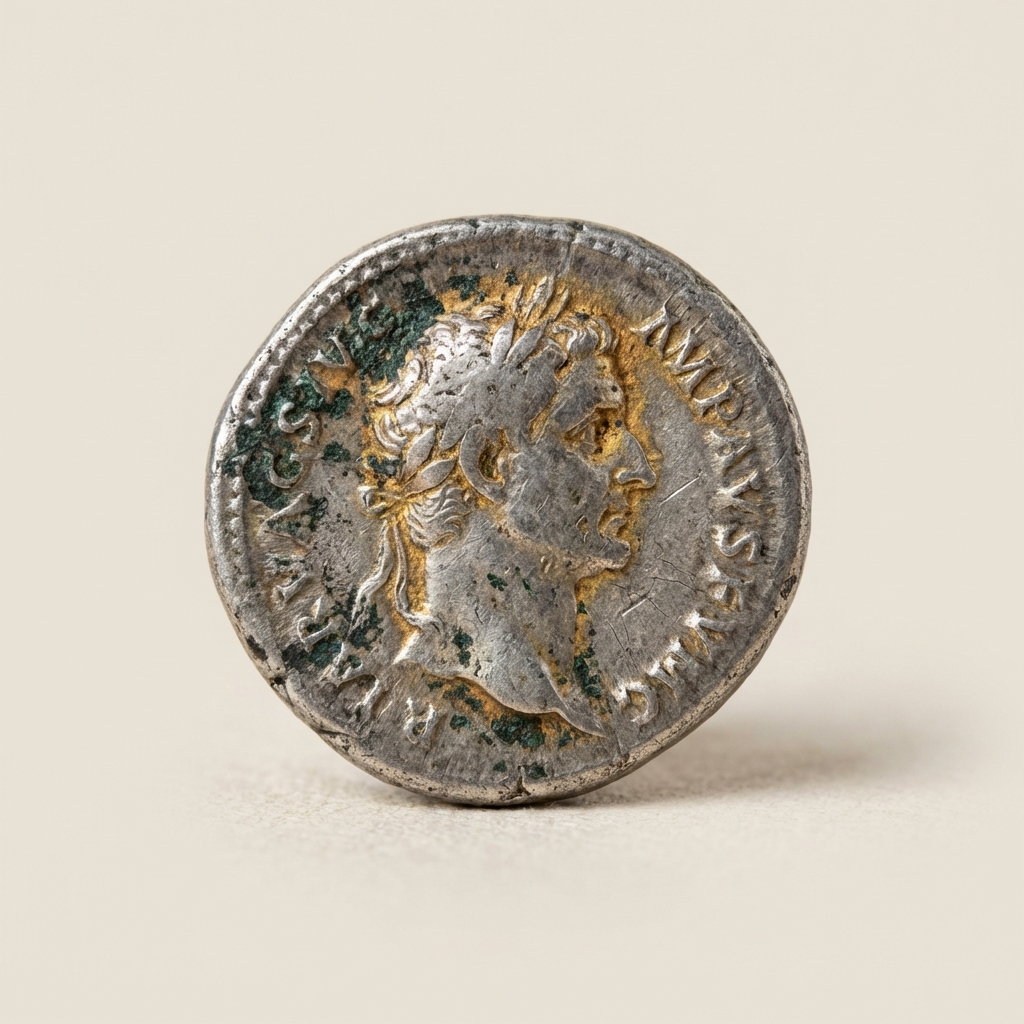
When you look at coin photos in museum guides or auction catalogues, certain visual cues help with cautious identification. Notice portrait orientation and style, the sequence of legend letters around the obverse, and any visible mint marks or control symbols. These features help narrow possibilities and suggest likely dating and attribution; concise museum notes often explain these details for specific issues British Museum coin guide.
Even when legends are worn, the combination of portrait style and remaining letters can permit a tentative identification. People who collect or study ancient rings set with coins or intaglios will find that a careful photograph and a catalogue comparison are the first useful steps before making stronger claims about dating or origin; consult our Ancient Roman Rings collection for examples of related items.
Common misreadings and pitfalls when people link the verse to modern claims
A frequent error is to treat the passage as a blanket political prescription rather than a contextually bounded exchange. The text is brief and rhetorical, so overextending it into a universal political doctrine overlooks its narrative and social setting. Scholarly surveys caution against such overstatements and recommend contextual reading instead Journal of Biblical Literature survey of exegetical debates.
Another pitfall is asserting certainty about the exact coin shown or its implications for modern policy. Coin imagery invites interpretation, but the limits of the textual evidence mean that confident claims about which exact issue was used are not supportable from the passage alone. Responsible discussion prefers tentative language and consultation of museum catalogues and numismatic scholarship when necessary. For further local collection examples see our rings collection.
Short museum and catalogue examples readers can consult
Museum collection guides and catalogue entries typically summarize a coin's obverse portrait, legend, and likely date range, and they often include high resolution images that make portrait and letters readable. The British Museum and the American Numismatic Society provide user-facing notes that explain how to read portrait and legend information in catalog entries British Museum coin guide.
Catalogues also commonly explain circulation and probable provenance at a cautious level, noting when attributions are tentative. For those wanting to follow up on the question what did jesus say about the roman coin in a material way, these resources model the close attention to image, inscription, and context that supports careful interpretation.
Conclusion: a balanced takeaway on the coin, its image and interpretive limits
The narrative in Matthew reports that a coin was shown and that Jesus responded in a way that separates civic obligation from ultimate religious allegiance; that textual detail is the foundation for discussions about a likely imperial silver coin such as a denarius and about the significance of its portrait and titulature. Readers should keep in mind both the numismatic evidence and the rhetorical density of the passage before drawing modern conclusions Encyclopaedia Britannica on 'Render unto Caesar'.
As a next step, consulting museum images, catalogue notes, and accessible numismatic overviews will clarify how portrait and legend functioned on Roman coinage and why they matter for interpreting the scene. That approach supports cautious, evidence-based readings rather than sweeping claims about ancient coins or contemporary policy. You can also explore further discussion on our Roman Empire blog Roman Empire blog.
Scholars and museum guides commonly identify the coin as an imperial silver issue such as a denarius, because these coins typically bore the emperor's portrait and titulature, though the text itself does not name a specific mint or denomination.
The passage has been read as distinguishing civic duties from ultimate allegiance, but most scholars advise contextual reading and caution against treating it as a blanket statement about modern tax policy.
Compare clear obverse photos and catalogue entries, note portrait style and surviving legend letters, and consult reputable museum guides and numismatic notes for tentative attributions.
More from Aurora Antiqua
References
- nomisma.org: denarius, Nomisma.org (numismatic linked open data project)
- Online Coins of the Roman Empire, American Numismatic Society and Institute for the Study of the Ancient World
- Online Coins of the Roman Empire: Search, American Numismatic Society
- Online Coins of the Roman Empire: RIC II Trajan 109, American Numismatic Society
- RPC, Home, Ashmolean Museum, University of Oxford; British Museum Press; Bibliotheque nationale de France
- Coin Hoards of the Roman Empire, University of Oxford